Overview
For B2B buyers sourcing grid-scale and commercial energy storage systems (BESS), the standard payment terms for global orders are typically structured as a 30% deposit with the purchase order, 60% before shipment, and 10% after commissioning—though Tier-1 suppliers often negotiate Letters of Credit (L/C) at sight or 30/70 T/T splits for repeat wholesale procurement. Below, our senior BESS technical support engineers answer the 8 highest-intent questions on LFP chemistry degradation, thermal management, and procurement terms.

Frequently Asked Questions
- Q1: What are the standard payment terms for B2B global energy storage orders?
- The standard payment terms for B2B global energy storage orders are 30% T/T deposit upon order confirmation, 60% T/T before shipment, and 10% T/T after successful commissioning and acceptance testing. For orders exceeding $500,000 USD, most Tier-1 manufacturers accept irrevocable L/C at sight or 30/70 T/T structures to reduce buyer risk. Repeat wholesale clients with established credit may qualify for 20/70/10 or net-30 terms after the first container delivery.
- Q2: What is the maximum cycle life and depth of discharge (DoD) of Tier-1 LFP cells in BESS?
- The maximum cycle life of Tier-1 LFP cells in BESS is 8,000 cycles at 80% DoD under 25°C ambient conditions, retaining ≥70% state of health. This is achieved through advanced liquid cooling, precise BMS cell balancing, and limiting charge/discharge C-rates to 0.5C. For 90% DoD operation, expect approximately 6,000 cycles—making 80% DoD the optimal economic balance for peak shaving and arbitrage.
- Q3: How do liquid cooling systems prevent thermal runaway in commercial energy storage cabinets?
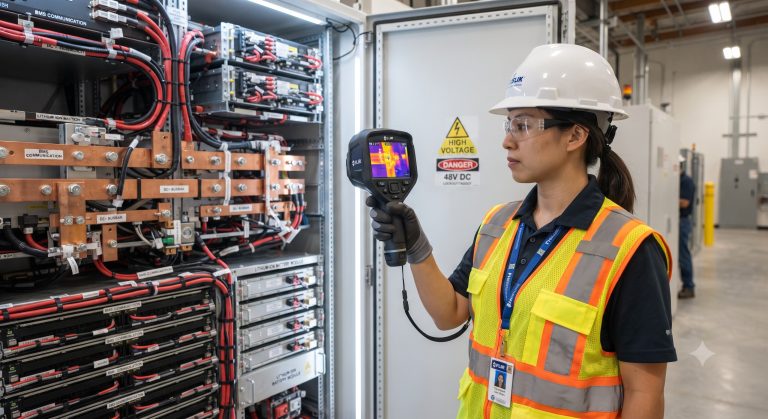
- Liquid cooling systems prevent thermal runaway by maintaining cell-to-cell temperature differentials below 3°C and keeping the maximum cell temperature under 35°C during high-rate cycling. The coolant loop absorbs heat directly from module cold plates, while the BMS triggers derating or shutdown if any cell exceeds 55°C. Combined with early gas/smoke detection and per-module aerosol fire suppression, this multi-tier design meets UL 9540A and IEC 62619 safety standards.
- Q4: What BMS monitoring and inter-cell balancing protocols are standard for post-sales BESS support?
- The standard BMS monitoring protocol is active cell balancing with CANbus 2.0B and Modbus TCP/IP communication, providing real-time SOC, SOH, and cell voltage data at 1-second intervals. Active balancing transfers energy between high and low cells with ≥90% efficiency, extending pack life by 15-20% versus passive balancing. Post-sales support includes remote firmware updates, cloud EMS dashboards, and alarm escalation via email or API webhook.
- Q5: How do you configure BESS for grid-tie versus off-grid operation?
- Grid-tie BESS configuration uses a bi-directional PCS synchronized to the utility grid for peak shaving, demand response, and frequency regulation, requiring UL 1741 SB or IEC 62477 certification. Off-grid configuration adds a grid-forming inverter with seamless transfer switch (<20ms) and black-start capability to island critical loads. Hybrid setups combine both modes with the EMS automatically switching based on grid availability and tariff signals.
- Q6: How scalable are modular BESS cabinets for expanding storage capacity?
- Modular BESS cabinets are scalable from 100 kWh to 100 MWh by paralleling up to 32 cabinets on a shared DC busbar with a single EMS master controller. Each cabinet includes its own BMS and PCS, enabling N+1 redundancy and hot-swap expansion without downtime. Custom DC busbar linkage supports mixed new/old cabinet deployment, though capacity matching within 10% SOC is recommended for optimal balancing.
- Q7: How do I calculate ROI for a commercial BESS project?
- Commercial BESS ROI is calculated by dividing annual savings (peak shaving + demand charge reduction + arbitrage + incentives) by total installed cost, targeting a 4-6 year payback and 12-18% IRR. For a 1 MWh system in a high-tariff region, typical annual savings range from $80,000 to $150,000 USD, yielding a 10-year LCOE of $0.08-0.12/kWh. Federal ITC (30%) and state SGIP rebates can reduce payback to under 3 years.
- Q8: What post-sales O&M and warranty terms are included in B2B energy storage contracts?
- Standard B2B energy storage contracts include a 10-year performance warranty guaranteeing ≥70% usable capacity, 5-year full-system warranty, and 2-year free remote O&M support. On-site commissioning and annual preventive maintenance are typically quoted separately or bundled into a 5-year O&M agreement at 1.5-2.5% of system CAPEX per year. Global sea freight insurance, spare parts kits, and 48-hour remote diagnostics response are standard for Tier-1 suppliers.