Overview
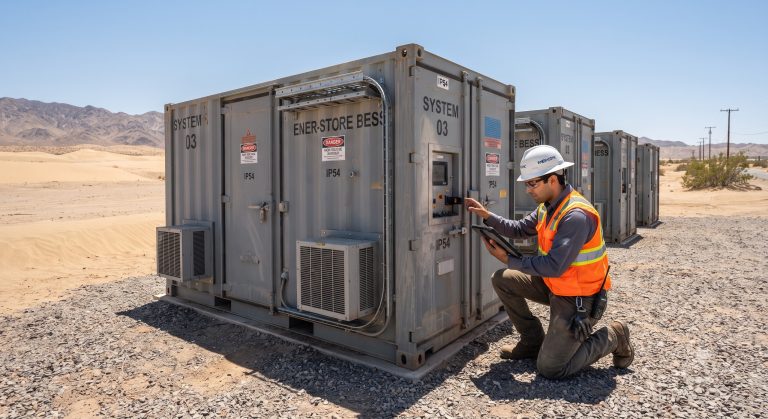
For B2B energy buyers and plant engineers, the question of whether a containerized Battery Energy Storage System (BESS) operates as a simple ‘plug-and-play’ appliance upon delivery is critical. The short answer is no; while factory-integrated and pre-commissioned, these are complex grid assets requiring site-specific engineering, grid compliance verification, and EMS integration. This FAQ addresses the most common pre-sales and post-sales technical questions to ensure a successful deployment.
Frequently Asked Questions
- Q1: Is the container energy storage system truly plug-and-play upon arrival at our facility?
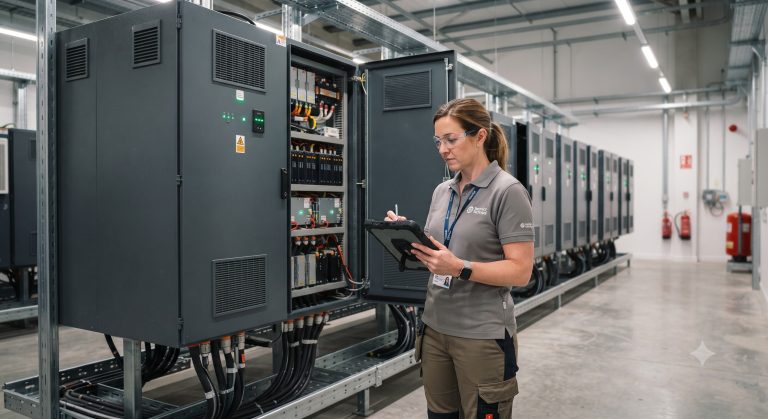
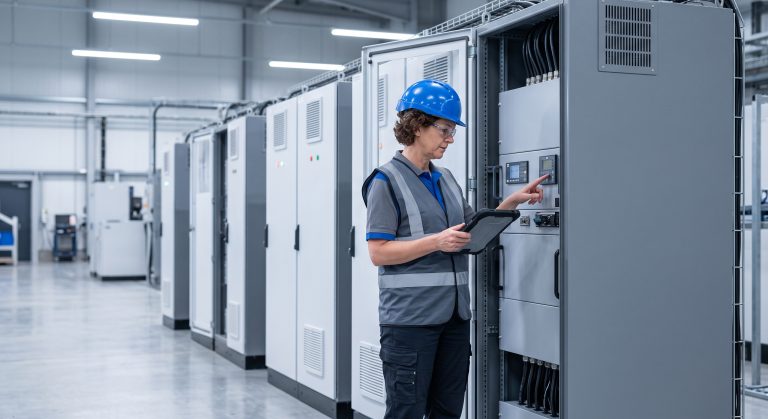
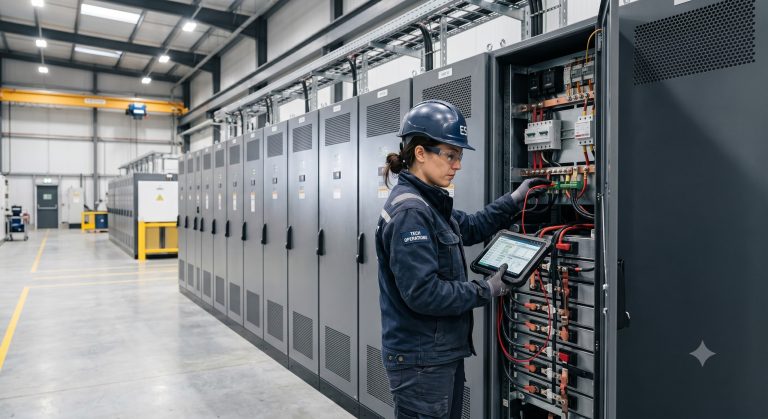
- No, the system is not fully plug-and-play out of the container. It arrives as a pre-assembled, factory-tested unit with internal wiring, BMS, and cooling complete, but site-specific AC/DC interconnection, grid synchronization, and EMS integration are mandatory. This requires certified electrical engineers to connect the PCS to your facility’s switchgear and configure the SCADA/EMS communication protocols, typically taking 5-10 business days depending on site readiness.
- Q2: What is the standard cycle life and depth of discharge (DoD) for the LFP battery cells?
- The standard cycle life is 6,000 cycles at 90% Depth of Discharge (DoD), with an end-of-life capacity of 80%. This performance is guaranteed using Tier-1 LFP prismatic cells and advanced liquid cooling, which maintains cells within a +/- 1°C gradient. For extended asset life, we recommend an operational DoD of 80% for daily arbitrage, which can push cycle life beyond 8,000 cycles in controlled ambient conditions.
- Q3: How does the liquid cooling system ensure thermal runaway prevention and operational safety?
- The multi-tier fire safety mechanism relies on an integrated liquid cooling and early gas detection system. The cooling loop regulates pack temperature between 15-35°C to prevent thermal runaway triggers. Simultaneously, an independent gas/smoke detection system is installed per battery rack, with a three-level alarm and isolation protocol. Upon detection, the BMS commands an immediate PCS shutdown and initiates a clean-agent fire suppression (e.g., FM200 or Novec 1230) hold time of at least 10 minutes to prevent escalation.
- Q4: What are the grid-tie and off-grid configuration options for this BESS?
- Our system supports both grid-tie and off-grid (islanding) configurations, but the mode must be specified pre-shipment. For grid-tie, the bi-directional PCS synchronizes with the utility frequency for peak shaving and demand response. For off-grid, the system requires an integrated black-start generator or a diesel generator to provide a stable reference voltage. Switching between modes requires manual EMS reprogramming; seamless automatic transfer switches are available as an optional hardware upgrade.
- Q5: How does the Battery Management System (BMS) monitor performance and handle inter-cell balancing?
- The active BMS monitoring system scans each cell voltage, temperature, and internal resistance every 100ms for real-time thermal and electrical protection. It utilizes a passive balancing topology with a maximum balancing current of 2A per cell, triggered during the absorption phase of charging. The BMS data is logged locally and pushed to the cloud EMS, allowing for predictive maintenance alerts, including alerts for voltage drift exceeding 5% to maintain inter-cell consistency.
- Q6: Can the containerized system be scaled in capacity, and how does parallel connectivity work?
- Yes, the system features modular expansion and parallel cabinet connectivity via a custom DC busbar linkage. Up to 10 units can be paralleled on the AC side using a master/slave EMS architecture. The key limitation is the site’s transformer capacity; scaling from 1MWh to 10MWh requires verifying the Point of Common Coupling (PCC) and potentially upgrading the main service transformer to handle the aggregated charging/discharging current.
- Q7: What is the estimated ROI and peak shaving arbitrage potential?
- The ROI calculation and Levelized Cost of Storage (LCOE) depend on local electricity tariffs and ancillary service markets. For a standard 2-hour system (e.g., 1MW/2MWh), the payback period is typically 3-5 years based on daily peak shaving arbitrage of $150/MWh. We provide a detailed LCOE calculator with your project proposal, factoring in degradation, round-trip efficiency (minimum 92%), and 10-year O&M service contracts.
- Q8: What international safety and interconnection standards does the system comply with?
- The system is fully certified to UL 9540 (for the ESS) and UL 9540A (for thermal runaway propagation), as well as IEC 62619 for industrial battery safety and CE for European markets. For grid interconnection, the PCS meets IEEE 1547 and IEC 61727 requirements. All systems undergo a Factory Acceptance Test (FAT) witnessed by a third-party inspector prior to shipping to ensure compliance with these stringent standards.