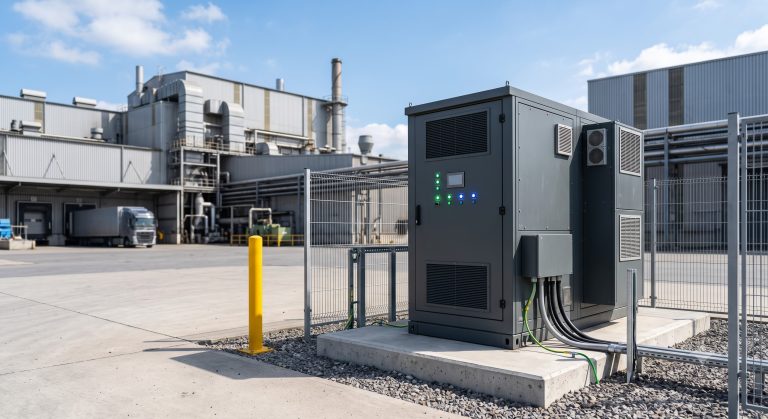
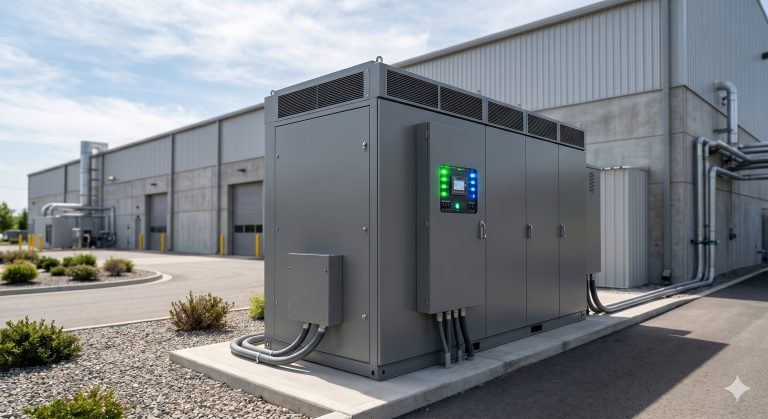
Introduction: The Compliance Imperative in Commercial & Industrial Energy Storage
The global C&I energy storage market is projected to exceed 120 GWh in annual deployments by 2030, driven by escalating demand charges, renewable integration mandates, and grid resiliency requirements. Yet, behind every bankable commercial energy storage project lies a non-negotiable foundation: regulatory compliance and engineering rigor. For EPCs, asset owners, and procurement engineers, the C&I energy management system is no longer merely a battery cabinet—it is a safety-critical, revenue-generating asset governed by UL 9540, IEC 62619, UN38.3, and CE frameworks. This masterclass dissects the engineering specifications, safety architectures, and certification pathways that separate Tier-1 systems from commoditized alternatives.
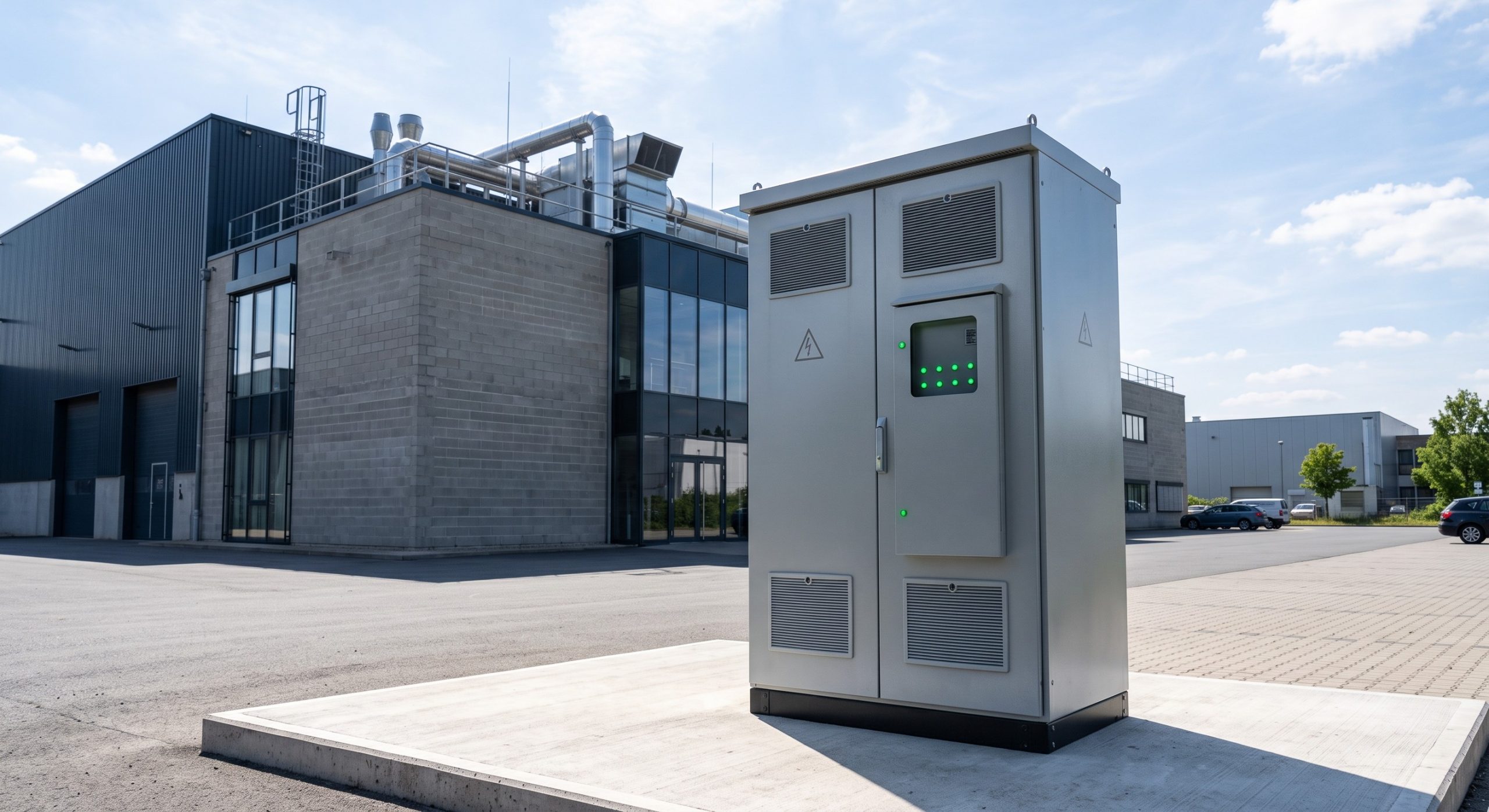
Core Architecture & Battery Management
PCS, BMS, and EMS: The Three Pillars
A compliant C&I energy management system integrates three interdependent subsystems. The Power Conversion System (PCS) delivers bi-directional AC/DC conversion with round-trip efficiency exceeding 94% at rated power. The Battery Management System (BMS) maintains cell-level voltage deviation below ±20 mV, enabling active balancing across 280 Ah to 314 Ah Tier-1 LFP cells. The Energy Management System (EMS) orchestrates dispatch logic, demand response signaling, and peak shaving algorithms with sub-second response latency.
UL 9540 and IEC 62619: The Certification Backbone
UL 9540 governs the complete energy storage system assembly, mandating cell, module, and cabinet-level thermal runaway propagation resistance. IEC 62619 specifies safety requirements for industrial lithium batteries, including overcharge tolerance, external short circuit protection, and drop test validation. UN38.3 ensures transport safety across air, sea, and land freight. A compliant system must pass UL 9540A cell-level propagation testing, demonstrating no fire escalation beyond the initiating module.
Technical Specifications
The following specification ledger represents a Tier-1 C&I energy management system designed for 2-hour to 4-hour commercial applications, incorporating liquid cooling thermal control and multi-level fire suppression.
| Key Parameter | Technical Specification |
|---|---|
| Battery Chemistry | Tier-1 LFP (Lithium Iron Phosphate), 280Ah-314Ah |
| System Capacity | 1 MWh – 5 MWh per container (modular scalable) |
| Cycle Life | >8,000 cycles @ 90% DoD, 25°C |
| Round-Trip Efficiency | ≥94% at 0.5C, including PCS and thermal overhead |
| Depth of Discharge (DoD) | 90% nominal, 95% maximum |
| Thermal Management | Liquid cooling, ±2°C cell delta, 3-6 L/min flow |
| Fire Suppression | Novec 1230 + water mist + exhaust ventilation |
| Communication Protocol | Modbus TCP, IEC 61850, CAN 2.0B |
| Certifications | UL 9540, UL 9540A, IEC 62619, UN38.3, CE |
| Operating Temperature | -20°C to +55°C (derated above 45°C) |
| Ingress Protection | IP54 (cabinet), IP67 (module) |
| Design Life | 15 years (10,000 cycles at 80% EOL) |
Thermal Safety & Fire Suppression Engineering
Liquid Cooling vs. Air Cooling: Thermal Efficiency Optimization
Liquid cooling maintains cell temperature differentials within ±2°C, compared to ±8°C for air-cooled systems, directly extending cycle life by 15-20%. The coolant loop operates at 3-6 L/min flow rate with glycol-water mixture maintaining 25°C ± 1°C setpoint. Air cooling, while lower CapEx, struggles beyond 0.5C continuous discharge rates in ambient temperatures above 35°C.
Multi-Level Fire Suppression Architecture
Tier-1 systems deploy three-tier protection: (1) Aerosol/Perfluorohexanone (Novec 1230) suppression at pack level, (2) Water mist or inert gas flooding at cabinet level, and (3) exhaust ventilation with H2/CO detection at container level. UL 9540A testing validates that propagation is contained within the initiating unit, preventing cascading thermal runaway across the MWh-scale installation.
Commercial ROI & Grid Support
Peak Shaving and Demand Charge Reduction
For a 1 MW / 2 MWh system deployed at a manufacturing facility with $18/kW demand charges, peak shaving can reduce monthly demand costs by 40-60%, yielding $8,000-$12,000 in monthly savings. With 8,000 cycles at 90% DoD, the levelized cost of storage (LCOS) ranges from $0.08-$0.12/kWh, outperforming diesel backup at $0.25-$0.35/kWh.
Demand Response and Frequency Regulation
Grid-interactive C&I energy management systems capture demand response incentives ranging from $50-$200/kW-year in ancillary service markets. Frequency regulation requires sub-100ms response, achievable through advanced PCS control loops and EMS predictive dispatch algorithms.
Deployment Scenarios
Industrial Parks and Manufacturing Facilities
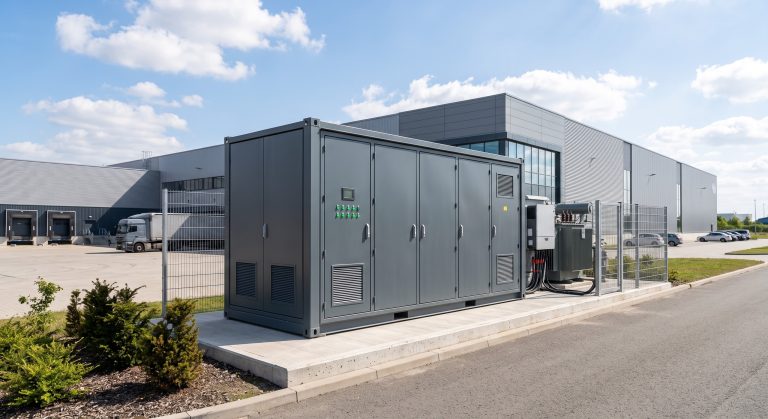
Modular C&I energy management systems deployed in 20-foot containerized enclosures enable scalable MWh-scale expansion. Parallel cabinet topology supports 4-16 units per busbar segment, with inter-cabinet busbar linkage rated for 2000A continuous current.
EV Supercharging and PV-Storage-Charging Integration
The PV-Storage-Charging (光储充) model integrates solar canopies, C&I energy management systems, and DC fast chargers (150-350 kW) to buffer grid demand and avoid expensive demand charges during high-power charging sessions. Round-trip efficiency of 94% ensures minimal energy loss across the DC-coupled architecture.

Conclusion: Compliance as a Competitive Advantage
Specifying a C&I energy management system that meets UL 9540, IEC 62619, UN38.3, and CE standards is not a procurement checkbox—it is the foundation of bankability, insurability, and long-term asset performance. As thermal runaway incidents continue to shape regulatory scrutiny, systems engineered with liquid cooling, multi-level fire suppression, and Tier-1 LFP cells will command premium valuations in secondary markets and secure favorable insurance terms. For EPCs and asset owners, the question is not whether to prioritize compliance, but how quickly they can standardize on certified, data-driven platforms that deliver 8000+ cycles, 94% round-trip efficiency, and seamless grid support across the asset lifecycle.