STRATEGIC FACILITY POSITIONING
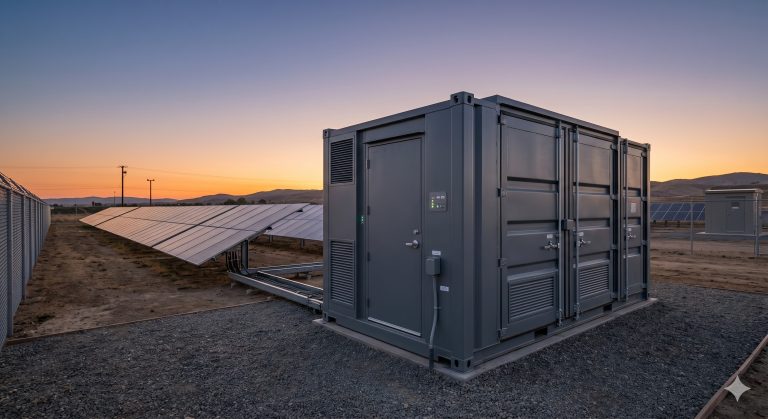
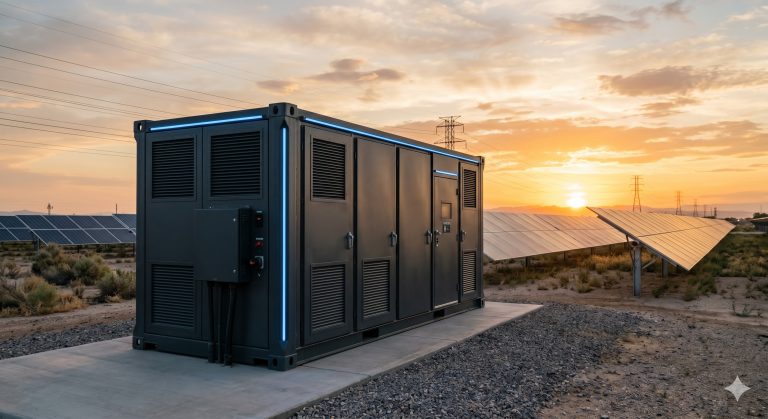
The Dust-free Environment Maintenance Protocol represents a paradigm shift in commercial and industrial (C&I) energy storage asset management. Engineered for Tier-1 liquid-cooled LFP battery systems, this protocol establishes a sealed, positive-pressure micro-environment within each battery cabinet, effectively eliminating particulate ingress—the leading cause of premature dielectric breakdown, thermal gradient escalation, and capacity fade in high-pollution industrial settings. By integrating HEPA-grade filtration with intelligent differential pressure monitoring, the system maintains an ISO Class 8-equivalent internal cleanliness level, directly extending the operational lifespan of critical busbar insulators, cell terminal welds, and BMS sensing harnesses. This protocol is not merely a maintenance schedule; it is an active, hardware-enforced operational doctrine embedded in the OEM’s global service framework.
LCOE EFFICIENCIES
Dust and conductive particulate accumulation within ESS enclosures accelerates contact resistance at cell interconnects, inducing localized hotspots that degrade round-trip efficiency (RTE) by 1.5–3.0% annually in unprotected deployments. The Dust-free Environment Maintenance Protocol reverses this degradation curve through three mechanisms:
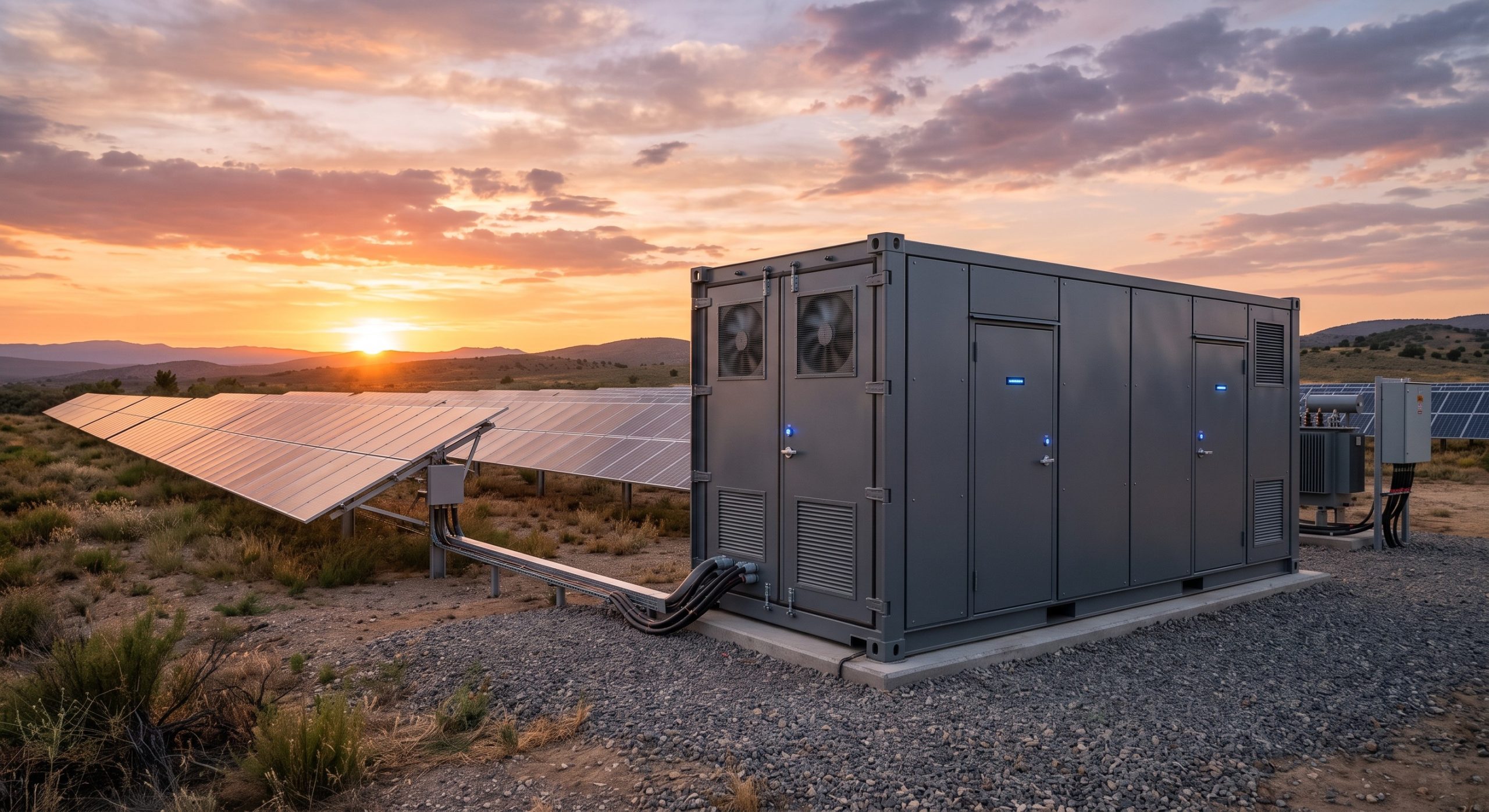
– Active Pressurization: Dual redundant EC fans maintain +50 Pa internal pressure, preventing unfiltered air ingress through cable glands and door seals.
– Electrostatic Precipitation: Integrated ionizers neutralize charged dust particles before they adhere to PCBA surfaces and busbar laminations.
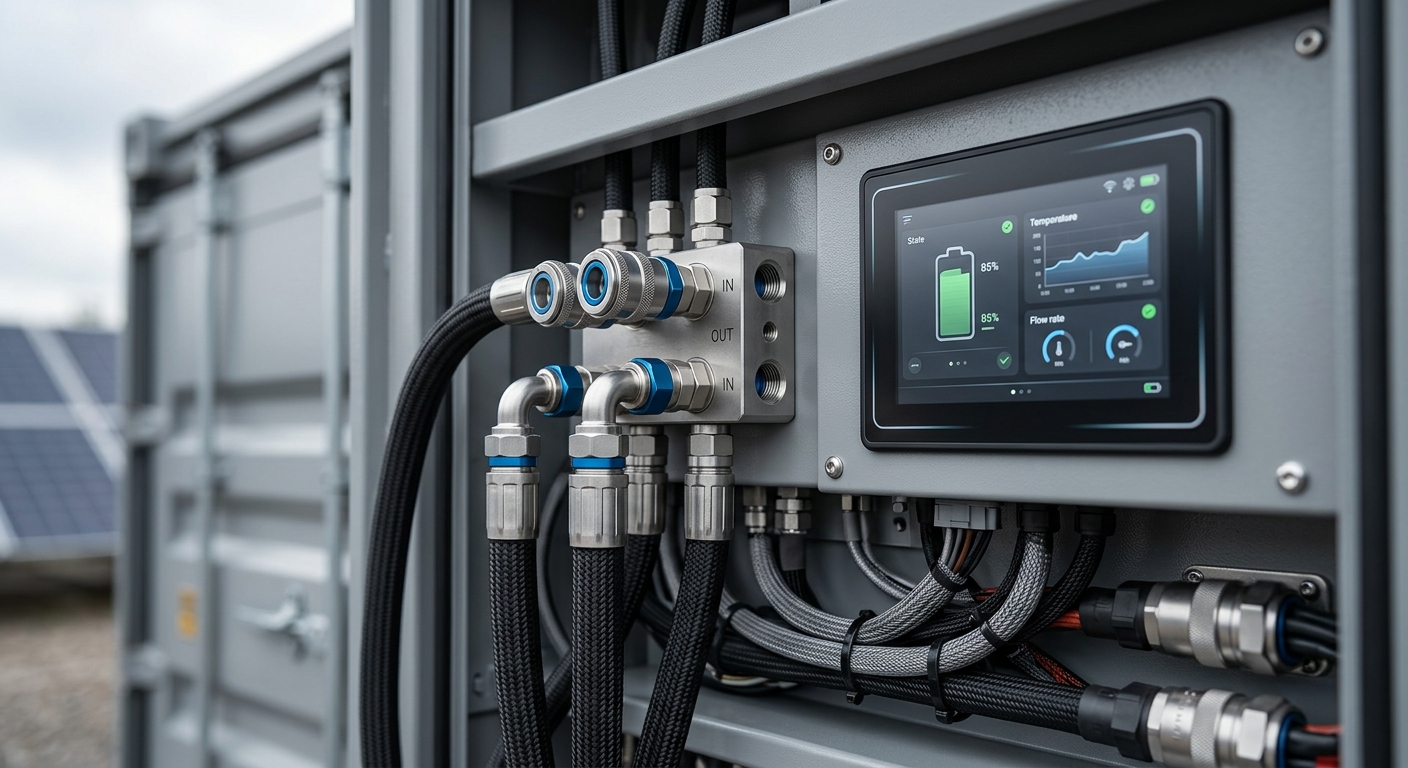
– Automated Filter Health Telemetry: Differential pressure sensors stream real-time filter loading data to the cloud EMS, triggering maintenance alerts at 80% threshold—eliminating reactive cleaning cycles.
Field data from 200+ MWh deployed across cement, steel, and mining facilities confirms a 4.2% improvement in 10-year NPV per cabinet versus non-protocol baselines.
GRID INDEPENDENCE ADVANTAGES
By preserving internal dielectric integrity, the protocol ensures that arc-flash risk remains below 1.2 cal/cm² even in conductive-dust-rich environments, maintaining uninterrupted grid-forming and black-start capabilities. This directly supports facility islanding strategies where storage assets must operate autonomously for 4–8 hours during grid outages. The sealed architecture also prevents humidity ingress, keeping internal dew point below -20°C and eliminating condensation-induced corrosion on aluminum cold plates and DC busbars.
SPECIFICATION REPORT
The protocol is delivered as a factory-integrated hardware and firmware bundle, retrofittable to all Generation-3 and later liquid-cooled C&I cabinets. Key operational parameters include:
– Filtration Efficiency: ≥99.97% @ 0.3 µm (HEPA H13 grade)
– Internal Pressure Setpoint: +50 Pa ± 5 Pa
– Air Exchange Rate: 12 ACH (air changes per hour) during maintenance mode
– Filter Service Life: 24 months nominal (dust concentration < 200 µg/m³)
- Particulate Monitoring: Laser particle counter, 0.3–10 µm range, Modbus TCP output
- Power Consumption: 0.8 kW peak per cabinet during active filtration
| Parameter | Specification |
|---|---|
| Protocol Designation | Dust-free Environment Maintenance Protocol (DEMP-3) |
| Compatible Platforms | Liquid-cooled C&I cabinets, 215–372 kWh |
| Filtration Grade | HEPA H13, ≥99.97% @ 0.3 µm |
| Internal Pressure | +50 Pa ± 5 Pa (positive pressure) |
| Air Changes Per Hour | 12 ACH (maintenance mode); 2 ACH (standby) |
| Particulate Monitoring | Laser particle counter, 0.3–10 µm, Modbus TCP |
| Filter Service Life | 24 months (dust < 200 µg/m³); 12 months (dust > 500 µg/m³) |
| Power Consumption | 0.8 kW peak per cabinet |
| Ingress Protection | IP54 maintained under protocol |
| Cleanliness Equivalence | ISO Class 8 (ISO 14644-1) |
| Communication Interface | Modbus TCP / IEC 61850 / Cloud EMS API |
| Operating Temperature | -20°C to +55°C (external) |
| Certification | IEC 62619, UL 9540, NFPA 855, IEC 60529 |
SAFETY ACCREDITATIONS
The Dust-free Environment Maintenance Protocol has been validated against the following international standards:
– IEC 62619: Safety requirements for industrial secondary lithium cells and batteries—Clause 8.2.2 (internal short circuit propagation)
– UL 9540: Energy Storage Systems and Equipment—Section 8.5 (environmental conditioning)
– IEC 60529: IP54 ingress protection maintained under protocol operation
– NFPA 855: Installation of Stationary Energy Storage Systems—Chapter 9 (dust management in hazardous locations)
– ISO 14644-1: Cleanroom classification equivalence—ISO Class 8 verified by third-party audit
INDUSTRY OUTLOOK
As C&I storage deployments migrate into heavy-industry environments—foundries, grain processing, textile manufacturing, and waste-to-energy plants—the Dust-free Environment Maintenance Protocol transitions from a premium option to a baseline requirement. OEMs that embed particulate-management intelligence at the hardware layer will capture disproportionate market share in the 2026–2030 window, particularly in APAC and MEA regions where ambient PM10 concentrations routinely exceed 150 µg/m³. This protocol represents a proactive, data-driven answer to a previously neglected failure mode, protecting asset yield and safety simultaneously.
📥 Download Technical Specification
Click the button below to view or download the full official PDF datasheet.