Introduction: The Energy Crisis Hook for C&I Operations
For commercial and industrial (C&I) enterprises, the convergence of rising grid instability, volatile electricity tariffs, and aggressive decarbonization targets has transformed energy storage from a luxury into a critical operational asset. The hybrid solar inverter battery system represents the technological nexus of this transition, enabling facilities to achieve energy independence, optimize peak-shaving ROI, and participate in lucrative demand response programs. Unlike standard solar inverters, these advanced systems integrate bidirectional power conversion with intelligent battery management, allowing for seamless PV-Storage-Charging synergy and grid support. This comprehensive B2B sourcing guide provides a deep technical dive into architecture, LCOE analysis, and grid support capabilities, empowering system integrators and procurement professionals to make data-driven decisions.
Modern hybrid solar inverter battery systems are engineered with Tier-1 LFP cells, achieving round-trip efficiencies above 97% and cycle lives exceeding 8,000 cycles at 90% DoD, as seen in platforms like MUST’s LP3000 series which offers modular expansion from 5.12 kWh to 40.96 kWh with IP65-rated durability for all-weather C&I deployment .
Core Architecture: PCS, BMS, and Smart EMS Dispatch
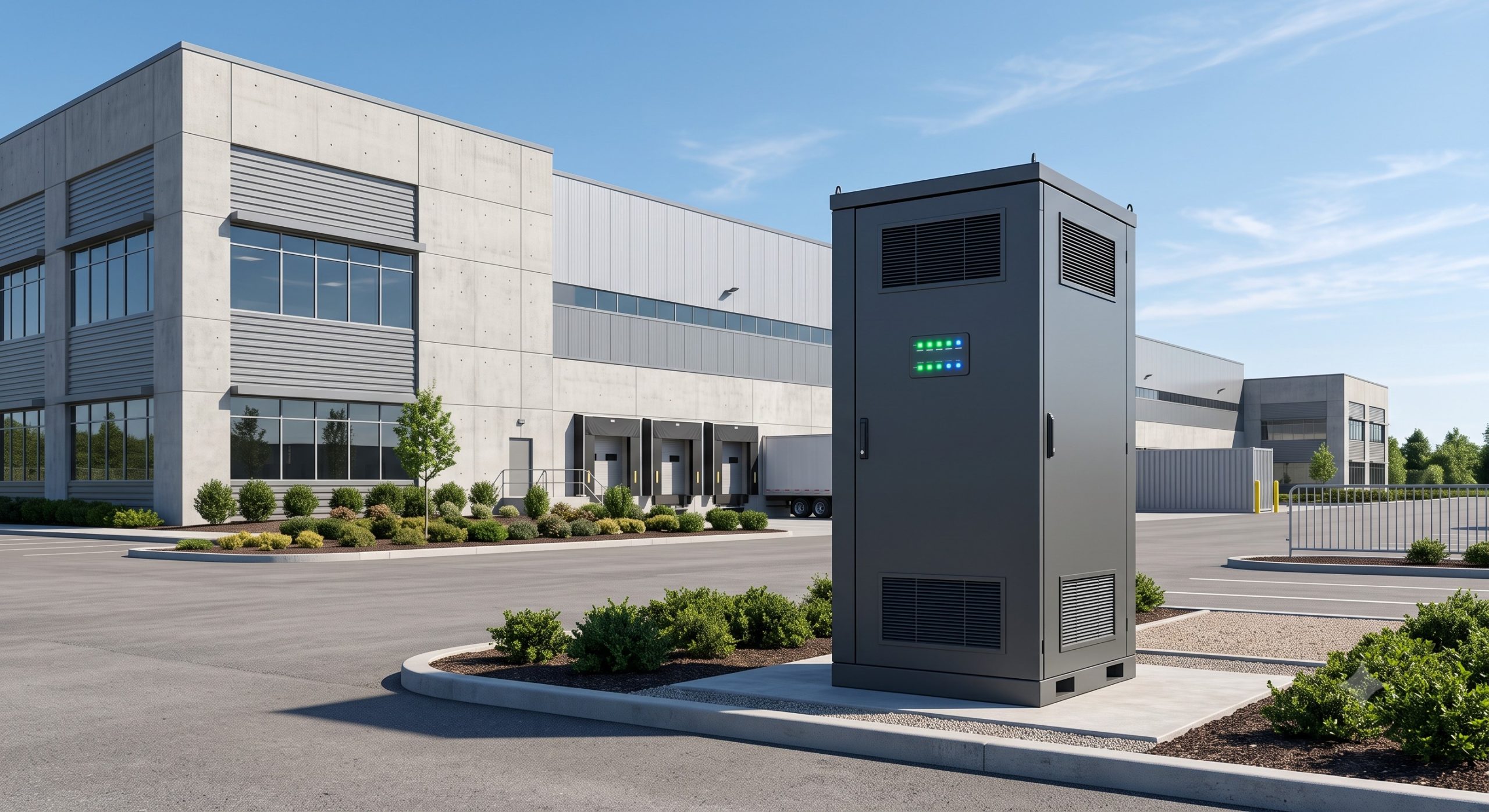
The architecture of a commercial hybrid solar inverter battery system hinges on the seamless integration of three core components: the Power Conversion System (PCS), the Battery Management System (BMS), and the Energy Management System (EMS). The PCS serves as the bi-directional gateway, converting DC power from PV arrays and battery storage into AC power for facility loads or grid export. Advanced three-phase hybrid inverters now offer up to 50 kW of PV input power with 200% oversizing and three independent MPPTs, ensuring optimal solar harvest even in complex rooftop orientations .
Intelligent BMS & Thermal Control
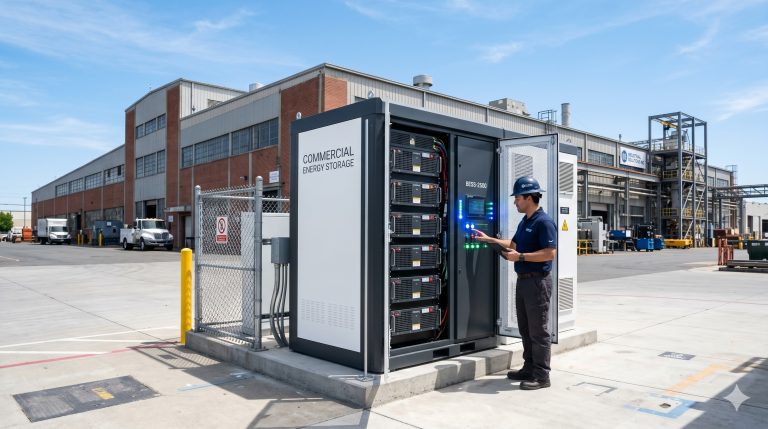
The BMS is the brain responsible for cell balancing, state-of-charge (SOC) estimation, and ensuring operational safety within the hybrid solar inverter battery. It actively monitors voltage, current, and temperature at the module level to prevent thermal runaway and over-discharge. For high-capacity C&I systems exceeding 600 kWh, liquid cooling thermal control is critical. Liquid cooling dissipates heat more effectively than air cooling, maintaining uniform cell temperatures and extending cycle life by up to 15% in high-ambient environments. This is a key differentiator for scalable BESS wholesale solutions requiring long-term performance guarantees.
Smart EMS & Demand Response
At the top of the hierarchy, the EMS provides advanced grid functionalities, including time-of-use (TOU) optimization, zero-export control, and VPP readiness. Modern hybrid solar inverter battery platforms utilize AI-driven energy optimization to forecast solar production and facility demand, dynamically dispatching stored energy to maximize peak-shaving ROI. They support fast grid synchronization for frequency regulation and can transition to off-grid backup in under 10 milliseconds (UPS-level performance), ensuring resilience for critical loads such as EV supercharging stations and industrial datacenters.
Technical Specifications
Understanding the core metrics of a hybrid solar inverter battery is non-negotiable for technical procurement. The table below outlines the key specifications that define performance, safety, and compliance for C&I applications.
| Key Parameter | Technical Specification |
|---|---|
| Battery Chemistry | Tier-1 LFP (Lithium Iron Phosphate) with Cell Balancing |
| System Capacity | Modular from 5.12 kWh to 600+ kWh (Parallel Expandable) |
| Cycle Life | >8,000 cycles @ 90% DoD (up to 10,000 cycles) |
| Round-Trip Efficiency | Up to 99.2% (Inverter) / 97.6% (System) |
| Thermal Management | Intelligent Air Cooling / Optional Liquid Cooling |
| Safety Standards | IEC 62619, UL 9540, CE, UN38.3 (Cell Level) |
| Ingress Protection | IP65 / IP66 (Outdoor Rated) |
Commercial ROI & Grid Support: Peak Shaving and LCOE
For C&I procurement, the business case for a hybrid solar inverter battery is quantified through Total Cost of Ownership (TCO) and Levelized Cost of Energy (LCOE). The primary driver is peak-shaving: reducing costly demand charges by discharging batteries during peak tariff periods. With systems now offering up to 99.2% maximum efficiency and durable LFP chemistry providing 10,000 cycles at 90% DoD, the LCOE for commercial storage has dropped below $0.10/kWh in many markets .
Furthermore, these systems unlock revenue streams through demand response programs. As VPP-ready assets, they can export stored power to the grid during peak events, creating a new profit center. The UL 9540 and IEC 62619 certifications are essential for grid interconnection and insurance compliance, guaranteeing that the hybrid solar inverter battery meets the highest safety and performance standards.
Deployment Scenarios: From Industrial Parks to EV Charging
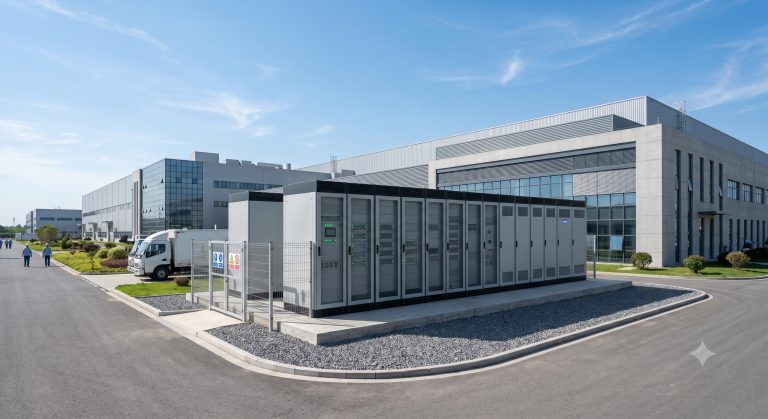
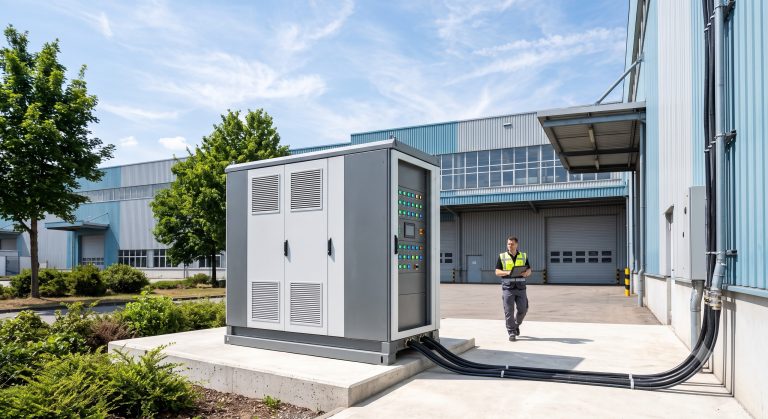
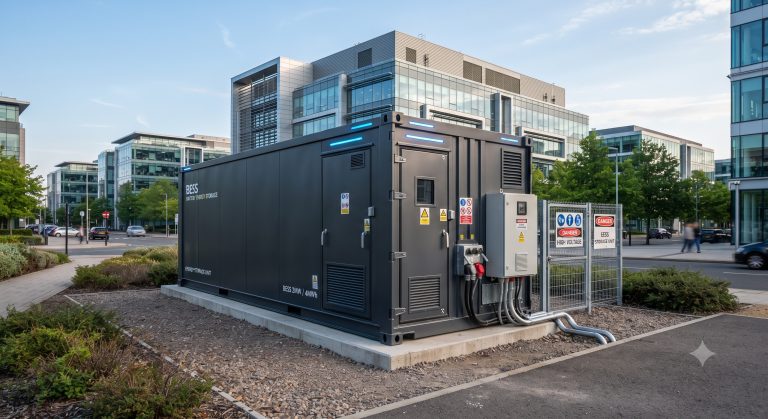
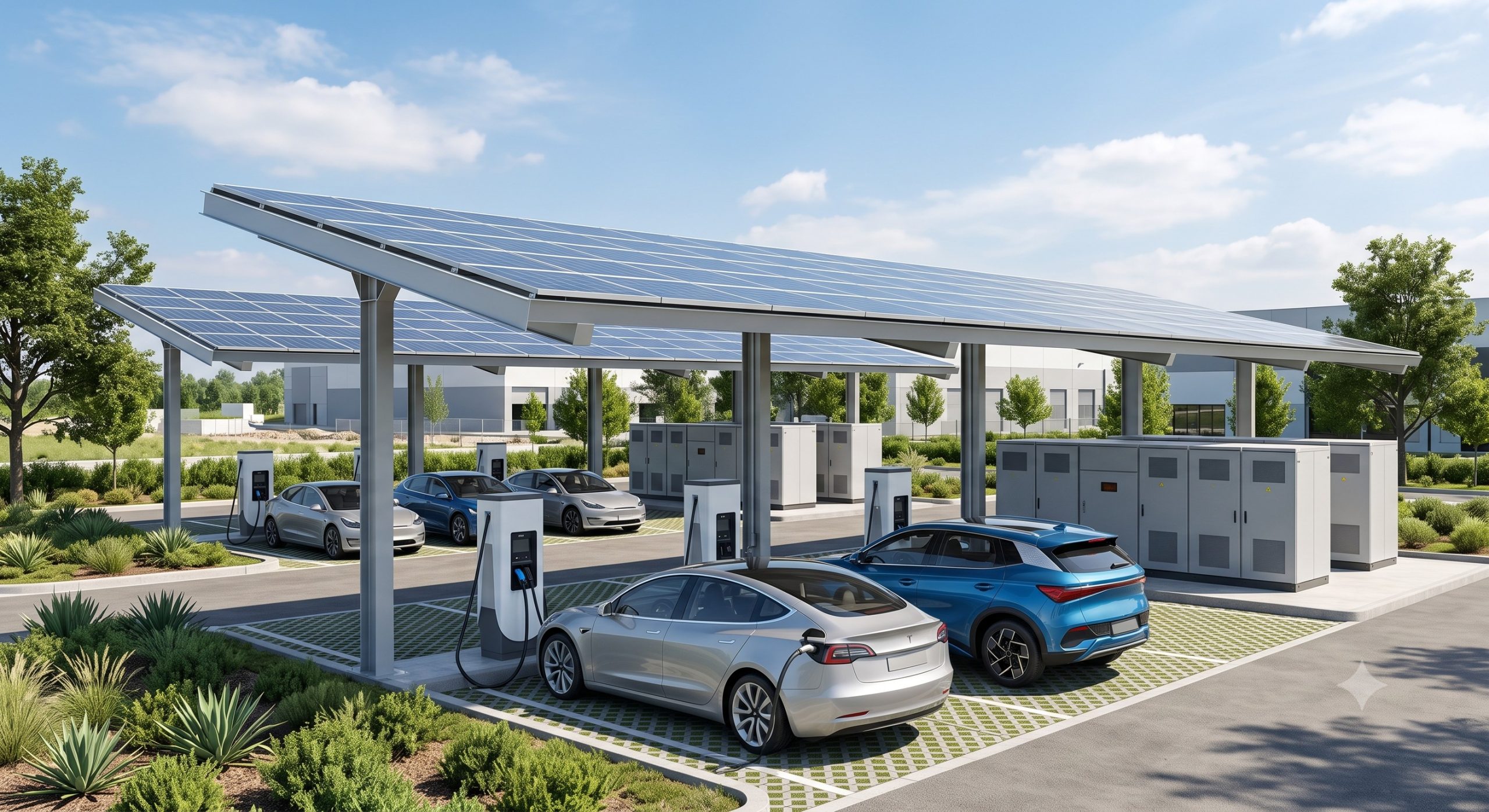
The modularity and scalability of modern hybrid solar inverter battery systems make them ideal for diverse C&I deployment scenarios. In industrial parks, containerized ESS with capacities exceeding 1 MWh provide backup power and energy arbitrage. The integration of PV-Storage-Charging for EV supercharging stations is a prime use case. By pairing solar canopies with high-power hybrid inverters (capable of 30 kW to 60 kW output), facilities can reduce grid stress and offer rapid DC charging for electric vehicle fleets, as demonstrated by PHB Solar’s solutions which integrate with up to 150 kWh of battery storage .
Another critical deployment is for micro-grids in remote or grid-constrained locations. The hybrid solar inverter battery replaces traditional diesel generators, offering a zero-carbon alternative with lower operational costs. Features like generator integration ports (smart load management) allow for hybrid micro-grids where the inverter and battery system optimize solar and battery usage, automatically starting a backup generator only when necessary, preserving autonomy.
Conclusion: Future-Proofing C&I Energy Assets
As global carbon regulations tighten and grid infrastructure ages, the hybrid solar inverter battery stands as the cornerstone of a resilient, cost-effective, and sustainable C&I energy strategy. For B2B buyers, the focus must shift from simple product specifications to evaluating the integrated performance of PCS, BMS, and EMS—with an emphasis on liquid cooling, cycle life, and compliance with standards like UL 9540 and CE. By selecting scalable, smart systems backed by Tier-1 LFP cells and robust warranties, organizations can achieve energy independence, maximize peak-shaving ROI, and position themselves as leaders in the energy transition.