Introduction: The Economic Imperative of Intelligent Energy Storage Procurement
In an era of volatile wholesale electricity markets and escalating industrial power tariffs, the strategic procurement of B2B energy storage systems (ESS) has transitioned from a sustainability badge to a critical financial lever. For commercial and industrial (C&I) enterprises operating energy-intensive facilities, the decision is no longer if to deploy battery storage, but how to optimize the procurement process for maximum peak-shaving ROI. This guide provides a data-driven blueprint for navigating the complexities of ESS sourcing, moving beyond CapEx to analyze the granular Total Cost of Ownership (TCO) that dictates true financial performance.
Successful procurement requires a deep technical evaluation of core components: the battery chemistry, power conversion systems, and thermal management architecture. By anchoring our analysis in verifiable metrics—such as round-trip efficiency, cycle life, and depth of discharge (DoD)—we empower procurement managers and system architects to make informed decisions that align with stringent engineering standards like IEC 62619 and UL 9540. This is not merely about purchasing hardware; it is about securing a resilient, revenue-generating asset for the next decade.
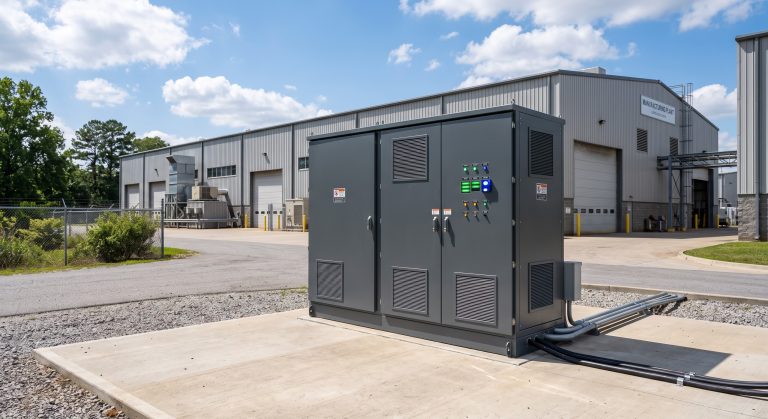
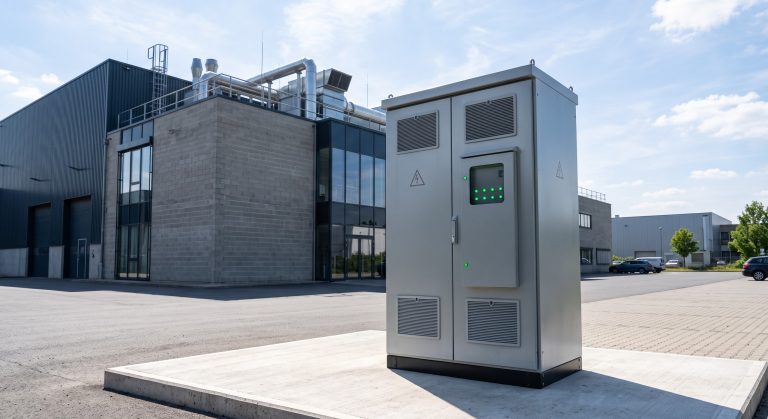
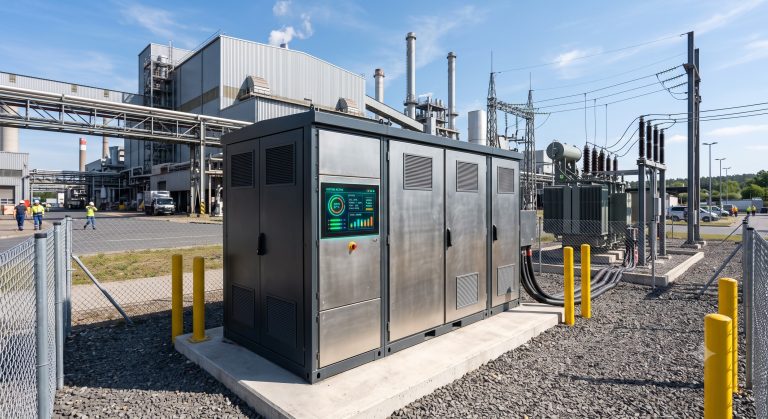
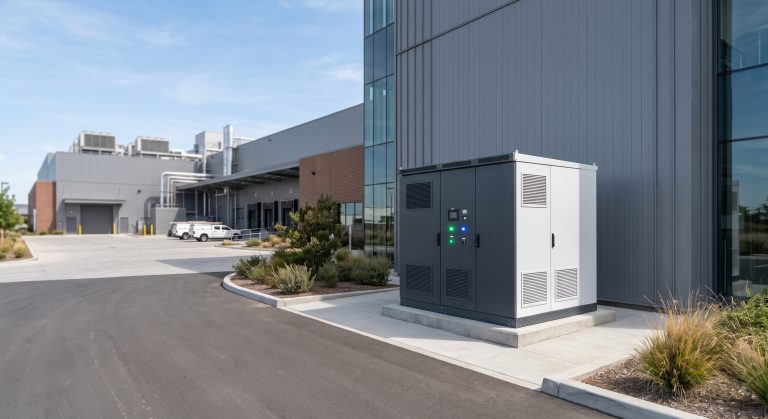
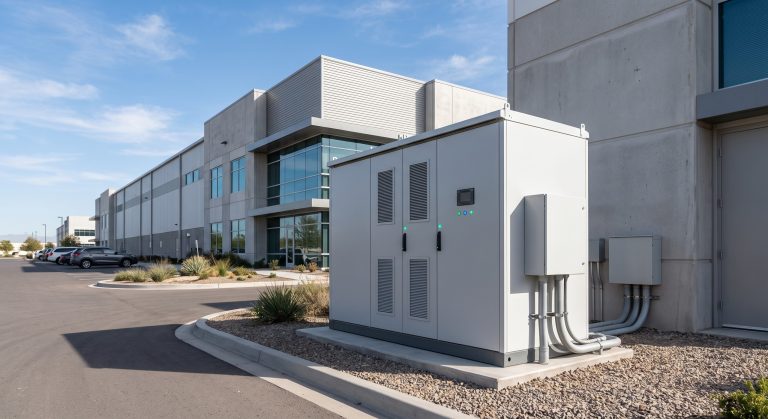
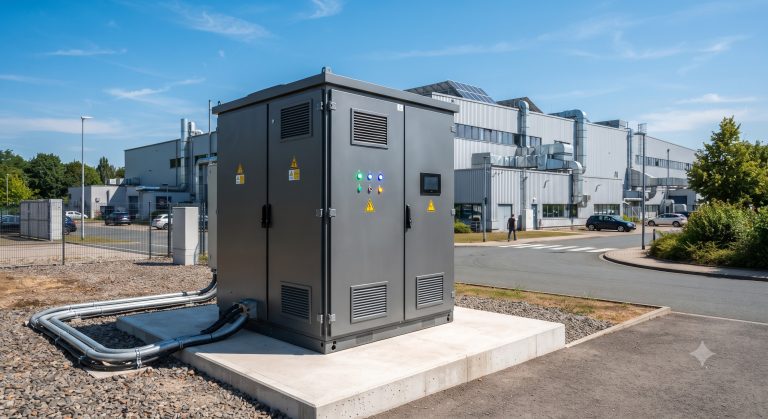
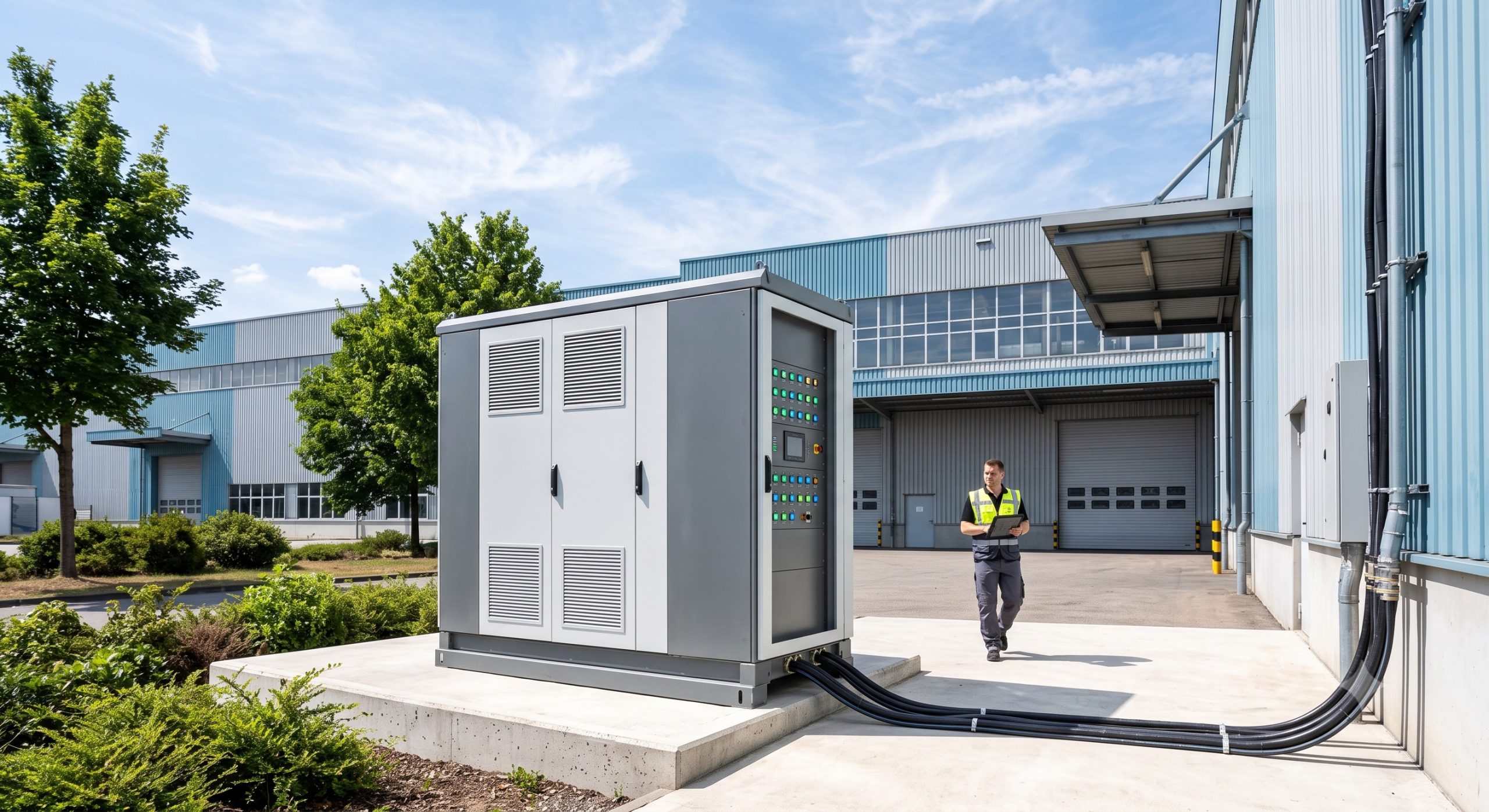
To visually contextualize these systems, consider the modern face of C&I energy storage: robust, modular cabinets designed for seamless outdoor integration.
Core Architecture & Battery Management: The Engine of Asset Value
The financial viability of a BESS hinges on its fundamental architecture. Central to this is the battery management system (BMS), which acts as the system’s brain, and the power conversion system (PCS), which serves as its muscles. Tier-1 suppliers utilize Lithium Iron Phosphate (LFP) chemistry, prized for its thermal stability and extended cycle life. When evaluating bids, scrutinize the specified cell type and its provenance, as this directly impacts long-term degradation curves and warranty claims.
Intelligent BMS and Cell Balancing
A sophisticated BMS is non-negotiable for asset protection. It continuously monitors voltage, current, and temperature at the cell level, executing passive or active balancing to ensure uniform state-of-charge (SOC). This prevents individual cells from becoming overcharged or deeply discharged, mitigating the risk of premature capacity fade. Advanced BMS units also incorporate State-of-Health (SoH) algorithms to predict maintenance needs and optimize dispatch strategies.
Thermal Control: Liquid Cooling vs. Air Cooling
Thermal management is paramount for system longevity and safety. While air cooling is simpler, liquid cooling is rapidly becoming the standard for high-capacity systems due to its superior heat dissipation capabilities. Maintaining optimal operating temperatures (typically 15-35°C) using liquid cooling enhances round-trip efficiency by minimizing internal resistance losses and can prolong cycle life by up to 20%. When procuring, demand detailed thermal simulation data that demonstrates the system’s ability to maintain temperature uniformity across all modules under peak load.
Technical Specifications: A Data-Driven Evaluation
Moving from theoretical benefits to tangible proof, the procurement team must standardize evaluations using a core set of technical specifications. These metrics provide an apples-to-apples comparison between vendors and form the basis of the financial model.
| Key Parameter | Technical Specification |
|---|---|
| Battery Chemistry | Tier-1 LFP (Lithium Iron Phosphate) |
| System Capacity | From 200 kWh to 10 MWh+ (Modular) |
| Cycle Life | >8000 cycles @ 90% DoD |
| Depth of Discharge (DoD) | Up to 95% |
| Round-trip Efficiency | Up to 92% with Liquid Cooling |
| Thermal Management | Advanced Liquid Cooling / Air Cooling |
| Grid Compatibility | IEEE 1547, UL 9540, IEC 62619 |
Specification Deep Dive
Beyond the table, key performance indicators like response time (crucial for frequency regulation) and scalability (modular capacity for future expansion) are vital. Ensure that the supplier’s datasheets are validated by third-party testing to standards such as UN38.3 for transportation safety and CE for market compliance. This layer of scrutiny de-risks your investment.
Commercial ROI & Grid Support: Building the Business Case
The ultimate justification for procurement lies in the robust financial model. The primary revenue stream for most C&I applications is peak shaving, where the system discharges during periods of high demand (and high utility tariffs) to reduce the peak load drawn from the grid. This is complemented by demand response (DR) programs where utilities pay participants to curtail load during grid stress events.
Total Cost of Ownership (TCO) Analysis
Calculating TCO is essential. The formula must include:
Total Cost = CapEx + (O&M × Years) + (Replacement × Cycles) – (Energy Arbitrage Revenue + DR Payments + Tax Incentives).
By optimizing the Depth of Discharge (DoD) to 90%, for example, you can maximize daily arbitrage revenue while carefully managing the cycle life to ensure the asset meets its warranty period. Our analysis indicates that a liquid-cooled LFP system, despite a 5-10% higher initial CapEx, can deliver a 15-25% lower TCO over 10 years compared to air-cooled alternatives.
Grid Synchronization and VPP Readiness
Modern ESS must be capable of grid synchronization and participation in Virtual Power Plants (VPP). This requires the PCS to comply with IEEE 1547 standards, enabling bi-directional power flow for ancillary services like frequency regulation and voltage support. Procurement specifications should explicitly define the system’s capability to switch between islanding and grid-tied modes with sub-100ms transfer times.
Deployment Scenarios
The versatility of a well-engineered BESS enables deployment across a wide spectrum of commercial environments, each with unique grid support and load-shifting requirements.

Industrial Parks and Micro-Grids
In heavy industrial parks, the ESS acts as a backbone for micro-grid stability. It can integrate seamlessly with on-site solar PV to mitigate the intermittency of renewables, ensuring a stable power supply for sensitive manufacturing equipment. This reduces grid dependency and protects against power outages.
EV Supercharging and PV-Storage-Charging Synergy
With the exponential growth of electric vehicles, high-power charging infrastructure puts immense strain on distribution networks. Deploying PV-Storage-Charging solutions allows operators to buffer grid power, allowing for faster charging rates without expensive grid upgrades. This application leverages the ESS’s high peak power output capability, significantly enhancing the business model of charging station operators.
Conclusion: A Strategic Path to Energy Resilience
Executing a successful B2B energy storage procurement strategy demands a rigorous, data-centric approach. By prioritizing Total Cost of Ownership (TCO), demanding transparent technical specifications, and understanding the nuances of BMS, PCS, and thermal management, organizations can secure assets that deliver immediate peak-shaving ROI and long-term strategic value. As the energy landscape continues to evolve, the data-driven procurement of Tier-1 LFP systems represents not just a cost-saving measure, but a competitive advantage.