Introduction
As the global transition to electric mobility accelerates, the commercial viability of EV charging infrastructure hinges on a critical yet often overlooked component: the EV charging plug. For B2B procurement managers, project developers, and energy storage system (ESS) integrators, the choice of charging connector is not merely a matter of compatibility; it is a strategic decision that impacts total cost of ownership (TCO), grid integration capabilities, and long-term asset performance. This guide provides an authoritative, data-driven analysis of the EV charging plug ecosystem, focusing on technical architectures, life cycle costing, and the synergies with commercial energy storage systems (C&I ESS) for peak shaving and grid support. We will dissect global standards from IEC 62196 to SAE J1772 , evaluate performance metrics such as cycle life and round-trip efficiency, and offer a blueprint for optimizing your commercial energy infrastructure.
Core Architecture & Battery Management: The Nexus of EV Charging and ESS
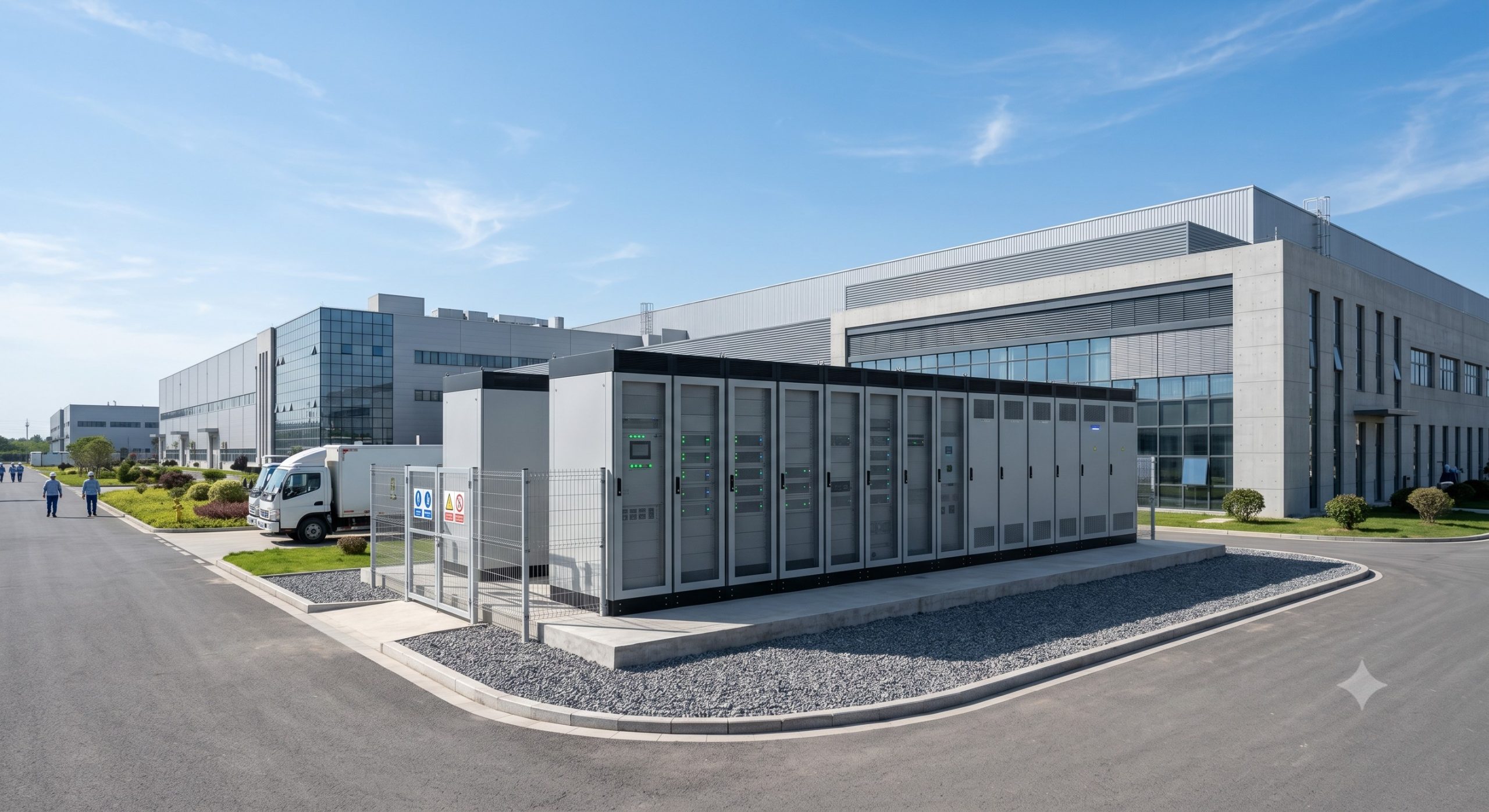
The integration of EV charging with commercial energy storage represents a paradigm shift in facility energy management. At the heart of this synergy lies the EV charging plug, which serves as the physical and communicative interface between the grid, the battery energy storage system (BESS), and the electric vehicle.
PCS and BMS Integration
In a typical C&I micro-grid, the Power Conversion System (PCS) acts as the bi-directional gateway, converting AC from the grid to DC for battery storage and vice versa. When deploying an EV supercharging station, the Battery Management System (BMS) plays a pivotal role in ensuring that the high-current DC output from the BESS is delivered safely and efficiently through the EV charging plug. Advanced BMS architectures monitor cell voltage, temperature, and state of charge (SOC) in real-time, interfacing with the PCS to modulate output based on the specific requirements of the charging standard (e.g., CCS1, CCS2, or CHAdeMO). This integration is critical for maintaining battery health, as the high power demands of DC fast charging (>150 kW) can significantly impact the cycle life of the storage system.
Thermal Management: Liquid Cooling vs. Air Cooling
Thermal control is paramount in high-power charging scenarios. The IEC 62196-1:2025 standard specifies that DC connectors must handle currents up to 800 A at 1,500 V, generating substantial heat . To mitigate thermal stress, advanced C&I storage solutions employ liquid cooling systems for both the BESS and the charging cables. Unlike air cooling, liquid cooling offers superior thermal conductivity, ensuring that the EV charging plug and its internal contacts remain within optimal temperature ranges (typically below 50K rise above ambient). This not only prolongs the lifespan of the connector but also enhances safety, reducing the risk of thermal runaway in the adjacent battery systems . For procurement professionals, specifying liquid-cooled PCS and connectors is essential for ensuring high round-trip efficiency and maintaining a cycle life exceeding 8,000 cycles at a 90% Depth of Discharge (DoD).
EMS Dispatch Logic for Demand Response
The Energy Management System (EMS) is the brain behind the operation. It utilizes advanced algorithms to flatten load curves by orchestrating charging schedules based on dynamic electricity pricing. By integrating data from the EV charging plug (e.g., vehicle connection status, communication protocols via ISO 15118), the EMS can implement demand response strategies. During peak tariff periods, the EMS can prioritize discharging the BESS to the grid or slow the charging rate of vehicles, reducing the facility’s peak demand charges. This smart dispatch capability is directly tied to the LCOE (Levelized Cost of Energy), allowing facilities to amortize their BESS investment more rapidly by capturing utility incentives.
Technical Specifications: A Deep Dive into Key Parameters
For B2B sourcing, evaluating the technical specs of an EV charging plug and its associated storage system is critical. Below are the key performance indicators (KPIs) that determine system efficacy and ROI.
| Key Parameter | Technical Specification |
|---|---|
| Battery Chemistry | Tier-1 LFP (Lithium Iron Phosphate) |
| Cycle Life | >8000 cycles @ 90% DoD |
| Round-trip Efficiency | >92% (with liquid cooling) |
| System Voltage (DC) | Up to 1,500 V (IEC 62196-1) |
| Max Current (DC) | Up to 800 A (High-power charging) |
| Cooling System | Liquid Cooling (Integrated PCS & Charger) |
| Safety Compliance | UL 9540, IEC 62619, CE, UN38.3 |
| Communication | ISO 15118 (Plug & Charge), Modbus, CAN |
Detailed Parameter Analysis
The table above outlines the baseline specifications for a high-performance C&I storage system compatible with modern EV charging. However, a deeper analysis reveals the importance of specific metrics:
- Battery Chemistry & Cycle Life: Tier-1 LFP (Lithium Iron Phosphate) cells are preferred for their thermal stability and longevity. A system demonstrating >8000 cycles at 90% DoD ensures that the asset remains productive for over a decade, directly influencing the amortization schedule and reducing CapEx over the project’s lifetime .
- Round-Trip Efficiency: A >92% round-trip efficiency guarantees minimal energy loss during the charge/discharge cycle. This is crucial for peak shaving, as the cost of electricity stored must be lower than the grid price at peak times. Liquid cooling aids in maintaining this efficiency by reducing internal resistance and heat generation.
- Compliance & Safety: The EV charging plug must adhere to stringent safety standards. For global deployment, look for IEC 62196-1 (general requirements), IEC 62196-2 (AC compatibility), and IEC 62196-3 (DC compatibility) . Additionally, UL 9540 certification is mandatory for ESS integration in North America, covering fire safety and BMS functionality . UN38.3 is required for the safe transport of lithium batteries, ensuring that the cells used in the BESS are certified for shipping and handling.
Commercial ROI & Grid Support: Quantifying the Business Case
From a commercial perspective, the deployment of an EV charging plug integrated with a BESS offers a compelling value proposition beyond mere operational capability. The primary drivers of ROI are peak shaving and grid support.
Maximizing Peak-Shaving ROI
Commercial and industrial (C&I) facilities often face exorbitant demand charges for electricity consumed during peak hours. By deploying a BESS with a smart EV charging plug, the system can charge the battery during off-peak periods (when electricity is cheaper) and discharge it during peak demand events. This not only powers the EV chargers but also offsets the facility’s baseline load. For example, a facility with a 1 MWh BESS can reduce its peak demand by up to 500 kW, translating to annual savings of tens of thousands of dollars. The Total Cost of Ownership (TCO) analysis must factor in the system capacity (in kWh/MWh), cycle life, and the degradation rate of the LFP cells. A lower degradation rate ensures consistent performance over 10+ years, accelerating the payback period.
VPP Readiness and Frequency Regulation
Beyond internal savings, the integration of the EV charging plug with a BESS enables participation in Virtual Power Plant (VPP) programs and frequency regulation markets. The PCS and EMS can respond to grid signals in milliseconds, providing ancillary services such as frequency response and voltage support. By aggregating multiple C&I sites, fleet operators can sell excess stored energy back to the grid during high-demand events, turning the charging infrastructure into a revenue-generating asset. This capability necessitates an EV charging plug that supports bi-directional power flow (V2G) and advanced communication protocols like ISO 15118, which facilitates Plug & Charge and data exchange .
Deployment Scenarios
The versatility of modern EV charging plugs allows for seamless integration across a variety of high-demand commercial settings.
PV-Storage-Charging Synergy
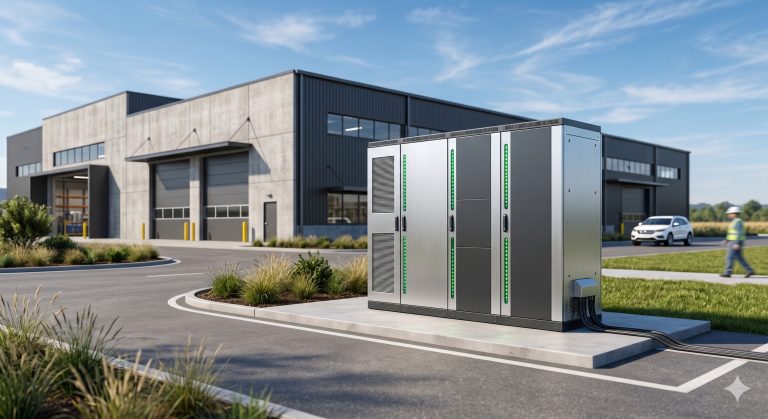
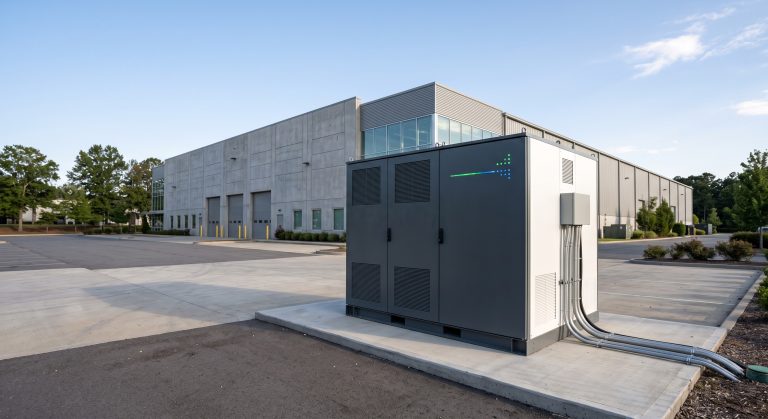
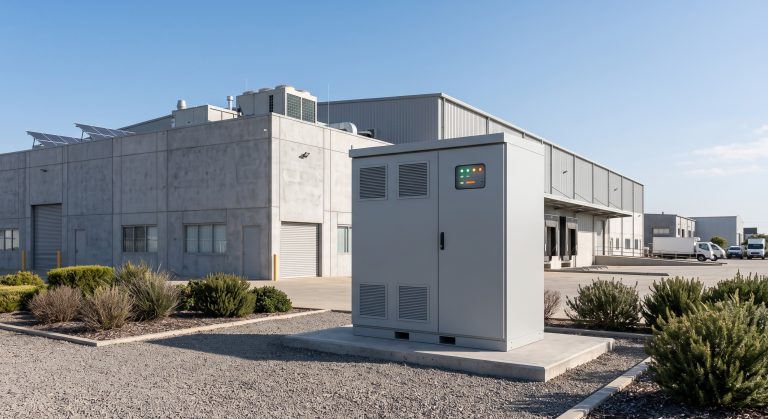
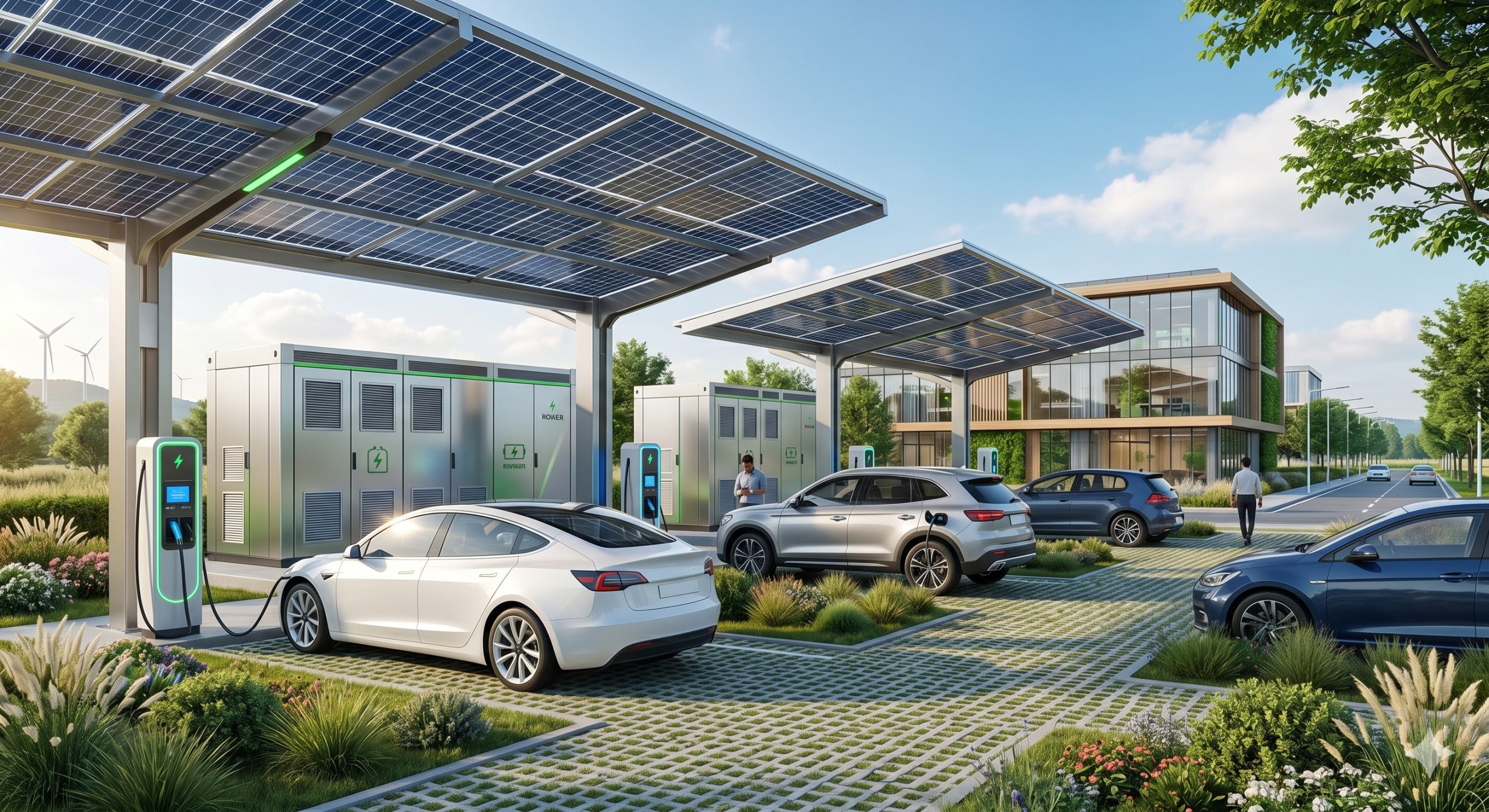
In urban environments and industrial parks, the combination of a PV solar canopy, a BESS, and an EV charging station represents the pinnacle of zero-carbon migration. The EV charging plug acts as the final node in this trinity. During the day, solar panels generate renewable energy, which is stored in the BESS. The EMS then intelligently dispatches this power through the EV charging plug to supercharge electric vehicles, ensuring that the facility operates independently of the grid during peak hours. This setup is ideal for fleet depots, logistics hubs, and commercial retail spaces, reducing carbon footprints while providing reliable, resilient power. The use of modular, containerized BESS cabinets allows for easy scalability, accommodating the future growth of EV fleets.
High-Capacity Sizing for MWh-Scale Deployments
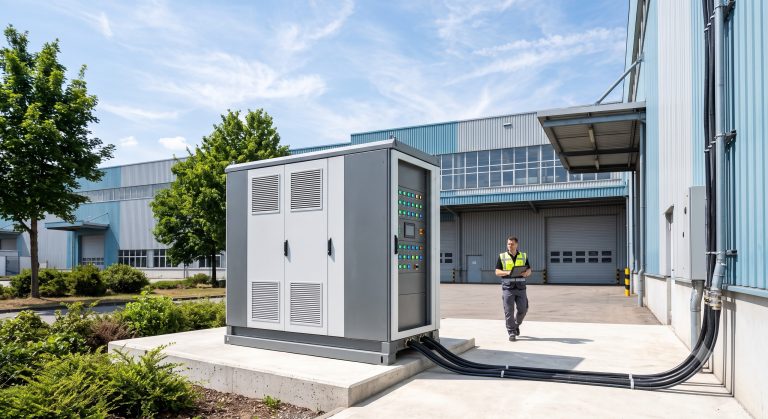
For large-scale industrial applications, such as e-truck depots or cargo ports, MWh-scale deployments are necessary. These sites require high-power EV charging plugs capable of handling MCS (Megawatt Charging System) standards. The architecture involves multiple BESS cabinets linked in parallel via a busbar, feeding into a central PCS. The charging plug in this scenario must support exceptionally high currents and incorporate robust thermal management (liquid cooling) to ensure safety and performance. When sourcing for such projects, look for turnkey delivery solutions that include pre-commissioning at the factory (FAT) and on-site support (SAT) to ensure compliance with local grid codes and safety regulations .
Conclusion
The EV charging plug is far more than a simple cable; it is a sophisticated engineering component that sits at the intersection of renewable energy storage, grid stability, and commercial ROI. For B2B buyers and system architects, a deep understanding of the technical standards (IEC 62196, UL 9540), performance metrics (cycle life, round-trip efficiency), and integration strategies (PV-Storage-Charging, VPP) is essential for making informed procurement decisions. By prioritizing liquid-cooled architectures, Tier-1 LFP cells, and smart EMS dispatch, commercial enterprises can future-proof their assets, achieve peak-shaving savings, and lead the charge toward a decarbonized, energy-independent future.