Introduction: The Economic Imperative of Peak Shaving in a Volatile Energy Market
For commercial and industrial (C&I) facility managers, the monthly utility bill is often the second largest operational expense, second only to payroll. Within that bill, demand charges—the penalties incurred for drawing high bursts of power from the grid during peak hours—can account for up to 40% of total electricity costs. Peak shaving energy storage, a strategic application of Battery Energy Storage Systems (BESS), has emerged as the definitive engineering solution to mitigate these charges, enhance energy resilience, and participate in lucrative grid service markets. Unlike traditional backup systems that merely wait for a power outage, a sophisticated peak shaving ESS actively dispatches stored energy to flatten the facility’s load curve, reducing both energy consumption costs and peak demand charges.
As global electricity prices surge and grid infrastructure strains under increasing loads, the B2B market for commercial energy storage is projected to grow at a CAGR of over 25% through the next decade. This comprehensive guide serves as a technical and commercial roadmap for procurement managers, system architects, and operations directors evaluating peak shaving energy storage solutions. We will dissect the core architecture—from the battery chemistry to the power conversion system—and provide a granular look at the financial modeling that justifies this capital expenditure. We will also address the critical safety and compliance standards that non-negotiable for any deployment, ensuring your investment is both profitable and future-proof.
Core System Architecture & Battery Management: The Engine of Peak Shaving
Understanding the hardware and software stack is the first step in selecting a high-performance peak shaving energy storage system. At its core, a commercial BESS is an orchestrated symphony of power electronics, electrochemical cells, and thermal management systems, all governed by an intelligent brain.
Battery Chemistry: The Dominance of Tier-1 LFP Cells
While Nickel Manganese Cobalt (NMC) batteries offer higher energy density, the C&I sector has overwhelmingly standardized on Lithium Iron Phosphate (LFP) chemistry for peak shaving applications. The primary driver is safety and longevity. LFP’s olivine structure provides exceptional thermal and chemical stability, making it inherently resistant to thermal runaway. The cathode material is more abundant and cobalt-free, insulating the BESS supply chain from geopolitical volatility. For peak shaving, which typically involves one to two deep discharge cycles per day, the superior cycle life of LFP—exceeding 8,000 cycles at 90% Depth of Discharge (DoD)—translates to a system lifespan of over 15 years.
PCS Integration: The Bi-Directional Power Converter
The Power Conversion System (PCS) acts as the bridge between the DC energy stored in the battery and the AC power used by your facility and the grid. High-efficiency PCS units, often integrating SiC (Silicon Carbide) MOSFETs, achieve round-trip efficiencies of up to 98%. The PCS intelligently controls the charging and discharging of the battery based on real-time load data from the site. In a peak shaving scenario, when the facility’s load approaches the demand threshold, the PCS instantly discharges the battery at a rate (e.g., 500kW, 1MW) to supplement the grid supply, effectively capping the peak demand at a pre-set target.
EMS Dispatch Logic: The Strategic Brain
The Energy Management System (EMS) is the software layer where peak shaving strategies are optimized. Advanced EMS platforms utilize machine learning algorithms to predict facility load profiles and electricity pricing signals. The EMS can be configured to prioritize multiple revenue streams: reducing demand charges, arbitraging time-of-use (TOU) utility rates, and participating in demand response (DR) programs offered by grid operators. A truly smart EMS does not simply discharge at a fixed time; it dynamically adjusts the dispatch schedule to maximize the Total Cost of Ownership (TCO) savings over the system’s lifetime.
Technical Specifications & Compliance Standards
When evaluating peak shaving energy storage vendors, technical specifications are the only basis for a fair comparison. Beyond basic capacity, procurement teams must scrutinize thermal management, safety certifications, and performance guarantees. The following table outlines the key metrics that define a world-class commercial BESS.
| Key Parameter | Technical Specification |
|---|---|
| Battery Chemistry | Tier-1 LFP (Lithium Iron Phosphate) |
| System Capacity | Customizable (e.g., 500kWh to 5MWh per container) |
| Cycle Life | >8,000 cycles @ 90% DoD (Depth of Discharge) |
| Round-trip Efficiency | ≥ 94% (AC/AC), >98% PCS conversion efficiency |
| Thermal Management | Advanced Liquid Cooling (Water-Glycol) or Intelligent Air Cooling |
| PCS Topology | Bi-directional, 3-Level IGBT/SiC technology |
| Safety Certifications | UL 9540, IEC 62619, CE, UN38.3 |
| BMS Protocol | Active cell balancing with ±5mV voltage accuracy |
| EMS Communication | Modbus TCP/IP, IEC 61850 for smart grid integration |
| Fire Suppression | Aerosol or Novec 1230 multi-level system |
Thermal Control: Liquid Cooling vs. Air Cooling
Thermal management is critical for maintaining cell-to-cell temperature uniformity and ensuring cycle life. While air cooling has been the traditional standard, liquid cooling technology is rapidly becoming the benchmark for high-performance peak shaving systems. Liquid cooling, using water-glycol mixtures, is 10 to 15 times more efficient at transferring heat than air. It enables tighter temperature control within the battery pack, typically within a ±2°C range between cells, preventing accelerated degradation and reducing the risk of hotspots. This superior thermal uniformity directly translates to higher system availability and a slower rate of capacity fade over the system’s lifetime.
Mandatory Safety & Compliance Certifications
Any BESS deployed in a commercial or industrial setting must have rigorous third-party certifications. UL 9540 is the standard for safety of energy storage systems and equipment in North America, covering fire and explosion hazards. IEC 62619 is the international standard for the safety requirements of secondary lithium cells and batteries for use in industrial applications. For shipping and logistics, UN38.3 certification is mandatory to ensure the transport safety of the lithium-ion batteries. Additionally, look for CE marking which indicates compliance with European health, safety, and environmental protection standards. A reputable manufacturer will offer a complete list of certifications and provide transparent documentation for Factory Acceptance Testing (FAT) and Site Acceptance Testing (SAT).
Commercial ROI, LCOE, and Grid Support
The business case for peak shaving energy storage is grounded in a clear financial analysis. The primary revenue stream is the reduction of demand charges. For a facility with a peak demand of 2,000 kW, using a 1,000 kW/2,000 kWh BESS to shave the peak by 500 kW on a recurring basis can yield annual savings of over $100,000, depending on the local utility’s rate structure. When combined with energy arbitrage (charging when energy is cheap at night and discharging during expensive peak periods), the internal rate of return (IRR) for these projects often exceeds 20%.
The Levelized Cost of Storage (LCOE) is the definitive metric for comparing different energy storage technologies. For LFP-based peak shaving systems, the LCOE has fallen dramatically due to the declining cost of raw materials and increased energy density. Currently, a well-engineered system can achieve an LCOE of $0.08 to $0.12 per kWh cycled, making it highly competitive with grid electricity prices during peak hours. Furthermore, grid support services, such as frequency regulation and voltage support, can add additional revenue streams. By participating in a Virtual Power Plant (VPP) network, a fleet of peak shaving systems can be aggregated and dispatched by a utility to provide grid stability, generating recurring revenue for the system owner.
Deployment Scenarios: Maximizing Versatility in the C&I Sector
The versatility of peak shaving energy storage allows it to be deployed in a wide range of C&I environments, each with unique energy profiles. The following are high-impact deployment scenarios where this technology delivers exceptional value.

Industrial Parks & Manufacturing Facilities
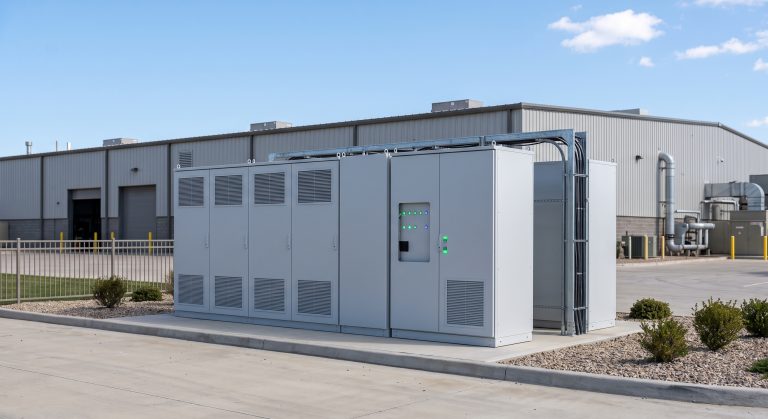
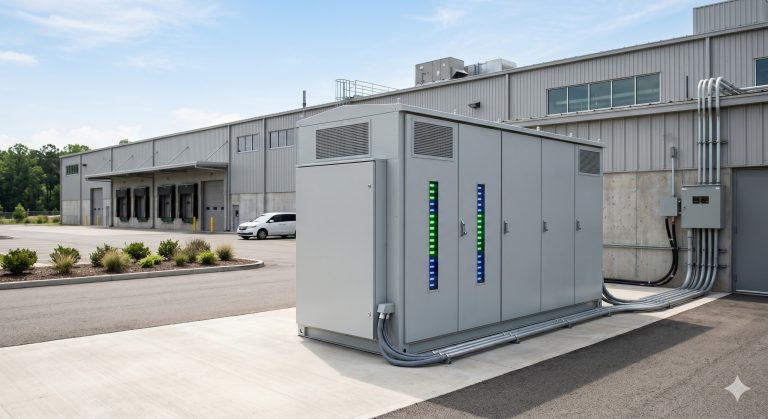
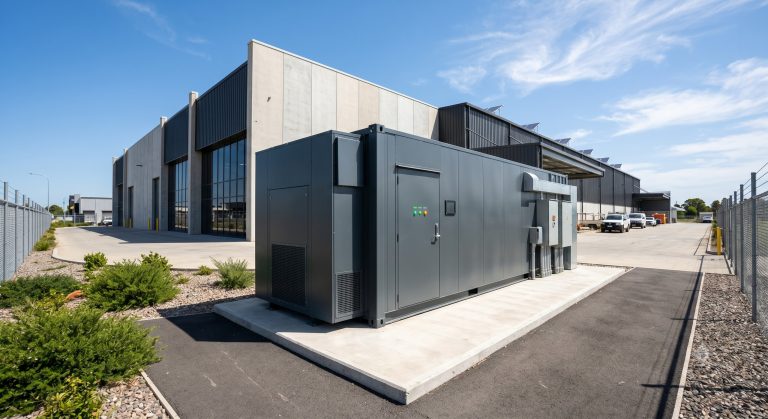
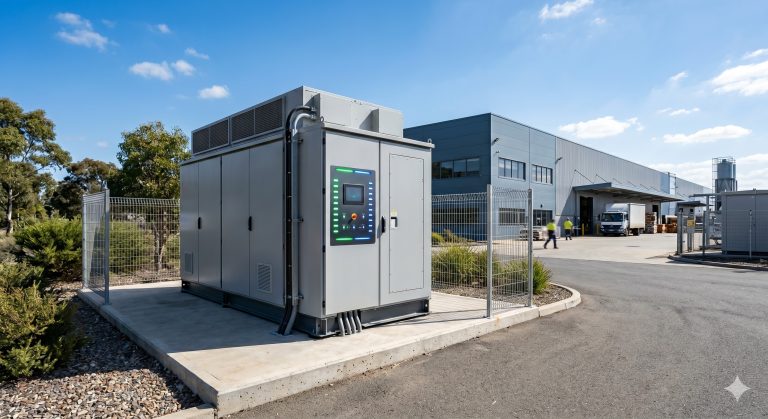
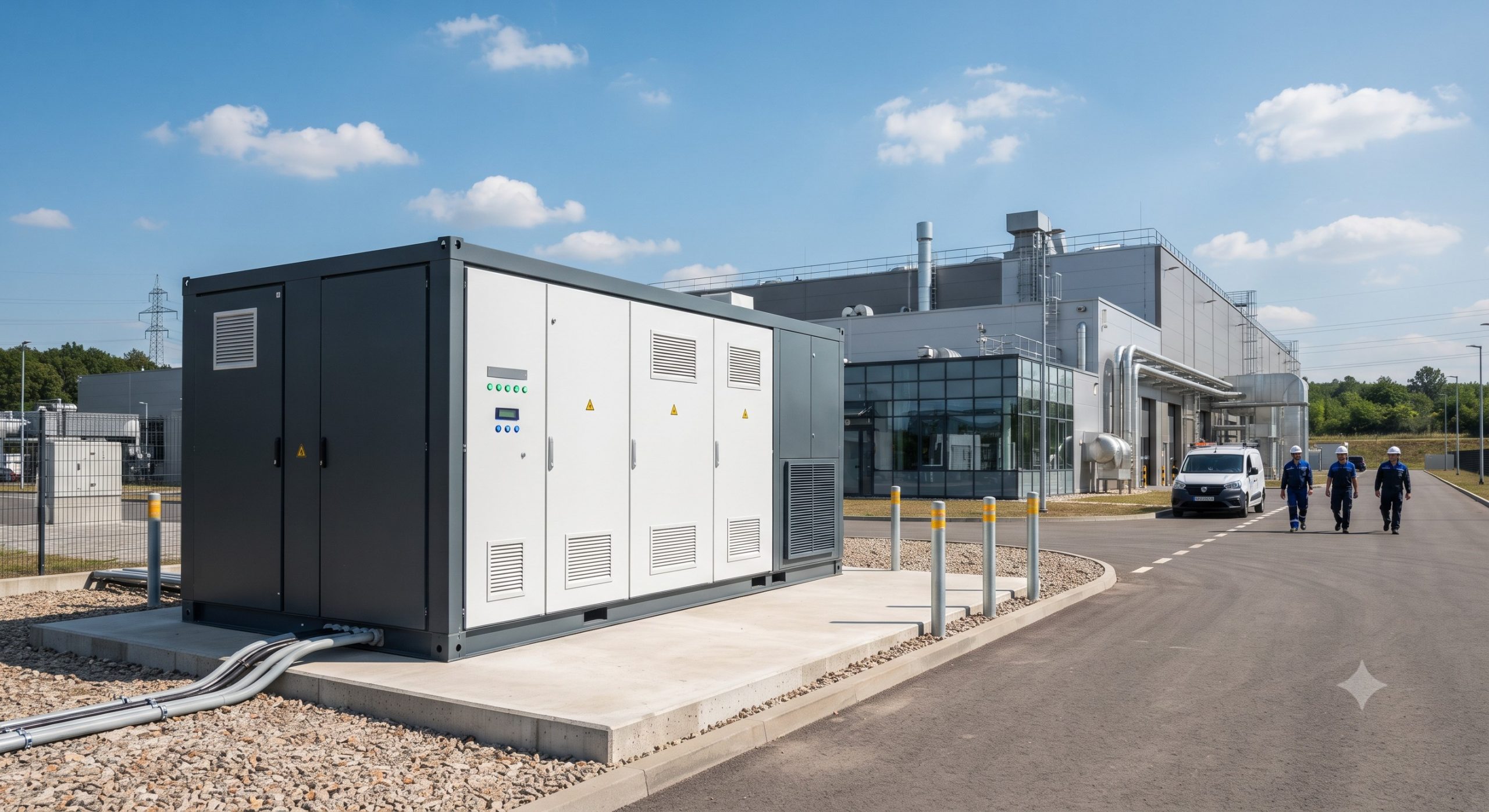
These sites are characterized by heavy machinery and continuous production lines, resulting in massive and often unpredictable demand spikes. A modular, containerized BESS can be installed adjacent to the main electrical room. The EMS is programmed to monitor the main utility meter and discharge the battery precisely when the total facility load exceeds a pre-set maximum demand limit, ensuring production is never interrupted by demand penalties.
PV-Storage-Charging Synergy at EV Supercharging Stations
As the transition to electric vehicles accelerates, the demand for ultra-fast EV charging is creating new grid challenges. A peak shaving energy storage system can be integrated with a solar canopy to buffer the extreme power draws of EV chargers. When an EV pulls up and requests a 350 kW charge, the BESS can supply the majority of that power, shaving the peak draw on the local grid transformer. This not only reduces demand charges but also enables the installation of more superchargers at a single site without costly utility infrastructure upgrades.
Data Centers & Critical Infrastructure
Data centers require an ultra-reliable power supply. A peak shaving BESS with built-in UPS (Uninterruptible Power Supply) functionality provides both economic and resilience benefits. The system can shave the peak demand from cooling equipment, while simultaneously providing a clean, instantaneous backup power bridge in the event of a grid disturbance. The advanced liquid cooling ensures the battery remains at an optimal operating temperature even under the high-heat loads typical of a data center environment.
Conclusion: The Strategic Business Case for Peak Shaving Energy Storage
For forward-thinking C&I enterprises, peak shaving energy storage is no longer an experimental technology but a proven, bankable asset. It represents a paradigm shift from simply consuming energy to actively managing and optimizing it. The data is clear: the combination of accelerating electricity costs, falling battery prices, and the growing value of grid flexibility makes the financial case for peak shaving ESS irrefutable. By investing in a turnkey system that integrates Tier-1 LFP cells, a high-efficiency PCS, and advanced EMS dispatch logic, your facility can unlock significant operational savings, enhance energy security, and contribute to a more sustainable and resilient grid. The key to a successful project lies in thorough due diligence, precise capacity sizing, and selecting a partner with a proven track record in safety, compliance, and long-term system performance.