Introduction: The Energy Independence Imperative
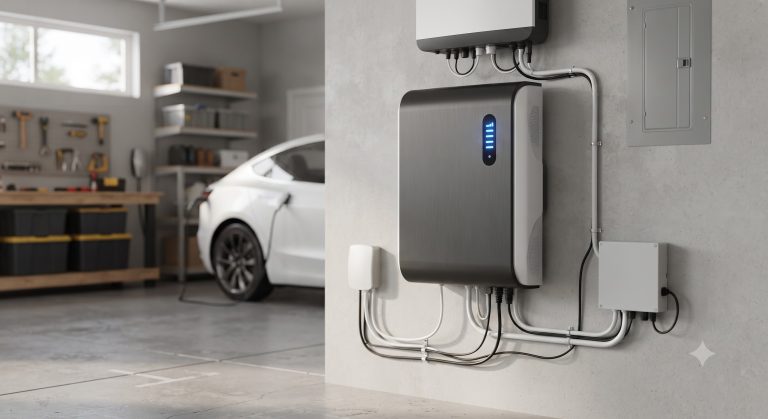
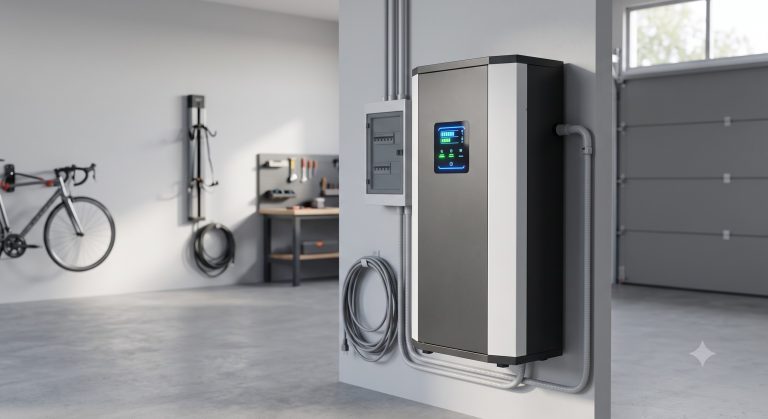
The global energy landscape is undergoing a paradigm shift. With grid instability, rising electricity costs, and a collective push toward decarbonization, the residential sector stands at the forefront of the energy transition. The modern residential off-grid battery system has evolved from a niche backup solution into a sophisticated, grid-forming asset capable of delivering complete energy independence . For B2B buyers, system integrators, and energy consultants, understanding the technical architecture, economic viability, and safety standards of these systems is critical for making informed procurement decisions.
Today’s premium Tier-1 residential off-grid battery solutions are no longer just about storing excess solar energy. They are intelligent, modular energy hubs that integrate LFP battery chemistries, AI-driven energy management, and rapid grid-switching capabilities. This guide provides a comprehensive technical deep-dive into the core metrics, safety compliance, and financial modeling required to source the ideal off-grid battery system for diverse applications, from remote cabins to high-value commercial residences.
Core Architecture & Advanced Battery Management
Power Conversion System (PCS) & Bi-Directional Inverters
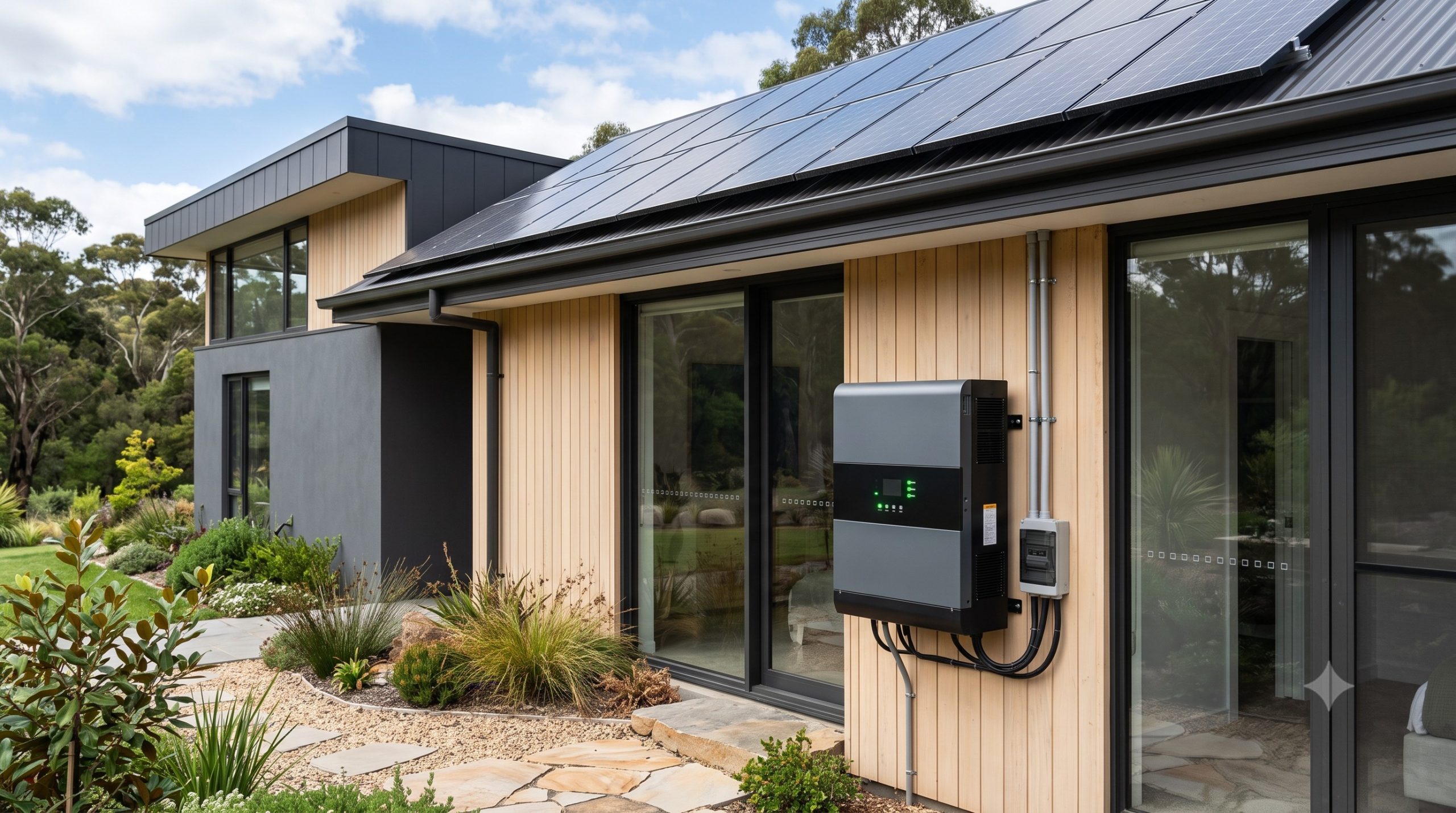
The heart of any residential off-grid battery is the Power Conversion System (PCS). This component dictates the system’s efficiency and its ability to support heavy inductive loads like HVAC units and water pumps. A robust off-grid solution must feature a bi-directional inverter capable of seamless islanding. Specifications from leading manufacturers indicate that modern systems switch from on-grid to off-grid mode in under 10 to 20 milliseconds . This transfer time is crucial for protecting sensitive electronics. For instance, the GoodWe ESA series achieves this transition in less than 4 ms, ensuring uninterrupted operation for computers and Wi-Fi routers .
Battery Chemistry: The Tier-1 LFP Advantage
Sourcing decisions hinge on battery chemistry. The residential off-grid battery market has consolidated around Lithium Iron Phosphate (LFP) due to its superior thermal stability, long cycle life, and lack of cobalt. Systems utilizing 314 Ah LFP cells are becoming standard, offering guaranteed lifespans exceeding 8,000 cycles at high DoD . BYD’s fourth-generation Battery-Box HVB, for example, leverages Blade Battery technology to maximize energy density while maintaining stringent safety standards . From a technical standpoint, LFP provides a safer, more durable backbone for off-grid applications where maintenance access may be limited.
Smart EMS & AI-Driven Optimization
Advanced Energy Management Systems (EMS) are what differentiate a simple battery from a smart energy asset. For B2B procurement, an EMS with AI-driven Time-of-Use (TOU) optimization is non-negotiable. Systems like the Hoymiles HiBattery 4020 Series utilize proprietary AI models to recalculate charging/discharging schedules every three hours based on tariffs, weather forecasts, and consumption patterns . This level of intelligence maximizes self-consumption and minimizes the Levelized Cost of Energy (LCOE), a critical metric for any off-grid investment.
Technical Specifications & Compliance
When evaluating a residential off-grid battery, due diligence requires a thorough review of technical specifications and safety certifications. The following table consolidates the key performance indicators (KPIs) that define a Tier-1 system.
| Key Parameter | Technical Specification | Benefit for Off-Grid |
|---|---|---|
| Battery Chemistry | Tier-1 LFP (Lithium Iron Phosphate) | Thermal stability & >6000 cycle life |
| Useable Capacity | 5 kWh – 90+ kWh (Modular) | Scalable for daily load requirements |
| Round-trip Efficiency | Up to 96%+ | Maximizes PV self-consumption |
| Grid Switching Time | < 10 ms (e.g., SAJ, GoodWe) | Seamless backup power for sensitive loads |
| Safety Standards | UL 9540, IEC 62619, UN38.3 | Ensures fire safety & compliance for insurance |
| AI-EMS Optimization | 3-hour rolling tariff & weather logic | Minimizes LCOE (Levelized Cost of Energy) |
| Operating Temperature | -20°C to 55°C | Reliable performance in harsh climates |
Safety & Compliance Certifications
Safety is the paramount concern for distributed energy storage. B2B buyers must ensure that the residential off-grid battery meets international standards. Compliance with IEC 62619 (safety requirements for industrial batteries), UL 9540 (standard for energy storage systems and equipment), and UN38.3 (transportation safety) is mandatory for insurance and grid interconnection . Additionally, modern units feature multi-layer protection including aerosol-based fire suppression systems, pressure-relief valves, and real-time insulation monitoring to prevent thermal runaway .
Thermal Management Systems
While liquid cooling is dominant in C&I MWh-scale projects, the residential off-grid sector primarily relies on advanced air-cooling or passive thermal management combined with intelligent self-heating functions. This ensures operation in extreme climates ranging from -20°C to 55°C . The ability to operate efficiently in harsh environments is a key differentiator for off-grid systems that may be deployed in remote locations.
Commercial ROI & Total Cost of Ownership
Peak Shaving & Load Management
For high-net-worth residences and off-grid communities, the financial model shifts from grid arbitrage to peak shaving and diesel displacement. In remote areas, diesel generators are often the only alternative. A residential off-grid battery integrated with PV can reduce diesel consumption by up to 85%, significantly lowering the Total Cost of Ownership (TCO). The LCOE of a modern PV + storage system is increasingly competitive with, and often superior to, diesel generators.
Decarbonization & Asset Value
Beyond immediate energy savings, the installation of a residential off-grid battery increases property value and aligns with global Environmental, Social, and Governance (ESG) criteria. The ability to claim energy independence and zero-carbon operations is a powerful asset for luxury developments and eco-resorts.
Deployment Scenarios
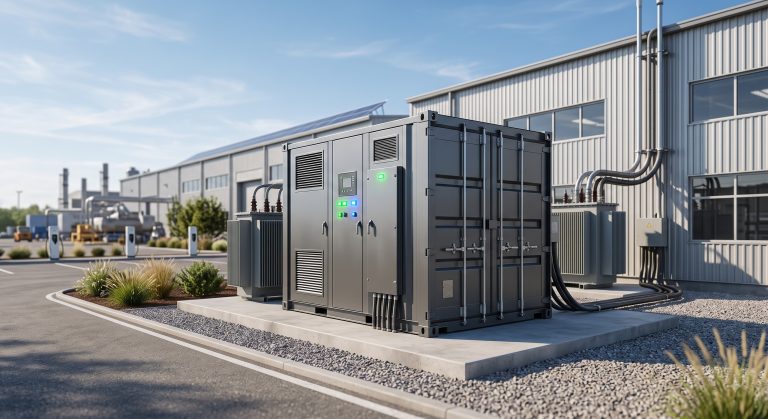
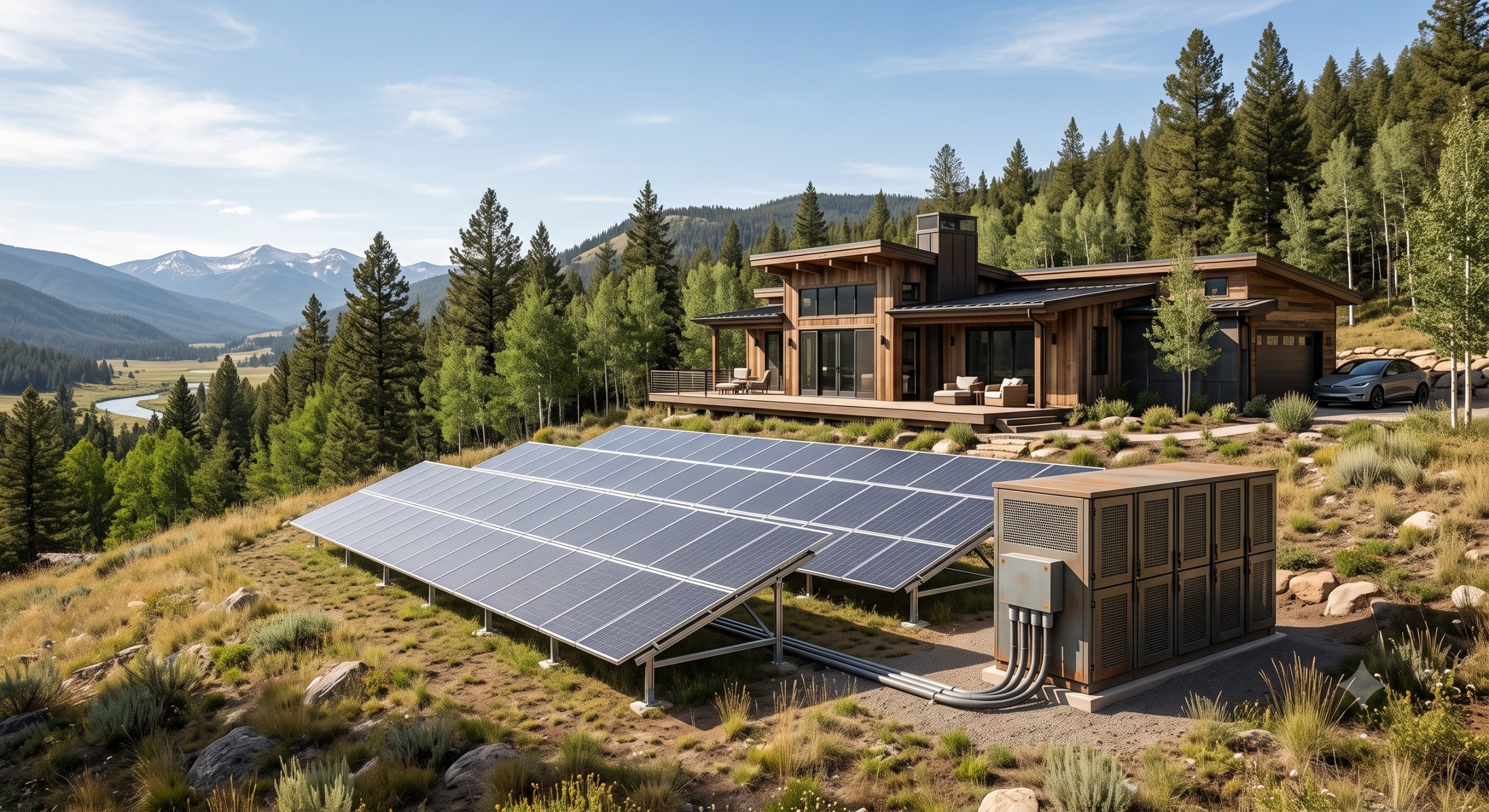
The versatility of modern residential off-grid battery systems allows for deployment across a diverse range of scenarios. From integrating with solar canopies in remote eco-villages to serving as the primary power source for off-grid EV charging stations, the modularity of these systems is key .
Conclusion: The Strategic Imperative
The residential off-grid battery has matured into a high-performance, financially viable, and technologically sophisticated asset. For B2B buyers, the sourcing strategy must prioritize systems with proven LFP chemistry, advanced AI-EMS, and rigorous safety certifications like UL 9540 and IEC 62619. By focusing on total cost of ownership, cycle life metrics, and thermal management, stakeholders can ensure they are investing in resilient, future-proof energy infrastructure that delivers immediate returns and long-term sustainability.