COMMERCIAL SYSTEMS ENGINEERING REFERENCE MANUAL: DATA CENTER UNINTERRUPTIBLE POWER EVOLUTION GUIDE
EXECUTIVE SUMMARY
This reference manual provides a comprehensive engineering overview of next-generation energy storage systems (ESS) specifically architected for the modern data center. As mission-critical facilities transition from traditional UPS topologies to more resilient, sustainable, and economically viable power architectures, our Commercial BESS platform offers a definitive evolution path. This document details the system architecture, core components, and operational advantages of integrating our Tier-1 LFP battery technology with advanced bi-directional PCS and intelligent energy management to deliver unprecedented availability and Total Cost of Ownership (TCO) reduction. The system is engineered to provide seamless UPS functionality, peak shaving, and grid services, all within a compact, outdoor-rated enclosure.
SYSTEM ARCHITECTURE & SAFETY
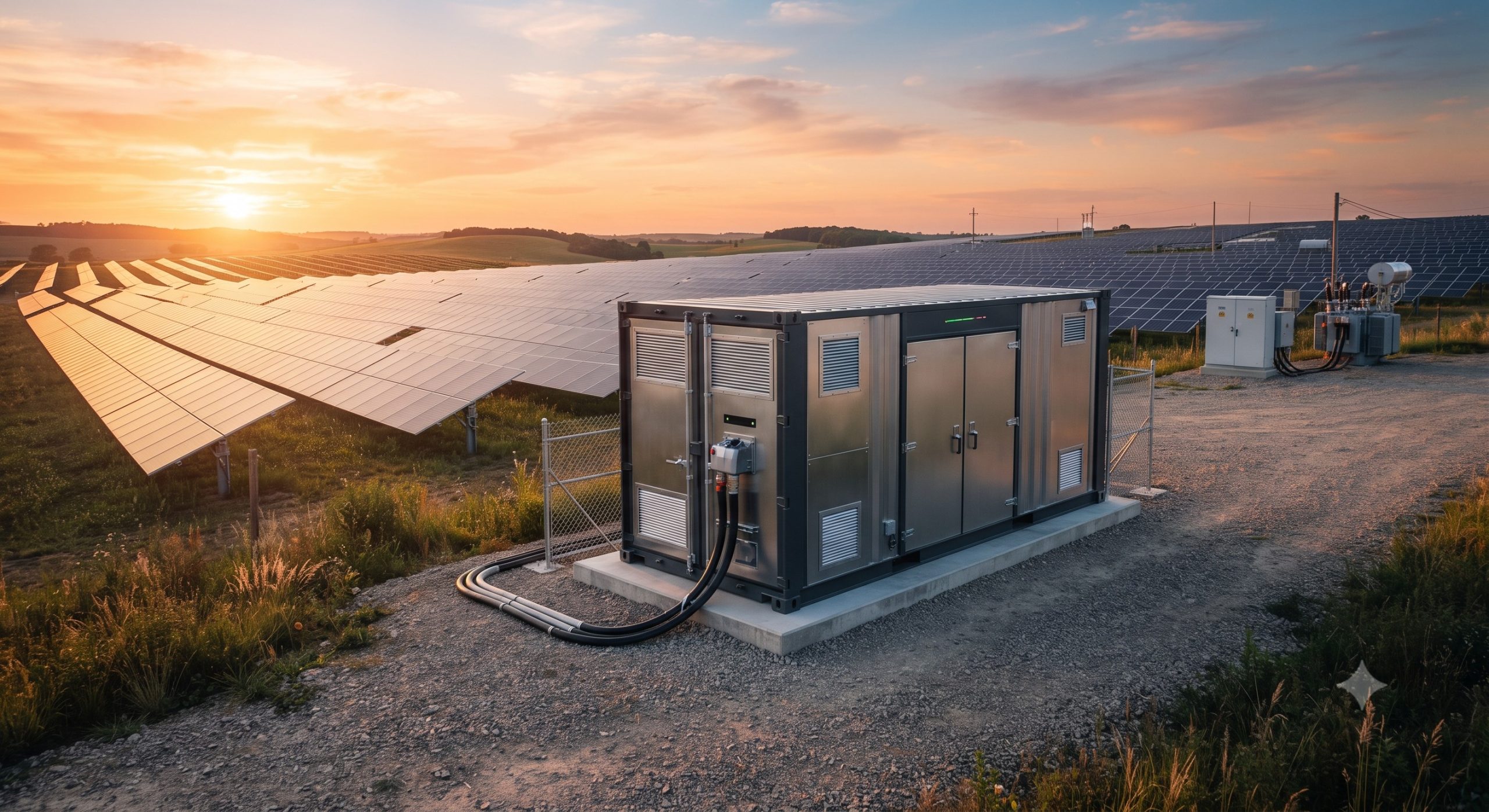
The platform is built around a modular, scalable architecture designed for the stringent requirements of Tier III and Tier IV data centers. The core components are integrated into a single, unified cabinet or containerized solution, minimizing the facility footprint while maximizing power density.
* **Bi-Directional Power Conversion System (PCS):** At the heart of the unit is a high-efficiency, bi-directional inverter that enables seamless transitions between grid-tied and islanded modes. It facilitates ultra-fast transfer times (< 5ms) for UPS-grade protection, ensuring zero downtime for critical loads. The PCS also supports advanced grid-interactive features, such as reactive power compensation and frequency response.
* **Tier-1 LFP Battery Bank:** The system utilizes prismatic Lithium Iron Phosphate (LFP) cells, known for their exceptional thermal and chemical stability. The cells are configured in a high-voltage DC bus architecture to optimize system efficiency and reduce conductive losses. A multi-layered BMS provides cell-level monitoring, balancing, and protection.
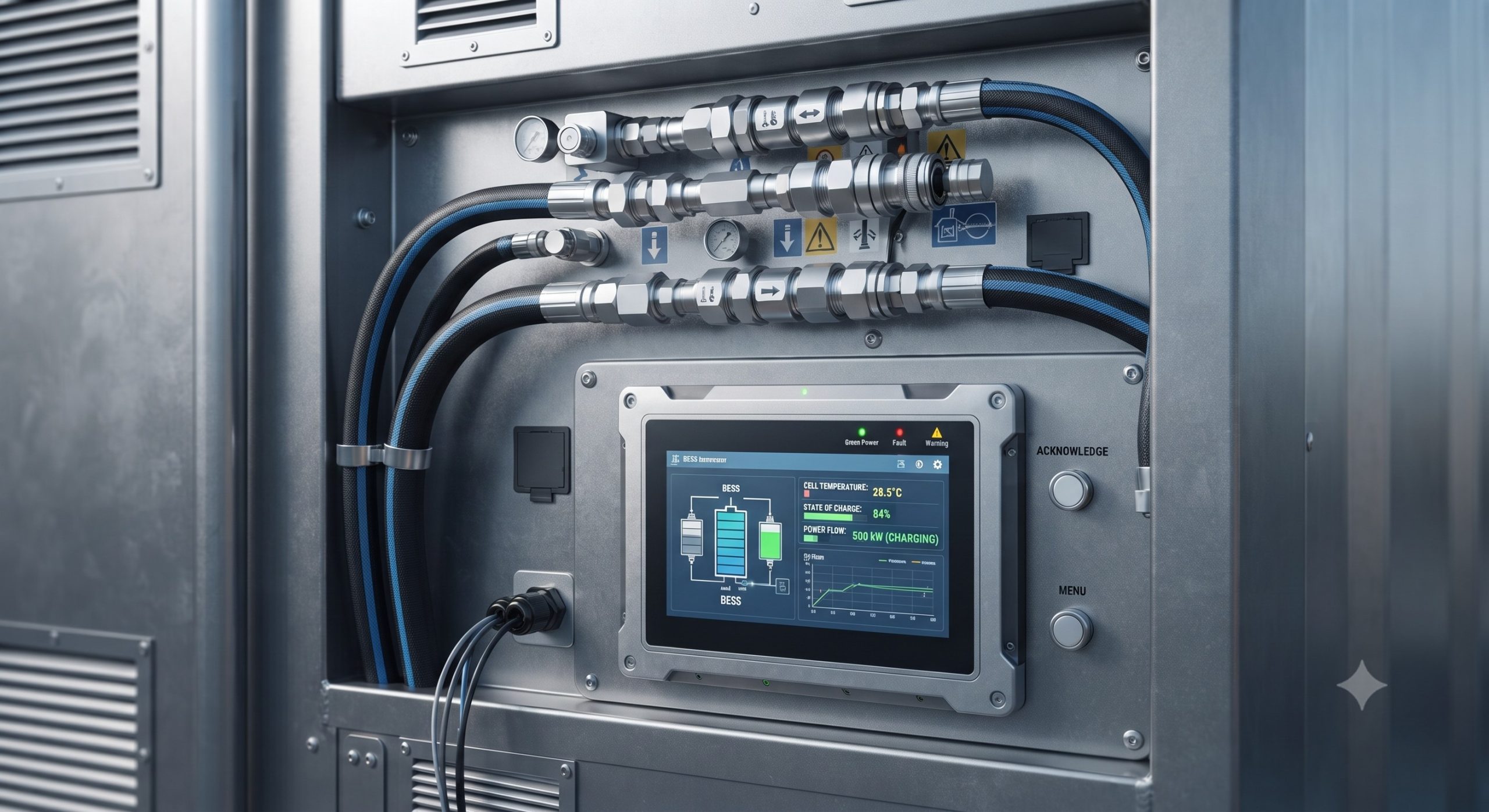
* **Intelligent Battery Management System (BMS):** The BMS is the guardian of the battery bank. It continuously monitors voltage, current, and temperature at the cell level. Its active equalization algorithms ensure that all cells remain balanced, maximizing usable capacity and extending the system's operational lifespan. The BMS communicates critical state-of-charge (SoC) and state-of-health (SoH) data to the EMS.
* **Energy Management System (EMS):** The EMS is the central brain of the system, orchestrating all power flows. It executes complex energy arbitrage, peak shaving, and demand response strategies based on real-time grid signals, facility load, and battery status. The system can be operated locally or integrated into a cloud-based fleet management platform for remote monitoring and control.
KEY FEATURES
- Feature 1: UPS-Grade Seamless Switching: Provides a true seamless transition (<5ms) between grid and battery power, ensuring mission-critical load protection at parity with traditional double-conversion UPS, but with the added benefit of a substantial energy buffer.
- Feature 2: Advanced Liquid Cooling Thermal Management: An integrated liquid cooling loop maintains precise temperature control across all battery cells. This system ensures optimal operating temperatures, preventing hotspots, enhancing long-term cycling stability, and extending the lifetime of the LFP cells by over 15% compared to air-cooled alternatives.
- Feature 3: Peak Shaving & Energy Arbitrage: The system's high round-trip efficiency (>92%) enables intelligent energy management to reduce peak demand charges and generate revenue by purchasing energy during low-price periods and discharging during high-price periods.
– Feature 4: Multi-Level Fire Safety Suppression: Safety is paramount. The unit is engineered with a multi-layer safety system, including gas detection, aerosol fire suppression, and a hermetically sealed battery compartment to prevent thermal runaway propagation. The design is fully compliant with UL 9540A and NFPA 855 standards.
– Feature 5: Modular & Scalable DC Busbar Architecture: The system is designed for easy capacity expansion. Multiple units can be paralleled on a common DC busbar to scale power and energy capacity, allowing the data center to grow its backup and load-shifting capabilities without overhauling the core infrastructure.
COMPLIANCE & STANDARDS
The system is engineered and certified to meet the most rigorous global standards for safety, performance, and grid interconnection, ensuring a smooth and compliant deployment process.
* **Safety:** UL 9540 (Energy Storage Systems and Equipment), UL 9540A (Thermal Runaway Fire Propagation), UL 1973 (Batteries for Use in Stationary Applications), IEC 62619 (Secondary Cells and Batteries – Safety Requirements), NFPA 855 (Standard for the Installation of Stationary Energy Storage Systems).
* **Grid Interconnection:** IEEE 1547 (Standard for Interconnection and Interoperability of Distributed Energy Resources with Associated Electric Power Systems Interfaces), UL 1741 (Inverters, Converters, Controllers and Interconnection System Equipment for Use With Distributed Energy Resources), and relevant regional grid codes (e.g., VDE-AR-E 2510-50).
* **Environmental:** The system is designed for outdoor installation with an IP54/NEMA 3R rating, capable of operating in a wide range of ambient temperatures. The packaging and materials are compliant with RoHS and WEEE directives.
TECHNICAL SPECIFICATIONS
| Parameter | Specification |
|---|---|
| Nominal Capacity (AC) | e.g., 215 kWh / 372 kWh / 745 kWh per cabinet |
| Nominal AC Power Output | e.g., 100 kW / 200 kW / 500 kW |
| Cell Chemistry | e.g., Tier-1 Prismatic LFP (Lithium Iron Phosphate) |
| Cooling Method | e.g., Smart Liquid Cooling (Active Temperature Regulation) |
| AC Voltage Range (Grid) | e.g., 400 V / 480 V / 690 V, 3-Phase + PE, 50/60 Hz |
| Battery Voltage Range (DC) | e.g., 800 V – 1500 V DC |
| Round-Trip Efficiency | e.g., > 92% (AC-AC) |
| Seamless Switchover Time | e.g., < 5ms (UPS-Grade) |
| Ingress Protection Rating | e.g., IP54 / NEMA 3R |
| Ambient Operating Temperature | e.g., -30°C to +55°C (with de-rating above 45°C) |
| Safety Certifications | e.g., UL 9540, UL 9540A (Cell/Module Level), IEC 62619 |
| Grid Interconnection Standards | e.g., IEEE 1547, UL 1741, VDE-AR-E 2510-50 |
| Dimensions (W x D x H) | e.g., 2500 x 1200 x 2200 mm (per cabinet – varies by configuration) |
| Fire Suppression System | e.g., Multi-Level Aerosol & Gas Detection |
| Communication Protocols | e.g., Modbus TCP/IP, CAN Bus, DNP3, IEC 61850 |
INDUSTRIAL DEPLOYMENT
The commercial BESS platform is optimized for a variety of data center applications, ranging from single-cabinet edge facilities to multi-megawatt hyperscale campuses. Typical deployments include:
* **UPS Enhancement:** Providing grid backup with a scalable energy reserve to bridge the gap between generator start-up and grid failure, extending the critical backup window from minutes to hours.
* **Demand Charge Management:** Proactively discharging stored energy during periods of peak facility load to significantly reduce costly demand charges from the utility.
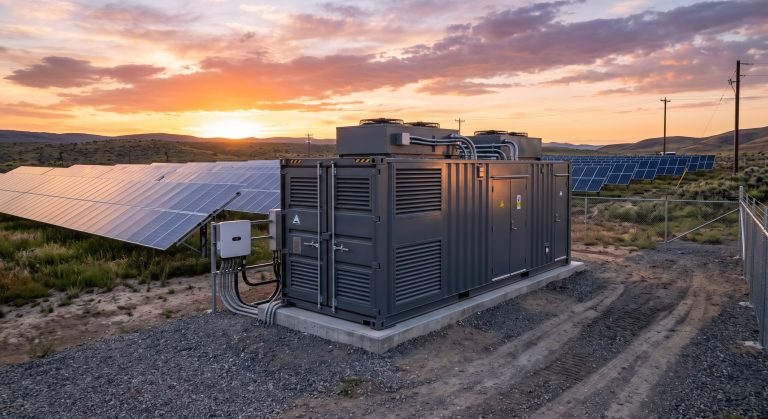
* **Renewable Integration:** Smoothing the intermittent output of on-site solar PV generation, enabling higher renewable penetration and supporting sustainability goals.
* **Grid Support & Microgrid Formation:** Acting as a primary or secondary grid-forming asset to create a resilient islandable microgrid, ensuring 100% uptime even during main grid outages. This feature is critical for data centers requiring high grid independence.
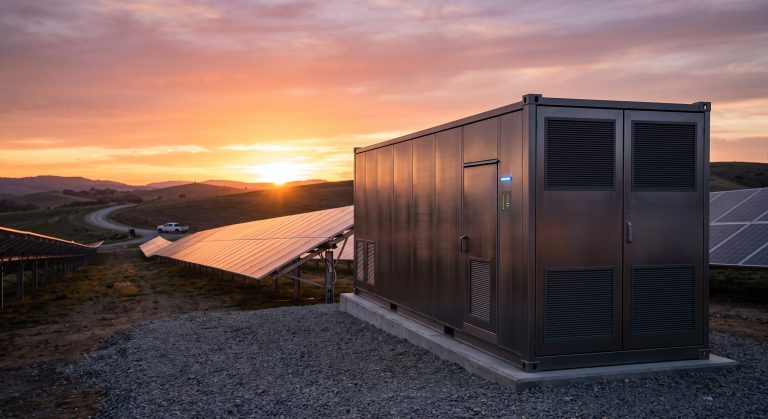
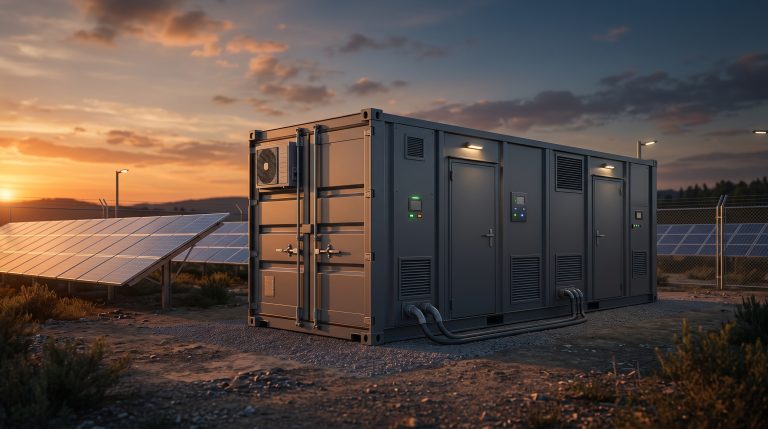
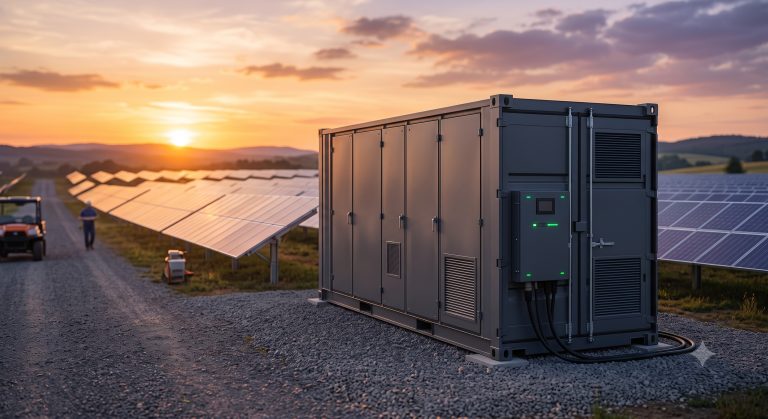
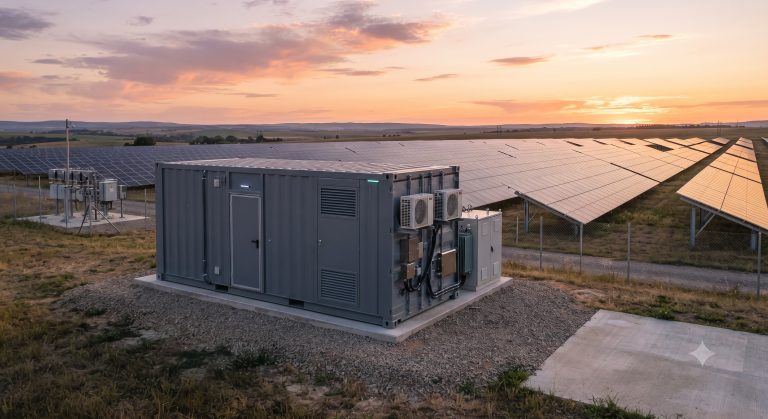
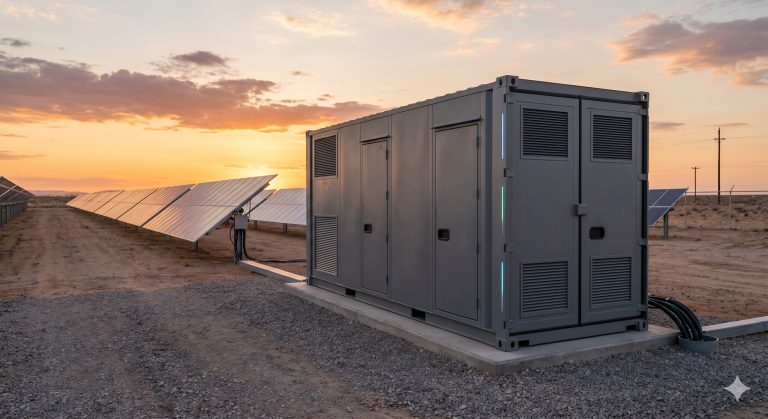
The physical footprint of the system is minimized by using high-density LFP cells, allowing for a high energy-to-floor-space ratio. The system can be pad-mounted outdoors, freeing up valuable indoor space for IT equipment. The pre-commissioned and factory-tested design reduces on-site engineering and deployment time, accelerating the project’s path to commercial operation.
📥 Download Technical Specification
Click the button below to view or download the full official PDF datasheet.