Introduction
As the global B2B renewable energy sector pivots towards high-capacity Commercial & Industrial (C&I) energy storage systems (ESS), the integrity of the battery pack structure has never been under greater scrutiny. While capacity metrics (kWh/MWh) and cycle life grab headlines, the silent, invisible factor determining long-term safety and return on investment is the quality of internal structural welding. A Battery structural welding monitor is no longer a peripheral diagnostic tool; it is the central nervous system for preventing thermal runaway and ensuring compliance with stringent international safety standards like IEC 62619 and UL 9540. This comprehensive technical guide delves into the architecture, integration, and commercial necessity of advanced welding monitors, providing system architects and procurement managers with the data-driven insights required for secure asset deployment.
Core Architecture & Battery Management
PCS & BMS Integration: The Monitoring Ecosystem
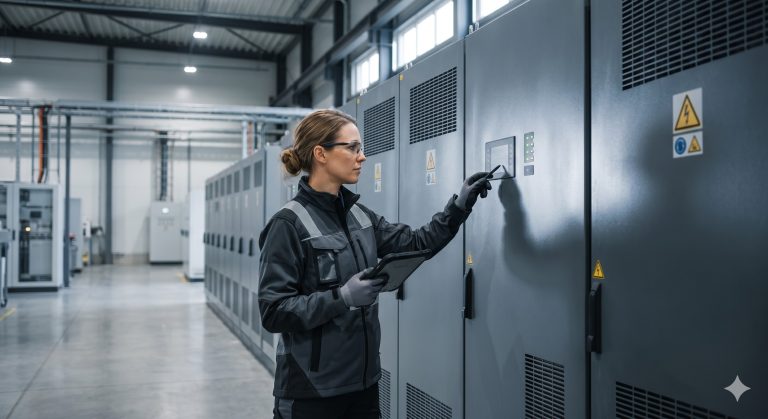
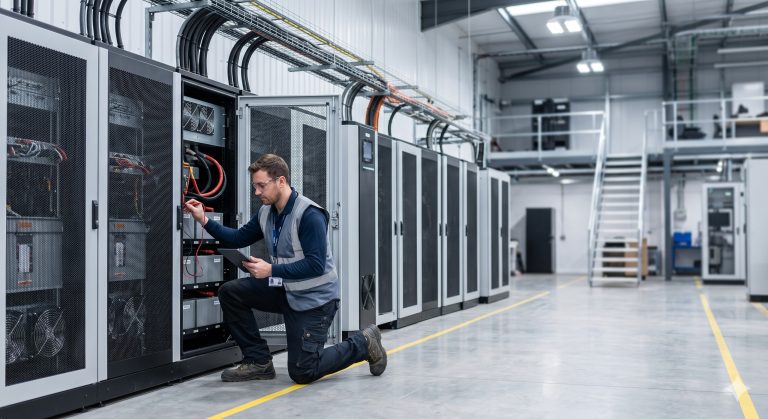
The modern Battery structural welding monitor functions as an integral component of the overarching Battery Management System (BMS). Unlike traditional resistance or ultrasonic weld checkers used in general manufacturing, these monitors are specifically engineered to provide real-time data feedback to the Power Conversion System (PCS). The architecture typically involves high-frequency ultrasonic sensors and thermal imaging cameras strategically placed along the busbars and cell interconnects. By analyzing the electrical resistance and thermal conductivity across welded joints, the system can detect micro-cracks or voids that could lead to high impedance points. In a 1MWh containerized system operating at 1500V DC, a single faulty weld can increase internal resistance by as little as 0.5 mΩ, leading to localized heating exceeding 60°C, which accelerates electrolyte decomposition. This data, fed into the intelligent EMS, allows for predictive maintenance scheduling rather than reactive failure management, effectively maximizing asset lifespan and ensuring a Round-trip efficiency of over 92% is maintained over a 10-year operational window.
Multi-level Fire Suppression and Weld Defect Correlation
One of the most critical correlations in C&I ESS safety is the link between structural weld integrity and the efficacy of multi-level fire suppression systems. Weld defects are a primary precursor to what is known as ‘off-gassing’—the venting of flammable gases like hydrogen and carbon monoxide before a full thermal runaway event. A high-fidelity monitoring system interfaces directly with the fire suppression control logic. For instance, if the monitor detects a rapid increase in the temperature gradient (dT/dt) at a specific weld node, it triggers a pre-alarm state, activating the first-level suppression (often aerosol-based or FM-200) before the event cascades to neighboring cells. This proactive approach is crucial for achieving UL 9540 certification, which mandates rigorous propagation testing. Furthermore, the monitor’s data logs provide a forensic audit trail, crucial for insurance assessments and OEM warranty claims, often extending the performance warranty period up to 15 years based on proven operational integrity.
Technical Specifications
The following table outlines the critical technical specifications and performance benchmarks for a high-end Battery structural welding monitor system designed for Tier-1 LFP cell integration, compliant with UN38.3 transportation safety standards.
| Key Parameter | Technical Specification |
|---|---|
| System Capacity | Up to 5MWh (Configurable) |
| Battery Chemistry | Tier-1 LFP (Lithium Iron Phosphate) |
| Cycle Life | >8000 cycles @ 90% DoD |
| Round-trip Efficiency | ≥ 92% (with Liquid Cooling) |
| Safety Standards | IEC 62619, UL 9540, UN38.3 |
| Thermal Management | Integrated Liquid Cooling with Active Flow Control |
| Communication Protocol | Modbus TCP/IP, CAN Bus |
Commercial ROI & Grid Support
Risk Mitigation as a Revenue Driver
In the B2B energy storage landscape, the cost of failure is exponentially higher than the cost of monitoring. A single thermal runaway event in a 5MWh industrial park installation can result in losses exceeding $2M in equipment damage, business interruption, and regulatory fines. Investing in a robust Battery structural welding monitor effectively shifts the Total Cost of Ownership (TCO) curve. By ensuring consistent 90% Depth of Discharge (DoD) capabilities without derating due to internal cell stress, the monitor ensures maximum peak-shaving ROI. In regions with dynamic electricity pricing, this reliable dispatch capability ensures the ESS can capture price arbitrage opportunities consistently. Furthermore, for facilities participating in Demand Response programs, the monitor ensures the system is always ‘grid-ready’ to inject power back to the grid during frequency regulation events, maximizing utility incentive captures.
Liquid Cooling and Thermal Runway Prevention
The synergy between a Battery structural welding monitor and advanced Liquid Cooling systems cannot be overstated. While the cooling loop manages the bulk temperature of the battery modules, the weld monitor acts as a high-resolution ‘thermometer’ for the internal cell connections. In high-throughput charging scenarios, the thermal expansion and contraction of dissimilar metals can stress welded joints. The monitor detects the resulting micro-strain, allowing the BMS to modulate the cooling flow rate dynamically. This closed-loop feedback prevents the ‘hot spots’ that typically initiate insulation breakdown and internal short circuits. This level of precision thermal control is essential for maintaining the structural integrity of the battery pack over >8000 cycles, directly supporting the zero-carbon migration goals of large-scale commercial facilities.
Deployment Scenarios
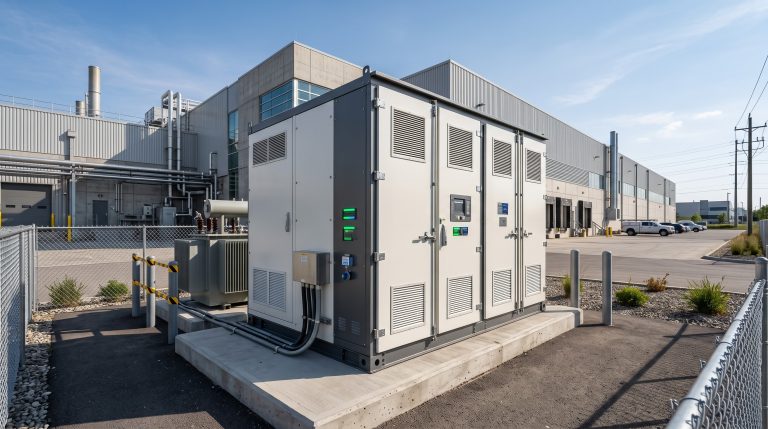
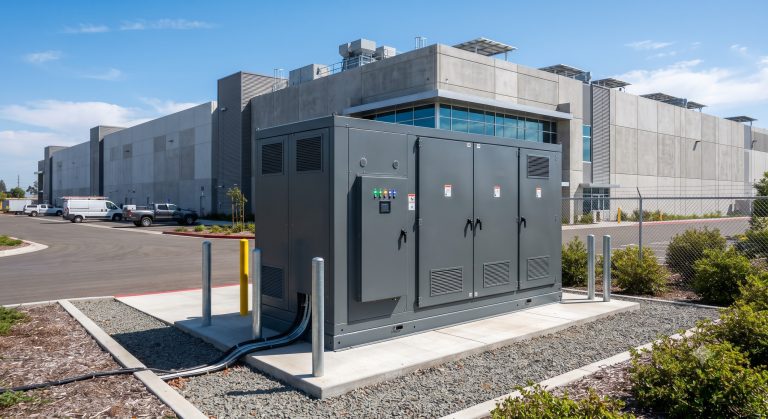
Deployment of this technology is most critical in high-density, high-stakes environments. Major deployment scenarios include:
- Industrial Parks & Data Centers: Ensuring uninterrupted power supply (UPS) and peak shaving for critical manufacturing loads, where a fire event would halt production for days.
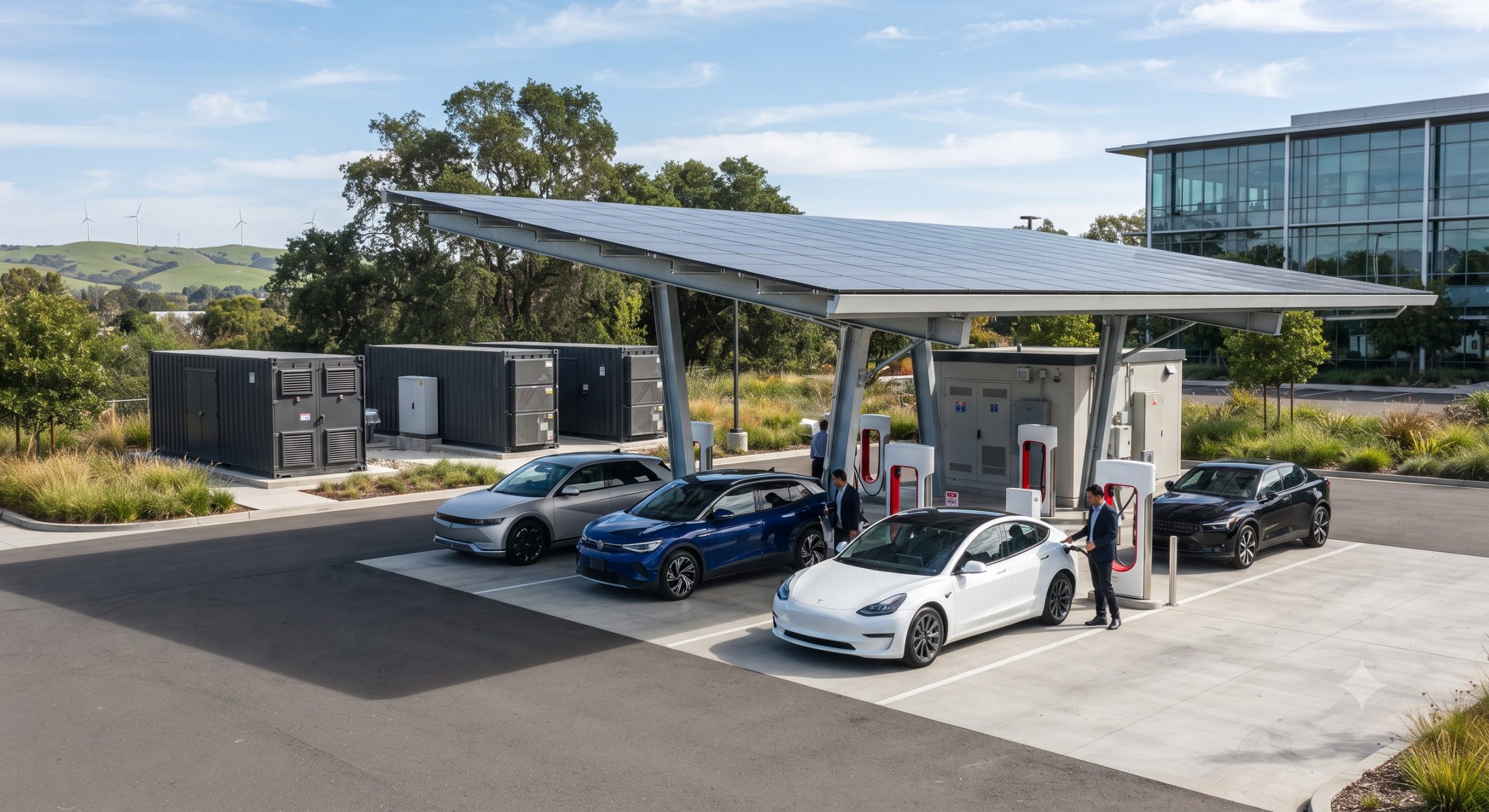
- PV-Storage-Charging (光储充) Hubs: Managing the extremely high charge/discharge rates required for EV supercharging stations, where weld integrity is stressed to the maximum.
These applications rely on the monitor to ensure safe and efficient operation under extreme electrical load cycles.
Conclusion
The Battery structural welding monitor represents the convergence of manufacturing quality, real-time electronics, and predictive analytics. For C&I facility managers and system integrators, prioritizing this component is essential for achieving the highest levels of safety and long-term profitability. As the energy transition accelerates and ESS capacities scale into the hundreds of MWh, the ability to monitor and predict structural failures will define the line between a successful investment and a catastrophic liability. Adopting these advanced monitoring systems is not just a technical upgrade—it is the bedrock of a resilient, zero-carbon energy future.