Introduction: The Dawn of the Commercial & Industrial Energy Storage Era
In the face of escalating global electricity costs and increasingly stringent carbon regulations, industrial enterprises are no longer asking if they should adopt energy storage, but rather how to optimize their procurement strategy. The modern industrial energy storage solutions market has evolved beyond simple battery backup into a sophisticated asset class capable of demand charge reduction, peak shaving, and frequency regulation. For B2B procurement professionals, Facility Managers, and System Architects, understanding the holistic value proposition—from Tier-1 LFP cell selection to the nuances of Round-trip efficiency (RTE) and Depth of Discharge (DoD)—is critical for maximizing Return on Investment (ROI) and ensuring grid resilience. This sourcing guide provides a data-driven analysis of the architecture, financial modeling, and grid-support capabilities inherent in state-of-the-art C&I storage systems.
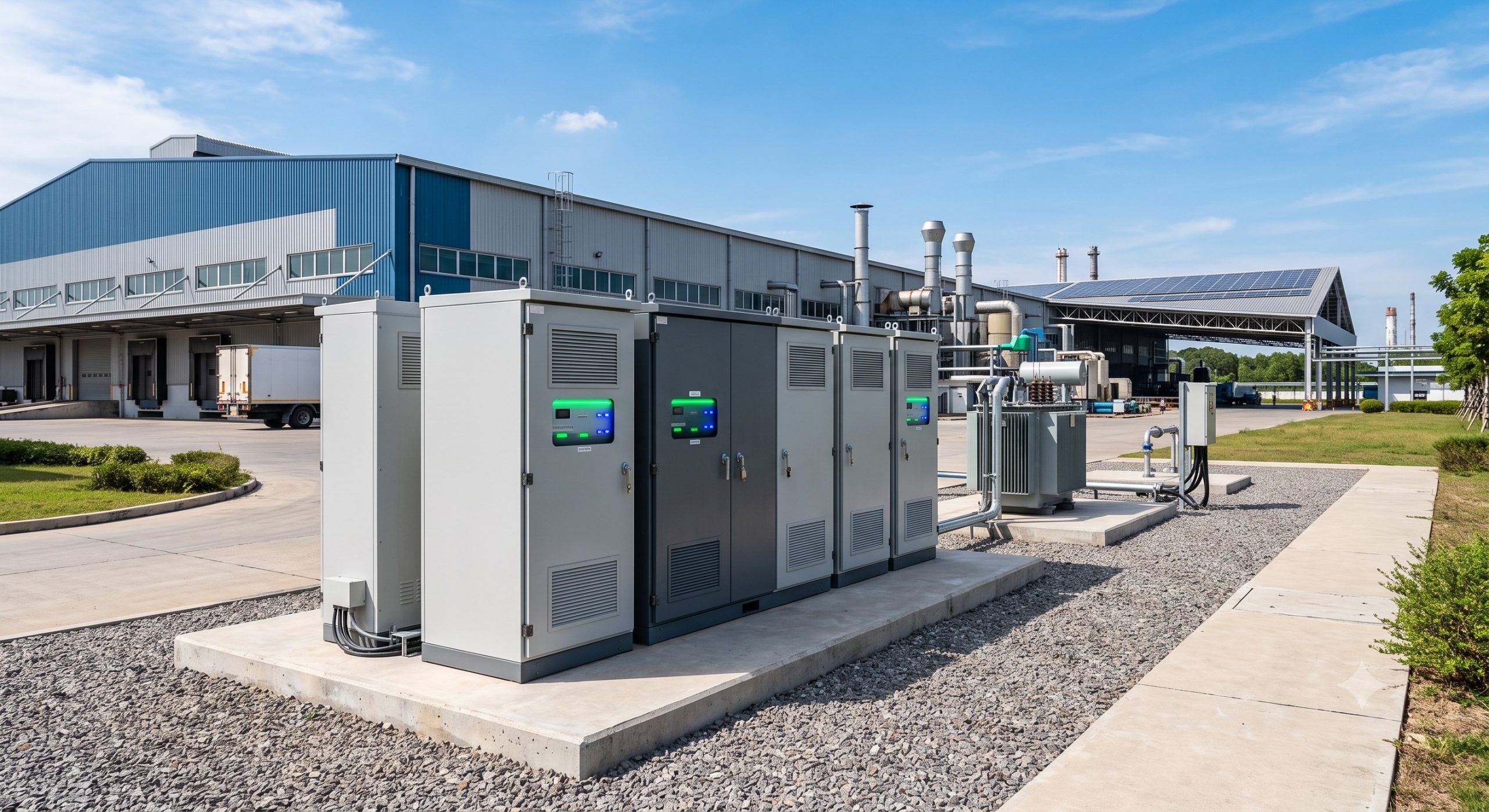
Core System Architecture & Battery Management Systems
Intelligent Power Conversion and Energy Management
The bedrock of any effective industrial energy storage solution lies in the seamless integration of three core components: the Battery Management System (BMS), the Power Conversion System (PCS), and the Energy Management System (EMS). The PCS serves as the bi-directional bridge, converting AC grid power to DC for battery charging and inverting DC back to AC for load supply or grid export. Modern BESS wholesale units feature bi-directional inverters capable of achieving up to 98.5% conversion efficiency, minimizing energy loss. The BMS, meanwhile, is tasked with cell balancing, temperature monitoring, and State of Charge (SoC) estimation to prevent overcharge or deep discharge. Tier-1 manufacturers integrate liquid cooling thermal control to maintain optimal cell temperatures, reducing the risk of thermal events and ensuring even pack degradation.
Thermal Control Paradigms: Liquid Cooling vs. Air Cooling
Thermal management is directly linked to cycle life and safety. While air-cooling systems are cost-effective and simpler, they struggle to maintain uniformity in high-capacity, high-utilization scenarios. Liquid cooling (water-glycol loops) offers superior heat dissipation, limiting cell temperature differentials to under 3°C. This precision extends the calendar life of Tier-1 LFP cells to exceed 8,000 cycles at 90% DoD, a crucial metric for industrial applications requiring daily deep cycling. This thermal efficiency translates directly to a lower Levelized Cost of Storage (LCOE) over the asset’s lifetime.
Technical Specifications: Performance Metrics That Matter
When evaluating industrial energy storage solutions, procurement teams must move beyond simple capacity ratings. The table below outlines the critical technical benchmarks that define a high-quality, bankable storage asset, ensuring compliance with global safety and performance standards.
| Key Parameter | Technical Specification |
|---|---|
| Battery Chemistry | Tier-1 LFP (Lithium Iron Phosphate) |
| System Capacity | 233 kWh to 1.5 MWh (Customizable) |
| Round-trip Efficiency | > 92% (DC to AC) |
| Cycle Life (at 25°C) | > 8,000 cycles @ 90% DoD (to 70% EOL) |
| Depth of Discharge (DoD) | Optimal Operating Range: 10% – 95% |
| Thermal Management | Liquid Cooling (Water-Glycol) / Air Cooling (Optional) |
| PCS Topology | Bi-directional 3-Level Inverter (up to 98.5% efficiency) |
| Safety Certifications | UL 9540, IEC 62619, UN38.3, CE |
| Communication Protocols | Modbus TCP/IP, CAN, IEC 61850 |
Safety and Compliance Certifications
Adherence to strict safety standards is non-negotiable for commercial installations. The specifications listed above are typically validated through rigorous testing to meet UL 9540 and IEC 62619 certifications. Additionally, cell-level compliance with UN38.3 ensures safe transport. These certifications are critical for securing insurance coverage and satisfying utility interconnection requirements.
Commercial ROI & Grid Support
Peak-Shaving and Total Cost of Ownership
The primary financial driver for industrial energy storage is peak demand shaving. Commercial demand charges can represent up to 30-70% of a facility’s monthly utility bill, depending on the region and load profile. By leveraging a BESS wholesale unit to discharge during peak hours, facilities can reduce their peak demand by up to 40%. The Total Cost of Ownership (TCO) model must account for the initial CapEx, O&M costs, and degradation rates. However, with a cycle life exceeding 8,000 cycles, high-quality systems amortize their costs within 4-6 years, yielding a positive ROI over the remaining life. Furthermore, revenue streams from grid services—such as frequency regulation and demand response—can reduce the payback period by 1-2 years.
Virtual Power Plant (VPP) Readiness
Advanced EMS capabilities enable aggregation of multiple storage units into a Virtual Power Plant (VPP). This allows industrial parks to participate in ancillary service markets, providing fast frequency response and voltage support to the grid. The EMS’s smart dispatch algorithm analyzes real-time pricing signals to optimize charge/discharge schedules, maximizing revenue potential while maintaining reserve capacity for emergency backup.
Deployment Scenarios: Where Industrial Storage Excels
PV-Storage-Charging Synergy
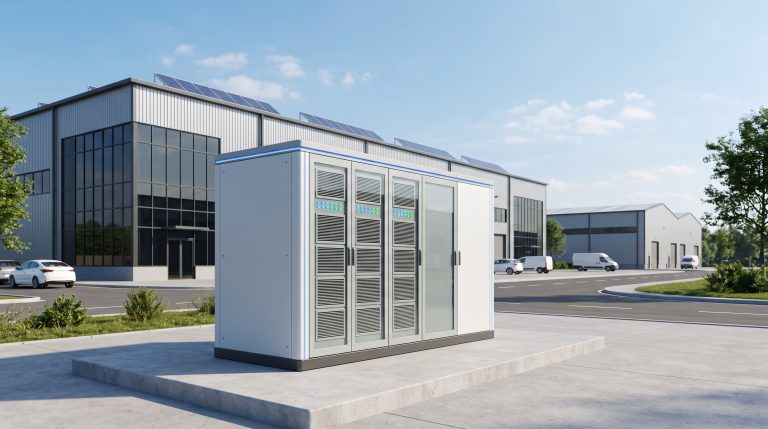
One of the most compelling use cases is the integration of industrial energy storage solutions with onsite solar PV and EV fast-charging infrastructure. The storage system acts as a buffer, absorbing solar energy during midday peaks and discharging to superchargers during evening demand spikes. This synergy creates a self-sufficient microgrid, effectively decarbonizing logistics and fleet operations while insulating the facility from grid volatility.

Industrial Parks and Micro-Grids
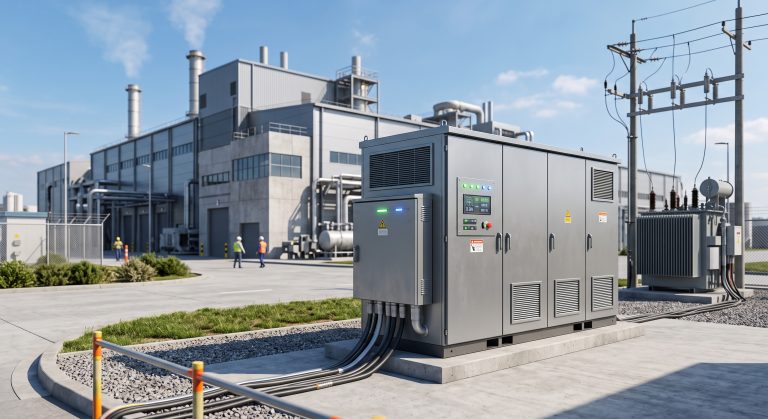
For large industrial parks, modular containerized solutions enable scalable MWh-level deployment. By paralleling multiple units, facilities can achieve capacity in the tens of MWh, ensuring power stability for critical manufacturing processes and seamless islanding capabilities during grid outages. This configuration not only ensures business continuity but also protects against volatile energy prices.
Conclusion: The Strategic Imperative
The strategic implementation of industrial energy storage solutions is no longer an experimental endeavor but a financially sound, technically mature strategy for enhancing energy independence and operational resilience. From the cell-level integrity of Tier-1 LFP batteries to the intelligent dispatch logic of advanced EMS, every component is engineered to deliver high round-trip efficiency, long cycle life, and substantial ROI. As industries accelerate toward net-zero goals, the ability to source and deploy these solutions effectively will differentiate market leaders from laggards. For procurement professionals and engineers, focusing on the data—the specification sheets, cycle life performance, and LCOE calculations—will ensure the longevity and profitability of the energy asset.