Overview
Peak shaving with a commercial Battery Energy Storage System (BESS) is a sophisticated process of discharging stored energy during periods of high grid demand to reduce costly demand charges and stabilize facility power. This FAQ provides definitive, technical answers to the most critical pre-sales and post-sales questions from plant engineers and procurement specialists, focusing on ensuring long-term performance, safety, and financial return. Below, we address core concerns ranging from battery chemistry and cooling to ROI, safety systems, and grid integration.
Frequently Asked Questions
- Q1: What is the peak shaving feature in a commercial BESS and how does it directly lower my electricity bill?
- The peak shaving feature actively discharges the BESS during your facility’s highest 15-to-60-minute grid demand intervals, directly reducing the peak kW draw measured by your utility meter. By capping this peak, you significantly lower demand charges, which often constitute 30-50% of a commercial electricity bill. The system uses advanced Energy Management System (EMS) software with predictive load forecasting to automatically trigger discharge, ensuring seamless shaving without disrupting operations.
- Q2: What is the cycle life and depth of discharge (DoD) for the LFP cells used in these peak shaving systems?
- The standard cycle life of a commercial BESS utilizing Tier-1 LFP (Lithium Iron Phosphate) cells is 6,000 to 8,000 cycles at 90% depth of discharge (DoD) under ambient temperatures of 25°C. This performance is guaranteed by the manufacturer, often with an end-of-life capacity threshold of 80%. The long cycle life is achieved through precise active BMS (Battery Management System) cell balancing and advanced thermal management, ensuring consistent performance for over 10-15 years of daily peak shaving operation.
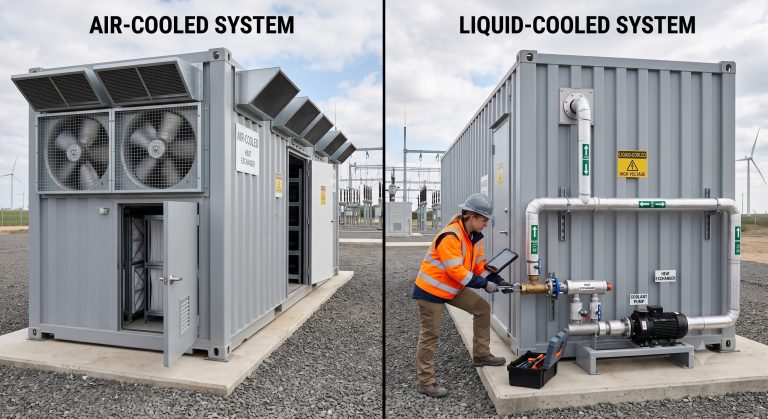
- Q3: How does the liquid cooling system preserve the battery’s cycle life and ensure safety during peak shaving?
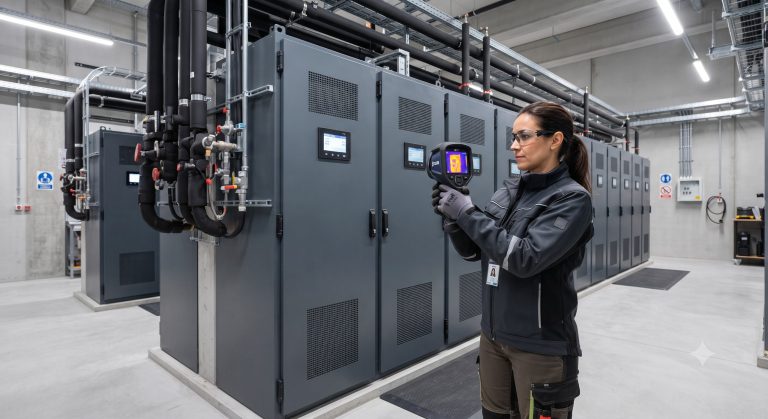
- The integrated liquid cooling system is critical for preserving cycle life by maintaining each battery cell within a tight optimal temperature range of 15°C to 35°C, preventing thermal degradation and cell-to-cell temperature variance. During high-power peak shaving discharges, this system efficiently removes heat, ensuring stability and performance. This thermal management is a primary defense against thermal runaway, as it significantly reduces the risk of internal short circuits caused by excessive heat.
- Q4: What are the key differences in configuration and control between a grid-tied peak shaving system and an off-grid system?
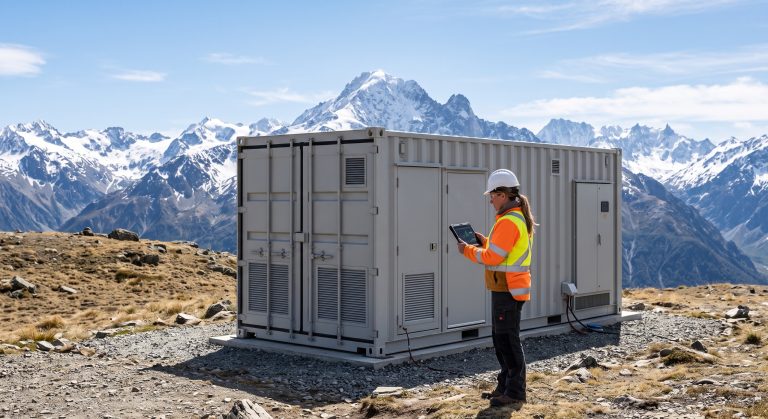
- A grid-tied peak shaving system is designed to operate in parallel with the utility grid, using a bi-directional PCS (Power Conversion System) to import power for charging and export power for peak shaving, with seamless transition capabilities. An off-grid system, in contrast, uses the BESS as the primary power source, requiring the PCS to form the grid (grid-forming) and manage all load fluctuations, with a generator or renewable source as backup. For peak shaving, the standard and most economical configuration is grid-tie, allowing the system to take advantage of utility rate structures while ensuring islanding capability for backup during outages.
- Q5: How is the BMS (Battery Management System) monitored to ensure reliability during every peak shaving event?
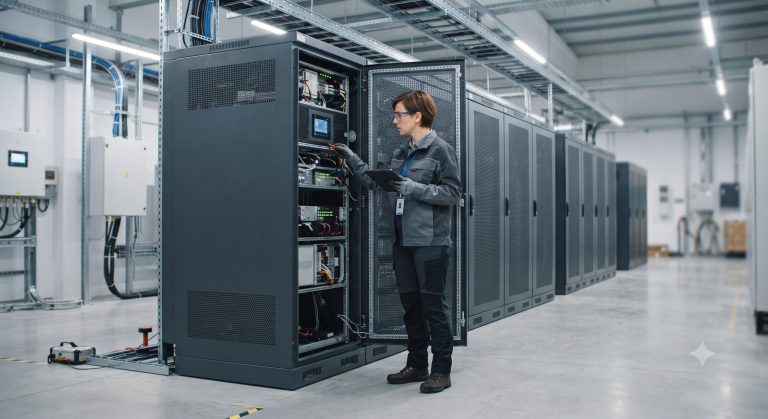
- The BMS continuously monitors every cell’s voltage, temperature, and state-of-charge (SoC) at a millisecond-level frequency, providing real-time data to the central EMS. It actively performs inter-cell balancing to ensure all cells are at an equal voltage, preventing weak cells from limiting the system’s total capacity. This data is accessible via a local HMI (Human-Machine Interface) and remote cloud-based platforms, allowing engineers to set alerts for any parameter deviations, ensuring pro-active maintenance and 100% discharge readiness for scheduled peak events.
- Q6: How scalable is the system? Can I add more cabinets later to increase my peak shaving capacity?
- The modular design of our commercial BESS allows for parallel scalability, enabling you to increase storage capacity (kWh) and power output (kW) by simply connecting additional battery cabinets to a common DC busbar or AC bus. This plug-and-play expansion is managed by the master EMS, which automatically recognizes new units. This offers an excellent, CAPEX-friendly approach to scaling your peak shaving capacity as your facility grows or as energy demands change, without requiring a complete system overhaul.
- Q7: What is the ROI calculation for a peak shaving BESS, and what key factors influence the payback period?
- The ROI for a peak shaving system is calculated by subtracting the total cost of ownership (CAPEX, O&M, replacement costs) from the total savings on utility demand charges, energy arbitrage, and potential incentive programs. The payback period, typically 3 to 6 years, is most heavily influenced by your facility’s peak demand profile (the higher the peak, the faster the payback), the utility’s demand tariff rate, the system’s round-trip efficiency (often >90%), and the cost of capital. A detailed on-site energy audit is essential to model your specific savings and calculate the exact LCOE (Levelized Cost of Energy).
- Q8: What specific fire safety mechanisms and thermal runaway prevention features are integrated into the system?
- Our system is engineered with a multi-tier fire safety strategy compliant with UL 9540 and NFPA 855, beginning with cell-level prevention through stable LFP chemistry and advanced liquid cooling. At the first sign of anomaly, the BMS and gas detection sensors trigger early warning alarms. If thermal runaway is suspected, the system initiates immediate isolation of the affected cabinet via contactors, while an integrated fire suppression system (e.g., aerosol or clean agent) is automatically deployed to suppress the event without water damage. Robust enclosure designs with fire-rated barriers further contain any potential issue.