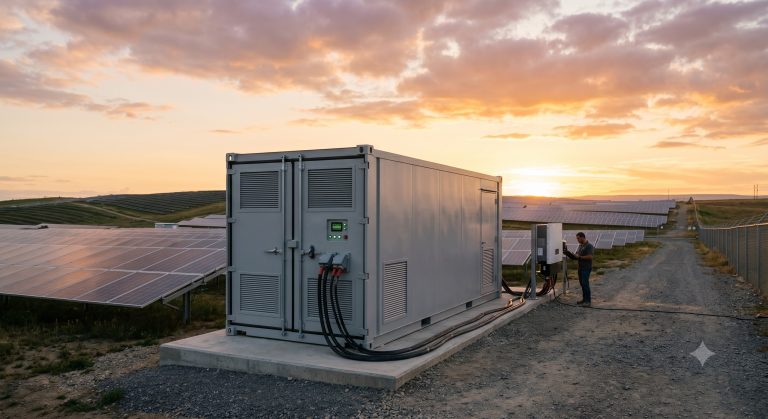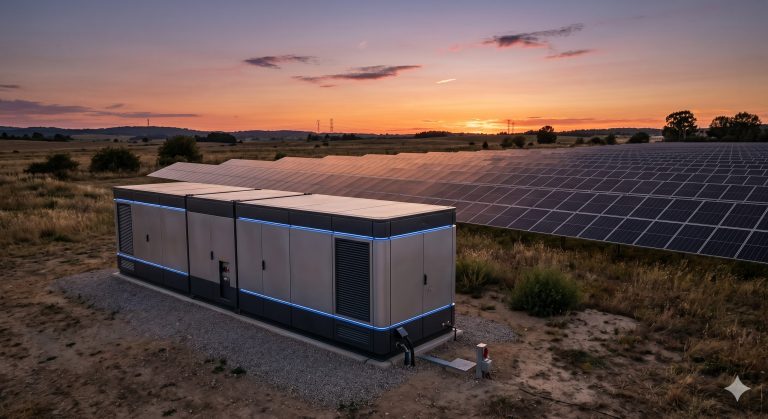
LIQUID-COOLED CONTAINER ESS
OFFICIAL COMMERCIAL BESS TECHNICAL OVERVIEW & DATASHEET
EXECUTIVE SUMMARY
This document provides a comprehensive technical overview and performance datasheet for the next-generation Liquid-cooled Containerized Energy Storage System (ESS). Designed for utility-scale, commercial & industrial (C&I), and renewable integration applications, this platform represents a paradigm shift in thermal management, safety, and operational efficiency. By leveraging advanced liquid cooling technology and Tier-1 Lithium Iron Phosphate (LFP) battery cells, the system delivers superior energy density, extended cycle life, and enhanced safety, offering a compelling total cost of ownership (TCO) for project developers, EPCs, and asset owners.
SYSTEM ARCHITECTURE & SAFETY
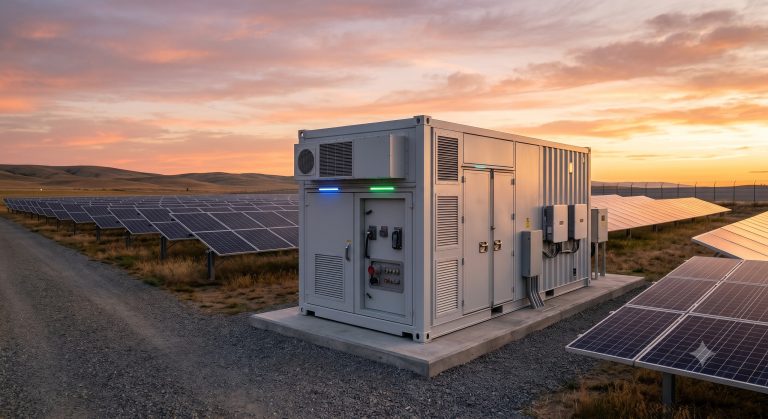
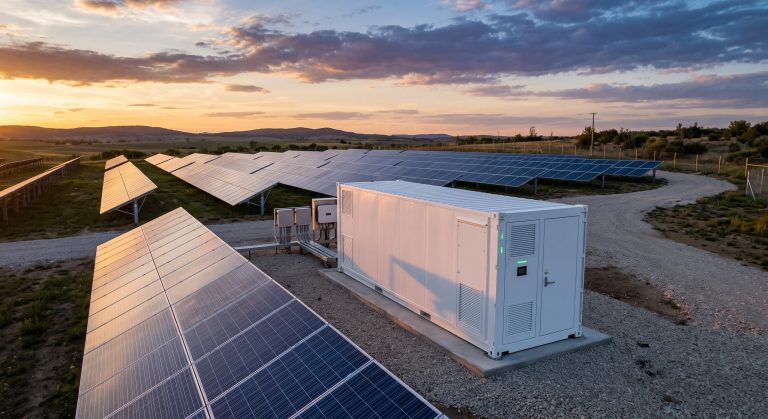
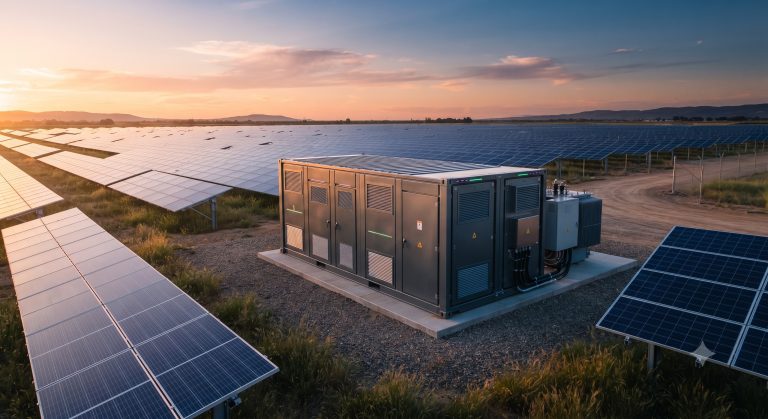
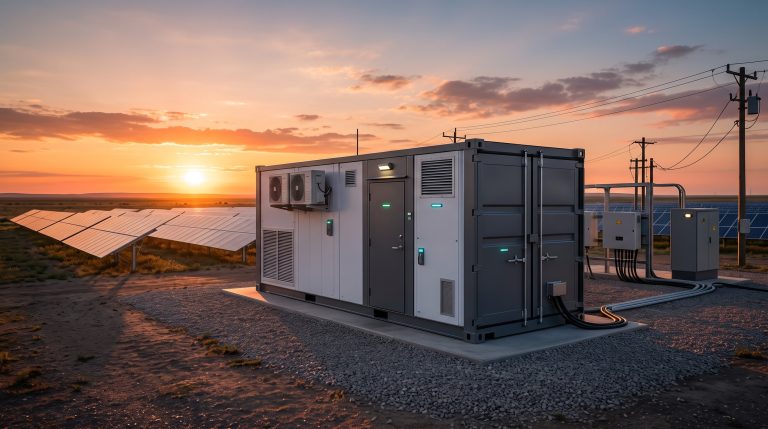
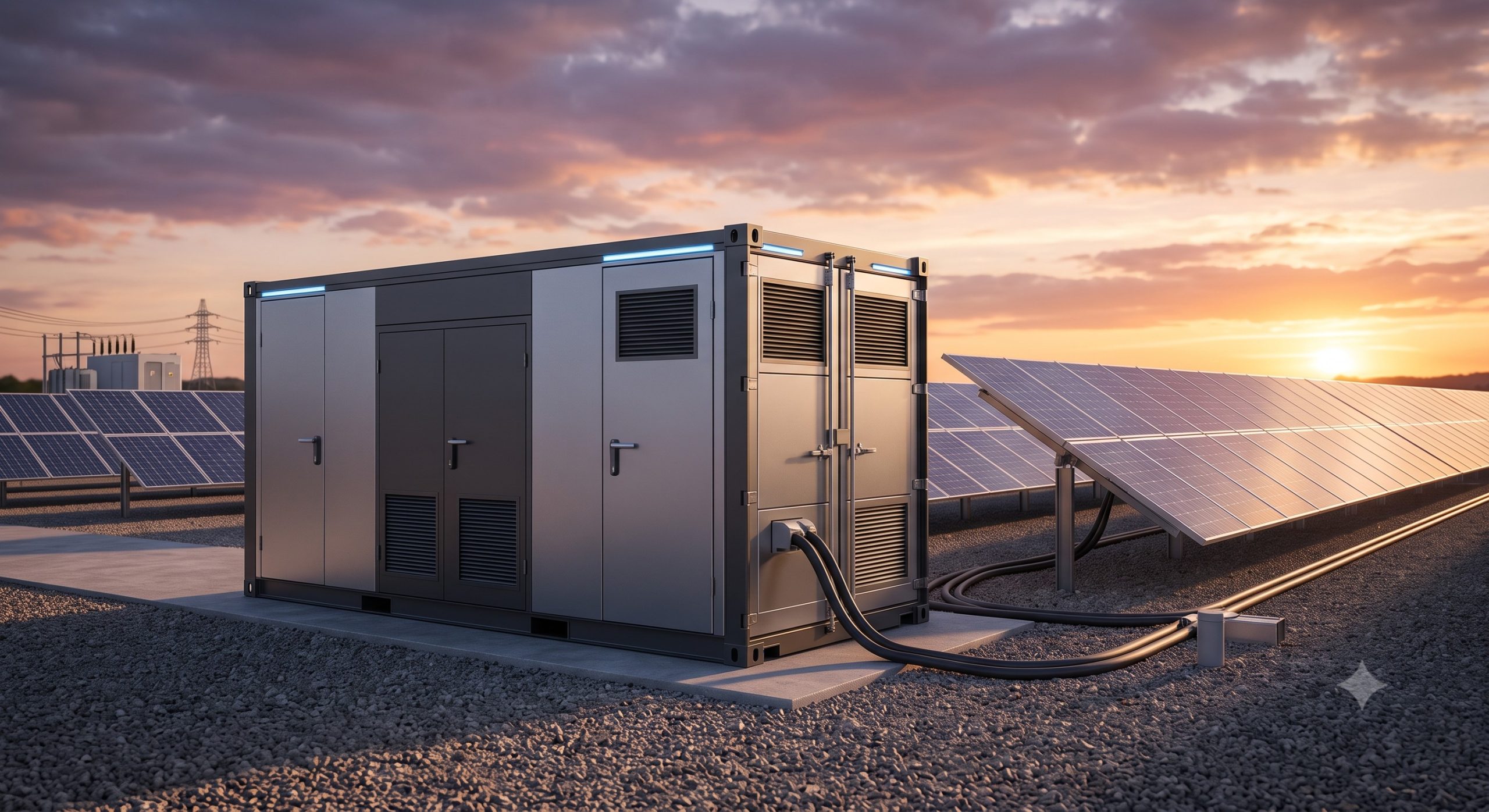
The Liquid-cooled Container ESS is engineered as a fully integrated, turnkey solution. The architecture is built around a 20-foot ISO high-cube container, housing a high-voltage DC battery rack system, a bi-directional Power Conversion System (PCS), a proprietary Liquid Cooling and Thermal Management Unit (LCU), a multi-tiered Battery Management System (BMS), and an Energy Management System (EMS) controller.
SAFETY BY DESIGN:
– Tier-1 LFP Cell Chemistry: The foundation of safety is the inherently stable lithium iron phosphate chemistry, which offers exceptional thermal and chemical stability, significantly reducing the risk of thermal runaway compared to other lithium-ion chemistries.
– Multi-Level Protection System: This includes cell-level fuses, module-level current interrupt devices (CID), rack-level DC circuit breakers, and a central fire suppression system (aerosol or gas-based), all managed by a centralized safety controller.
– Liquid Cooling Thermal Runaway Containment: The liquid cooling circuit is designed to rapidly dissipate heat in abnormal conditions, acting as an efficient thermal barrier and preventing thermal propagation between modules.
– IP65/NEMA 4X Rated Enclosure: The container is designed for rigorous outdoor environments, providing robust protection against dust, water ingress, and corrosion.
KEY FEATURES
– Superior Thermal Management: Advanced liquid cooling maintains optimal battery operating temperature (a delta of ±2°C across all cells). This precision enhances round-trip efficiency, prolongs battery life by up to 20%, and ensures consistent performance in ambient temperatures ranging from -30°C to +55°C.
– High Energy Density: The system integrates high-capacity LFP cells in a compact footprint, achieving an industry-leading energy density of > 200 kWh/m², significantly reducing the required land area for large-scale projects.
– Black Start & Grid-Forming Capability: Equipped with advanced PCS and EMS, the system can be deployed for black start services and operate in grid-forming mode, providing essential grid stability and frequency regulation.
– Modular & Scalable Design: The containerized architecture allows for easy parallel connection of multiple units, enabling seamless project scaling from MWh to GWh levels with a simple AC and DC busbar interconnection.
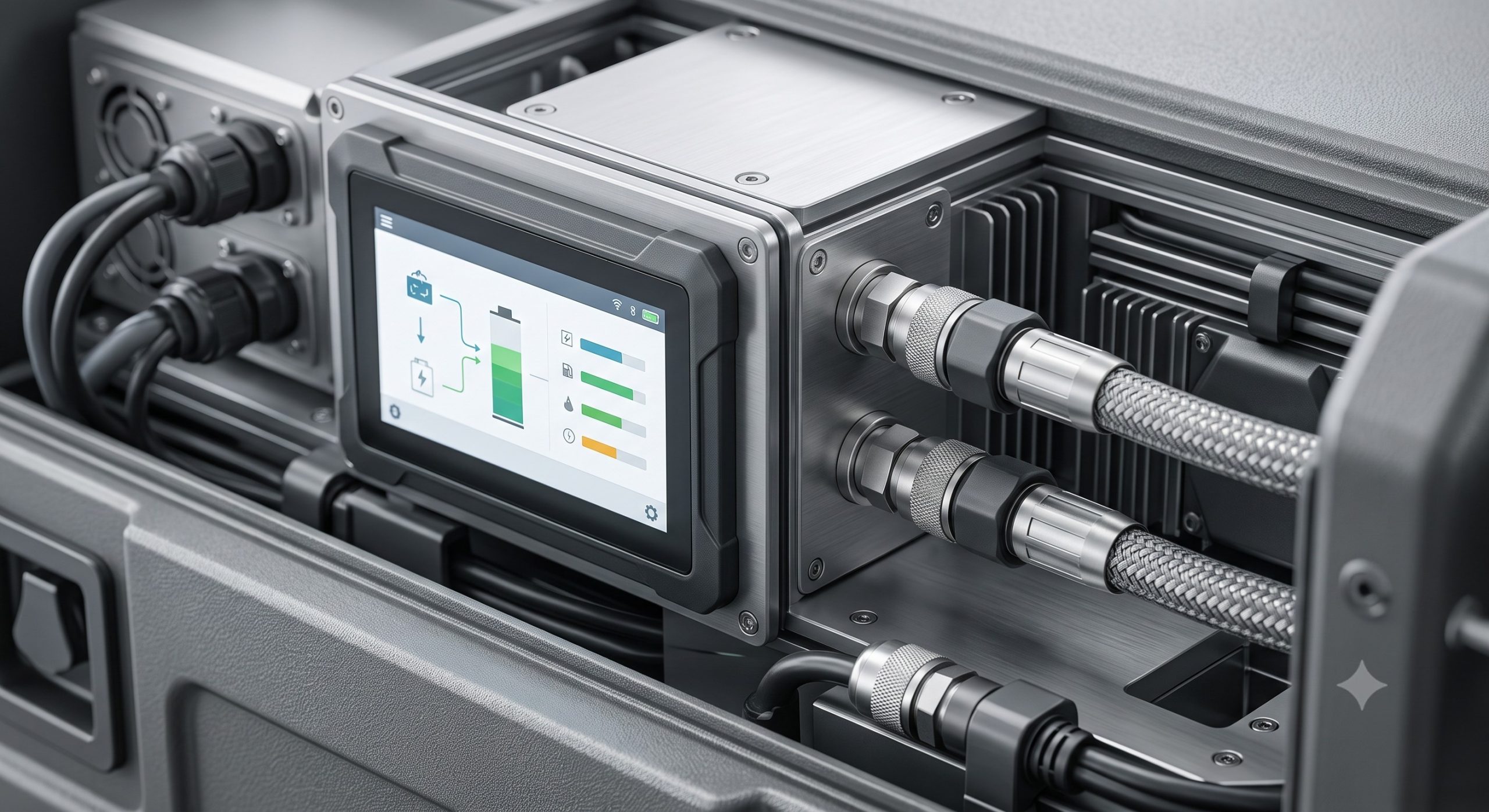
– Intelligent EMS & Cloud Connectivity: The integrated EMS features a user-friendly HMI touch panel for local control and remote monitoring via a secure cloud-based SCADA platform, enabling predictive maintenance, real-time asset optimization, and data-driven dispatch strategies.
COMPLIANCE & STANDARDS
The Liquid-cooled Container ESS has undergone rigorous testing and complies with the most stringent international safety and performance standards, ensuring global bankability and project approval.
– UL 9540A: Thermal runaway fire propagation testing
– UL 9540: Energy storage systems and equipment
– UL 1973: Batteries for use in stationary applications
– IEC 62619: Secondary cells and batteries for industrial applications (Safety)
– IEC 62477-1: Safety requirements for power electronic converter systems
– NFPA 855: Standard for the Installation of Stationary Energy Storage Systems
– CE, UN 38.3, and various local grid codes (e.g., VDE-AR-E 2510-50)
TECHNICAL SPECIFICATIONS
INDUSTRIAL DEPLOYMENT
The versatility of the Liquid-cooled Container ESS allows it to be deployed across a wide spectrum of applications. Its robust design and advanced features make it an ideal solution for:
– Utility-Scale Arbitrage & Peak Shaving: Storing low-cost electricity during off-peak hours and discharging during peak demand periods to maximize revenue and reduce grid strain.
– Renewable Energy Integration: Smoothing the intermittent output of solar and wind farms, ensuring a stable and predictable power supply to the grid.
– Microgrid & Islanded Systems: Serving as a primary energy source for off-grid communities, mining operations, and remote industrial facilities, offering grid stability and energy independence.
– Commercial & Industrial Peak Load Management: Reducing demand charges for large C&I consumers such as data centers, manufacturing plants, and large retail complexes.
– EV Supercharging Infrastructure: Acting as a buffer to support ultra-fast EV charging, reducing the required grid connection capacity and enabling profitable peak shaving.
This datasheet provides a preliminary overview. For project-specific engineering, integration details, and customized configurations, please contact our technical sales team.
📥 Download Technical Specification
Click the button below to view or download the full official PDF datasheet.