Overview
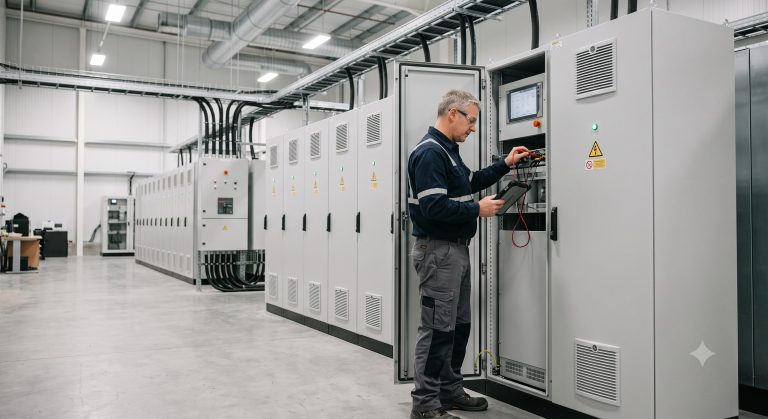
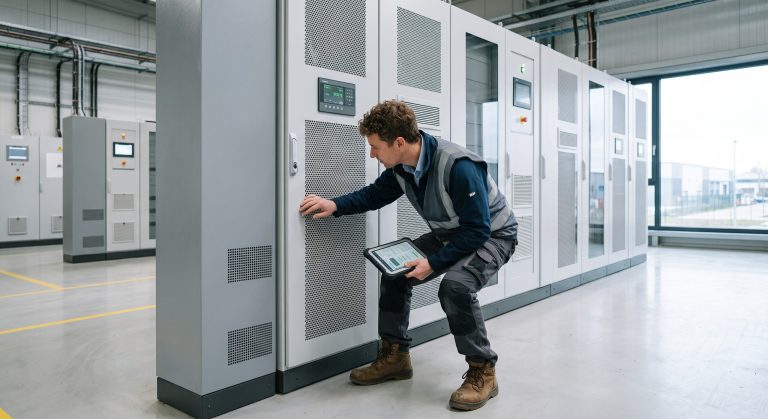
Cable glands are critical mechanical cable entry devices used in Battery Energy Storage Systems (BESS) to secure and seal the ends of electrical cables, ensuring connections to battery racks, power conversion systems (PCS), and grid interfaces are safe from environmental ingress and mechanical stress. This FAQ addresses the most common technical support, pre-sales, and post-sales questions plant engineers and procurement specialists have about selecting, installing, and maintaining cable glands in utility-scale and C&I storage projects. From preventing thermal runaway to ensuring strict IP66/68 water and dust protection, proper cable gland engineering is paramount for system longevity and safety.
Frequently Asked Questions
- Q1: What are the critical IP ratings and certifications required for cable glands used in outdoor BESS enclosures?
- The minimum required rating for outdoor BESS installations is IP66, with IP68 recommended for submerged or high-condensation environments. This ensures complete protection against dust ingress and powerful water jets, which is essential for protecting sensitive battery management system (BMS) wiring. Certifications like UL 514B, CSA, and ATEX for explosive atmospheres (common in battery off-gassing scenarios) are often mandatory for global project compliance and insurance approval.
- Q2: How do I troubleshoot grid synchronization issues caused by faulty cable gland terminations?
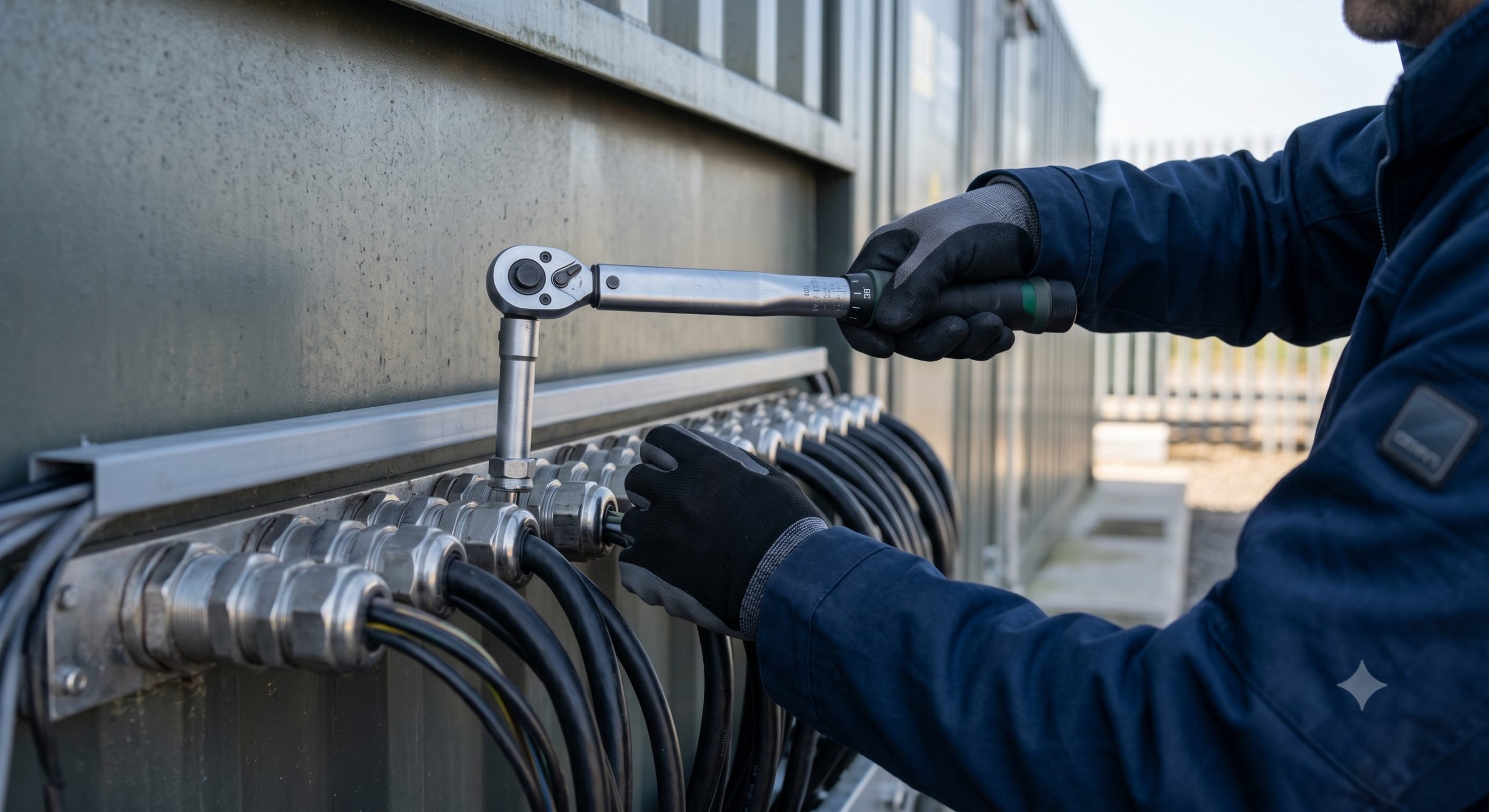
- Grid synchronization failures in the PCS are frequently traced to high-resistance connections or electromagnetic interference (EMI) at the gland termination point. This is diagnosed by using a micro-ohmmeter to measure connection resistance and a thermal camera to identify hot spots at the gland entry. If resistance exceeds the IEEE standard (typically > 50 micro-ohms), the cable should be re-terminated using a properly sized compression lug and the gland should be re-torqued to the manufacturer’s specified value. For EMI, ensure the gland provides 360-degree shielded continuity to the equipment grounding busbar.
- Q3: Why is cable gland selection critical for BMS calibration and communication signal integrity?
- Improper cable glands for communication cables (e.g., RS-485, CAN bus) can crush the cable, altering its impedance and causing signal reflection and data packet loss, which directly leads to BMS calibration errors. It is critical to use multi-hole or split cable glands designed specifically for data cables that do not apply crushing force on the individual conductors. Maintaining the cable’s bend radius and using an EMC (Electromagnetic Compatibility) gland is often required to maintain clean, interference-free voltage and temperature readings from the battery cells.
- Q4: How do cable glands contribute to thermal runaway prevention and fire safety?
- Cable glands are a first line of defense in fire safety by preventing external sparks or water ingress from reaching internal high-voltage DC connections. In the event of a thermal event, specially designed firestop or intumescent cable glands expand under heat to seal the cable entry, preventing the spread of flames and toxic smoke to adjacent battery cabinets or the facility. This compartmentalization is a key requirement for achieving UL 9540 and NFPA 855 compliance for energy storage systems.
- Q5: What is the role of cable glands in paralleling multiple BESS cabinets for scalability?
- When scaling storage capacity by paralleling multiple battery cabinets on a common DC busbar, cable glands ensure the high-current power cables (typically 240mm² to 400mm²) are securely anchored to eliminate mechanical stress on the busbar terminals. Using correctly sized compression glands prevents the conductor from ‘pulling out’ due to thermal cycling expansion and contraction over the system’s 20-year lifespan. A proper seal also ensures zero resistance creep, which is vital for equal current sharing between parallel cabinets.
- Q6: How often should cable glands be inspected and maintained in a utility-scale BESS?
- A visual inspection of all cable glands should be performed quarterly, with a full torque re-tightening check semi-annually or during any scheduled O&M visit. Inspection focuses on signs of UV degradation (for plastic/polymer glands), corrosion on metallic glands, and cracks in the sealing compound. Any gland showing signs of ingress (e.g., moisture inside the cabinet) must be replaced immediately. This proactive maintenance is essential for maintaining the site’s low Levelized Cost of Energy (LCOE) by preventing unplanned downtime.
- Q7: How do I select the correct cable gland for low-smoke zero-halogen (LSZH) and armored cables?
- For armored cables (SWA or STA), an armored cable gland with a cone and banjo is required to terminate the armor braid to the earth bar. For LSZH cables, the gland must be made of halogen-free materials to maintain the cable’s fire-safety characteristics in a fire. Selection is based on the exact outer diameter (OD) of the cable sheath and the core conductor size; using a universal ‘one-size-fits-all’ gland is strongly discouraged as it often fails to provide the necessary seal against moisture.
- Q8: What are the pre-sales technical specifications I must provide to correctly size cable glands for my BESS project?
- To correctly size your cable glands pre-sales, you must provide the exact cable outer diameter range (min and max), the conductor cross-section (AWG/kcmil or mm²), the conductor material (Copper or Aluminum), and the cable’s voltage rating (e.g., 1500V DC). The equipment’s enclosure wall thickness and thread type (NPT, Metric, or PG) are also critical. This data ensures you receive a gland that provides the required ingress protection, mechanical retention, and electrical continuity, avoiding costly site delays and rework.