Overview
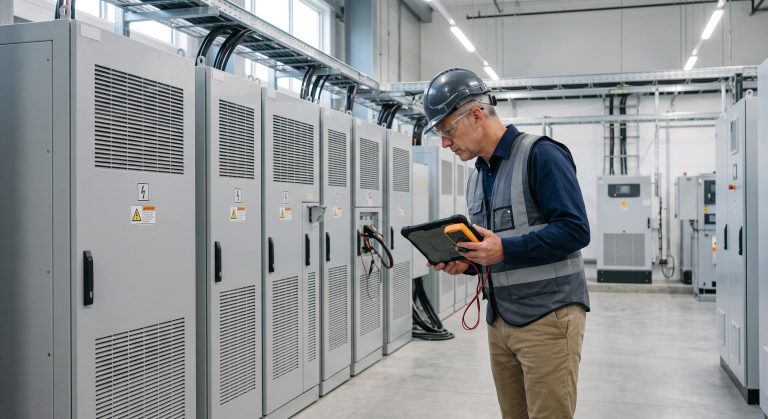
Pre-assembled containerized Battery Energy Storage Systems (BESS) are revolutionizing how commercial and industrial facilities deploy grid-scale storage. By integrating battery racks, Power Conversion Systems (PCS), fire suppression, and thermal management into a single ISO container, manufacturers dramatically reduce on-site commissioning time and installation risk. The key to a successful deployment lies in understanding the rigorous pre-assembly, testing, and shipping protocols that ensure the system arrives ready to connect. This FAQ addresses the most critical technical and procurement questions asked by plant engineers, project developers, and procurement managers regarding the pre-assembly and shipping process of a containerized ESS.
Frequently Asked Questions
- Q1: How is a container ESS pre-assembled for shipping to ensure system integrity and safety?
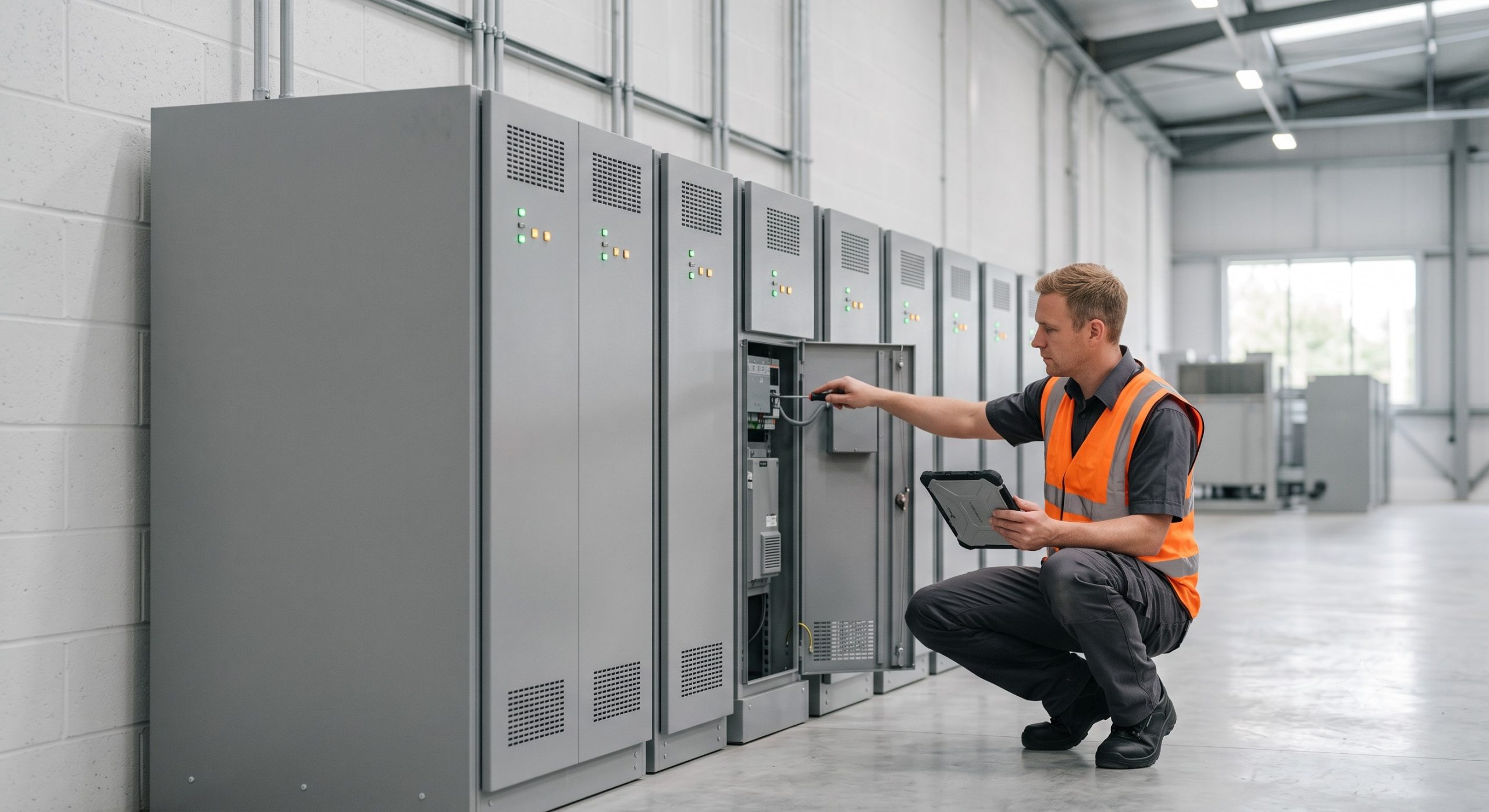
- A container ESS is pre-assembled as a fully integrated, tested unit at the factory, including all battery modules, BMS, PCS, HVAC, and fire suppression systems installed and wired onto custom racks within the container.
- This off-site assembly is followed by a comprehensive Factory Acceptance Test (FAT) that simulates real operational conditions, verifying all electrical connections, communication protocols, and safety interlocks. The container is then structurally reinforced for shipping, with specific shock-absorbing mounts for batteries and secure blocking and bracing of all internal components to prevent movement during sea freight, adhering to ISO standards for transport.
- Q2: What are the core pre-sales specifications I need to verify before ordering a pre-assembled container ESS?
- Before finalizing your order, you must verify the system’s total energy capacity (MWh), power rating (MW), battery chemistry (LFP or NMC), guaranteed cycle life at a specific Depth of Discharge (DoD), and the operational temperature range.
- Additionally, confirm the container’s protection rating (IP65 or higher for outdoor use), the cooling system type (liquid or air), and critical Grid-Tie or Off-Grid compliance certifications (UL 9540, IEC 62619). Request the Tier-1 cell supplier details and review the warranty terms covering performance degradation and component replacement to fully align with your project’s operational lifecycle and ROI model.
- Q3: How does the pre-assembly process affect the container ESS’s cycle life and battery degradation?
- The pre-assembly process directly enhances cycle life by ensuring the Active BMS is meticulously calibrated to each cell, enabling precise cell balancing and thermal management during operation, which are critical factors in minimizing degradation.
- A standard LFP chemistry container ESS offers 6,000 to 8,000 cycles at 80% DoD. This longevity is secured by the pre-assembly stage where advanced liquid cooling circuitry is integrated to maintain uniform cell temperatures, preventing hotspots that accelerate degradation and ensuring the system meets its 10-year performance guarantee.
- Q4: What fire safety and thermal runaway prevention systems are built into the pre-assembled container ESS?
- A pre-assembled container ESS is equipped with a multi-tiered fire safety system, including early-stage gas and smoke detection, automatic aerosol or water-mist fire suppression, and an isolation mechanism to disconnect the affected battery rack to prevent thermal propagation to adjacent modules.
- This system is physically and functionally tested during the pre-assembly phase. The container is designed with integrated vents and fire-resistant barriers to contain any potential event, ensuring it meets the latest international fire safety standards like NFPA 855 and UL 9540A, which are critical for insurance and permitting.
- Q5: How do I configure a pre-assembled container ESS for Grid-Tie vs. Off-Grid islanding operation?
- Your pre-assembled container ESS can be configured for either Grid-Tie or Off-Grid mode via its Power Conversion System (PCS) and Energy Management System (EMS) during the factory pre-assembly.
- For grid-tie applications, the system is pre-set for peak shaving and demand response, synchronizing with the utility grid. For off-grid islanding, the BMS and PCS are pre-configured to form a stable micro-grid, enabling seamless transition to backup power. This configuration can also be adjusted via remote software updates, but specifying your primary operational mode early ensures optimal PCS tuning.
- Q6: What is included in the standard post-sales O&M support and global shipping security for a container ESS?
- Standard post-sales support includes a comprehensive warranty covering the battery cells (e.g., 10 years or 80% capacity retention), the PCS, and the BMS, along with remote monitoring and diagnostic services integrated via the EMS platform.
- During shipping, the container is secured with shock sensors and GPS trackers to monitor its condition. Upon arrival, certified technical engineers perform a post-shipping verification test to ensure no damage occurred during sea freight, and provide comprehensive on-site commissioning support to integrate the system with your existing facility infrastructure.
- Q7: How can I calculate the ROI and peak shaving arbitrage for a pre-assembled container ESS?
- To calculate ROI, you need to model the system’s ability to perform peak shaving (reducing demand charges) and energy arbitrage (buying low, selling high). This is based on your local utility tariff structure, the system’s round-trip efficiency, and the capacity (MWh) you deploy.
- As a benchmark, a 1MWh pre-assembled container ESS can often shave peak demand by 30-40%, saving thousands in monthly demand charges. When combined with solar self-consumption, the ROI is typically realized within 3-5 years. Your supplier should provide a customized ROI simulation using your specific load data during the pre-sales stage.
- Q8: Can I scale my energy storage capacity by connecting multiple pre-assembled container ESS units in parallel?
- Yes, pre-assembled container ESS units are designed for modular expansion, allowing you to connect multiple units in parallel to increase your total energy capacity from MWh to hundreds of MWh.
- This is achieved through a custom DC busbar linkage and a master EMS that dispatches power across all connected units. During pre-assembly, the units are prepared with the necessary communication and power ports to ensure plug-and-play scalability, enabling you to start with a smaller investment and expand as your energy demands grow.