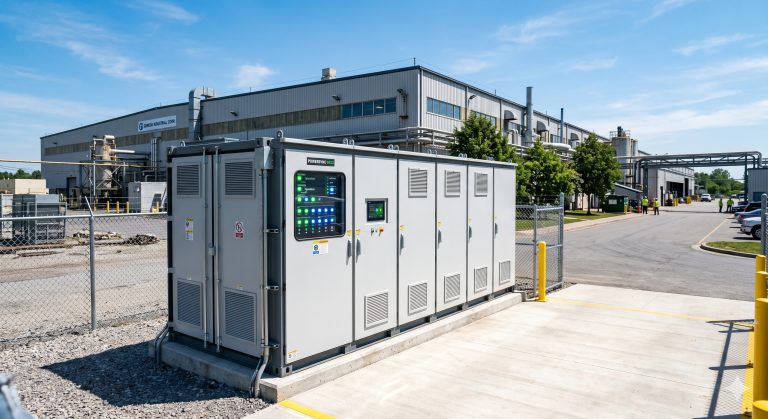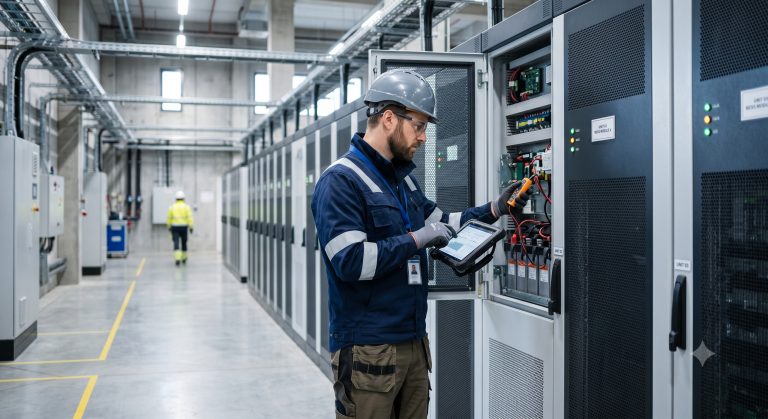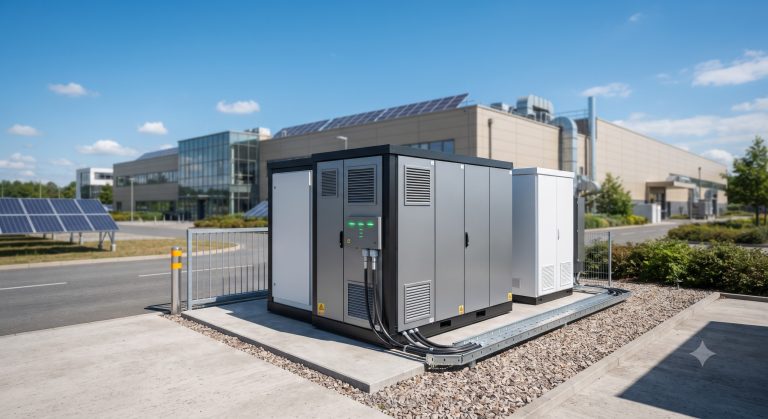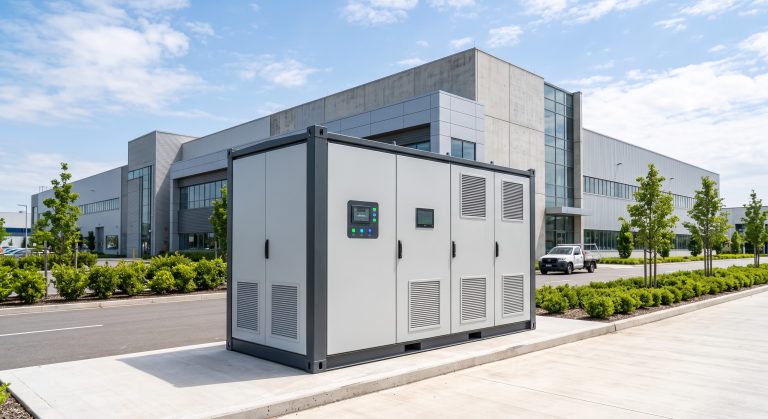
Introduction: The Silent Killer of C&I Energy Storage – Overcurrent Events
In commercial and industrial (C&I) battery energy storage systems (BESS), overcurrent is not merely a performance issue—it is the primary catalyst for thermal runaway, catastrophic cell failure, and fire hazards. As system capacities scale from 500 kWh to multi-MWh containerized solutions, the risk of uncontrolled current spikes increases proportionally. A robust overcurrent protection strategy integrates IEC 62619-certified Battery Management Systems (BMS), UL 9540-compliant fire suppression, and high-precision current sensing. This technical masterclass quantifies how advanced protection architectures mitigate risks while preserving round-trip efficiency (>92%) and cycle life (>8,000 cycles @ 90% DoD).
Multi-Level Overcurrent Protection Architecture
1. BMS-Based Current Monitoring & Pre-Charge Logic
Modern Tier-1 LFP cells demand hierarchical protection. At Level 1, the BMS continuously samples current via hall-effect sensors (±1% accuracy). Upon detecting a >1.2x C-rate anomaly, it triggers software-controlled contactor opening within 20ms. For inverter-related inrush currents, a pre-charge circuit limits initial surge to <5% of nominal current, preventing weld arcing on DC contactors.
2. Fast-Acting Fuses & Solid-State Circuit Breakers
For Level 2 hardware protection, UL 248-19 fuses with interrupting ratings >50kA DC clear faults within 2-5ms. Alternatively, solid-state circuit breakers (SSCBs) using SiC MOSFETs achieve sub-microsecond trip times, essential for high-power PCS (Power Conversion System) integration where fault currents can exceed 10kA.
3. Liquid Cooling Thermal Runaway Containment
Overcurrent generates joule heating (P=I²R). Our liquid cooling system maintains cell delta-T <2°C across all modules, even during 1C continuous discharge. If a cell enters thermal runaway (>80°C), the BMS isolates the affected rack while the cooling fluid (deionized water/glycol mix) absorbs latent heat, delaying propagation to adjacent cells by >15 minutes—critical for Novec 1230 or aerosol-based fire suppression activation.
| Key Parameter | Technical Specification | Standard |
|---|---|---|
| Battery Chemistry | Tier-1 LFP (Lithium Iron Phosphate) with proprietary coating | UL 1973 |
| Cycle Life | >8,000 cycles @ 90% DoD, 25°C | IEC 62619 |
| Overcurrent Trip Threshold | Software: 1.2x C-rate (adjustable); Hardware: 1.5x C-rate | UL 248-19 |
| Fault Interrupting Capacity | DC: 50kA; AC: 30kA | IEC 60947-2 |
| Thermal Runaway Detection | Gas sensor (CO/H2) + temperature ramp rate >2°C/min | UL 9540A |
| Round-Trip Efficiency (RTE) | 92% @ 0.5C, liquid cooling active | Internal test @ 25°C |
| Depth of Discharge (DoD) | Max 95% daily; 90% for cycle life warranty | Manufacturer spec |
Technical Specifications & Standards Compliance
The table below details mandatory overcurrent protection parameters for UL 9540 and IEC 62619 certification. Note that UN38.3 transportation testing also requires short-circuit protection at the cell level.
Commercial ROI & Safety as a Value Driver
While advanced overcurrent protection adds 3-5% to upfront CapEx, it delivers quantified OpEx benefits: Reduced insurance premiums (up to 40% for FM Global-approved systems), lowered forced outage costs (avoided $50k/day downtime in manufacturing facilities), and extended warranty eligibility (>10 years or 8,000 cycles). In demand response scenarios, fail-safe overcurrent protection ensures VPP (Virtual Power Plant) reliability—grid operators penalize non-compliance at rates exceeding $500/MWh.
Deployment Scenarios for High-Risk C&I Verticals
Three industrial cases demand premium overcurrent protection: EV supercharging hubs (1,200A peak loads from simultaneous DC fast chargers), data center UPS augmentation (load steps from 0% to 100% in <10ms), and marine/port microgrids (corrosive environments accelerating fuse aging). In each scenario, deploy a redundant protection topology: BMS + fuses + molded case circuit breakers (MCCBs) with magnetic trip units calibrated to 125% of nominal PCS output.

Conclusion: Overcurrent Protection as a Non-Negotiable Core
Sourcing a C&I BESS without certified overcurrent protection is accepting operational and liability risk. Insist on OEMs providing third-party test reports for UL 9540A thermal runaway propagation, IEC 62619 functional safety, and open-access BMS data logs. The cost of prevention is negligible compared to a single fire event—where average losses exceed $2M for a 1 MWh system. Prioritize systems with liquid cooling and multi-layer current interruption to achieve true energy independence.