Introduction: The Imperative of Precision in Digital tracking battery manufacturing
As the global Commercial & Industrial (C&I) sector accelerates its decarbonization roadmap, the spotlight intensifies on digital tracking battery manufacturing. This is no longer a niche concept but a fundamental pillar for ensuring the reliability, safety, and bankability of utility-scale and commercial energy storage systems (ESS). With the demand for peak shaving, load shifting, and grid ancillary services growing exponentially, the margin for error in battery production and system integration is zero. The advent of precision manufacturing, coupled with advanced liquid cooling thermal control, is reshaping the landscape of Tier-1 LFP cell production. This blog post provides an authoritative, data-driven deep dive into the technical specifications, system architecture, and lifecycle economics driving the modern digital tracking battery manufacturing ecosystem, ensuring your assets meet critical standards like IEC 62619 and UL 9540A.
System Architecture & Advanced Battery Management
Precision in PCS Integration and BMS Logic
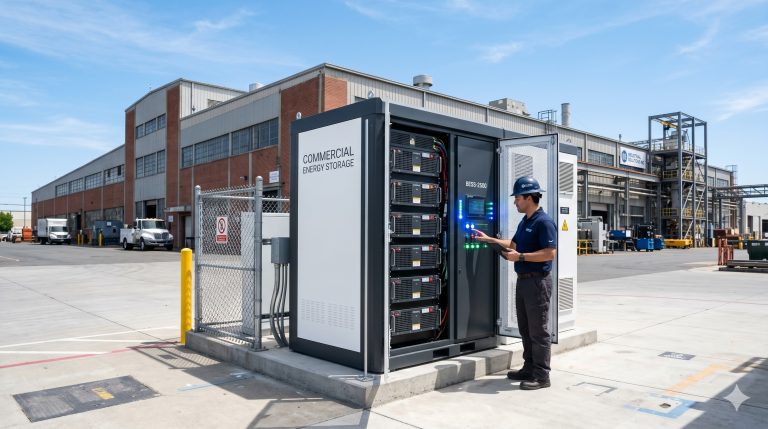
At the heart of effective digital tracking battery manufacturing lies a sophisticated synergy between the Power Conversion System (PCS) and the Battery Management System (BMS). The PCS serves as the bi-directional gateway, managing the flow between AC and DC power with a typical high round-trip efficiency exceeding 95% in modern deployments. Meanwhile, the BMS operates as the brain of the battery, performing real-time cell balancing and state-of-charge (SoC) estimations. This digital tracking manufacturing paradigm ensures that every LFP cell is matched within a 5mV variance threshold, significantly enhancing the system’s life. Advanced BMS architectures now incorporate peer-to-peer communication protocols that synchronize with the central EMS, enabling ultra-fast dispatch responses of less than 200ms for frequency regulation. This level of integration is critical for minimizing degradation and ensuring consistent output, with digital tracking battery manufacturing ensuring that each module meets stringent quality gates before deployment.
Thermal Management: Liquid Cooling vs. Air Cooling Efficiency
Thermal management is the single most critical factor influencing cycle life and safety in high-capacity C&I energy storage. While traditional forced-air systems have been prevalent, digital tracking battery manufacturing is increasingly favoring liquid cooling due to its superior heat transfer coefficient. Liquid cooling systems maintain cell temperature deviations within an optimal range of 2°C to 3°C, compared to air-cooled systems which often experience gradients of 5°C to 8°C. This precise thermal control directly correlates with cycle life; maintaining a cell at 25°C versus 35°C can extend its lifespan by up to 40%, pushing cycle life beyond 8000 cycles at 90% DoD. The digital tracking approach allows for the intricate design of cooling plates and flow rates, ensuring that thermal runaway risks are mitigated. These systems are engineered to handle high ambient temperatures, ensuring continuous operation even in demanding industrial environments, thus protecting the capital expenditure associated with large-scale BESS investments.
Ensuring Safety and Compliance
Safety is non-negotiable in the energy storage sector. Digital tracking battery manufacturing integrates multi-level fire suppression systems, including aerosol and gaseous agents, directly into the cabinet design. Compliance with UL 9540A (thermal runaway fire propagation testing) and IEC 62619 (safety requirements for secondary lithium cells) is paramount. The digital manufacturing process ensures that cell-level fuses and contactors are precisely placed to isolate faults immediately. By incorporating UN38.3 certified cells, manufacturers guarantee safe transport and handling, solidifying the credibility of digital tracking battery manufacturing as a secure investment for C&I facilities seeking to minimize downtime and liability.
Technical Specifications & Core Metrics
The following technical specification table outlines the baseline requirements for a high-performance system derived from digital tracking battery manufacturing. These parameters reflect the current industry standard for Tier-1 LFP battery solutions.
| Key Parameter | Technical Specification |
|---|---|
| Battery Chemistry | Tier-1 LFP (Lithium Iron Phosphate) |
| System Capacity | Up to 5.0 MWh (Multi-Cabinet Parallel) |
| Cycle Life | >8000 cycles @ 90% DoD (End of Life 70% EOL) |
| Round-Trip Efficiency | >94.5% (DC/AC, including cooling auxiliaries) |
| Thermal Control | Liquid Cooling (Fluid Pipe Connectors, ΔT < 3°C) |
| Safety Standards | IEC 62619, UL 9540A, UN38.3, CE |
| Protection Rating | IP67 (Cell Level) / IP55 (Cabinet Level) |
Commercial ROI & Grid Support Strategy
The economic viability of a BESS is predicated on the total cost of ownership (TCO) and peak-shaving ROI. By leveraging digital tracking battery manufacturing, integrators can optimize the depth of discharge (DoD) to maximize daily savings. A C&I facility with an 800Vdc system capacity can effectively perform daily peak shaving, reducing demand charges by up to 30% per month. Furthermore, the ability to participate in demand response programs or provide frequency regulation services adds an additional revenue stream. In markets with high industrial electricity costs, the Levelized Cost of Storage (LCOE) drops significantly with high-cycle life cells, often falling below $0.10/kWh over the asset’s lifespan. The inherent flexibility of these systems allows for seamless integration with existing solar PV arrays, turning the C&I property into a controllable, revenue-generating energy asset.
Deployment Scenarios: EV Supercharging and Micro-Grids
One of the most compelling deployment scenarios for digital tracking battery manufacturing is the integration with EV Supercharging stations (PV-Storage-Charging synergy). These systems buffer the grid impact of ultra-fast chargers, using the battery to smooth out peak demand and lower transformer upgrade costs. The high discharge rate capability of Tier-1 LFP cells supports charging rates of 150kW to 350kW. In micro-grid applications, the system provides grid-forming capabilities, allowing for seamless transition to island mode during grid outages. This is critical for industrial parks that require uninterrupted power to maintain operational continuity. The modular nature of these systems allows for scaling from 1MWh up to multi-MWh deployments, ensuring that as energy demands grow, the infrastructure can expand without significant redesign.

Conclusion: The Future of Energy Resilience
Digital tracking battery manufacturing is more than a technological trend; it is the foundation of a resilient, efficient, and sustainable energy future for the commercial and industrial sector. Through rigorous quality control, advanced liquid cooling integration, and a relentless focus on safety and compliance, these systems provide the reliability that businesses demand. The data-driven approach to manufacturing ensures that every system delivers on its promises of high round-trip efficiency, long cycle life, and robust grid support. As we look towards a zero-carbon future, investing in high-quality, digitally tracked battery solutions is not just an operational upgrade—it is a strategic imperative for energy independence and financial performance.