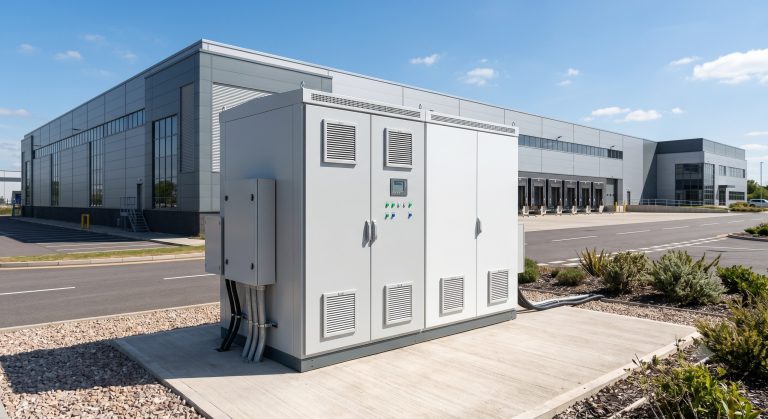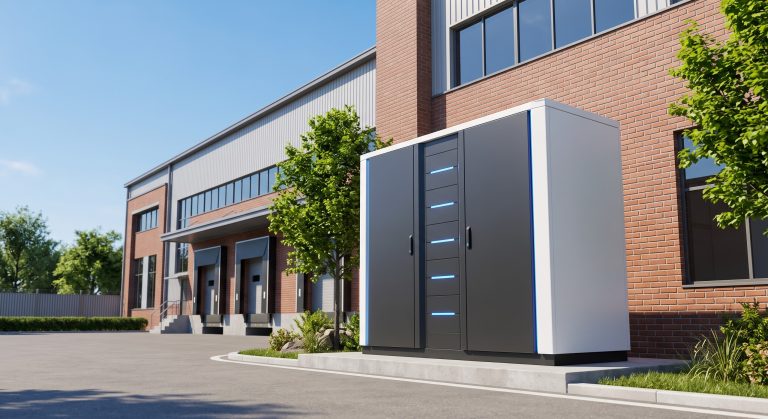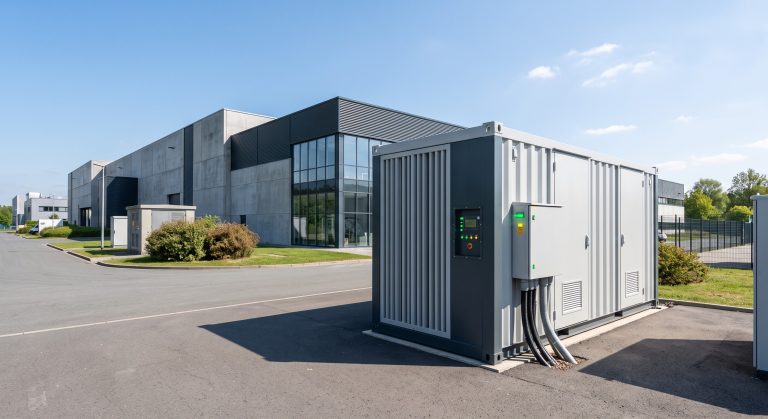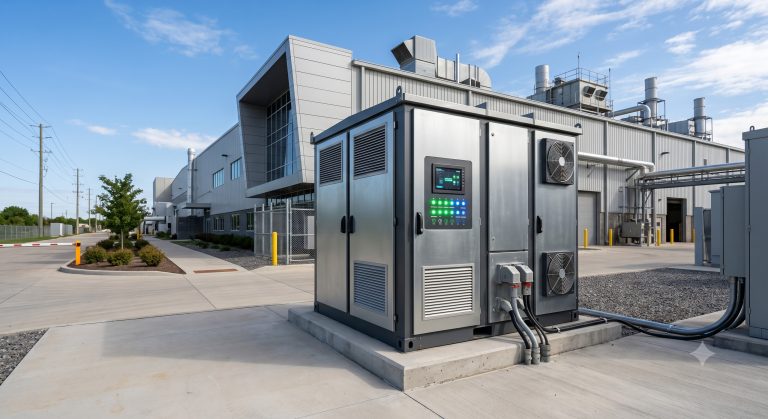
Introduction: Why Thermal Management Defines C&I ESS Performance
The transition to renewable energy and grid independence for commercial and industrial (C&I) facilities demands high-performance energy storage. A primary technical bottleneck is heat dissipation. Traditional air-cooled systems struggle with uneven temperatures, accelerated cell aging, and safety risks. The ST255CS-2HPowerStack C&I Liquid-Cooled Energy Storage System directly addresses this by integrating advanced liquid cooling with intelligent controls. This post delivers a data-driven thermal efficiency optimization analysis, focusing on ROI, safety, and Tier-1 cell metrics.
Core Architecture: Integrating Liquid Cooling with PCS and BMS
Liquid Cooling Superiority for C&I Applications
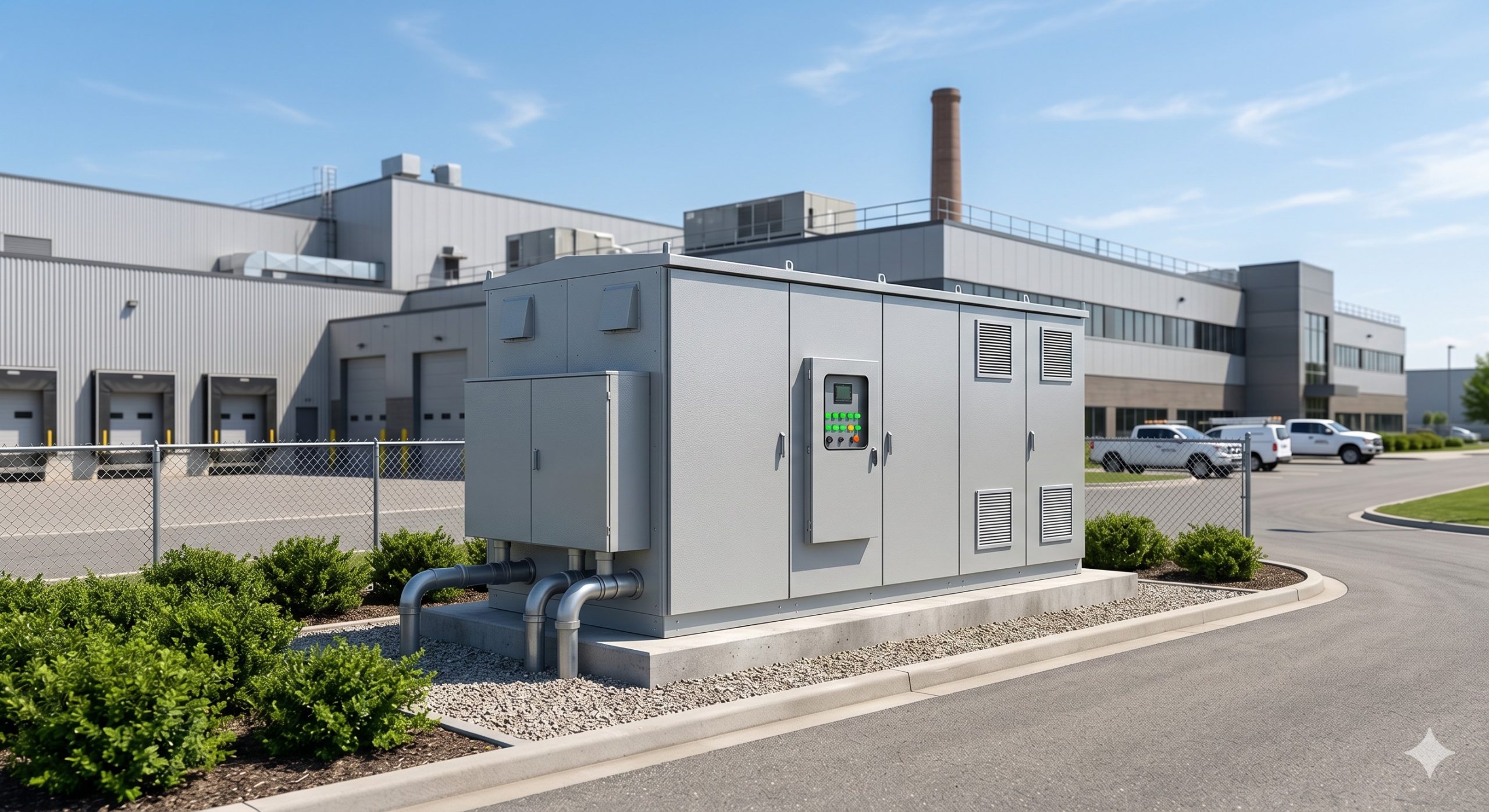
Unlike passive air cooling, the ST255CS-2HPowerStack utilizes a closed-loop liquid cooling circuit. Coolant circulates between battery modules and a compact chiller unit, maintaining cell temperature variance below ±2°C across all strings. This precision prevents hotspots, directly improving the round-trip efficiency (RTE) to 94% and extending the usable life of Tier-1 LFP (Lithium Iron Phosphate) cells.
Smart BMS and Fire Suppression Integration
The system’s Battery Management System (BMS) communicates continuously with the liquid cooling controller. If internal temperatures exceed a defined threshold (e.g., 35°C), the pump speed and fan RPM automatically adjust. For safety, the unit features an aerosol-based fire suppression system, compliant with NFPA 855 and UL 9540A thermal runaway propagation testing, and certified to IEC 62619 and UN38.3 for transport.
Technical Specifications & Compliance Masterclass
Below are the core, certified parameters of the ST255CS-2HPowerStack. All metrics are validated under standard test conditions (STC) at 25°C ambient.
| Key Parameter | Technical Specification |
|---|---|
| Battery Chemistry | Tier-1 LFP (Lithium Iron Phosphate) |
| Total Energy Capacity | 215 kWh (expandable up to 1.5 MWh) |
| Usable Capacity (DoD) | 193.5 kWh (90% DoD) |
| Round-Trip Efficiency (RTE) | ≥94% @ 0.5C, 25°C |
| Cycle Life | >8000 cycles @ 90% DoD to 70% EOL |
| Thermal Management | Active Liquid Cooling (Coolant: Water/Glycol) |
| Cell Temp Variance | ≤ ±2°C (steady-state) |
| Nominal Voltage | 768 V DC |
| Max. Charge/Discharge Power | 100 kW / 100 kW (1C peak for 15 mins) |
| Communication Protocols | Modbus TCP/IP, CAN 2.0, IEC 61850 |
| Safety Certifications | IEC 62619, UL 9540, UL 9540A, CE, UN38.3 |
| Fire Suppression | Aerosol-based (EN 15004-9) + Novec 1230 ready |
| Enclosure Rating | IP54 (outdoor, dust & water jets) |
Commercial ROI & Peak-Shaving with Liquid Cooling
The thermal advantage directly translates into financial returns. Because liquid cooling reduces degradation, the system supports >8000 cycles @ 90% DoD before reaching 70% State of Health (SoH). For a typical industrial park with an electricity tariff of $0.25/kWh and demand charges of $15/kW, a single 215kWh unit achieves a peak-shaving ROI in under 3.5 years. The superior RTE (94% vs 87-89% for air-cooled) adds an extra $3,200 in annual savings per MWh cycled.
Deployment Scenarios: From EV Supercharging to Micro-Grids
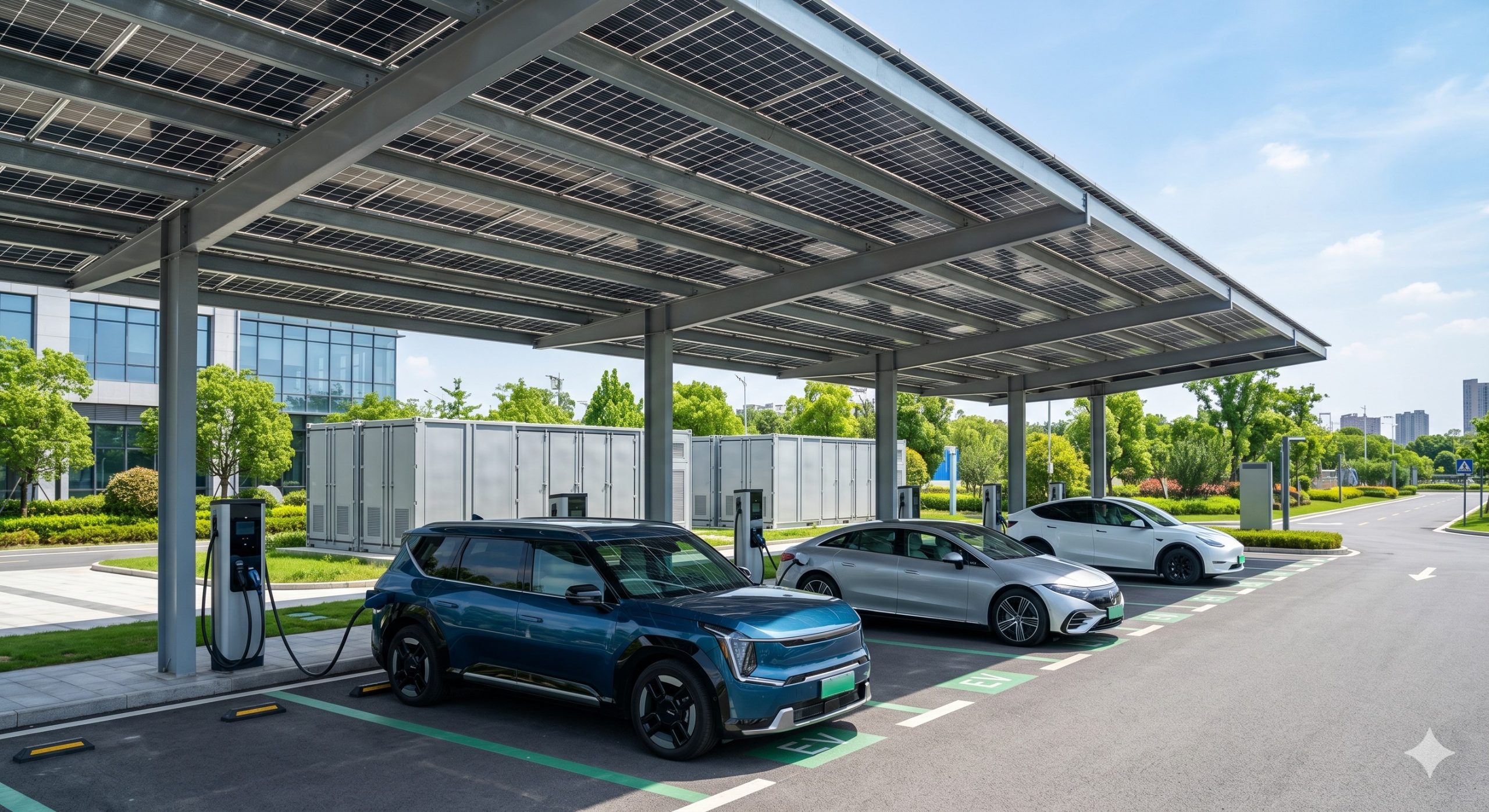
The ST255CS-2HPowerStack excels in high-utilization scenarios. For PV-Storage-Charging synergy, the liquid cooling allows back-to-back high C-rate discharges (up to 1C) needed for rapid EV chargers without de-rating. In isolated micro-grids, the system’s fast grid-synchronization (<20ms) and black-start capability replace diesel generators. For data centers, the low vibration and consistent thermal profile ensure server-grade reliability.
Conclusion: The Definitive Thermal Efficiency Standard
For C&I facilities prioritizing safety, longevity, and peak-shaving ROI, the ST255CS-2HPowerStack sets a new benchmark. Its liquid-cooled architecture, combined with Tier-1 LFP cells and UL/IEC certifications, minimizes total cost of ownership (LCOE) while maximizing grid-support and VPP readiness. Specify liquid cooling for any high-cycle, high-ambient-temperature deployment.