COMMERCIAL SYSTEMS ENGINEERING REFERENCE MANUAL: PLUG-AND-PLAY CONTAINER BESS QUICK START GUIDE
EXECUTIVE SUMMARY
This document serves as the definitive technical reference for the deployment and operational integration of the next-generation Plug-and-Play Containerized Battery Energy Storage System (BESS). Designed for commercial and industrial (C&I) applications, this system redefines grid-interactive energy management through a paradigm of pre-engineered, factory-assembled, and fully validated modularity. The platform is engineered to minimize on-site commissioning time, reduce installation costs, and deliver immediate grid services, including peak shaving, demand charge reduction, and emergency backup power.
By integrating Tier-1 Lithium Iron Phosphate (LFP) battery cells with an advanced liquid cooling architecture and a bi-directional Power Conversion System (PCS), this solution delivers industry-leading round-trip efficiency and cycle life within a robust, outdoor-rated container. This reference manual provides engineering teams, system integrators, and facility managers with the essential architectural overview, safety protocols, and technical specifications required for a successful deployment.
SYSTEM ARCHITECTURE & SAFETY
The system architecture is founded on a centralized direct current (DC) busbar configuration, integrating four primary subsystems: the battery rack, the PCS, the Battery Management System (BMS), and the Energy Management System (EMS). The battery rack employs a series-parallel configuration of prismatic LFP cells to achieve a nominal DC voltage of 1500V, optimizing energy density and power conversion efficiency. The bi-directional PCS enables seamless grid synchronization, supporting both grid-tied and islanded modes of operation.
Safety is the cornerstone of the engineering design, featuring a multi-layered protection scheme that includes active cell voltage balancing, real-time temperature monitoring at the module level, and a three-stage fire suppression system. The containerized enclosure is constructed from marine-grade steel with C5 corrosion resistance, ensuring IP54/NEMA 3R environmental protection. Integral gas detection and positive pressure ventilation systems provide early warning and mitigation of potential thermal events, ensuring compliance with the most stringent international safety standards.
KEY FEATURES
– Pre-Engineered Modularity: Factory-assembled and tested, significantly reducing on-site engineering and commissioning time. Standardized interfaces for AC power, communication, and cooling ensure rapid, error-free integration.
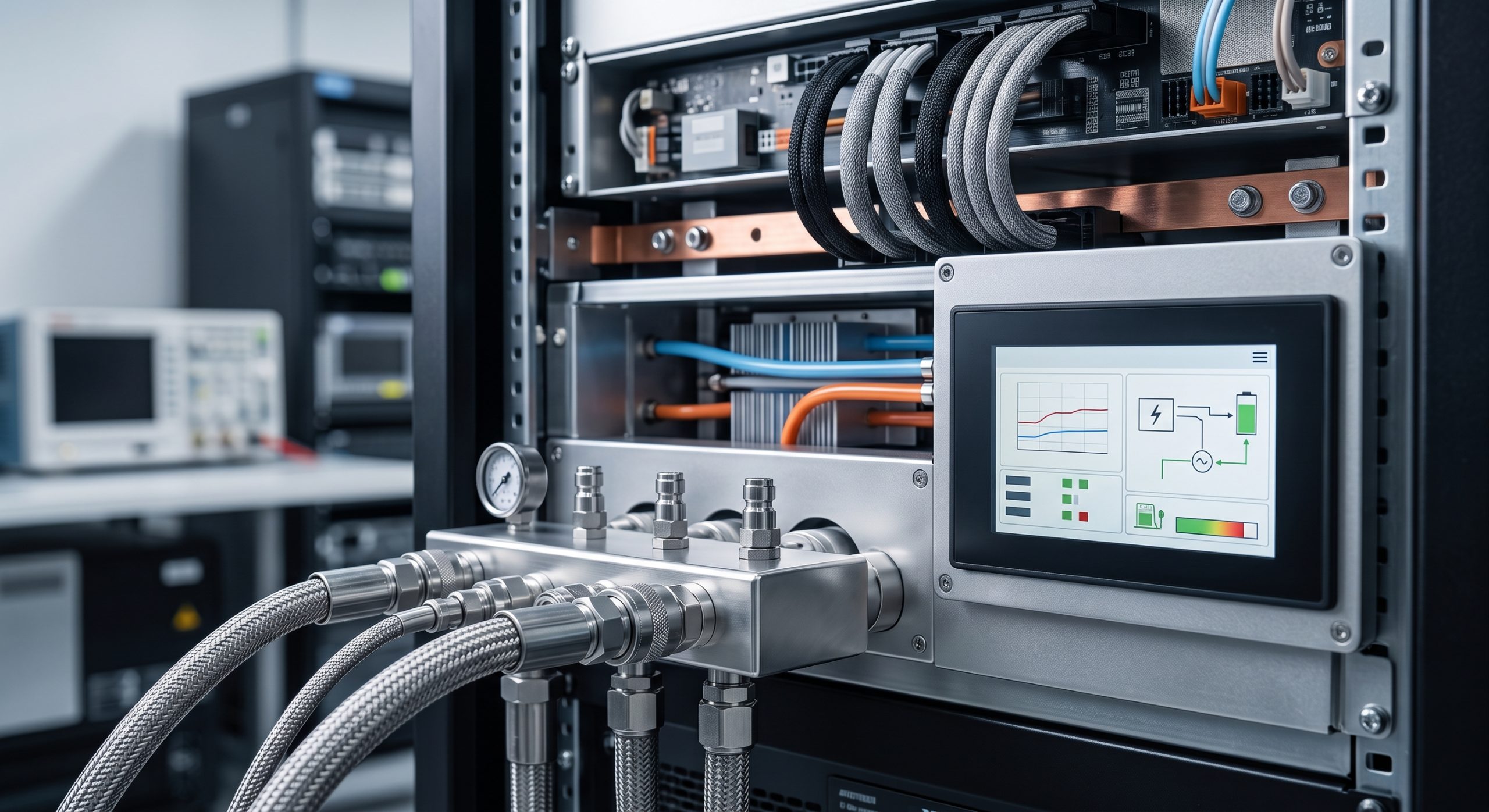
– Advanced Liquid Cooling Architecture: Maintains a stable optimal operating temperature range of 25°C ± 2°C across all cells, enhancing LFP longevity and ensuring consistent power output. The closed-loop system minimizes water consumption and maintenance.
– Integrated Energy Management & Controls: The proprietary EMS platform provides intelligent dispatch logic, supporting dynamic grid response, time-of-use (TOU) arbitrage, and remote monitoring via secure cloud connectivity (4G/5G/Ethernet).
– Enhanced Safety & Compliance: Certified to UL 9540, IEC 62619, and UN 38.3, incorporating a UL 9540A tested cell and a multi-level suppression (active/passive) system for complete asset protection.
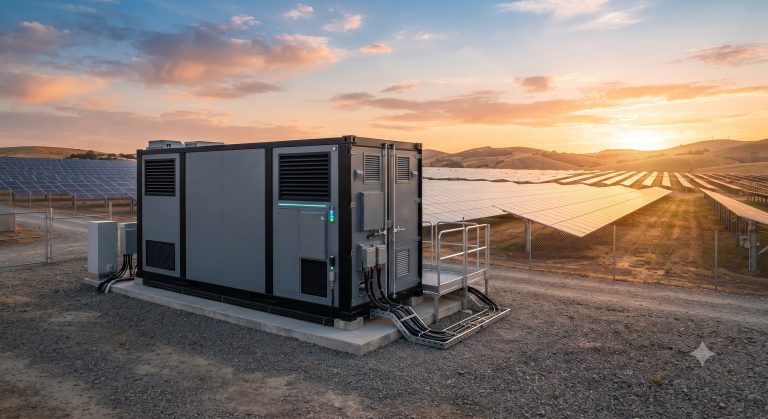
– Rapid Deployment & Plug-and-Play: Fully containerized with external quick-connect ports for power and data. The system is delivered ready for immediate service, drastically reducing time-to-revenue for asset owners.
COMPLIANCE & STANDARDS
This equipment is engineered and certified to meet the following regulatory standards for a safe and reliable global deployment:
– Safety: UL 9540 (Energy Storage Systems and Equipment), IEC 62619 (Secondary Cells and Batteries – Safety Requirements), UL 1973 (Batteries for Use in Stationary Applications).
– Transportation: UN 38.3 (Transport of Dangerous Goods – Lithium Batteries).
– Grid Interconnection: IEEE 1547 (Standard for Interconnection and Interoperability of Distributed Energy Resources with Electric Power Systems), IEC 61727 (Photovoltaic Systems – Characteristics of the Utility Interface).
– Environmental Protection: IP54 (Ingress Protection), NEMA 3R (Outdoor Enclosure).
TECHNICAL SPECIFICATIONS
| Parameter | Specification |
|---|---|
| Nominal Capacity (Single Unit) | 1.0 MWh / 2.0 MWh (Expandable) |
| Nominal AC Power Output | 500 kW / 1000 kW |
| Cell Chemistry | Tier-1 LFP (Lithium Iron Phosphate) |
| Cooling Method | Smart Liquid Cooling (Closed-Loop) |
| System Voltage | 1500 V DC |
| Round-Trip Efficiency (AC-AC) | ≥ 92% |
| Enclosure Protection | IP54 / NEMA 3R |
| Operating Temperature Range | -30°C to +55°C |
| Dimensions (L x W x H) | 20ft ISO Container (6058 x 2438 x 2896 mm) |
| Weight (Approx.) | ~25,000 kg (depending on capacity) |
| Fire Suppression System | Aerosol / Gas-based (3-Stage) |
| Communication Protocols | Modbus TCP/IP, IEC 61850, DNP3 |
INDUSTRIAL DEPLOYMENT
The Plug-and-Play BESS is optimized for a diverse range of industrial and commercial applications. Typical deployment scenarios include:
– Manufacturing Facilities: Mitigate demand charges by shaving peak loads, ensuring stable production costs and protecting sensitive machinery from voltage sags.
– Data Centers: Provide uninterruptible power support (UPS) and grid stabilization, ensuring 24/7 operational integrity and reliability.
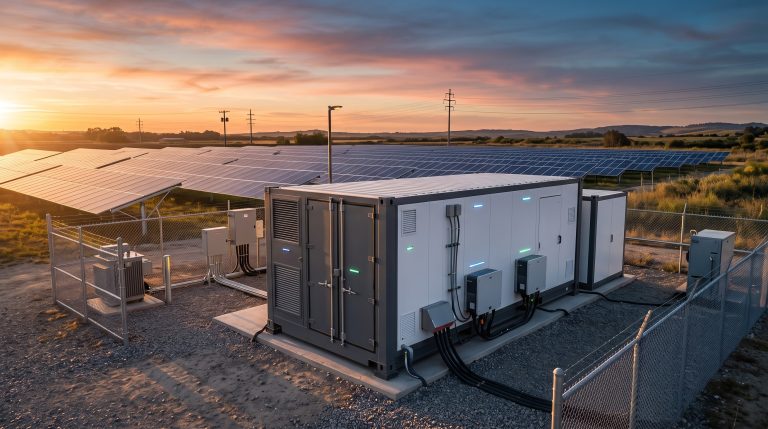
– Renewable Integration: Smooth the intermittent output of on-site solar PV, enabling higher self-consumption and reducing grid feed-in, thereby maximizing economic returns and grid independence.
– EV Charging Hubs: Support ultra-fast EV charging infrastructure by buffering grid capacity, preventing demand spikes, and delivering reliable, high-power charging sessions.
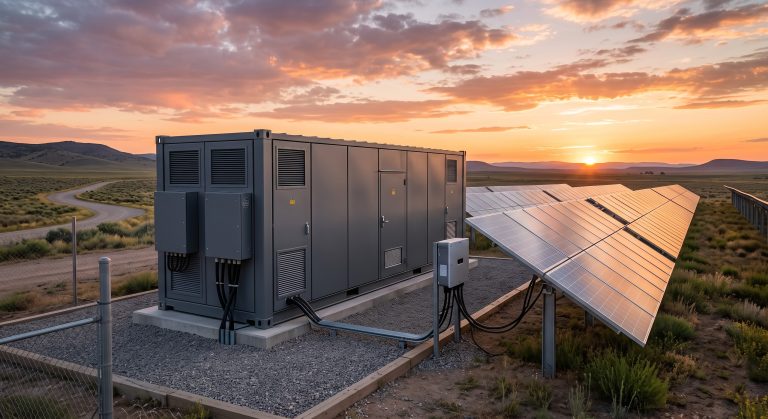
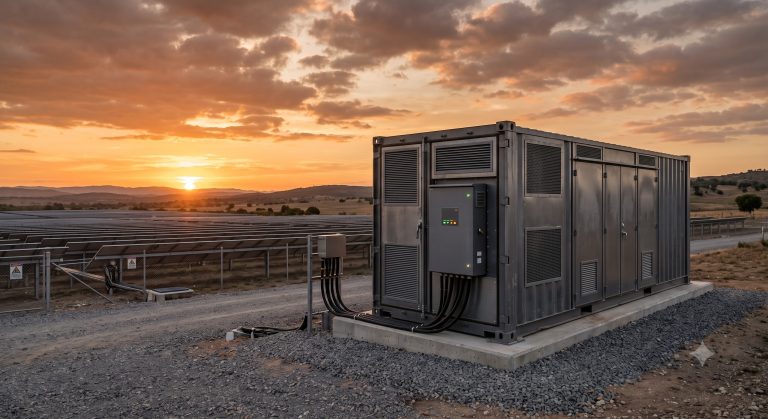
For optimized performance, the system is designed for ground-level outdoor installation on a reinforced concrete pad. The recommended ambient operational temperature range is -30°C to +55°C (with derating above 45°C). The system’s standard 20-foot ISO container footprint allows for easy transportation and stacking, with parallel expansion capabilities to scale capacity from 1 MWh to 10 MWh and beyond by interconnecting multiple units via the shared DC busbar.
📥 Download Technical Specification
Click the button below to view or download the full official PDF datasheet.