Introduction: The Escalating Burden of Commercial Demand Charges
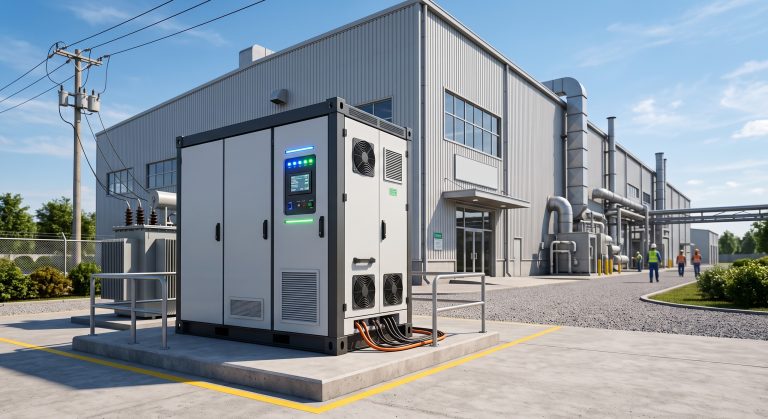
For commercial and industrial (C&I) facility operators, the single most volatile and controllable line item on the electricity bill is the demand charge. Unlike volumetric energy charges (kWh), demand charges (kW) are levied based on the highest 15-minute average power draw during a billing cycle. In regions with aggressive rate structures, demand charges can represent 30% to 70% of a facility’s total monthly utility expense. This financial exposure is the primary catalyst behind the rapid adoption of Demand Charge Management BESS (Battery Energy Storage Systems).
This analysis dissects the architecture, technical specifications, and financial mechanics of deploying a behind-the-meter (BTM) Demand Charge Management BESS to achieve verifiable peak shaving. We will examine the interplay between LFP (Lithium Iron Phosphate) cell chemistry, liquid cooling thermal management, and smart EMS (Energy Management System) dispatch logic to quantify the Total Cost of Ownership (TCO) and return on investment (ROI).
System Architecture: PCS, BMS, and Thermal Control Dynamics
Bi-Directional PCS and Grid Synchronization
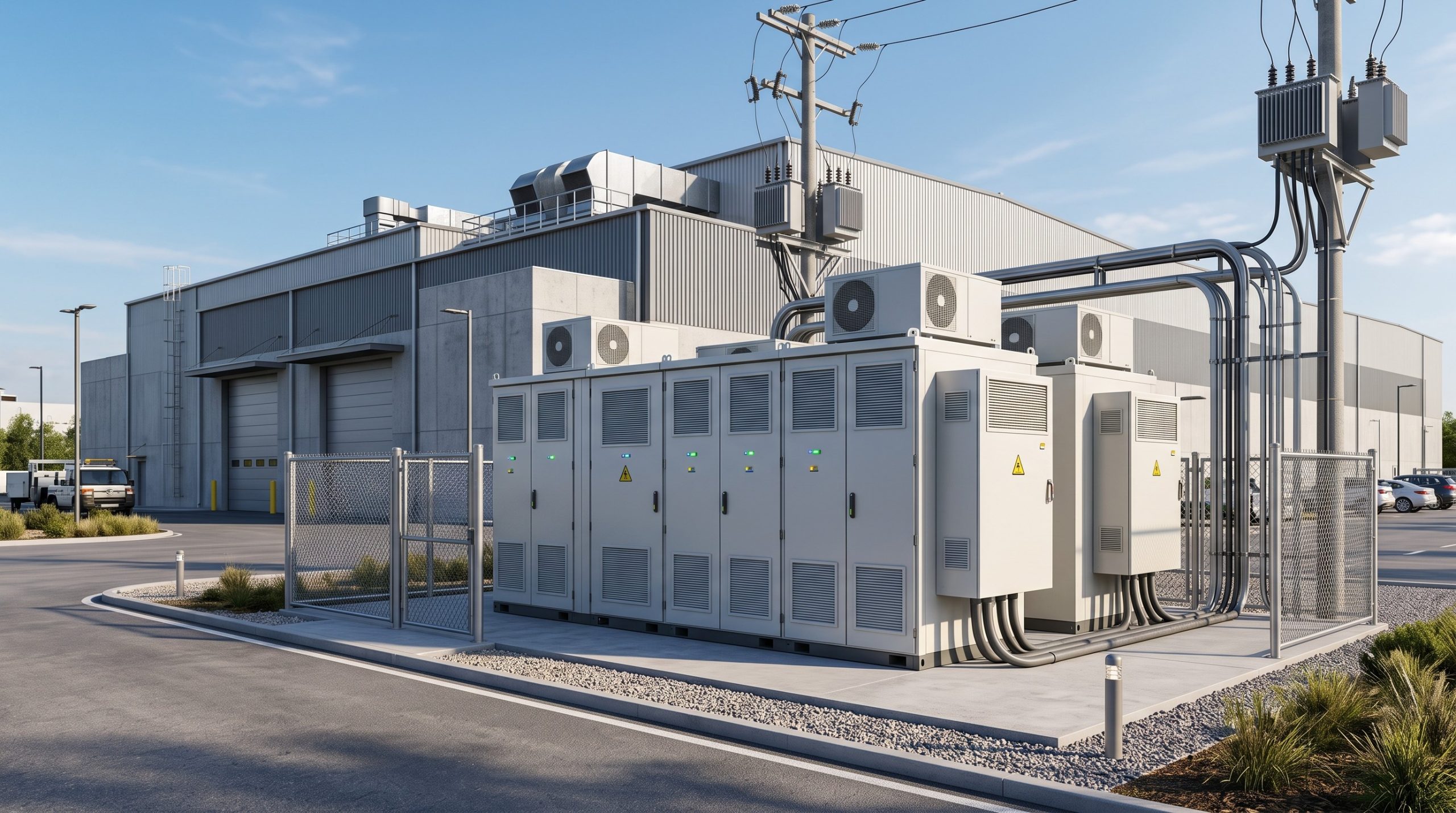
The core of any Demand Charge Management BESS is the Power Conversion System (PCS). Unlike standard inverters, a bi-directional PCS must execute seamless transitions between grid-following (charging) and grid-forming (discharging) modes. For demand charge management, the PCS must achieve a response time of less than 100ms to capture the load spike before the utility meter registers the peak. Advanced PCS units now integrate active harmonic filtering and reactive power compensation, effectively improving the facility’s power factor and avoiding penalties.
Battery Management System (BMS) and Cell Balancing
The BMS is the intelligence layer that ensures safety and longevity. In a Demand Charge Management BESS, the BMS performs three critical functions: State of Charge (SoC) estimation, State of Health (SoH) monitoring, and cell-level passive or active balancing. Active balancing is superior for peak-shaving applications because it redistributes energy from stronger cells to weaker ones, preventing premature capacity fade. This is essential for maintaining the system’s ability to deliver full power during consecutive high-demand days.
Liquid Cooling vs. Air Cooling: Thermal Efficiency Optimization
Thermal management is the single largest determinant of system longevity and safety. Air cooling is cost-effective but creates thermal gradients across the battery rack, leading to uneven degradation. In contrast, liquid cooling circulates a glycol-water mixture through cold plates sandwiched between cells, maintaining a temperature delta of less than 3°C across the entire pack. This precision thermal control allows the Demand Charge Management BESS to operate at higher C-rates (continuous discharge) without derating, which is vital for shaving short, intense load spikes.
Technical Specifications and Performance Metrics
The following table outlines the critical engineering parameters that define a Tier-1 Demand Charge Management BESS. These specifications are benchmarked against IEC 62619 and UL 9540 standards for safety and performance.
| Key Parameter | Technical Specification |
|---|---|
| Battery Chemistry | Tier-1 LFP (Lithium Iron Phosphate) |
| System Capacity | 215 kWh / 372 kWh / 1 MWh (Modular) |
| Cycle Life | >8000 cycles @ 90% DoD, 25°C |
| Round-Trip Efficiency | ≥ 90% (DC-DC), ≥ 87% (AC-AC) |
| Depth of Discharge (DoD) | 90% (Standard), 100% (Emergency) |
| Cooling Method | Liquid Cooling (Intelligent Thermal Management) |
| Operating Temperature | -20°C to +55°C (Derating above 45°C) |
| Communication | Modbus TCP/IP, CAN 2.0, RS485 |
| Certifications | IEC 62619, UL 9540, UL 9540A, CE, UN38.3 |
| Ingress Protection | IP54 (Outdoor Cabinet), IP67 (Battery Pack) |
| Fire Suppression | Aerosol + Perfluorohexanone (Novec 1230) |
| Design Life | 10 Years (or 8000 cycles) |
Commercial ROI: TCO, LCOE, and Peak Shaving Mechanics
CapEx vs. OpEx: The Total Cost of Ownership Equation
The TCO of a Demand Charge Management BESS extends beyond the initial CapEx. Operators must account for round-trip efficiency (RTE) losses (typically 85-90%), auxiliary power consumption (thermal management), and O&M costs. However, the financial model is anchored by the avoided demand charges. For a facility with a monthly peak of 1,000 kW and a demand charge of $20/kW, the annual exposure is $240,000. A correctly sized BESS can shave 20-40% of that peak, yielding savings of $48,000 to $96,000 annually.
Demand Response and Utility Incentive Capture
Beyond peak shaving, a Demand Charge Management BESS can participate in Demand Response (DR) programs. When the grid is stressed, the utility dispatches a signal, and the BESS discharges to reduce the facility’s net load. This creates a dual revenue stream: avoided demand charges and DR incentive payments. In markets like PJM, CAISO, and ERCOT, these payments can accelerate the payback period to under 5 years.
Cycle Life and Depth of Discharge (DoD) Economics
The economic viability of peak shaving hinges on the battery’s cycle life at a specific Depth of Discharge (DoD). Tier-1 LFP cells typically deliver >8000 cycles at 90% DoD. However, operating at 100% DoD for daily peak shaving may degrade the cells faster. The EMS must be programmed to optimize the DoD window based on the facility’s load profile, balancing the need for maximum shaving against long-term asset preservation. A well-designed system will maintain >70% capacity retention after 10 years of daily cycling.
Deployment Scenarios: Industrial Parks and EV Supercharging
Industrial Parks and Manufacturing Facilities
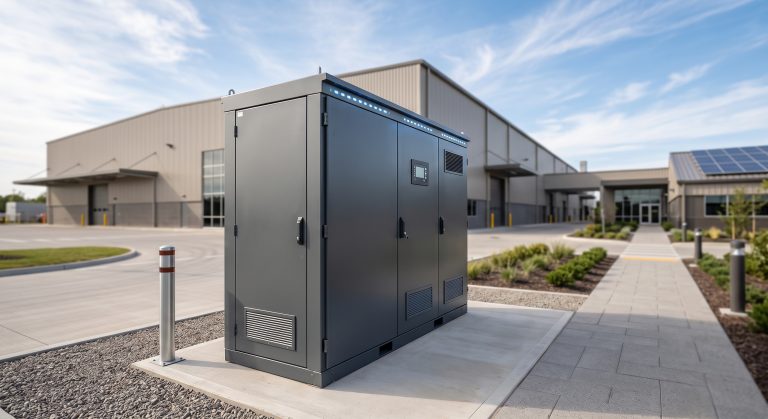
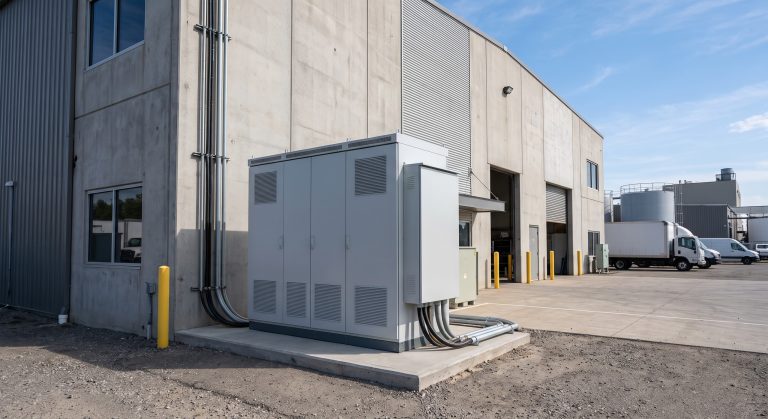
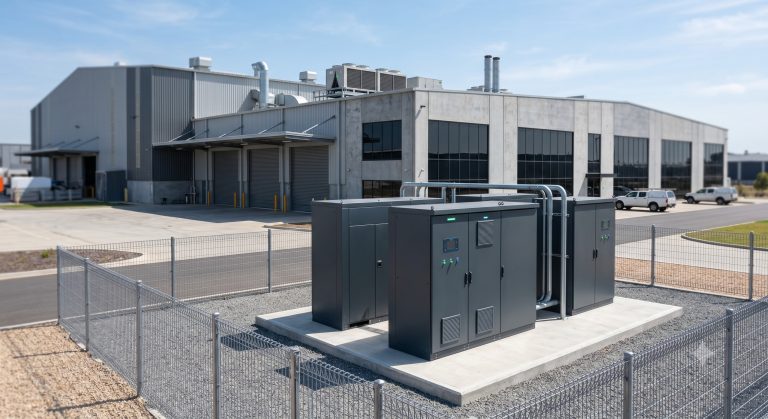
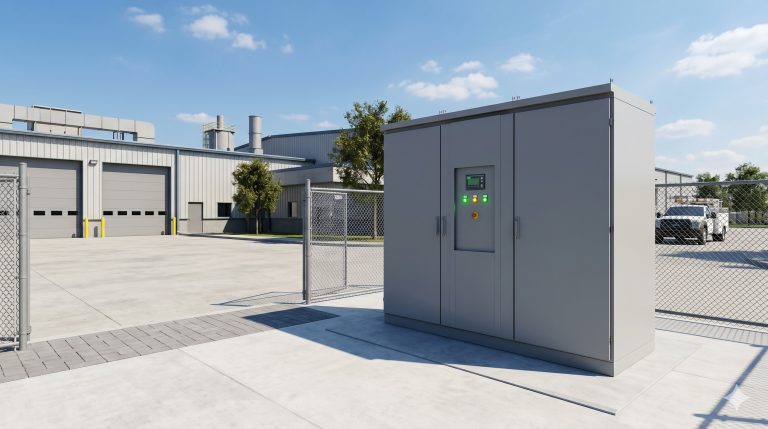
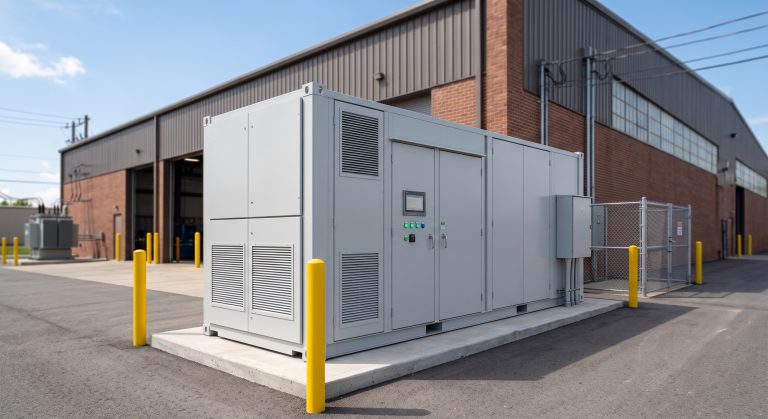
In heavy manufacturing, Demand Charge Management BESS units are deployed behind the main utility meter. The EMS monitors the facility’s load in real-time. When the load approaches the predefined peak threshold, the BESS discharges to cap the demand. This is particularly effective for facilities with highly transient loads, such as welding shops, stamping plants, and plastic injection molding facilities. The modular nature of modern BESS cabinets allows for parallel expansion as the facility grows.
PV-Storage-Charging (光储充) EV Supercharging Stations
The integration of Demand Charge Management BESS with PV (solar) and EV supercharging is a rapidly growing application. EV superchargers (DC fast chargers) create massive, short-duration demand spikes that can trigger severe demand charges. By pairing the chargers with a BESS, the system can buffer the peak demand, drawing from the battery instead of the grid. This not only reduces demand charges but also enables the site to host more chargers without requiring a costly utility transformer upgrade. The BESS can also store excess solar energy during the day for use during evening charging peaks.

Conclusion: Strategic Imperatives for C&I Energy Independence
The Demand Charge Management BESS is no longer a niche technology; it is a fundamental pillar of C&I energy strategy. As utility rates continue to escalate and grid instability becomes more frequent, the ability to dynamically manage demand is a competitive advantage. By selecting Tier-1 LFP cells, implementing liquid cooling thermal control, and deploying an AI-driven EMS, facility operators can achieve payback periods of 4-6 years and a Levelized Cost of Storage (LCOS) below $0.10/kWh. The transition to a zero-carbon, resilient, and cost-optimized facility begins with a rigorous TCO analysis of your Demand Charge Management BESS requirements.