Overview
As a B2B Energy Storage System (BESS) technical support engineer specializing in Wantage solutions, I address the most critical grid-support and deployment questions from EPCs, plant engineers, and procurement teams. This FAQ covers peak shaving, seamless off-grid transitions, demand response optimization, PCS round-trip efficiency, and post-sales BMS monitoring for Wantage commercial and industrial battery storage projects.

Frequently Asked Questions
- Q1: How does Wantage BESS perform peak shaving and demand response optimization for commercial facilities?
- Wantage BESS performs peak shaving by discharging stored energy during high-demand periods, reducing facility demand charges by up to 30-50% depending on load profiles. The integrated EMS continuously monitors site load and utility rate structures, automatically triggering discharge when demand approaches a preset threshold. For demand response, Wantage BESS can respond to utility signals within milliseconds, curtailing site load or exporting power to the grid to earn incentive revenue.
- Q2: Can Wantage BESS switch seamlessly between grid-tie and off-grid modes?
- Yes, Wantage BESS supports seamless grid-tie to off-grid switching with a transition time of less than 20 milliseconds, ensuring no interruption to critical loads. The bi-directional PCS maintains voltage and frequency stability during islanding, making it suitable for facilities requiring uninterruptible power. This capability is validated under IEC 62619 and UL 9540 standards for grid-interactive energy storage.
- Q3: What is the round-trip efficiency of Wantage BESS PCS, and how are conversion losses minimized?
- The Wantage PCS achieves a round-trip efficiency of up to 95% under standard operating conditions. Conversion losses are minimized through advanced silicon carbide (SiC) semiconductor technology, adaptive DC bus voltage control, and intelligent sleep modes during low-load periods. This high efficiency directly improves project LCOE and peak shaving arbitrage returns.
- Q4: What battery chemistry and cycle life does Wantage BESS offer for grid-support applications?
- Wantage BESS utilizes Tier-1 LFP (Lithium Iron Phosphate) cells with a cycle life of 6,000-8,000 cycles at 80% depth of discharge (DoD). This chemistry provides superior thermal stability and degradation resistance compared to NMC alternatives. The system is backed by a 10-year performance warranty guaranteeing minimum 70% state of health.
- Q5: How does Wantage ensure fire safety and thermal runaway prevention in grid-support installations?
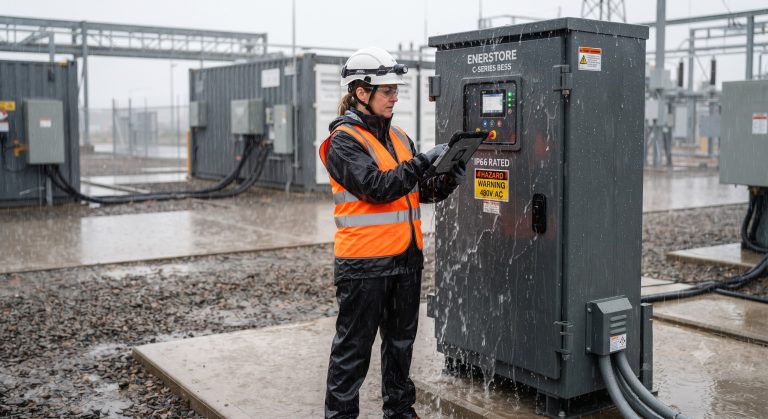
- Wantage BESS employs multi-tier fire safety mechanisms including cell-level gas and smoke detection, pack-level liquid cooling with active thermal management, and cabinet-level aerosol fire suppression. The liquid cooling system maintains cell temperature variance within ±2°C, significantly reducing thermal runaway risk. All enclosures meet IP65+ ratings for harsh outdoor environments.
- Q6: What post-sales BMS monitoring and O&M support does Wantage provide?
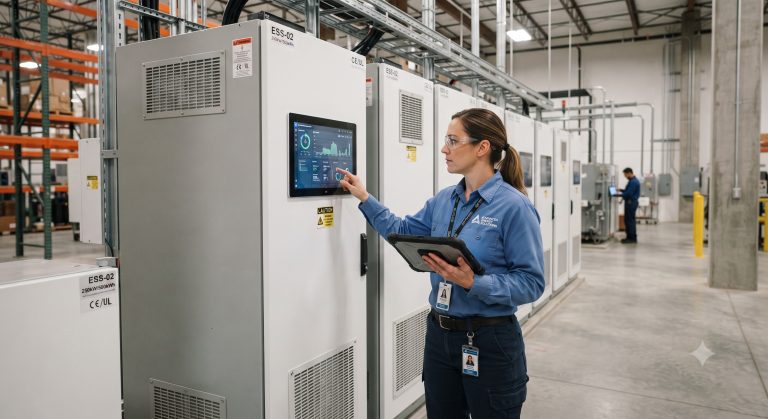
- Wantage provides 24/7 remote BMS monitoring via a cloud-based EMS platform with API integration for SCADA systems. The system performs continuous inter-cell balancing, state-of-charge (SOC) calibration, and fault diagnostics. Local O&M support includes annual maintenance visits, spare parts availability, and global sea freight security for replacement components.
- Q7: How scalable is Wantage BESS for expanding storage capacity in parallel configurations?
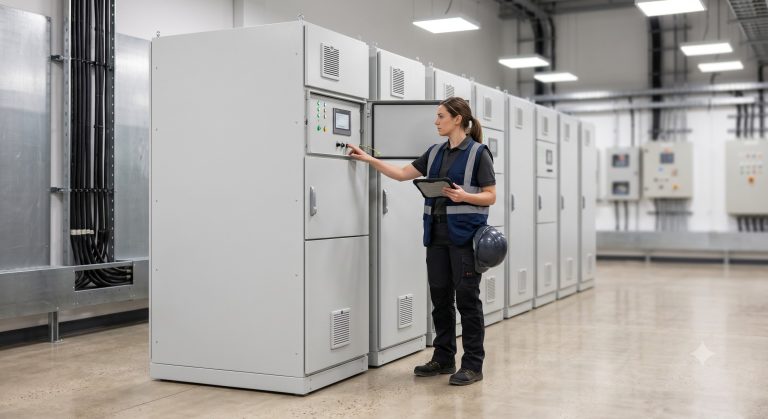
- Wantage BESS supports parallel cabinet connectivity with custom DC busbar linkage, allowing capacity expansion from 100 kWh to 10+ MWh without replacing existing equipment. The modular architecture enables incremental upgrades as facility load grows, protecting initial capital investment. Each cabinet operates independently with its own BMS, ensuring fault isolation and system redundancy.
- Q8: How is ROI calculated for Wantage BESS in peak shaving and demand response projects?
- ROI for Wantage BESS is calculated by comparing annual energy cost savings (demand charge reduction + arbitrage + demand response revenue) against total installed cost, typically yielding a payback period of 4-6 years. Key variables include local utility rate structures, daily cycling frequency, and available incentive programs. Wantage provides a free ROI modeling tool and engineering support to validate project economics before purchase.