Overview
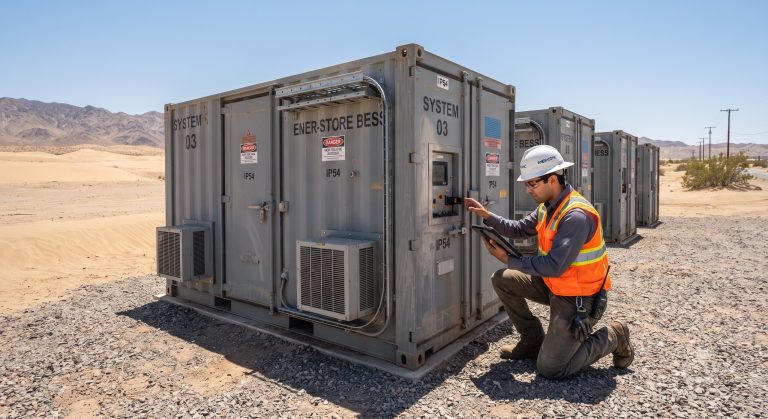
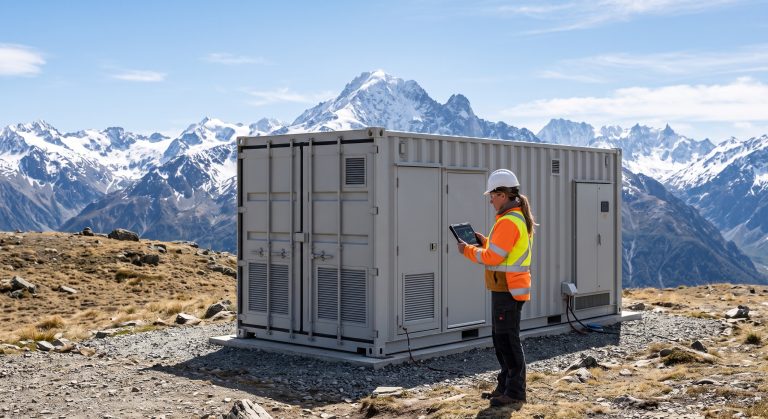
Wantage delivers comprehensive global after-sales maintenance for B2B energy storage system clients through a tiered support network that combines remote BMS diagnostics, regional spare-parts hubs, and on-site field engineering. This FAQ addresses the most common pre-sales and post-sales technical questions plant engineers and procurement teams ask when evaluating Wantage BESS for commercial and industrial deployments.
Frequently Asked Questions
- Q1: What battery chemistry does Wantage use in its BESS, and what is the cycle life?
- Wantage BESS products use Tier-1 LFP (lithium iron phosphate) cells with a standard cycle life of 6,000 to 8,000 cycles at 80% depth of discharge (DoD). This chemistry is selected for its superior thermal stability, long cycle life, and lower degradation rate compared to NMC alternatives. At a typical 1C/1C charge-discharge rate and 25°C ambient temperature, clients can expect 10 to 15 years of operational life before capacity drops below 80% of nominal.
- Q2: How does Wantage handle global after-sales maintenance and spare parts logistics?
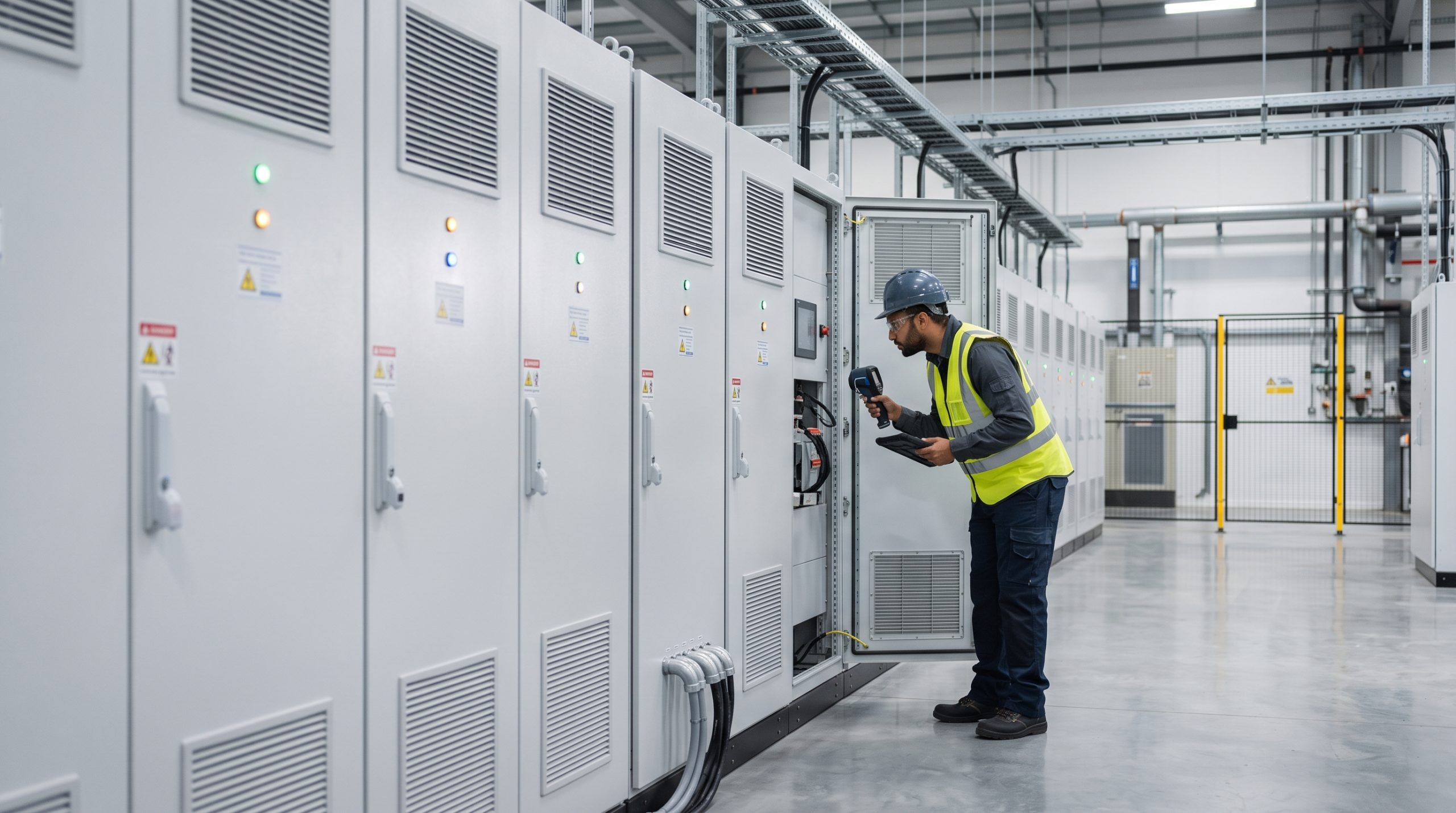
- Wantage operates a three-tier global after-sales maintenance model: remote diagnostics, regional spare-parts hubs, and on-site field service. Tier 1 provides 24/7 remote BMS monitoring and fault diagnosis via the Wantage EMS cloud platform. Tier 2 maintains spare-parts warehouses in North America, Europe, Southeast Asia, and the Middle East for 48-hour component dispatch. Tier 3 dispatches certified field engineers for on-site repair, module replacement, and commissioning within 5 to 7 business days depending on location.
- Q3: What cooling system does Wantage BESS use, and how does it prevent thermal runaway?
- Wantage BESS uses a liquid cooling system with multi-tier thermal runaway prevention. The system combines cell-level temperature sensors, pack-level coolant flow control, and cabinet-level fire suppression (aerosol or perfluorohexanone). If a cell exceeds 55°C, the BMS derates power; at 65°C, it isolates the affected module and triggers the suppression system. This layered approach meets UL 9540A and IEC 62619 safety standards.
- Q4: How does the BMS monitoring system work for post-sales support?
- The Wantage BMS provides real-time cell-level voltage, temperature, and SOC/SOH monitoring with active balancing and remote firmware updates. Data is transmitted to the Wantage EMS cloud via Modbus TCP, CAN, or MQTT, enabling 24/7 remote diagnostics. The system automatically generates alerts for cell imbalance, over-temperature, and voltage anomalies, allowing Wantage support engineers to proactively troubleshoot before failures occur.
- Q5: Can Wantage BESS be configured for both grid-tie and off-grid applications?
- Yes. Wantage BESS supports grid-tie, off-grid, and hybrid configurations through its bi-directional PCS. The system can perform peak shaving, demand response, and seamless islanding switching in under 20 milliseconds. For off-grid micro-grids, the PCS operates in voltage-source mode with droop control to maintain stable frequency and voltage while integrating solar PV and diesel generators.
- Q6: How scalable is Wantage BESS for large commercial and industrial facilities?
- Wantage BESS scales from 100 kWh to 100+ MWh through parallel cabinet connectivity and custom DC busbar linkage. Each cabinet is a self-contained 215 kWh or 372 kWh unit; up to 20 cabinets can be paralleled per PCS without additional hardware. The EMS automatically balances load across cabinets and supports incremental capacity expansion, allowing clients to start with a smaller investment and add modules as energy demands grow.
- Q7: What is the ROI and LCOE for a typical Wantage BESS installation?
- Typical ROI for a Wantage BESS in peak-shaving applications ranges from 4 to 7 years, with an LCOE of $0.05 to $0.09 per kWh over a 10-year horizon. The exact figure depends on local electricity tariffs, demand charges, and cycling frequency. Wantage provides a free ROI modeling tool that calculates payback based on utility rate structures, ITC or local incentives, and expected annual degradation.
- Q8: What international standards and certifications does Wantage BESS comply with?
- Wantage BESS complies with UL 9540, UL 9540A, IEC 62619, IEC 62933, CE, and UN 38.3 for global deployment. These certifications cover cell safety, system-level fire propagation resistance, electromagnetic compatibility, and transportation safety. For grid interconnection, Wantage PCS meets IEEE 1547 and IEC 61727, enabling seamless approval with local utilities in North America, Europe, and Asia-Pacific.