Overview
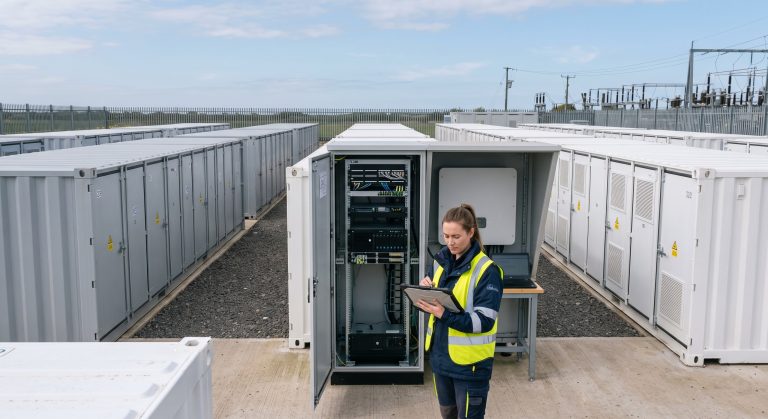
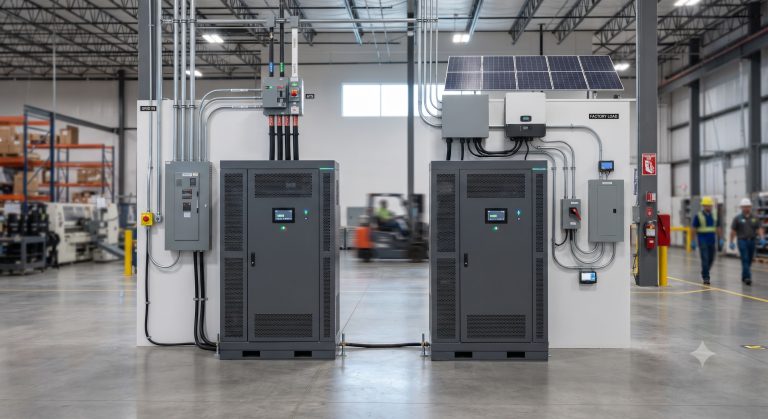
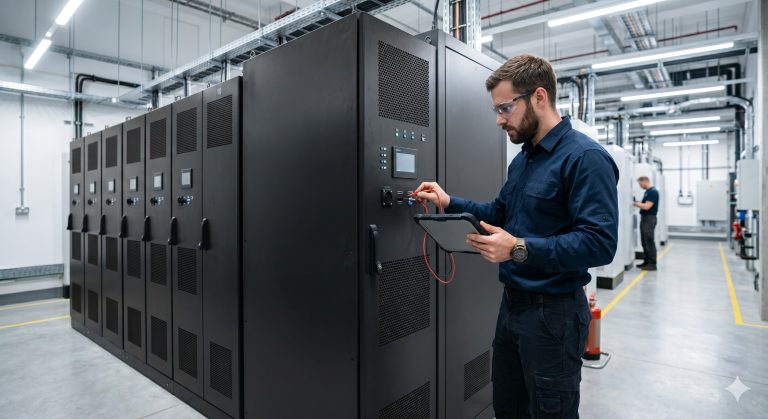
Before a BESS container is deployed, it must undergo a comprehensive series of functional calibration tests to verify system performance, safety, and grid compliance. These pre-commissioning procedures ensure that the BMS, PCS, cooling, and fire suppression systems operate in perfect harmony. For B2B procurement managers and plant engineers, understanding this critical phase reduces operational risks and ensures the asset meets performance guarantees from day one.

Frequently Asked Questions
- Q1: What functional calibration tests are performed on the BMS before container deployment?
- BMS functional calibration includes cell voltage accuracy validation, temperature sensor linearity checks, and state-of-charge (SOC) algorithm alignment. The system undergoes a full-charge/discharge cycle while cross-referencing each cell’s voltage against a high-precision reference meter to ensure the BMS accurately balances cell groups and triggers protection thresholds within +/- 1% error.
- Q2: How is the PCS (Power Conversion System) calibrated for grid-tie vs. off-grid operation?
- PCS calibration involves frequency-watt and volt-var response tests using a programmable grid simulator to verify seamless transition between grid-connected and islanding modes. The reactive power capability and active power ramp rates are tuned to the local grid code, ensuring a smooth switchover under 20ms to protect critical industrial loads during grid disturbances.
- Q3: What safety tests are conducted to prevent thermal runaway and verify fire suppression?
- The fire suppression system undergoes functional proof testing using simulated heat/smoke signals to confirm gas detection, venting, and agent release logic within the required 3-second window. A forced thermal event test validates the multi-tier safety logic, ensuring the BMS initiates contactor opening and the fire panel triggers suppression before cell temperatures exceed 60°C.
- Q4: How do engineers calibrate the liquid cooling system for a BESS container?
- The liquid cooling system is calibrated by performing flow rate balance testing across all battery racks using ultrasonic flow meters to ensure even coolant distribution. A heating element stimulates a thermal load to verify the chiller’s PID control loop and differential pressure sensors, maintaining cell-to-cell temperature variance under 3°C for optimal LFP cycle life.
- Q5: What grid synchronization and power quality tests are mandatory before commissioning?
- Grid synchronization tests include phase sequence verification, voltage matching, and a synchroscope check, followed by a step-load rejection test to verify voltage and frequency ride-through capabilities. Additionally, a harmonic distortion analyzer validates the active filter compensation, ensuring the total demand distortion (TDD) meets IEEE 519 limits to avoid penalties and protect sensitive on-site electronics.
- Q6: How is the container’s insulation and grounding system verified for safety?
- Grounding calibration includes a detailed ground continuity test with a low-resistance ohmmeter and an insulation resistance test applying a 1000V DC megger to confirm the busbars and cabinets exceed 1 Gigaohm. Furthermore, the residual current device (RCD) is tested to trip within 40ms during simulated fault injection, ensuring personnel safety even in high-humidity outdoor environments.
- Q7: What data logging and remote monitoring verification is done before site handover?
- The entire SCADA and remote monitoring chain is verified by injecting simulated data points across the Modbus or IEC 61850 protocol stack to confirm accurate transmission of SOC, SOH, and alarm states to the central control room. An end-to-end latency test ensures critical data packets reach the client’s EMS under 200ms, enabling reliable demand response participation and daily performance reporting.
- Q8: How is the scalability of the system tested if multiple containers are deployed in parallel?
- For parallel BESS containers, a master-slave communication handshake is verified and a DC busbar voltage droop test is performed to confirm balanced load sharing during parallel discharge. A staged load test validates that the EMS can dispatch peak power output proportionally while maintaining AC current sharing accuracy within 2.5% across all parallel units, enabling smooth modular expansion.