Overview
For global energy storage buyers, verifying manufacturing capabilities is critical to ensuring quality, safety, and long-term performance. Virtual tours provide a transparent, real-time window into advanced production facilities, bridging the gap between distant suppliers and stringent project requirements. This FAQ addresses the most common pre-sales and post-sales questions surrounding BESS virtual inspections, technical specifications, and deployment strategies.
Frequently Asked Questions
- Q1: Can global clients request a virtual tour of the advanced manufacturing facility?
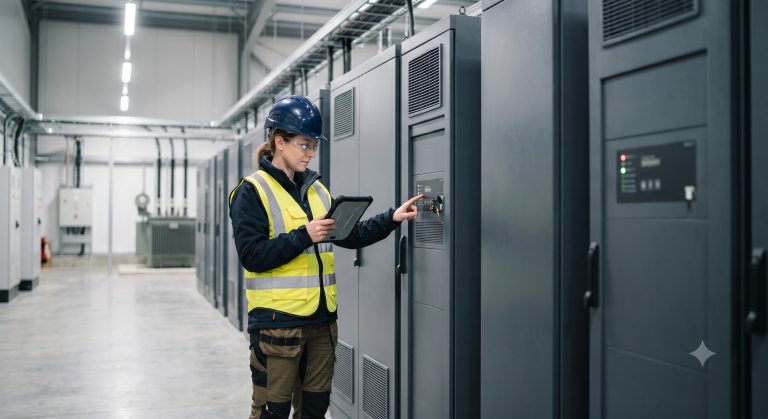
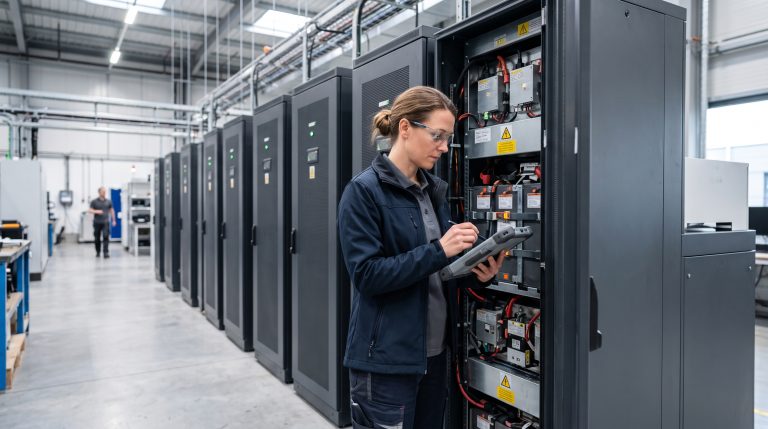
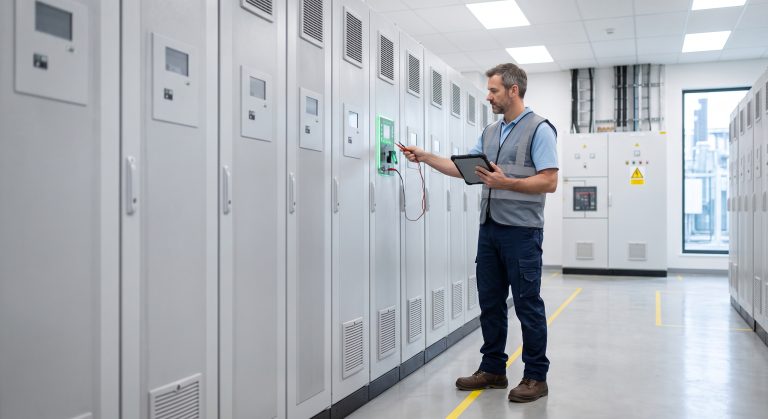
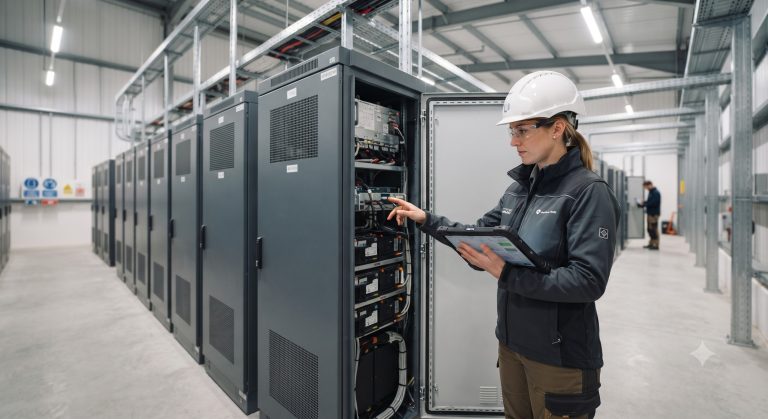
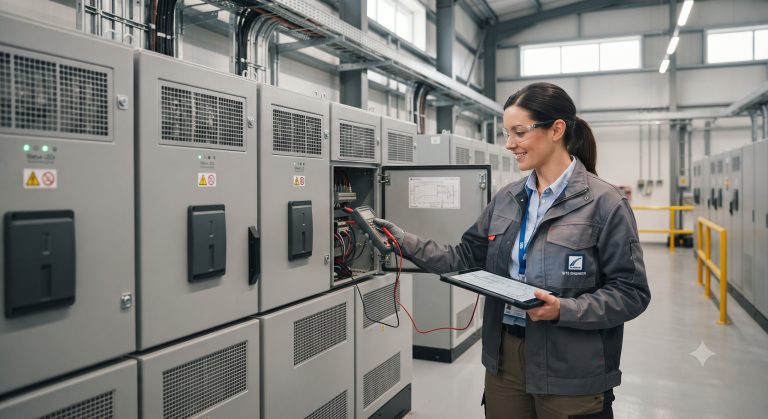
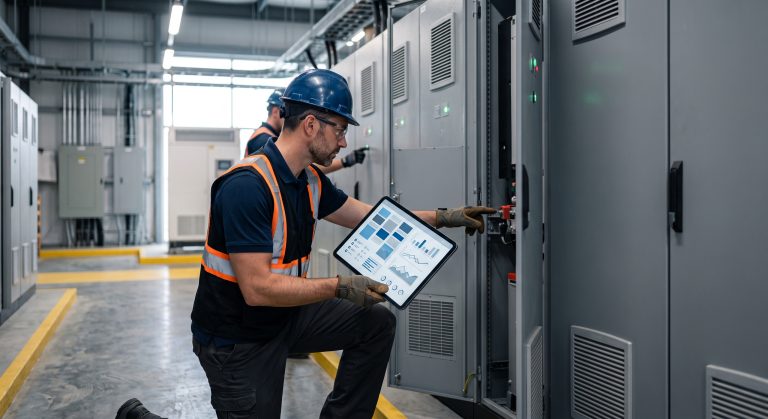
- Yes, we offer scheduled live virtual tours and pre-recorded 360-degree walkthroughs of our advanced manufacturing facility for all global clients. These tours are conducted via secure video platforms and include real-time Q&A with our production engineers, showcasing key areas such as the automated cell assembly lines, liquid cooling system integration, BMS testing stations, and final quality assurance chambers. To ensure a personalized experience, we tailor each virtual tour to focus on the specific products or production stages relevant to your project.
- Q2: What battery chemistry do you use, and what is the guaranteed cycle life at a specific DoD?
- We exclusively utilize Grade A LFP (Lithium Iron Phosphate) prismatic cells from Tier-1 manufacturers, offering a guaranteed cycle life of 6,000 cycles at 80% DoD (Depth of Discharge) under standard operating conditions. This extended lifespan is achieved through advanced liquid cooling that maintains optimal cell temperature uniformity, minimizing degradation and ensuring that the system retains over 85% of its original nominal capacity after 6,000 cycles. For off-grid applications requiring deeper discharge, we can customize the BMS parameters to allow for 90% DoD, though this will slightly adjust the total cycle count.
- Q3: How does the liquid cooling system work, and what are its advantages over air cooling?
- The liquid cooling system circulates a dielectric coolant through micro-channel cold plates attached to each battery module, effectively removing heat from the cell cores with a temperature differential of less than 3°C across the entire rack. This active thermal management is superior to air cooling because it increases system efficiency by reducing auxiliary power consumption, extends cell cycle life by preventing hot spots, and enables a higher energy density within the cabinet, as modules can be packed more closely together.
- Q4: Is the BESS scalable, and how does the parallel cabinet connectivity work?
- Our modular BESS architecture is highly scalable, allowing you to expand storage capacity from a single 1MW/2MWh cabinet to a 100MWh+ site by connecting up to 50 cabinets in parallel on the AC or DC side. For scalability, we utilize a common DC busbar linkage, which simplifies integration and reduces the need for complex transformer upgrades, while our proprietary Energy Management System (EMS) automatically handles load sharing and synchronization across all connected units.
- Q5: How do you calculate ROI and payback period for a peak shaving or arbitrage application?
- ROI is calculated by estimating the annual revenue generated from energy arbitrage (buying low, selling high) and peak demand reduction (shaving kW during peak tariff periods), then subtracting the annual O&M costs and financing charges. A robust calculation uses site-specific load profiles and utility tariffs, factoring in a 10-year system lifespan, the LFP cycle life of 6,000 cycles, and the round-trip efficiency of the PCS (typically >94%). We provide a detailed ROI simulation model during the pre-sales phase to help you determine the exact payback period for your local utility rates and load patterns.
- Q6: What are the multi-tier fire safety mechanisms and thermal runaway prevention protocols?
- Our BESS includes a multi-tier fire safety system comprising early gas/smoke detection, aerosol-based fire suppression, and an electromagnetic locking isolation mechanism. The BMS continuously monitors voltage, current, and temperature at the cell level; if an anomaly is detected, it triggers a Tier 1 alarm for remote diagnostics, or Tier 2/3 active suppression, which isolates the affected module and releases a clean agent that is safe for personnel and electronics.
- Q7: How does the BMS monitor inter-cell balancing, and can I access this data remotely?
- The Battery Management System (BMS) performs passive or active inter-cell balancing to maintain all cells within a ±25mV voltage difference, preventing premature capacity loss. All BMS data, including cell voltages, temperatures, state of charge (SoC), and state of health (SoH), are available for remote monitoring 24/7 via our web-based EMS platform, which also supports API integration for connection to your own SCADA or building management systems.
- Q8: What is the lead time, and how is the BESS shipped and insured for global freight?
- Standard lead time for a turnkey BESS is 12-14 weeks from PO confirmation, depending on the scale and customization requirements. All units are packed according to UN 38.3 and IMDG Code regulations for safe sea freight, and we provide comprehensive insurance covering damage or loss during transit. We also coordinate with our global logistics partners to ensure smooth customs clearance and delivery to your project site.