Overview
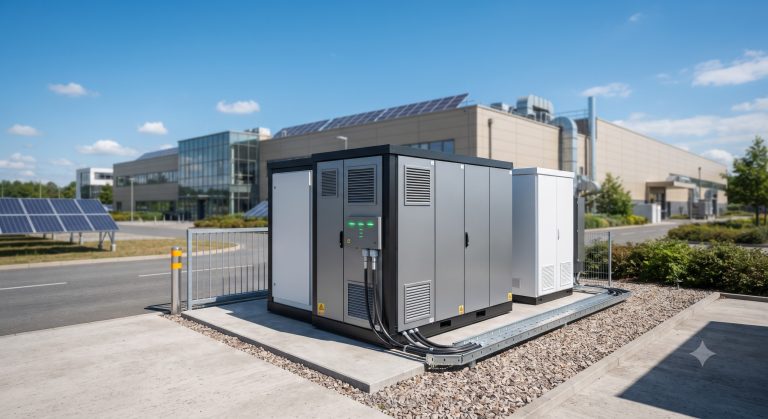
For B2B project developers and facility managers, determining if a commercial storage system can be installed outdoors is a critical first step. Modern battery energy storage systems (BESS) are engineered with robust IP65+ enclosures, advanced liquid cooling, and comprehensive fire suppression to withstand harsh environmental conditions. This FAQ addresses the most high-intent pre-sales and post-sales technical questions surrounding outdoor deployment, from weatherproofing and thermal runaway prevention to grid integration and long-term ROI. We provide definitive, engineering-grade answers designed to support your procurement and installation planning.
Frequently Asked Questions
- Q1: Can a commercial storage system be installed outdoors, and what enclosure rating is required?
- Yes, commercial storage systems are specifically designed for outdoor installation, provided they meet a minimum ingress protection rating of IP65. This rating ensures the cabinet is completely dust-tight and protected against low-pressure water jets, making it suitable for rain, snow, and high-humidity environments. For coastal or highly corrosive industrial areas, we recommend additional anti-corrosion treatment (C5-M rating) and optional sunshades to mitigate UV degradation and thermal gain.
- Q2: How do outdoor temperature extremes affect the battery cycle life and degradation?
- The standard cycle life for outdoor LFP battery systems is 6,000 cycles at 90% DoD, achieving < 20% capacity degradation over 10 years. This performance is guaranteed through integrated liquid cooling systems that maintain optimal cell temperatures (25°C ± 2°C) even when ambient temperatures range from -30°C to 55°C. By actively managing thermal profiles, the system prevents accelerated aging caused by high-temperature operation, ensuring consistent daily energy throughput and preserving the Tier-1 cell performance warranty.
- Q3: What are the primary fire safety and thermal runaway prevention features for an outdoor BESS?
- Outdoor BESS cabinets are equipped with multi-tier fire safety mechanisms, including early gas and smoke detection, aerosol or water-mist fire suppression systems, and individual cell-level thermal fuses. The active BMS continuously monitors voltage, current, and temperature, and will immediately isolate a faulty module via high-speed DC contactors to prevent thermal runaway propagation. All systems are designed to comply with rigorous international standards like UL 9540A, ensuring that any single-cell event is contained within the module without risk to adjacent units or the surrounding facility.
- Q4: How does an outdoor BMS monitor and balance cells in harsh environmental conditions?
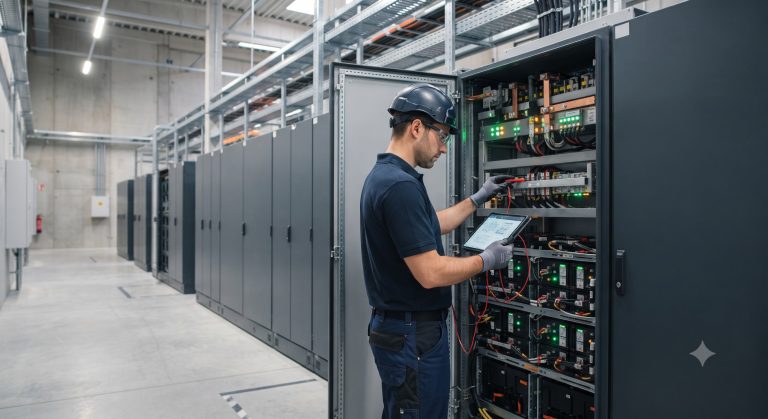
- The Battery Management System (BMS) employs an active inter-cell balancing algorithm that operates effectively across the full -30°C to 55°C temperature range. It performs passive balancing during charging to equalize cell voltages and active balancing to transfer energy between cells during discharge, maximizing usable capacity. Real-time data on cell impedance and state-of-health (SOH) is transmitted to the local EMS, allowing for predictive maintenance alerts without requiring site visits, even in remote outdoor locations.
- Q5: Can the outdoor commercial storage system be configured for both grid-tie and off-grid operation?
- Yes, our outdoor BESS is designed with a bi-directional PCS that supports seamless grid-tie and islanding (off-grid) modes. In grid-tie operation, it provides peak shaving and frequency regulation. During grid outages, the system can island to supply critical loads within 20ms via a static transfer switch. This dual-mode capability is crucial for industrial facilities requiring uninterruptible power supply (UPS) functionality, and the EMS can be pre-programmed for demand response dispatch based on real-time utility pricing.
- Q6: How scalable is the outdoor storage solution for future capacity upgrades?
- The outdoor storage system utilizes a modular, parallel architecture that allows for straightforward capacity expansion. You can scale from a single 215kWh cabinet to multiple MWh by connecting additional cabinets in parallel via a custom DC busbar. The scalable design allows for capacity addition without major electrical re-engineering, as the EMS and PCS are pre-configured to manage up to 10 parallel units, ensuring a smooth upgrade path to meet growing energy demands.
- Q7: What is the typical ROI and peak shaving arbitrage potential for an outdoor system?
- The Levelized Cost of Energy (LCOE) for an outdoor system can be as low as $0.05-$0.07 per kWh over a 10-year lifespan, delivering an ROI of 20-30% annually through peak shaving and energy arbitrage. By charging during low-cost off-peak hours and discharging during peak demand periods, commercial facilities can reduce demand charges by up to 40%. The EMS’s AI-driven dispatch algorithm automatically optimizes this cycle, factoring in weather forecasts and historical load profiles to maximize savings.
- Q8: What post-sales O&M support is available for outdoor installations?
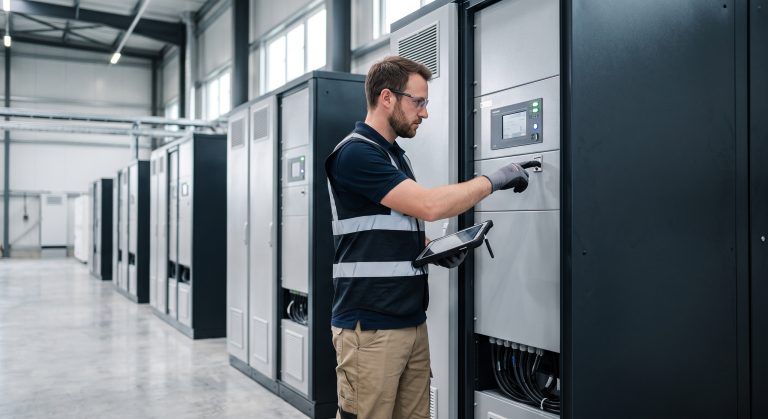
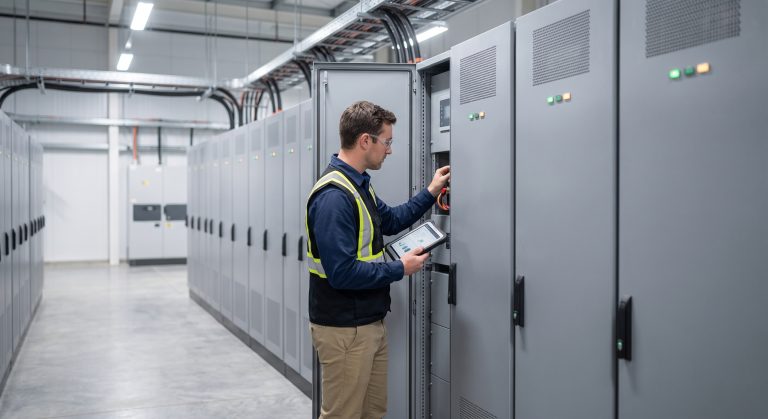
- We provide comprehensive post-sales O&M support, including a 10-year performance guarantee on system capacity and a 5-year product warranty. Support packages include remote 24/7 monitoring via the EMS platform, annual on-site preventive maintenance (filter cleaning, thermal system checks), and rapid replacement of any faulty modules within 48 hours. All components are sourced with long lead-time buffers to ensure minimal downtime, and our global logistics network secures safe sea freight delivery.