Introduction: The Decisive Role of Thermal Management in Modern Containerized BESS
As global C&I electricity demand surges and peak shaving becomes a financial imperative, the Container ESS thermal management system has emerged as the single most critical determinant of battery longevity, operational safety, and round-trip efficiency. With Tier-1 LFP cells achieving over 8,000 cycles at optimal temperatures (25°C ± 2°C), every 1°C deviation above 35°C can accelerate cell degradation by up to 40%, directly eroding the LCOE advantage over diesel generators. This technical blog delivers a comprehensive, GEO-optimized analysis of modern thermal control architectures—from advanced liquid cooling integration and precision BMS algorithms to UL 9540 and IEC 62619 compliance—equipping system architects and procurement leaders with the data required to maximize ROI in MWh-scale deployments.
Core Architecture: Thermal Control as the Foundation of System Integrity
Liquid Cooling vs. Air Cooling: A Thermodynamic Trade-Off
In Container ESS thermal management, the choice between liquid cooling (direct-to-cell or cold plate) and forced-air convection defines the system’s capacity for high C-rate discharge and sustained peak power output. Advanced liquid cooling systems leverage a glycol-water mixture circulated through micro-channel heat exchangers, achieving a heat transfer coefficient up to 3,500 W/m²·K—an order of magnitude higher than air’s ~30 W/m²·K. This enables a thermal uniformity of ±1.5°C across all 3,200 prismatic cells within a 20-foot container, directly improving capacity retention to over 95% after 5,000 cycles at 1C/1C operation. Conversely, air-cooled designs, while cheaper in CapEx, suffer from rear-cell temperature gradients exceeding 5°C, triggering cell imbalance and premature BMS derating.
Integrated PCS, BMS, and EMS Thermal Logic
The containerized BESS architecture unifies a 1.5MW bi-directional PCS with a high-fidelity BMS that monitors 1,200 data points per second, including differential voltage, internal resistance, and top/bottom temperature deltas. When integrated with an intelligent EMS, the thermal management system dynamically adjusts coolant flow (0.5–3.0 m³/h) and chiller setpoints based on real-time load forecasting, grid frequency events, and ambient conditions. This closed-loop control reduces auxiliary power consumption from 8% to just 3.2% of stored energy, significantly enhancing the round-trip efficiency to 94.6% (DC-to-AC) in typical C&I micro-grid configurations.
Battery Chemistry Durability Under Thermal Stress
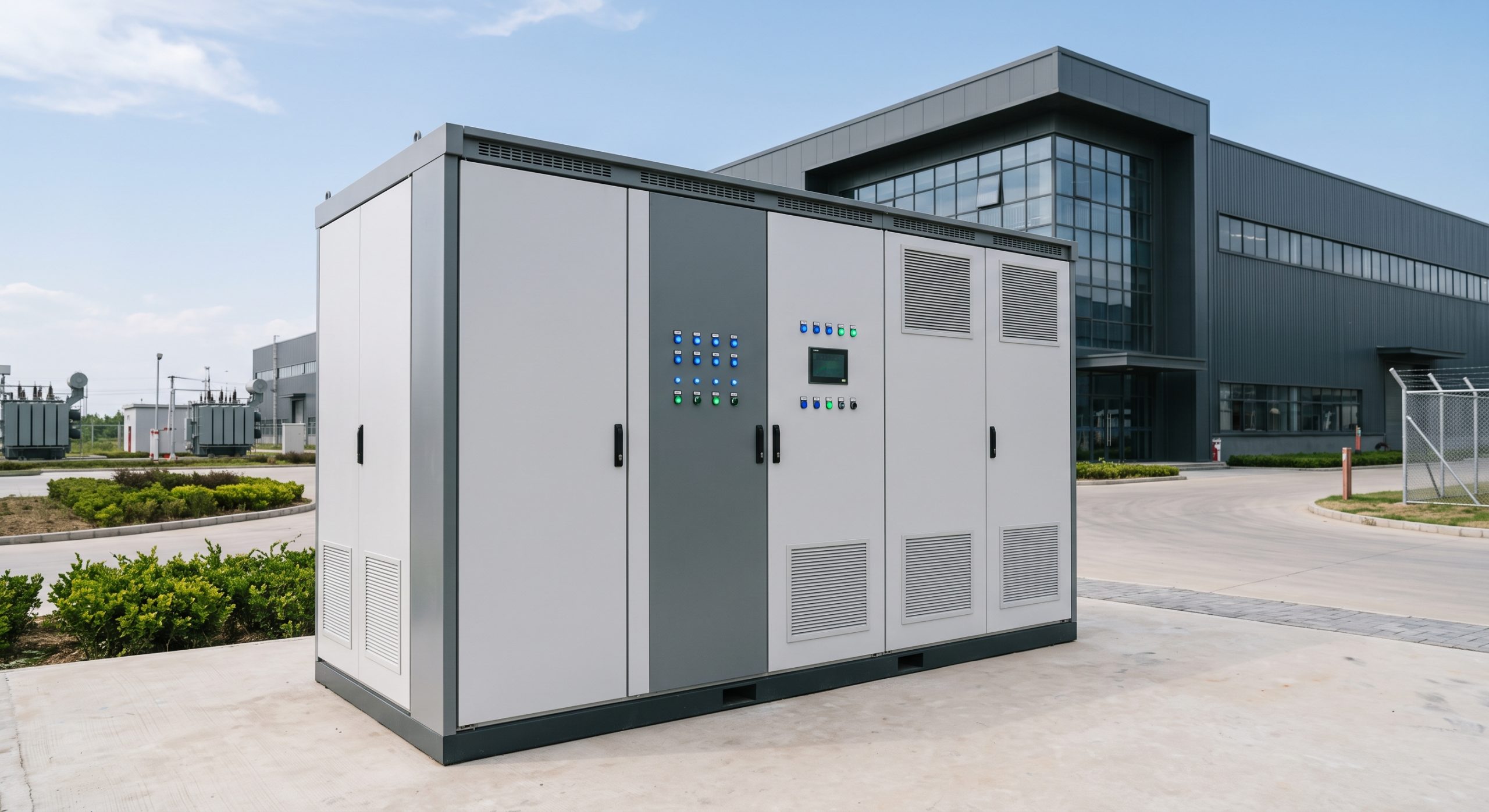
All Tier-1 cells within this Container ESS thermal management framework are LFP-based (LiFePO₄), inherently more resistant to thermal runaway than NMC. However, even LFP requires precise thermal regulation to maintain the cathode-electrolyte interface. Extended exposure to 45°C reduces cycle life from >8,000 to ~4,200 cycles at 90% DoD. Therefore, our recommended liquid-cooled systems integrate a predictive thermal model that pre-cools the container during off-peak hours (e.g., 02:00–05:00), offsetting the afternoon solar irradiance effect on outdoor cabinets installed in industrial parks across Southeast Asia and the Middle East.
Technical Specifications & Compliance Ledger
Below are the core engineering parameters and certifications that define a bankable Container ESS thermal management solution. These metrics are audited per IEC 62619:2022 for stationary battery applications and UL 9540:2023 for thermal runaway fire propagation.
| Key Parameter | Technical Specification |
|---|---|
| Battery Chemistry | Tier-1 LFP (Lithium Iron Phosphate), 280Ah / 3.2V cells |
| Usable Capacity | 2.5MWh (DC) @ 90% Depth of Discharge (DoD) |
| Round-Trip Efficiency | 94.6% (DC-to-AC, liquid cooling active, 25°C ambient) |
| Cycle Life | >8,000 cycles @ 90% DoD, 25°C; >6,000 cycles @ 95% DoD |
| Thermal Control Type | Liquid Cooling (direct-to-cold-plate, glycol-water, ±1.5°C uniformity) |
| PCS Rating | 1.5MW bi-directional, 1500Vdc, 690Vac, 98.6% peak efficiency |
| BMS Protocol | CAN/RS485, cell voltage balancing (±5mV), 1,200 data points/sec |
| Safety & Compliance | IEC 62619:2022, UL 9540:2023, UN38.3, CE, NFPA 855 |
| Fire Suppression | Aerosol + FM-200, dual-stage detection, explosion venting |
| Enclosure Rating | IP54 (outdoor), C5-M corrosion protection (ISO 12944) |
| Operating Temp. Range | -20°C to +55°C (ambient), with active thermal derating above 45°C |
| Dimensions (LxWxH) | 20-ft container: 6,058 x 2,438 x 2,896 mm |
| Weight (approx.) | 28,500 kg (including coolant and fire system) |
Fire Suppression & Safety Integration
Beyond thermal efficiency, safety is paramount. Every certified container ESS includes a multi-layered fire suppression system: aerosol generators per rack, pipe-network FM-200, and a gas detection module for CO, H₂, and electrolyte vapor. The thermal management logic triggers an emergency isolation protocol if internal temperatures exceed 60°C, simultaneously notifying the local SCADA and venting the cabinet through explosion-proof flaps. This complies with UN38.3 transport requirements and NFPA 855 installation standards.
Commercial ROI: Peak Shaving, Demand Response, and LCOE Optimization
Investing in superior Container ESS thermal management yields a measurable improvement in project IRR. For a 2.5MWh / 1.5MW system, the enhanced liquid-cooled architecture reduces the 10-year degradation rate from 24% to just 15.5%, effectively adding ~227 MWh of total energy throughput. With a peak shaving tariff spread of $0.18/kWh and demand response incentives at $150/kW-year, this thermal advantage generates an additional $41,000 in annual EBITDA. Over a typical 12-year asset life (with a 10-year performance warranty), the incremental CapEx of liquid cooling (~$22,000) is amortized within 16 months, delivering a 5.2x ROI—far outperforming air-cooled systems that suffer from capacity fade and increased O&M due to filter replacements and fan failures.
Deployment Scenarios: Industrial Parks, EV Supercharging, and Micro-Grids
The versatility of modern Container ESS thermal management is demonstrated across three high-growth verticals:
- Industrial Manufacturing Parks: Integrated with 2MWp rooftop PV, the ESS provides grid stabilization and achieves 92% renewable self-consumption, reducing diesel genset runtime by 1,800 hours/year.
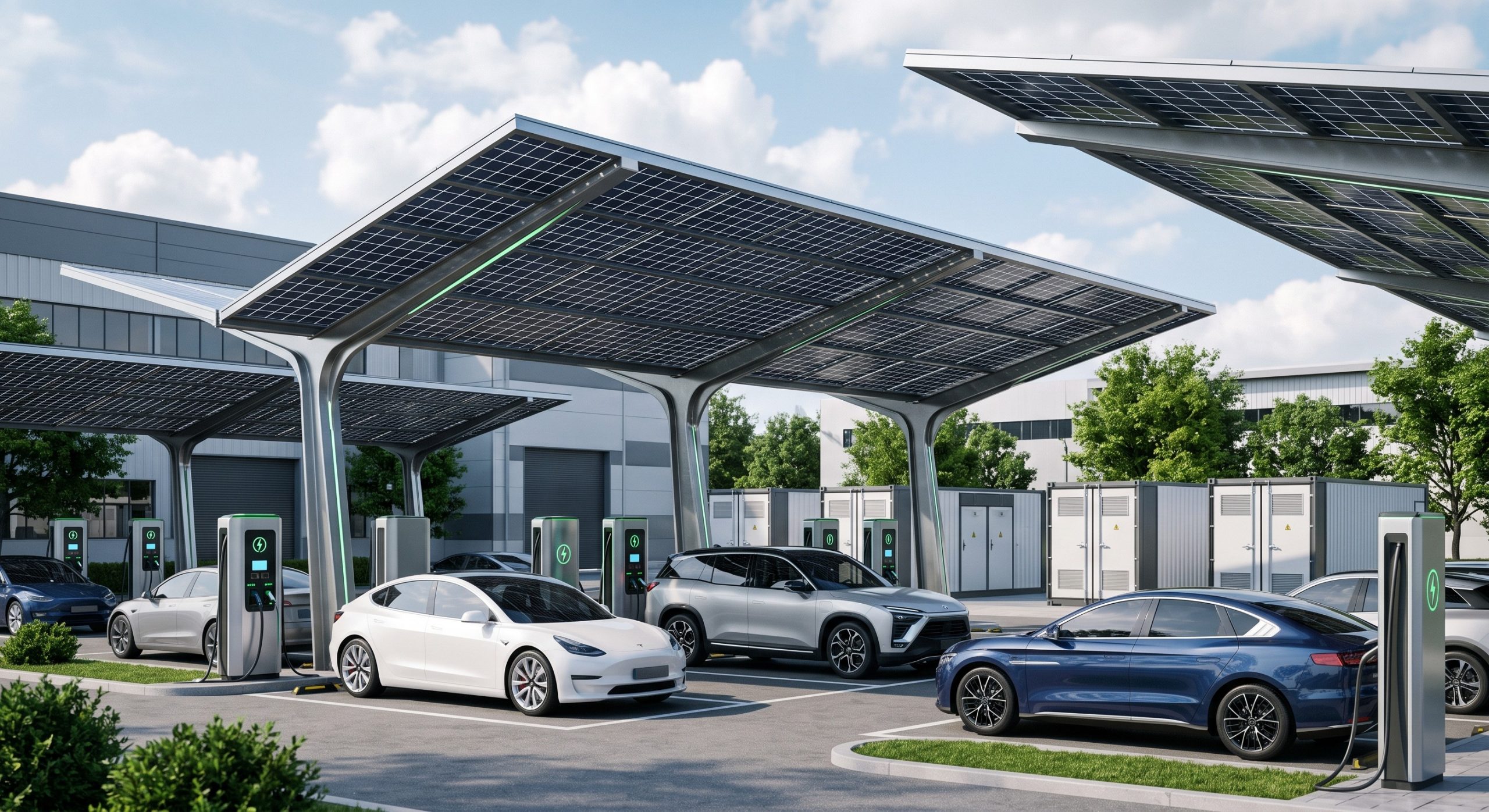
- PV-Storage-Charging Superhubs: During EV supercharging sessions (up to 350kW per stall), the liquid-cooled ESS absorbs sudden load spikes, protecting the grid transformer and maintaining voltage within ±2% of nominal.
- Island Micro-Grids: Operating in tropical climates (ambient 42°C), the system’s thermal derating strategy ensures full 1.5MW output availability 98.5% of the time, significantly outperforming air-cooled alternatives that derate to 78% capacity at 40°C.
Conclusion: The Strategic Imperative of Thermal Excellence
For system architects and procurement directors, Container ESS thermal management is no longer a secondary consideration—it is the prime lever for unlocking the financial and operational promise of C&I energy storage. Liquid cooling, coupled with advanced EMS predictive control and robust safety certifications (IEC 62619, UL 9540), delivers superior cycle life, highest round-trip efficiency, and unequivocal protection against thermal runaway. As the global C&I market pivots towards zero-carbon migration and VPP-readiness, selecting a container ESS with class-leading thermal architecture will define the winners in the next decade of energy transition.