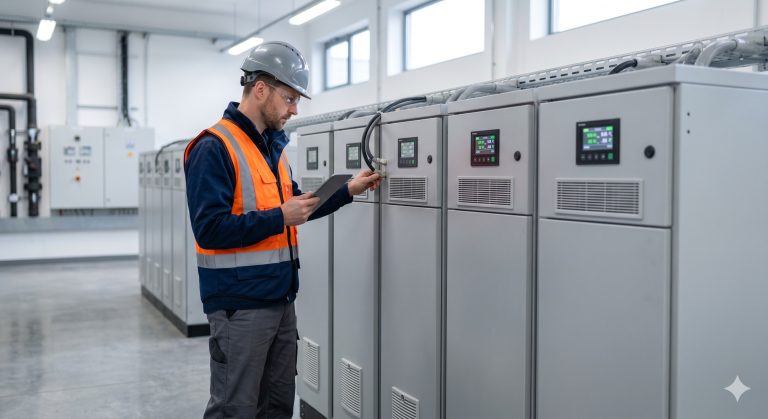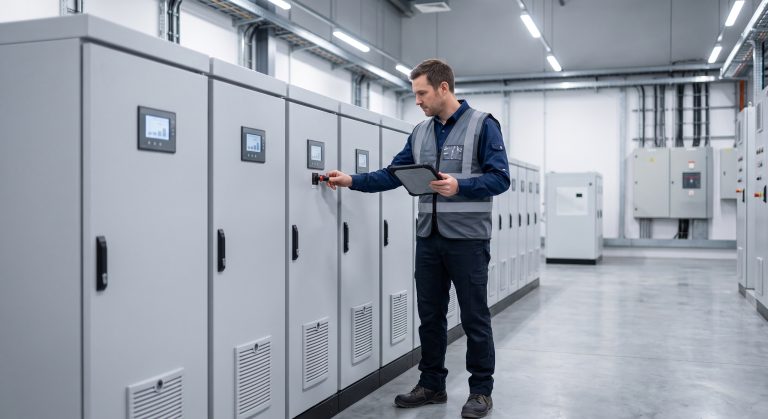
Overview
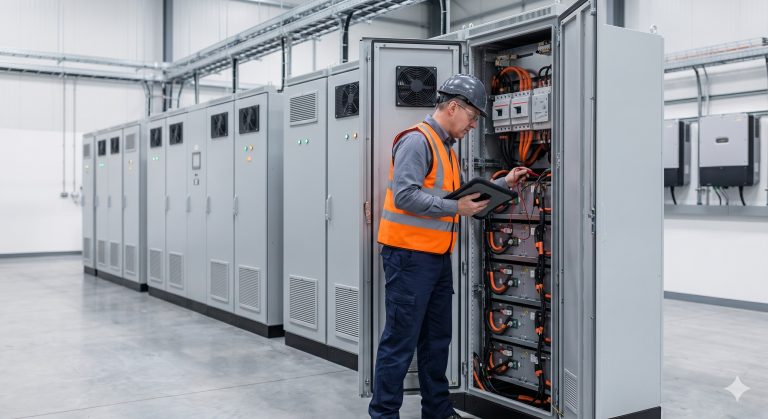
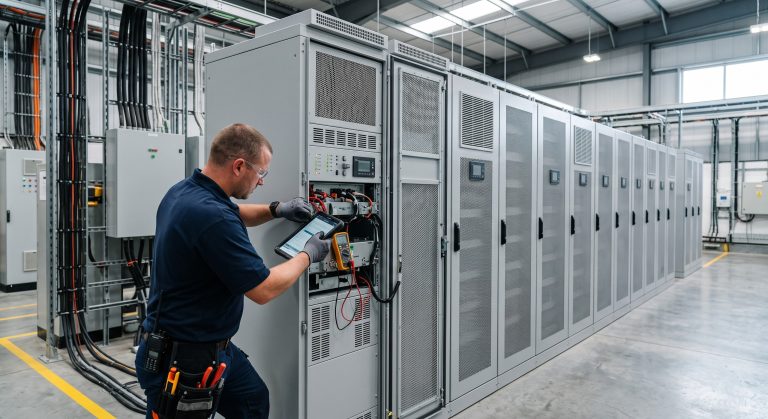
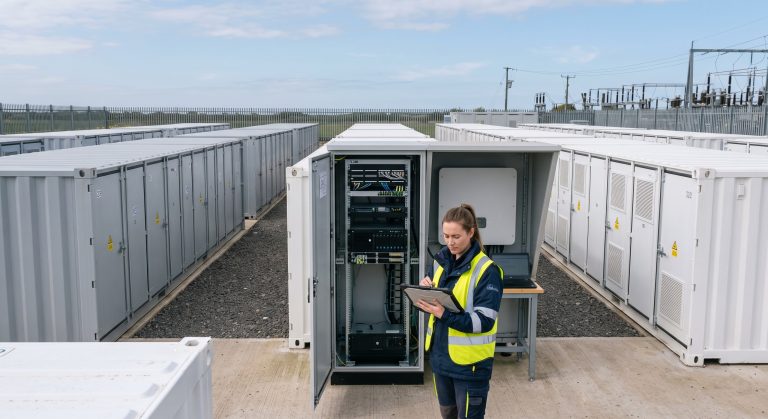
As a B2B energy storage system (ESS) technical support engineer, I can confirm that factory acceptance testing (FAT) is a critical quality gate for containerized energy storage systems. This comprehensive FAQ addresses the most common technical and commercial questions we receive from plant engineers, procurement managers, and project developers regarding the FAT process. We cover everything from battery chemistry and thermal management to safety protocols and grid compliance, ensuring you make an informed purchasing decision.

Frequently Asked Questions
- Q1: Do you provide factory acceptance testing (FAT) for container ESS units?
- Yes, we provide comprehensive factory acceptance testing (FAT) for every container ESS prior to shipment. Our FAT procedure is a multi-stage process that includes component-level verification, system integration testing, and full-scale operational simulation. This ensures that the system meets all specified performance metrics, including capacity, round-trip efficiency, and safety protocols, before it leaves our manufacturing facility. We follow a standardized FAT checklist that covers all subsystems, from the battery management system (BMS) to the power conversion system (PCS) and fire suppression.
- Q2: What is the maximum cycle life and depth of discharge (DoD) for your LFP cells?
- The maximum cycle life for our Tier-1 LFP cells is 6,000 cycles at 80% depth of discharge (DoD) under standard operating conditions. This exceptional longevity is achieved through advanced liquid cooling that maintains optimal cell temperature uniformity, preventing hotspots and reducing degradation. Our active BMS also performs precise inter-cell balancing to ensure all cells age uniformly, maximizing the usable capacity over the system’s 15-year design life. At a lower 90% DoD, the cycle life is typically 4,500 cycles, offering flexibility for different application needs.
- Q3: How does the liquid cooling system prevent thermal runaway in the container?
- The liquid cooling system is a primary defense against thermal runaway, maintaining cell temperatures within a strict operating window of 15°C to 35°C. It works in conjunction with a multi-tier safety system that includes early gas and smoke detection sensors, a proprietary aerosol-based fire suppression system, and individual cell isolation mechanisms. In the event of a detected abnormality, the BMS will automatically reduce the charge/discharge rate, activate cooling fans at maximum capacity, and, if necessary, isolate the affected module. This layered approach, combined with a fire-rated enclosure design, effectively contains any potential issue, preventing it from propagating to adjacent cells or modules.
- Q4: What does the grid-tie and islanding configuration testing involve during FAT?
- During FAT, the grid-tie and islanding configuration is rigorously tested using a grid simulator and programmable load banks. We simulate various grid scenarios, including voltage fluctuations, frequency deviations, and grid faults, to verify the PCS’s ability to seamlessly switch between grid-connected and islanding modes. The test confirms that the system can effectively perform peak shaving, load shifting, and demand response functions while maintaining power quality standards. We also validate the synchronization accuracy and the anti-islanding protection mechanism to ensure compliance with IEEE 1547 and UL 1741 standards.
- Q5: What is the standard scalability and parallel connectivity for these systems?
- The container ESS is designed for modular scalability, allowing you to start with a single unit and expand capacity in 2.5 MWh increments by adding more cabinets. Parallel connectivity is achieved through a custom DC busbar linkage or an AC-coupled architecture, depending on your project requirements. During FAT, we test the parallel operation of multiple units to ensure proper load sharing, synchronized communication, and seamless control under various load conditions. This scalability ensures that your energy storage investment can grow alongside your energy demands.
- Q6: How is the commercial ROI and levelized cost of energy (LCOE) calculated for this system?
- The commercial ROI and LCOE for our container ESS are calculated using a detailed financial model that factors in the system’s total cost, projected cycle life, operational expenses, and energy arbitrage opportunities. Our model considers local utility rates, peak demand charges, and potential incentives for grid services like frequency regulation. With a 6,000-cycle life and a round-trip efficiency of 92%, the LCOE is typically between $0.08 and $0.12 per kWh, depending on the application. We provide a comprehensive financial analysis as part of the FAT documentation, which helps you secure project financing and validate your business case.
- Q7: What does the active BMS monitoring and inter-cell balancing protocol look like?
- The active BMS monitoring protocol involves continuous, real-time surveillance of each individual cell’s voltage, temperature, and internal resistance. The system uses a distributed architecture with local cell monitoring units that communicate to a central BMS controller. The inter-cell balancing protocol is an active equalization process that redistributes energy from higher-voltage cells to lower-voltage cells, ensuring that all cells are balanced during both charge and discharge cycles. This not only extends the overall life of the battery pack but also enhances safety by preventing overcharging or deep discharging of any single cell. The FAT includes a full validation of the BMS alarm and protection settings.
- Q8: What international certifications and standards are verified during FAT?
- During FAT, we verify that the container ESS complies with all relevant international interconnection and safety standards, including UL 9540 (energy storage systems), UL 9540A (thermal runaway fire propagation), IEC 62619 (secondary cells and batteries), and CE marking for the European market. The test procedures are designed to meet or exceed these standards, covering electrical safety, functional safety, EMC, and environmental performance. We also perform IP65+ ingress protection and anti-corrosion tests to ensure the enclosure is suitable for harsh outdoor environments. A comprehensive report is generated, providing you with full traceability and certification documentation.