Overview
For B2B energy storage buyers and plant engineers, the safe sea freight of large-scale BESS containers is a critical post-sales and logistics concern. Improperly secured battery racks can lead to catastrophic damage, voided warranties, and project delays. This FAQ addresses the core engineering standards, structural calculations, and monitoring protocols that guarantee your BESS arrives on-site in pristine, operational condition. We detail how certified container designs handle the dynamic stresses of ocean transit, from ISO container twist-locks to internal rack bracing and shock data logging.
Frequently Asked Questions
- Q1: How are battery racks secured inside the container during sea freight?
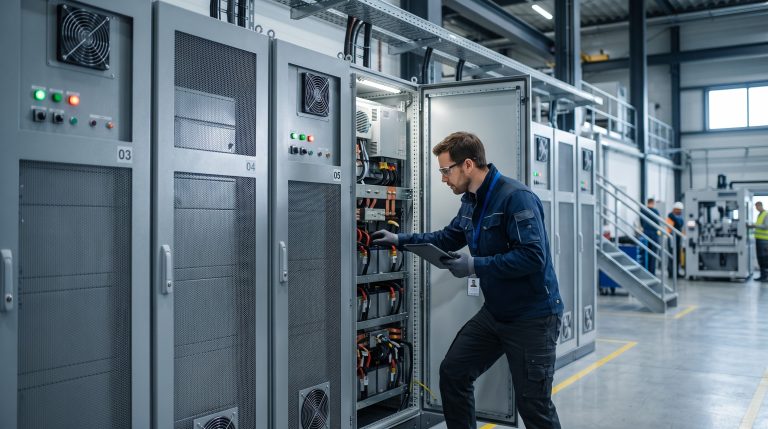
- Battery racks are secured through a multi-tiered system of heavy-duty structural bracing, ISO container twist-lock corner castings, and internal tie-downs that withstand dynamic forces up to 2G. Each rack is bolted directly to the container’s integrated C-channel floor using high-tensile steel brackets and anti-vibration pads. Additionally, gaps between racks are filled with custom-engineered foam or wooden bracing to eliminate horizontal shifting, ensuring the entire assembly moves as a single, rigid unit with the container.
- Q2: What are the specific international standards (UL 9540, IEC 62619) for BESS container sea freight?
- Compliance with UL 9540 and IEC 62619 is mandatory, mandating that the entire containerized system (including racking) pass vibration and mechanical shock tests simulating sea transport. These standards require that the racking structure and its anchoring points do not fail under the sinusoidal and random vibrations experienced on cargo ships. The container itself must also hold a valid CSC (International Convention for Safe Containers) plate, certifying the structural integrity of the corner castings and the frame for stacking and lifting during transit.
- Q3: What data logging and monitoring systems are in place to detect rack shifting or damage in transit?
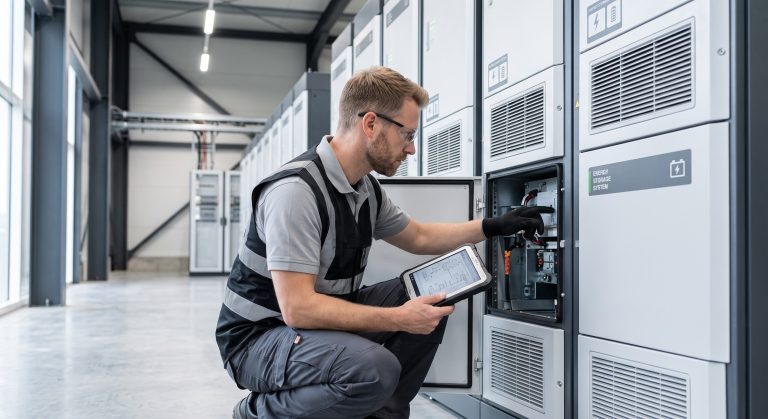
- High-end BESS solutions are equipped with IoT-enabled shock loggers and tilt sensors attached directly to the racks, recording any impact exceeding 3G during sea freight. This data is uploaded to a cloud-based platform, providing real-time monitoring and a detailed transit history. Upon arrival, this ‘Shock & Tilt Report’ is reviewed by engineers to verify that the racks have not shifted or suffered internal battery cell damage, ensuring the system is safe for commissioning.
- Q4: What are the fire safety mechanisms to prevent thermal runaway during sea freight?
- During transit, the BMS is placed in a dedicated ‘shipping mode’ that reduces the State of Charge (SoC) to 30% to minimize the potential energy for thermal runaway, and the fire suppression system (typically aerosol-based) remains armed with remote monitoring capabilities. The container’s internal racking is designed with fire-resistant barriers between each module, preventing the propagation of heat in the rare event of a cell failure. The pre-charged suppression system is calibrated to activate automatically if internal sensors detect a rapid temperature rise or off-gassing.
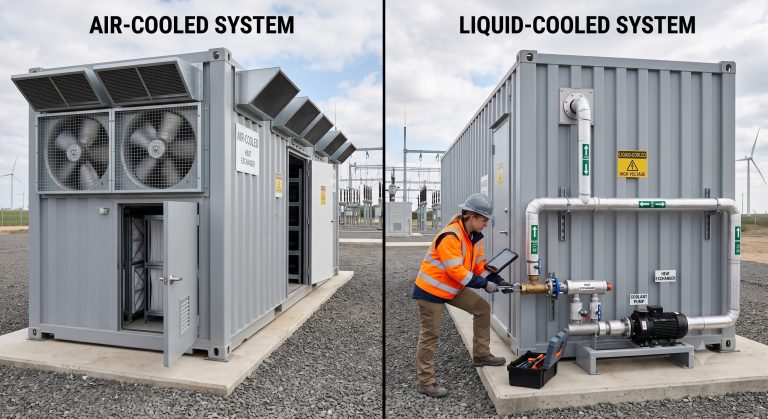
- Q5: How do securing methods differ for liquid-cooled vs. air-cooled BESS containers?
- Liquid-cooled BESS containers require additional rack securing for the fluid circulation hardware, with the pipework and pumps clamped independently of the battery modules to prevent coolant leaks. The racking must be braced to prevent any torsional flex that could stress the coolant fittings. Securing air-cooled systems is simpler but requires specific attention to maintaining clear air intake and exhaust pathways so that the structural bracing does not obstruct the fans, which are critical for maintaining thermal equilibrium during short-term storage.
- Q6: What is the standard protocol for inspecting and unstrapping BESS racks upon arrival?
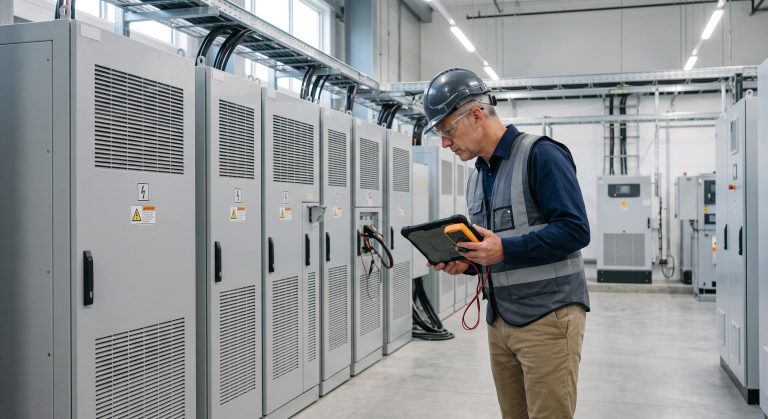
- The standard protocol involves a visual inspection of all tie-downs and bracing for signs of stress or breakage before any power connections are made. Structural engineers then use torque wrenches to verify that all main anchoring bolts are still at the specified torque values. Finally, the unloading process is reversed: the container twist-locks are released, internal braces are sequentially removed, and the racks are lifted using a factory-approved spreader frame to ensure even weight distribution, preventing structural distortion.
- Q7: How does a comprehensive O&M and post-sales support plan account for sea freight securing?
- Our O&M plan includes a mandatory ‘pre-shipment’ structural inspection and certification from our logistics engineers, guaranteeing that the rack securing is compliant with our transport standards. Post-delivery, we provide on-site technical support to oversee the unstrapping and re-torquing process. Furthermore, our performance warranty covers any damage directly attributable to a failure in our specified securing methods, giving you complete peace of mind that your asset is protected from the factory to your site.
- Q8: What are the most common mistakes buyers make when arranging their own sea freight for BESS containers?
- The most common mistake is underestimating the dynamic loads (especially pitch and roll) and using non-engineered timber bracing instead of certified structural steel brackets and twist-locks. Buyers often neglect to verify the CSC plate certification, leading to detention by customs. Another critical error is failing to engage the factory’s BMS shipping mode, resulting in a full battery SoC that poses a significant fire hazard. Always use a logistics provider approved by your BESS manufacturer.