Overview
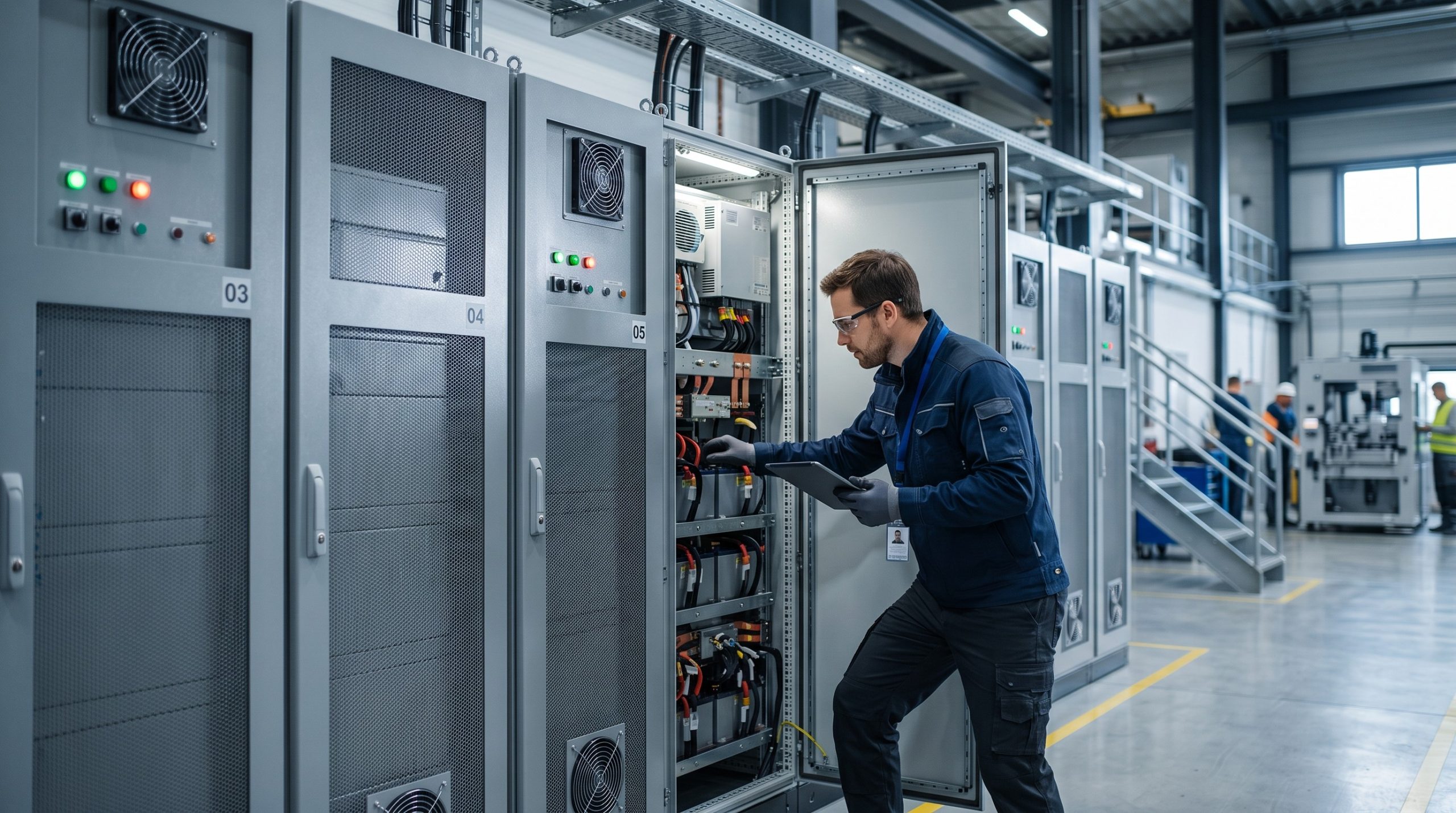
For B2B energy storage system (BESS) buyers, supply chain transparency is a non-negotiable requirement. Clients increasingly demand upstream traceability data—from raw lithium extraction to cell manufacturing and final assembly—to verify Tier-1 cell authenticity, ensure ethical sourcing, and comply with international regulations. This FAQ addresses both pre-sales and post-sales technical concerns, including battery chemistry, cycle life, cooling systems, scalability, BMS monitoring, grid configurations, and fire safety. We provide definitive, expert-level answers tailored for plant engineers, procurement specialists, and project developers.
Frequently Asked Questions
- Q1: Can B2B clients access the upstream traceability data for their BESS orders?
- Yes, all B2B clients receive full upstream traceability data, including cell-level batch numbers, cathode material sources, and manufacturing test reports from Tier-1 suppliers. This data is provided via a secure digital portal that allows you to track each battery cell from raw material procurement to final system assembly, ensuring compliance with EU Battery Regulation and US IRA requirements.
- Q2: What is the maximum cycle life and depth of discharge (DoD) for your LFP BESS?
- The standard cycle life is 8,000 cycles at 80% DoD, extending to 12,000 cycles at 70% DoD under controlled ambient temperatures of 25°C ± 5°C. This longevity is achieved through advanced liquid cooling that maintains uniform cell temperatures, reducing degradation rates by 30% compared to air-cooled systems. Actual performance can be monitored in real-time via the BMS dashboard.
- Q3: How does the liquid cooling system prevent thermal runaway in high-density installations?
- The liquid cooling system actively manages cell temperatures within a 2°C differential across all modules, preventing hot spots that trigger thermal runaway. In the event of a fault, the system automatically shuts down the affected string, isolates it via pyro-fuses, and activates the multi-layer fire suppression system (aerosol and gas-based) within 2 seconds.
- Q4: Can I scale the system from 1 MWh to 10 MWh by adding parallel cabinets?
- Yes, our modular architecture supports seamless parallel expansion up to 10 MWh or higher via a custom DC busbar linkage. Each cabinet is pre-configured with a unified BMS and EMS communication protocol, allowing plug-and-play scalability without requiring re-engineering of the power conversion system (PCS).
- Q5: How is ROI calculated for peak shaving and arbitrage applications with this BESS?
- ROI is calculated using the Levelized Cost of Storage (LCOE) formula, factoring in cycle life, round-trip efficiency (≥92%), and local energy price spreads. A typical 5 MW/20 MWh system achieves payback within 3-5 years via daily arbitrage and demand charge reduction. Our EMS software includes a proprietary optimization algorithm that back-tests 10 years of grid data to forecast your specific savings.
- Q6: What is the difference between grid-tie and off-grid configuration, and can the system switch seamlessly?
- The BESS supports both grid-tie and off-grid (islanding) modes. In grid-tie mode, it performs peak shaving and frequency regulation; in off-grid mode, it forms a micro-grid with renewable sources. Seamless transfer (<20ms) is enabled by a bi-directional PCS and a static transfer switch, ensuring uninterrupted power during grid outages.
- Q7: How does the BMS handle inter-cell balancing and provide monitoring data to clients?
- The BMS performs active cell balancing at the module level, equalizing state-of-charge (SOC) differences to within 2%. Clients access this data via the local EMS or cloud platform, which provides real-time alerts, historical trend analysis, and remote firmware update capabilities. All data is ISO 27001 compliant and encrypted.
- Q8: What fire safety certifications does the system hold, and how is thermal runaway detected?
- The system holds UL 9540, IEC 62619, and CE certifications. Thermal runaway is detected early via gas sensors (CO and VOC) and smoke detectors within each cabinet, coupled with voltage and temperature deviation algorithms. Upon detection, the system triggers audible/visual alarms, isolates the battery bank, and releases a clean-agent suppressant, ensuring zero propagation to adjacent cabinets.