COMMERCIAL SYSTEMS ENGINEERING REFERENCE MANUAL: MEGAWATT BESS DEPLOYMENT STRATEGY GUIDE
1. EXECUTIVE SUMMARY
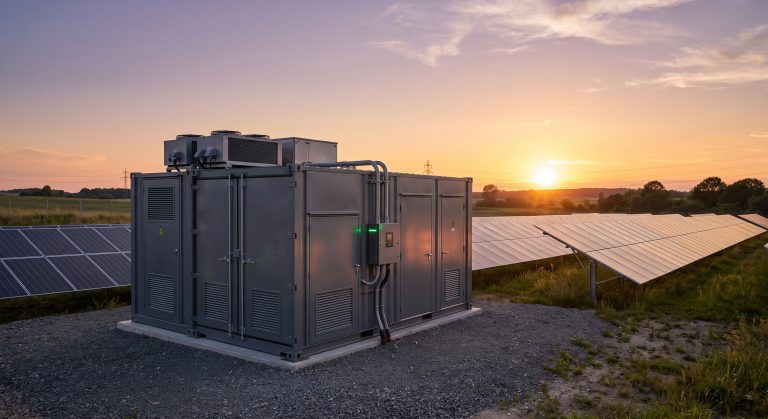
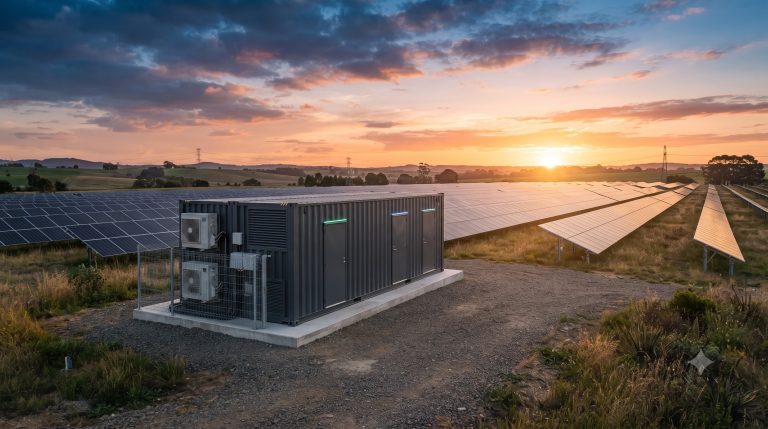
This document serves as the definitive technical reference for the deployment of Megawatt-scale Battery Energy Storage Systems (BESS) within commercial and industrial (C&I) environments, as well as utility-scale infrastructure projects. Engineered for high-throughput energy arbitrage, peak shaving, and grid stabilization, this platform leverages Tier-1 Lithium Iron Phosphate (LFP) cell technology and advanced liquid thermal management to deliver superior cycle life, safety, and operational efficiency. This manual provides system architects, project developers, and procurement specialists with the critical engineering data, safety protocols, and configuration logic required to optimize site integration and long-term asset performance. Our solution is designed to meet the rigorous demands of modern energy markets, offering a turnkey pathway to enhanced grid independence and revenue generation.

2. SYSTEM ARCHITECTURE & SAFETY
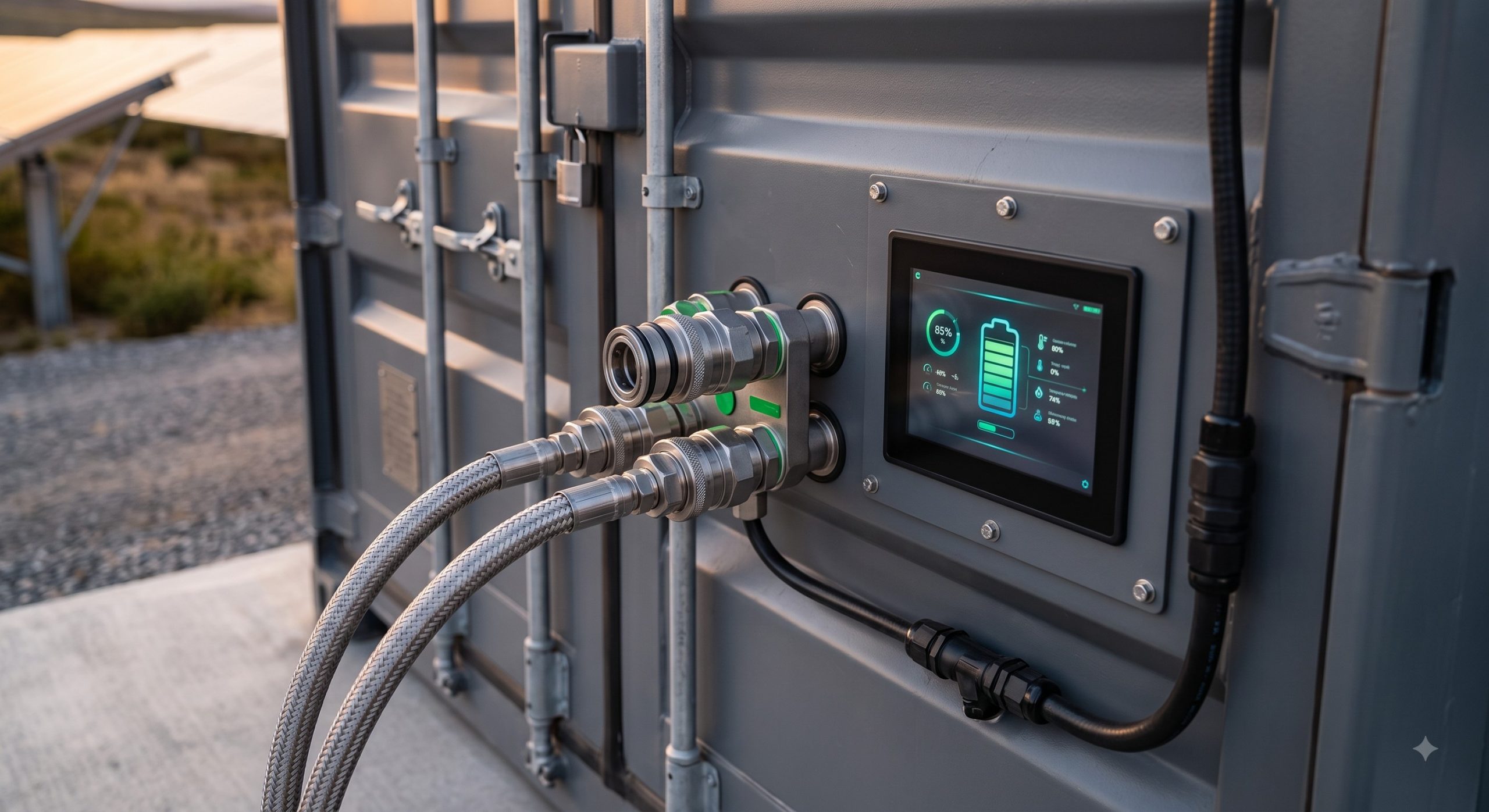
The platform is architected around a modular, containerized design that prioritizes scalability and redundancy. At its core, the system integrates high-capacity battery racks with a proprietary Battery Management System (BMS) that oversees cell-level monitoring and balancing. This is paired with a bi-directional Power Conversion System (PCS) capable of seamless grid-interactive operation. A centralized Energy Management System (EMS) acts as the intelligence layer, orchestrating dispatch logic and optimizing performance based on real-time grid signals or user-defined profiles.
Safety is embedded into the system design through multiple layers of protection:
– Passive Protection: Reinforced steel enclosures with anti-corrosion treatment (C5-H rating), segregated electrical and battery compartments, and naturally fire-resistant LFP chemistry.
– Active Protection: A multi-level suppression system comprising aerosol-based fire extinguishing, water misting, and gas detection (H2, CO, VOC). Independent smoke and temperature sensors provide early warning triggers.
– Operational Protection: The BMS continuously monitors voltage, current, and internal resistance to prevent overcharge, deep discharge, and thermal runaway. The system is designed for rapid isolation via DC contactors and AC circuit breakers.
3. KEY FEATURES
– Feature 1: Intelligent Liquid Thermal Management: An advanced liquid cooling and heating loop maintains battery cell temperatures within an optimal narrow band (25°C ± 2°C), minimizing degradation and maximizing round-trip efficiency. This system ensures consistent performance across ambient temperature ranges of -30°C to +55°C.
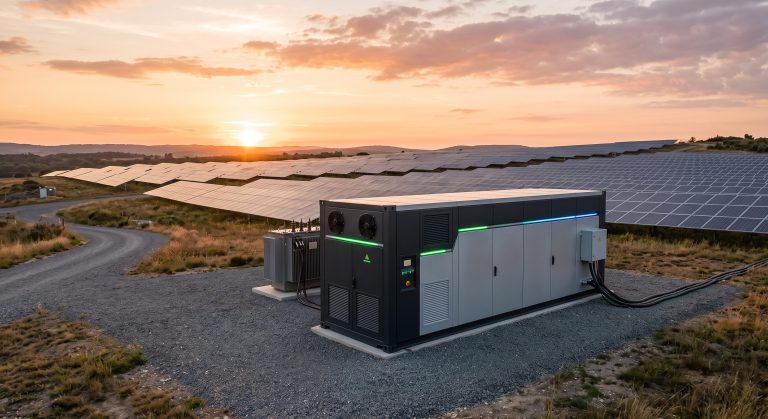
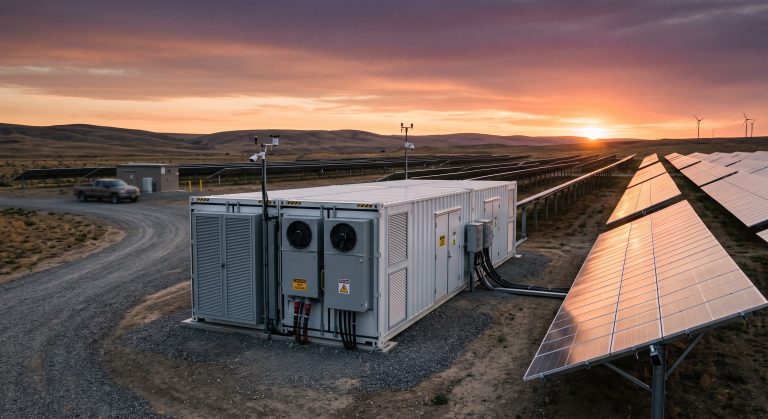
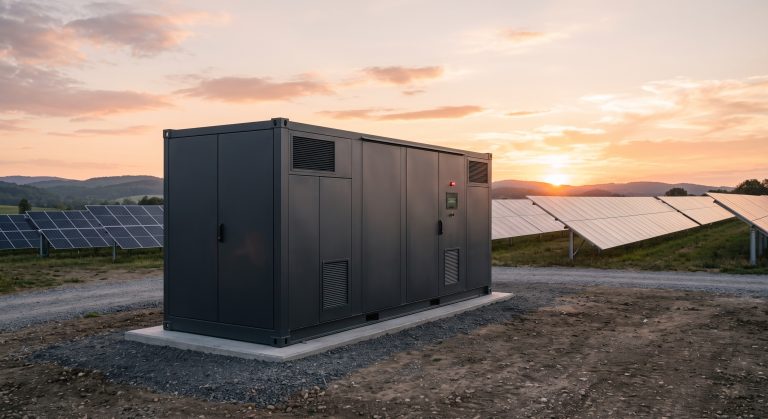
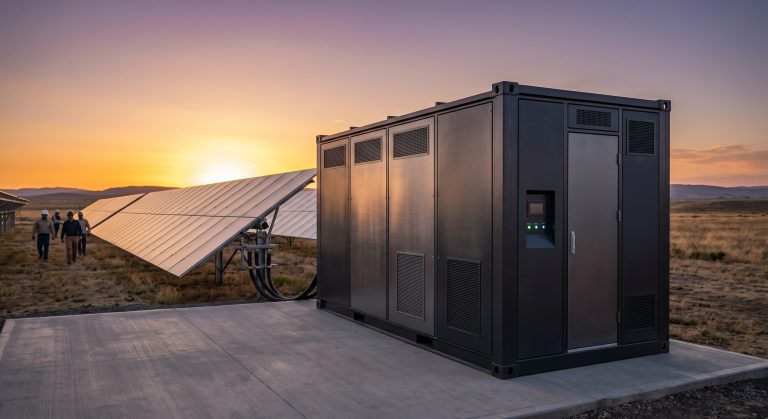
– Feature 2: High-Density Modular Architecture: The containerized solution maximizes energy density while allowing for easy transport, rapid on-site installation, and straightforward parallel expansion to achieve multi-MWh capacities. Each unit operates as an independent building block.
– Feature 3: Advanced Grid Interfacing: The PCS features low-voltage ride-through (LVRT) and high-voltage ride-through (HVRT) capabilities, supports active and reactive power control (PF regulation), and provides black-start functionality for microgrid applications.
– Feature 4: Comprehensive EMS & Cloud Management: The integrated Energy Management System provides intuitive local control and supports cloud-based remote monitoring, predictive analytics, and over-the-air (OTA) firmware updates, facilitating fleet-level O&M optimization.
4. COMPLIANCE & STANDARDS
The system has been designed and rigorously tested to meet the most stringent international safety and performance standards, ensuring bankability and smooth project permitting. The platform is fully compliant with:
– UL 9540: Standard for Energy Storage Systems and Equipment (Safety).
– UL 9540A: Test Method for Evaluating Thermal Runaway Fire Propagation.
– IEC 62619: Safety requirements for secondary lithium batteries and battery installations.
– IEC 62477: Safety requirements for power electronic converter systems and equipment.
– UN 38.3: Transportation testing for lithium batteries.
– IEEE 1547: Standard for Interconnection and Interoperability of Distributed Energy Resources.
5. TECHNICAL SPECIFICATIONS
Detailed performance parameters are provided in the specification matrix below. All values are based on standard test conditions (STC) and represent typical performance metrics for the base module.
| Parameter | Specification |
|---|---|
| Nominal Energy Capacity | 2.0 MWh per 20-ft Container |
| Battery Chemistry | Tier-1 LFP (LiFePO4) |
| Cooling Method | Smart Liquid Cooling (Heating + Cooling) |
| AC Power Rating | 1.0 MW / 1.25 MVA (PCS Rating) |
| Round-Trip Efficiency | ≥ 92% (at nominal power) |
| Voltage Range | 600 Vdc – 900 Vdc (Battery String) |
| Grid Connection Voltage | 400 Vac / 480 Vac, 3-Phase, 4-Wire (Customizable) |
| System Response Time | < 50 ms |
| Operating Temperature Range | -30°C to +55°C (Derating above 45°C) |
| Protection Class | IP54 (Container), IP20 (Internal Components) |
| Communication Protocols | Modbus TCP/IP, IEC 61850, CAN |
| Dimension (LxWxH) | 6,058 mm x 2,438 mm x 2,896 mm |
6. INDUSTRIAL DEPLOYMENT
Deployment of the Megawatt BESS is optimized for a variety of high-demand scenarios:
– Energy Arbitrage: Charging during periods of low energy prices and discharging during peak pricing periods to maximize revenue.
– Peak Load Shaving: Reducing facility demand charges by discharging stored energy during short-duration peak consumption events.
– PV-Storage-Charging Integration: Smoothing the intermittent output of solar PV and supporting rapid EV charging infrastructure, thereby reducing grid impact.
– Microgrid Stabilization: Serving as the primary grid-forming source to ensure stable frequency and voltage for islanded industrial parks or remote communities.
The system’s containerized design facilitates a straightforward deployment process, requiring only a prepared concrete pad, AC and DC connection points, and communication lines. Our engineering team provides full turnkey support, from site assessment and design to commissioning and ongoing service.
📥 Download Technical Specification
Click the button below to view or download the full official PDF datasheet.