Overview
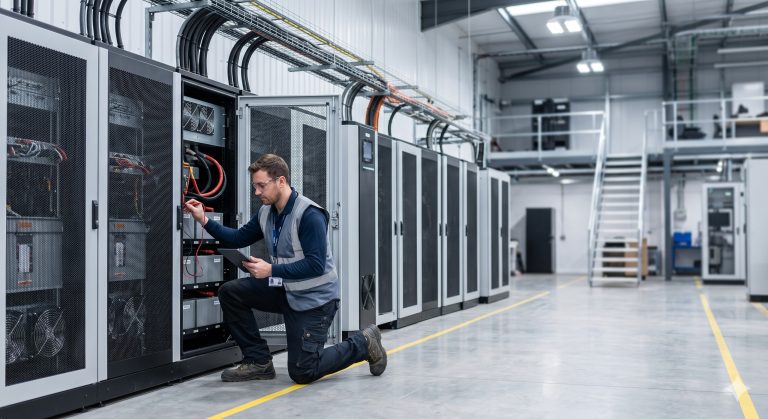
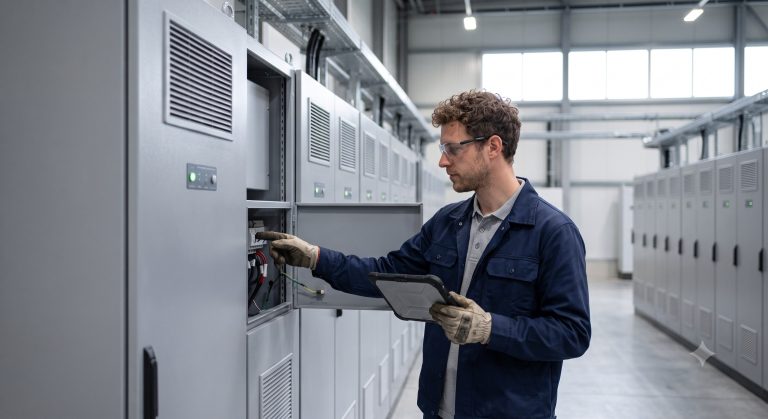
For B2B energy storage system (BESS) buyers, safety is paramount. This FAQ provides definitive, engineer-level answers to critical pre-sales and post-sales questions, with a strong focus on fire safety, thermal runaway prevention, and the comprehensive protection systems integrated into modern industrial battery cabinets. From multi-tier fire suppression to active BMS monitoring, we cover the technical safeguards that ensure safe, reliable operation over a 10+ year lifecycle.
Frequently Asked Questions
- Q1: Do your industrial battery systems include built-in fire suppression?
- Yes, every industrial battery system is equipped with a multi-tier, built-in fire suppression system as a standard safety feature. This includes aerosol-based or clean agent fire extinguishing modules (e.g., perfluorohexanone) installed inside each battery cabinet, capable of rapid deployment upon detection of smoke or extreme temperature rise. This is coupled with a three-level protection strategy: cell-level thermal runaway prediction via the BMS, module-level gas and smoke detection, and cabinet-level total flooding suppression to contain any event before it spreads.
- Q2: What specific mechanisms prevent thermal runaway in LFP batteries?
- Thermal runaway prevention is managed through a combination of stable LFP chemistry and an advanced, multi-layer safety architecture. The Battery Management System (BMS) continuously monitors each cell’s voltage, current, and temperature, with active cell balancing to prevent overcharging or deep discharging. If an anomaly is detected, the system initiates a staged response: first, it derates the power output; second, it activates internal cooling loops to dissipate heat; and third, it triggers the dedicated fire suppression unit to flood the enclosure with an extinguishing agent, stopping the chain reaction.
- Q3: What is the standard cycle life and Depth of Discharge (DoD) for these systems?
- The standard cycle life is 6,000 cycles at 90% Depth of Discharge (DoD), ensuring over 10 years of reliable daily operation. This extended lifespan is achieved through the use of Tier-1 LFP cells, an advanced liquid cooling system that maintains optimal cell temperature (15-35°C), and precise BMS cell balancing protocols that minimize cell degradation. Maintaining this DoD level optimizes the system’s financial return by maximizing daily energy arbitrage while guaranteeing long-term asset value.
- Q4: How does the liquid cooling system contribute to both performance and safety?
- The liquid cooling system is critical for maintaining thermal stability, directly contributing to both peak performance and enhanced safety. It efficiently removes heat generated during high-rate charge/discharge cycles, preventing hotspots and ensuring uniform cell temperatures, which reduces the risk of thermal events. This active thermal management extends cycle life and improves round-trip efficiency by minimizing resistance losses, making it a superior alternative to passive air cooling for high-capacity industrial deployments.
- Q5: What BMS monitoring and post-sales support do you provide?
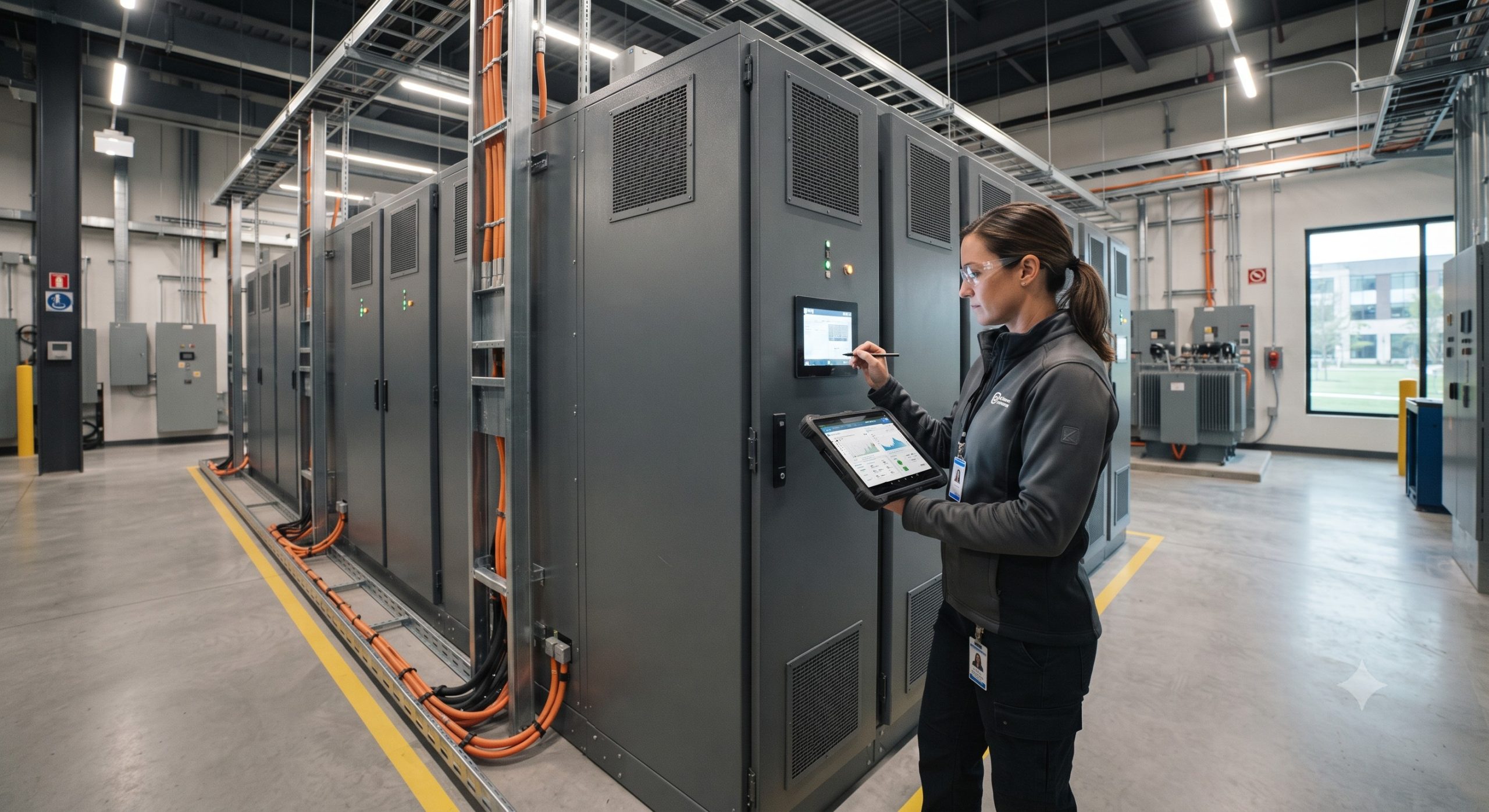
- The system features a comprehensive, cloud-enabled BMS that provides 24/7 real-time monitoring of all critical parameters, including state of charge (SoC), state of health (SoH), and cell impedance. Post-sales support includes a standard 10-year performance warranty, remote diagnostic capabilities for proactive issue resolution, and on-site O&M (Operations & Maintenance) support via a global service network. This ensures maximum uptime and allows for data-driven maintenance scheduling to prevent failures and optimize system performance throughout its lifecycle.
- Q6: Can these systems be configured for grid-tie, off-grid, or micro-grid applications?
- Yes, the bi-directional power conversion system (PCS) supports seamless configuration for grid-tie, off-grid, and micro-grid applications. For grid-tie, it enables peak shaving, load shifting, and demand response participation. For off-grid operation, it includes an islanding mode with black-start capability, ensuring stable power supply. For micro-grids, the integrated Energy Management System (EMS) can coordinate with solar PV and diesel generators for optimal dispatch and grid stability, all while adhering to stringent grid interconnection standards like UL 9540 and IEC 62619.
- Q7: How is scalability and capacity expansion handled?
- Scalability is facilitated through a modular, parallel cabinet design that allows for simple capacity expansion via a shared DC busbar. Starting with a base system, you can seamlessly add additional battery cabinets to increase total energy capacity (kWh/MWh) to meet growing demand without overhauling the existing PCS or EMS infrastructure. This ‘pay-as-you-grow’ architecture protects initial investment and provides flexible, future-proof deployment for evolving industrial and commercial energy needs.
- Q8: What is the expected ROI and how is the LCOE calculated for this system?
- The expected ROI is typically achieved within 3-5 years through peak shaving, demand charge reduction, and energy arbitrage, depending on local utility tariffs. The Levelized Cost of Energy (LCOE) is calculated by dividing the total lifetime cost (CAPEX + OPEX) by the total lifetime energy throughput (MWh). With a 6,000-cycle life at 90% DoD and a 10-year warranty, the LCOE is highly competitive for industrial applications, with long-term O&M support ensuring your asset achieves its projected financial and decarbonization targets.