TURNKEY C&I ENERGY STORAGE SOLUTION BRIEF: DEPLOYING LITHIUM IRON PHOSPHATE TECHNOLOGY EVOLUTION REPORT
EXECUTIVE SUMMARY
This document presents a comprehensive technical overview of the latest generation Lithium Iron Phosphate (LFP) energy storage platforms developed for commercial and industrial (C&I) applications. As the global energy transition accelerates, the demand for safe, reliable, and high-performance battery energy storage systems (BESS) has never been greater. This report charts the evolutionary path of LFP cell technology, from its foundational chemistry to the advanced system-level engineering that defines modern Tier-1 solutions. Our platform represents a culmination of over a decade of research and field data, delivering unprecedented levels of safety, cycle life, and operational efficiency.
SYSTEM ARCHITECTURE & SAFETY
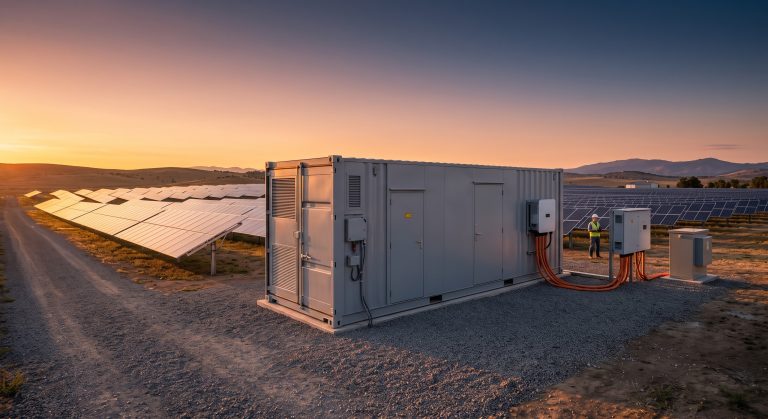
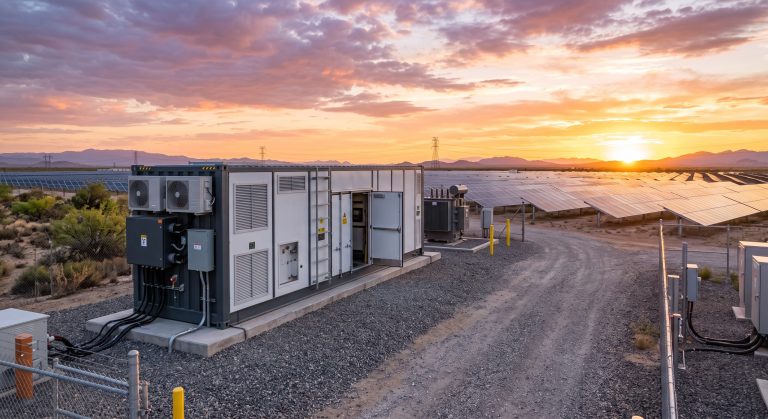
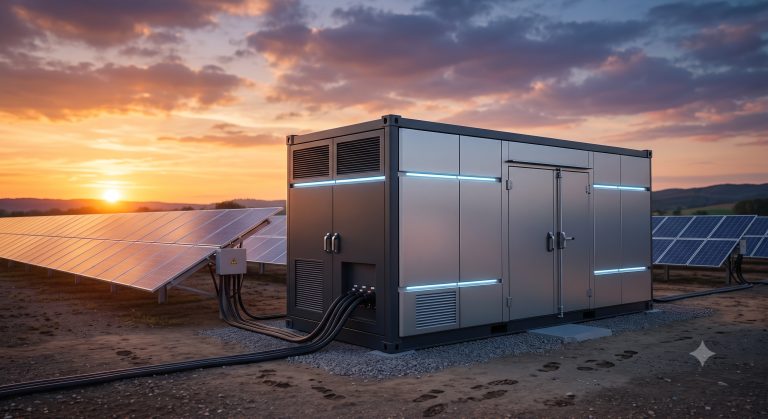
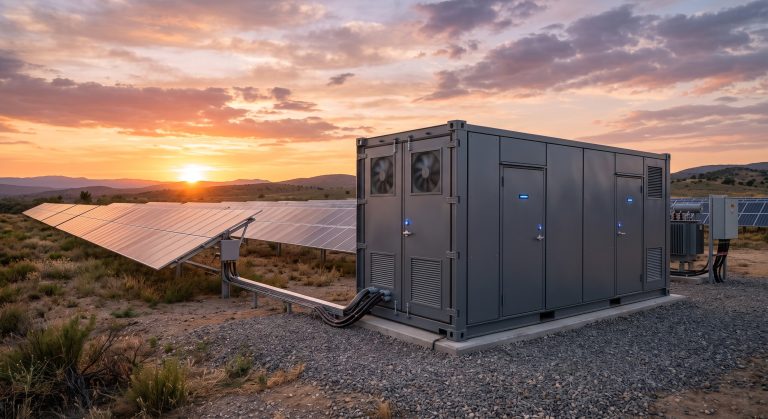
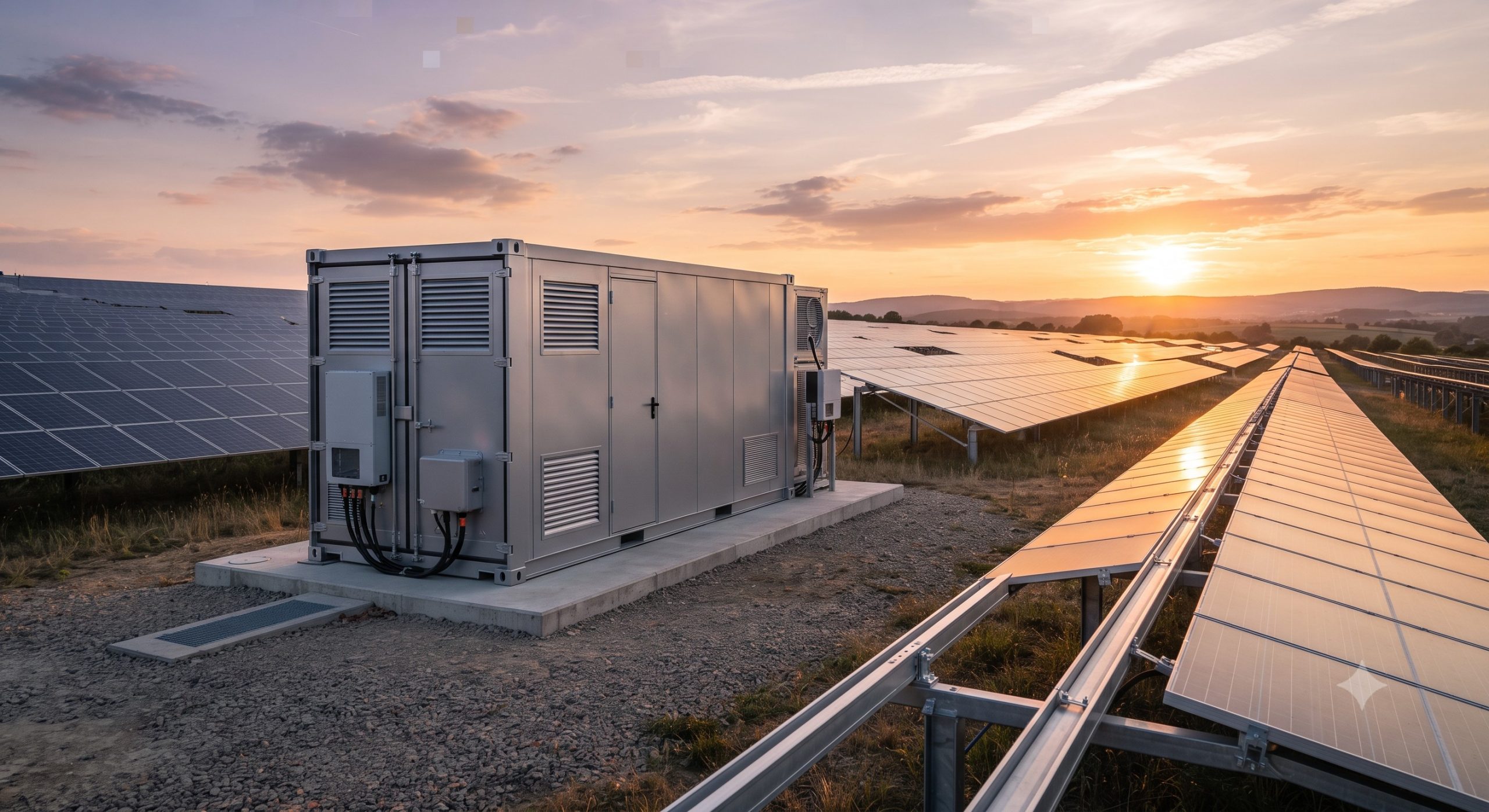
The core of our technology evolution is a shift from traditional air-cooled designs to an advanced, intelligent liquid cooling architecture. This system ensures that each of the high-capacity prismatic LFP cells operates within an optimal temperature window of 25°C ± 2°C, significantly mitigating the risk of thermal runaway and ensuring consistent performance across all operating conditions. The BESS is housed in an IP55-rated, corrosion-resistant outdoor enclosure, engineered to withstand harsh environmental conditions.
KEY FEATURES
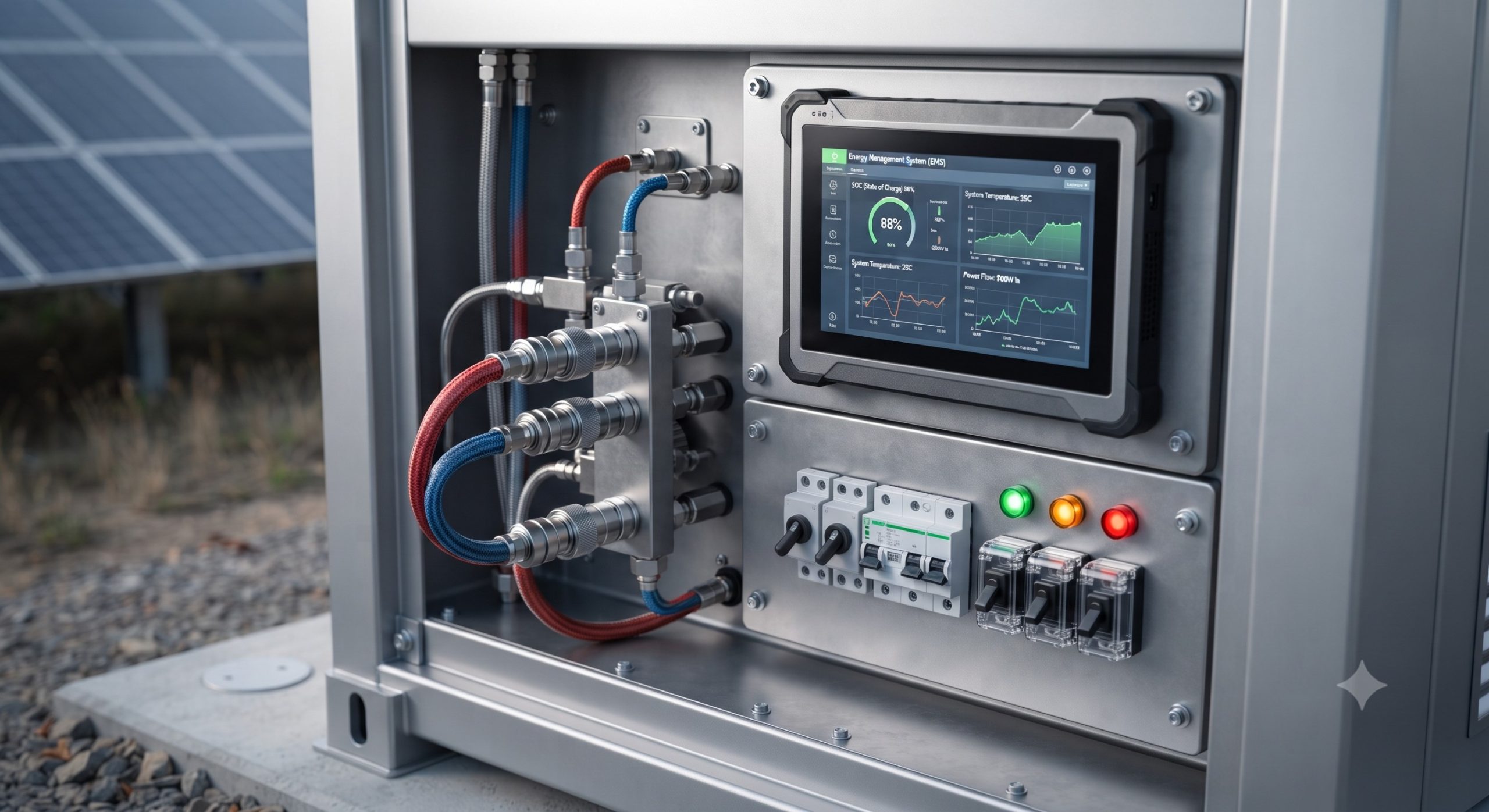
– Advanced Liquid Cooling & Thermal Management: The closed-loop liquid cooling system offers superior heat dissipation compared to forced-air solutions, reducing auxiliary power consumption by up to 30% and extending the effective cycle life of the cells. This is critical for maintaining high charge/discharge rates without derating.
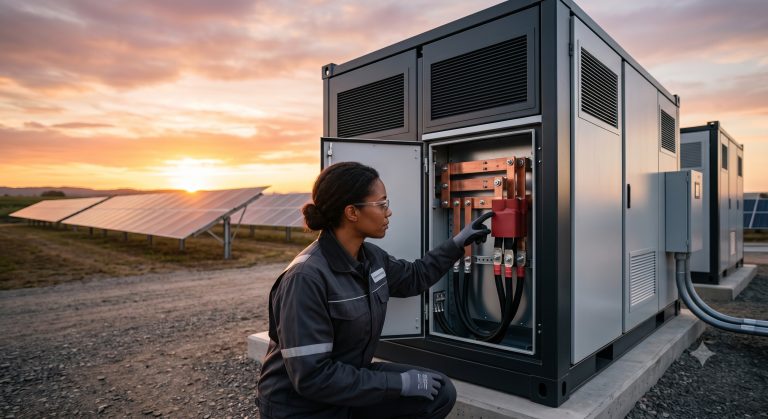
– Enhanced Safety & Fire Suppression: Beyond the inherent stability of LFP chemistry, the system integrates a multi-layered safety protocol. This includes an early-warning gas detection system, a fully automatic aerosol fire suppression unit, and a dedicated battery management system (BMS) that performs real-time cell-level monitoring for voltage, current, and temperature anomalies.
– High Energy Density & Scalability: The modular cabinet design has been optimized to maximize volumetric energy density, with a nominal capacity of 215 kWh per cabinet. The system is designed for parallel scalability, enabling configurations from 215 kWh up to multi-MWh installations through a simple DC-bus architecture, simplifying expansion.
– Intelligent Energy Management System (EMS): The integrated EMS leverages AI-driven algorithms to optimize energy dispatch, enabling functions such as peak shaving, demand charge reduction, load shifting, and grid frequency regulation. The platform is fully compatible with our cloud-based monitoring suite for remote O&M.
COMPLIANCE & STANDARDS
The LFP technology platform is engineered to meet the most stringent global safety and performance standards. Full compliance and certification have been achieved across key international regulatory bodies, ensuring seamless project deployment and insurability.
TECHNICAL SPECIFICATIONS
| Parameter | Specification |
|---|---|
| Nominal Capacity (per cabinet) | 215 kWh (configurable in parallel) |
| Battery Chemistry | Tier-1 Prismatic LFP (LiFePO4) |
| Cooling Method | Active Smart Liquid Cooling |
| Round-trip Efficiency (at 25°C) | >92% (DC/AC) |
| Design Life | >15 years |
| Cycle Life (at 1C, 100% DOD) | >6,000 cycles to 80% EOL |
| Operating Temperature Range | -20°C to +50°C (derating above +45°C) |
| Ingress Protection | IP55 |
| Fire Suppression | Aerosol-based automatic system |
| Communication Protocol | Modbus TCP/IP, CAN-Bus, IEC 61850 |
INDUSTRIAL DEPLOYMENT
This solution is ideally suited for a wide array of commercial and industrial environments, including manufacturing facilities, data centers, commercial office buildings, EV charging hubs, and micro-grids. The combination of high round-trip efficiency, robust safety features, and low total cost of ownership positions our LFP-based BESS as the superior choice for asset owners and developers seeking a reliable and profitable energy storage asset. The technology’s evolution has directly addressed the primary challenges of the previous generation, offering a path to a more resilient and sustainable energy infrastructure.
📥 Download Technical Specification
Click the button below to view or download the full official PDF datasheet.