Introduction: The Convergent Economics of EV Supercharging
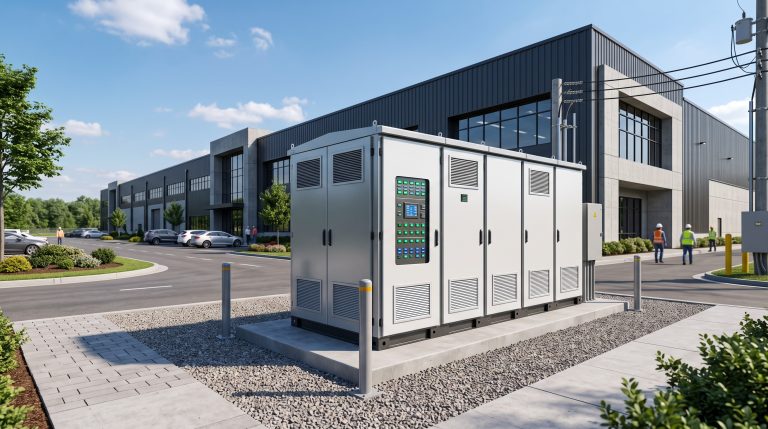
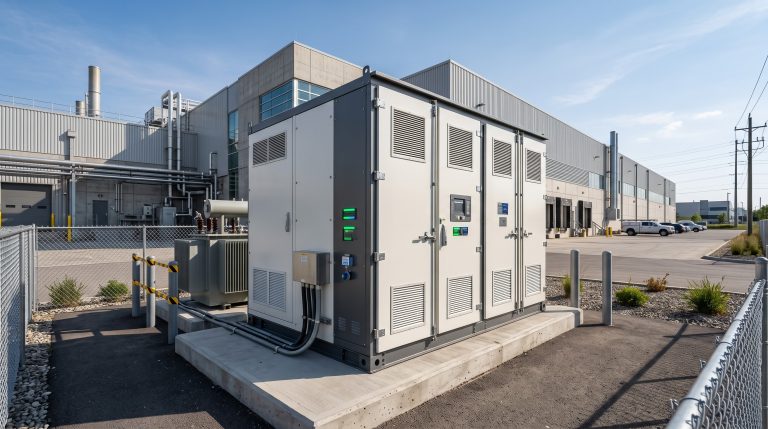
The global transition to electric mobility has exposed a critical infrastructure bottleneck: the capacity of existing electrical grids to support high-power DC fast charging (DCFC) networks. For commercial and industrial (C&I) facility operators, the convergence of solar photovoltaic (PV) generation, battery energy storage systems (BESS), and electric vehicle charging infrastructure—known as Integrated solar-storage-charging solutions—presents a transformative opportunity to bypass grid upgrade costs, capture peak-shaving arbitrage, and achieve tangible zero-carbon operational targets. Unlike conventional diesel-dependent or grid-only charging hubs, these synergistic systems leverage advanced liquid cooling thermal controls, tier-1 LFP cell chemistries, and intelligent energy management systems (EMS) to optimize levelized cost of energy (LCOE) while ensuring grid stability and demand response readiness.
Core Architecture: PV-to-Battery-to-Vehicle Power Flow
Seamless DC/AC Coupling & Bi-Directional Power Conversion
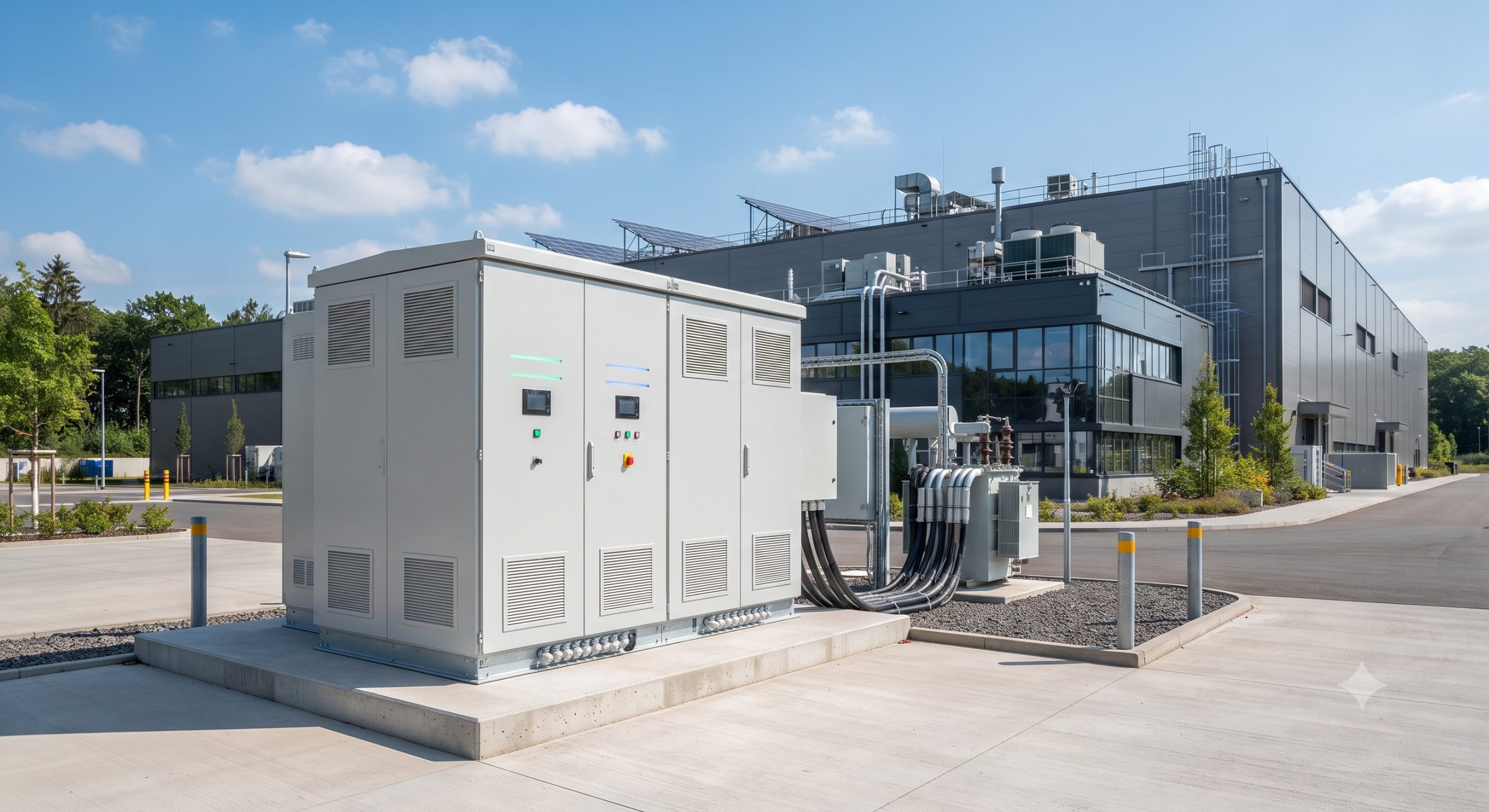
At the heart of a high-performance Integrated solar-storage-charging solution lies a sophisticated power conversion system (PCS). Modern architectures utilize a common DC bus to couple PV strings directly with battery racks and vehicle chargers, minimizing conversion losses. The PCS, typically rated between 500kW to 2MW for hub-scale deployments, performs bi-directional AC/DC conversion with a peak efficiency exceeding 98.5%. This allows the system to execute multiple operational modes: solar-to-battery charging, solar-to-vehicle direct supply, battery-to-vehicle discharge, and grid-to-battery storage. Advanced grid-following and grid-forming inverters are essential for maintaining voltage and frequency stability during sudden EV charging demand spikes, which can reach 350kW per plug.
Intelligent EMS Dispatch Logic for Peak Shaving
The Energy Management System (EMS) is the algorithmic brain of the installation. By ingesting real-time data from smart meters, weather forecasting APIs, and charger utilization rates, the EMS executes a multi-variable optimization algorithm. Its primary objective is to flatten the facility load curve by discharging stored solar energy during peak tariff periods (typically 4-9 PM) and recharging batteries during low-cost off-peak hours or from excess PV generation. This dynamic peak-shaving strategy can reduce demand charges, which often constitute 30-50% of a C&I electricity bill, by up to 40%. Furthermore, the EMS orchestrates the system’s participation in demand response (DR) programs, providing frequency regulation capabilities to the grid operator within milliseconds in exchange for utility incentives.
Thermal Management: Liquid Cooling for High-Cycle Durability
Thermal runaway prevention and cycle life preservation are paramount in high-utilization charging hubs. High-power charge/discharge cycles generate significant internal heat within the battery cells, accelerating degradation and posing safety risks. Liquid cooling has emerged as the superior thermal control methodology compared to traditional forced air cooling, particularly for systems exceeding 500kWh. By circulating a dielectric coolant through micro-channel plates adjacent to each LFP cell, the BMS maintains inter-cell temperature differentials below 3°C. This uniform thermal profile is critical for achieving the projected >8000 cycle life at 90% depth of discharge (DoD). The liquid cooling loop also enables tighter cell stacking, increasing energy density by 20-30% compared to air-cooled cabinets, which is a decisive advantage for footprint-constrained urban supercharging sites.
Technical Specifications: Tier-1 LFP Cell Integration
Integrating Integrated solar-storage-charging solutions demands uncompromising adherence to safety and performance standards. The following technical metrics represent the baseline for certified, bankable deployments. All battery modules are constructed from Tier-1 LFP (Lithium Iron Phosphate) prismatic cells, renowned for their intrinsic thermal stability and extended calendar life.
| Key Parameter | Technical Specification |
|---|---|
| Battery Chemistry | Tier-1 LFP (Lithium Iron Phosphate) Prismatic Cells |
| Cell Cycle Life | >8000 cycles @ 90% DoD (Depth of Discharge) to 80% EOL |
| System Capacity (Nominal) | 1MWh to 5MWh per cabinet cluster (scalable) |
| Round-Trip Efficiency (RTE) | >90% (DC-DC) / ~88% (AC-AC including auxiliaries) |
| Thermal Management | Active Liquid Cooling with <3°C inter-cell delta T |
| PCS Rating | 500kW – 2MW Bi-directional, 98.5% Peak Efficiency |
| Safety Certifications | UL 9540, UL 9540A, IEC 62619, CE, UN38.3 |
| Communication Protocols | Modbus TCP, CAN Bus, IEC 61850 (VPP-ready) |
Commercial ROI: LCOE, CapEx, and Grid Support
Total Cost of Ownership Analysis
A comprehensive total cost of ownership (TCO) analysis reveals that Integrated solar-storage-charging solutions achieve a break-even point 2-3 years earlier than grid-only DCFC installations. While the upfront CapEx for a 1MW/2MWh system ranges between $400,000 and $600,000 depending on liquid cooling and PCS specifications, the operational savings are substantial. The primary revenue streams include: (1) Energy Arbitrage: Buying electricity at $0.05/kWh off-peak and selling or utilizing it at $0.20/kWh during peak periods, generating an annual spread of $100,000-$150,000 per MWh of cycled storage. (2) Demand Charge Reduction: Eliminating peak demand spikes can save a C&I facility upwards of $50,000 annually. (3) Grid Support Services: Revenue from frequency regulation and spinning reserve markets can add 10-15% to the annual IRR.
Accelerating Decarbonization with VPP Readiness
The architectural design is inherently Virtual Power Plant (VPP)-ready. Through secure IoT protocols (e.g., Modbus TCP, IEC 61850), the aggregated storage capacity of multiple C&I sites can be dispatched by utility operators as a single, flexible resource. This not only enhances grid resilience but positions the asset owner to capitalize on the evolving value of stored energy beyond simple backup. The system’s round-trip efficiency (RTE), typically between 87% and 92% when factoring in auxiliary loads (liquid cooling pumps, EMS servers), directly correlates with profitability; a 1% improvement in RTE can translate to a $5,000 annual gain in energy throughput for a 2MWh system.
Deployment Scenarios: From Industrial Parks to Highway Hubs
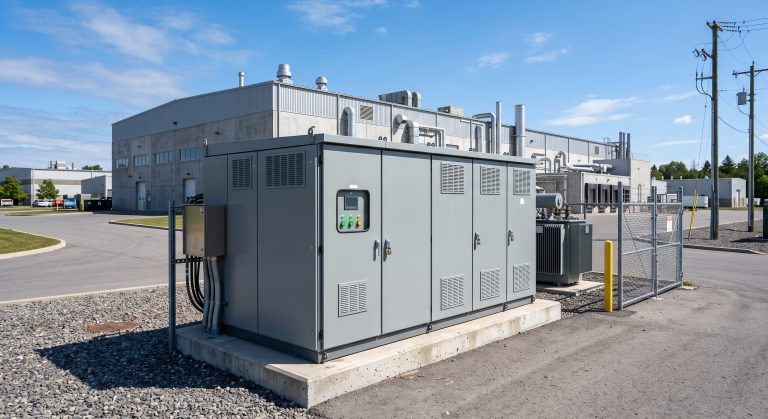
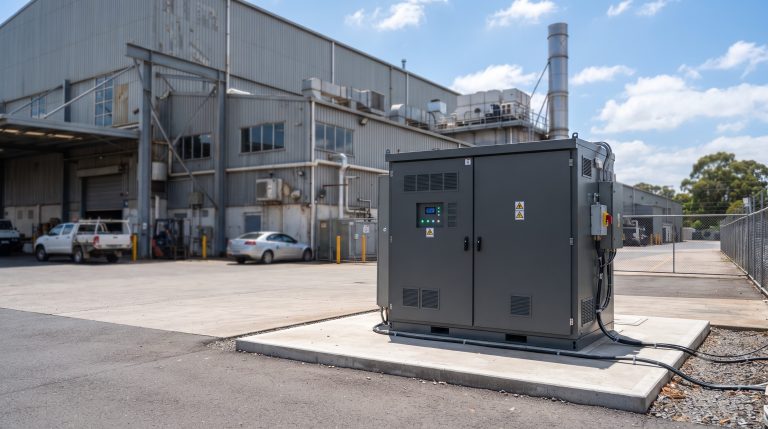
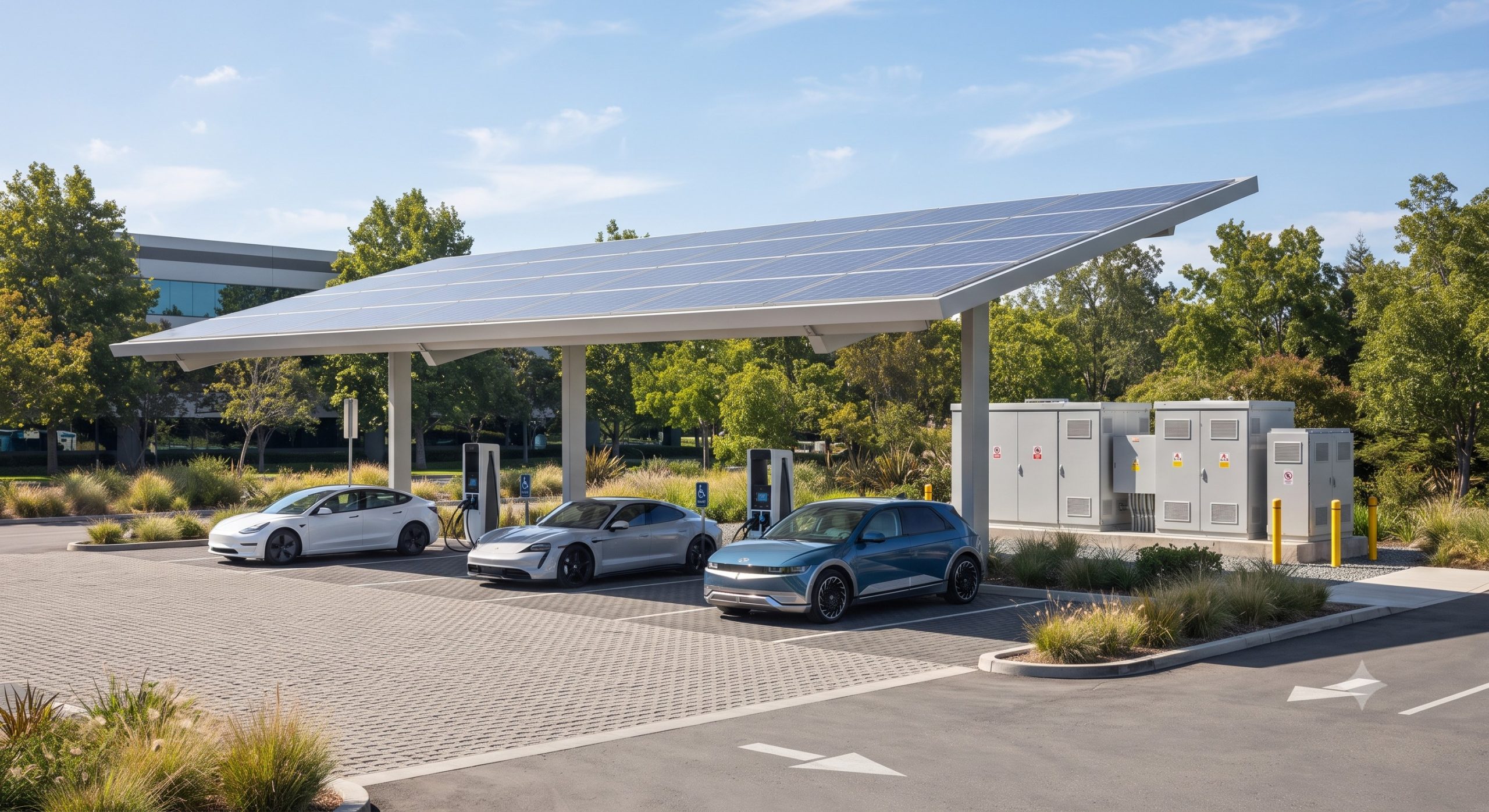
Integrated solar-storage-charging solutions exhibit remarkable versatility across diverse C&I verticals. In industrial parks, they serve as the backbone of a microgrid, providing uninterruptible power supply (UPS) functionality for critical manufacturing lines while simultaneously powering employee EV fleets. For retail and logistics hubs, the combination of a solar canopy over parking lots with integrated storage enables fast-charging for delivery vans without straining the local distribution transformer. The most aggressive adoption, however, is occurring at highway corridor supercharging stations, where the solution allows operators to deploy 8-12 ultra-fast chargers (300kW+) with a grid connection that is 50% smaller than would otherwise be required, dramatically reducing interconnection wait times and infrastructure costs.
Conclusion: The Definitive Infrastructure Roadmap
Integrated solar-storage-charging solutions are not merely an alternative energy choice; they are a strategic economic imperative for C&I stakeholders committed to long-term energy sovereignty and sustainability. By adopting UL 9540 and IEC 62619 certified systems equipped with advanced liquid cooling, tier-1 LFP batteries, and intelligent EMS, facility operators can achieve a 20-30% reduction in LCOE for EV charging operations while significantly enhancing grid resilience. As utility rates continue to rise and the penetration of EVs accelerates, the synergy of PV, storage, and charging will define the competitive landscape of commercial real estate and industrial logistics. The blueprint for zero-carbon migration is here; the economics are compelling, and the technology is proven.