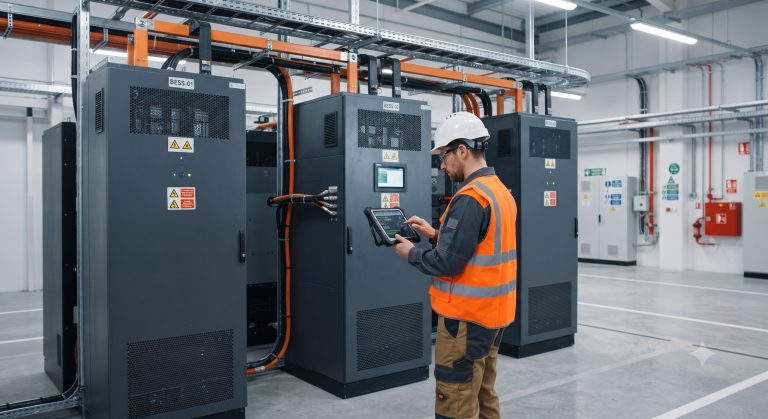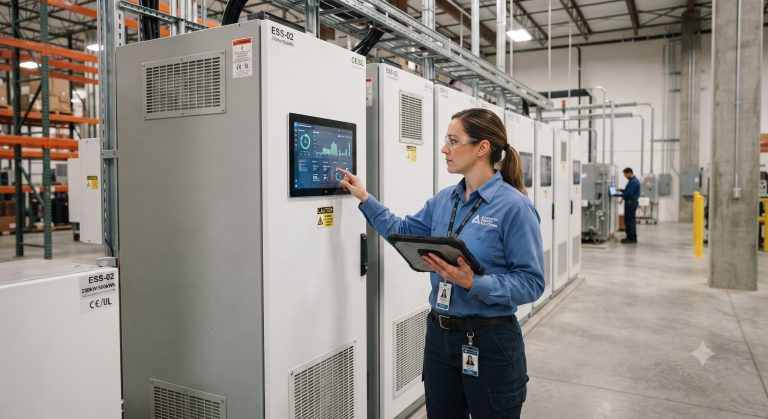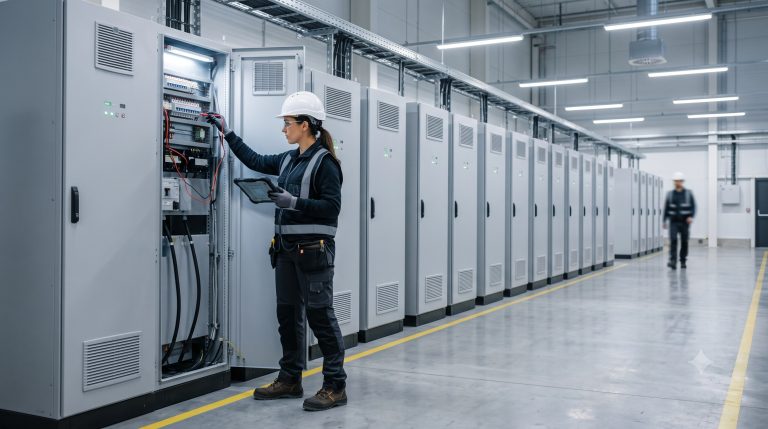
Overview
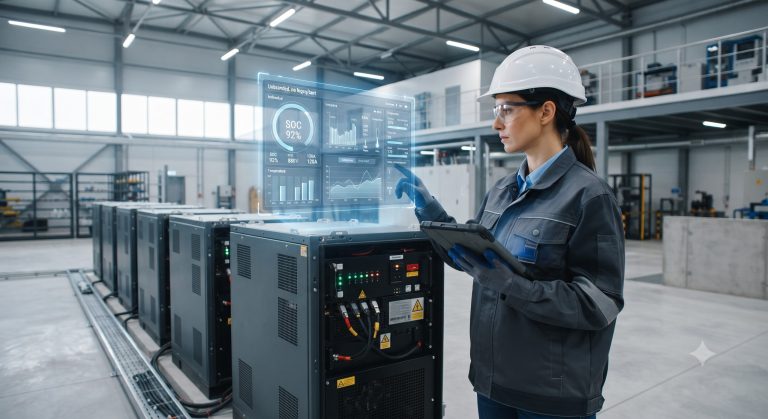
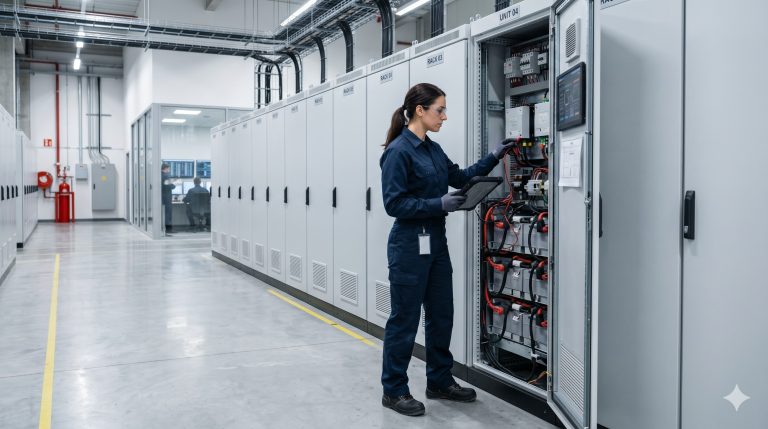
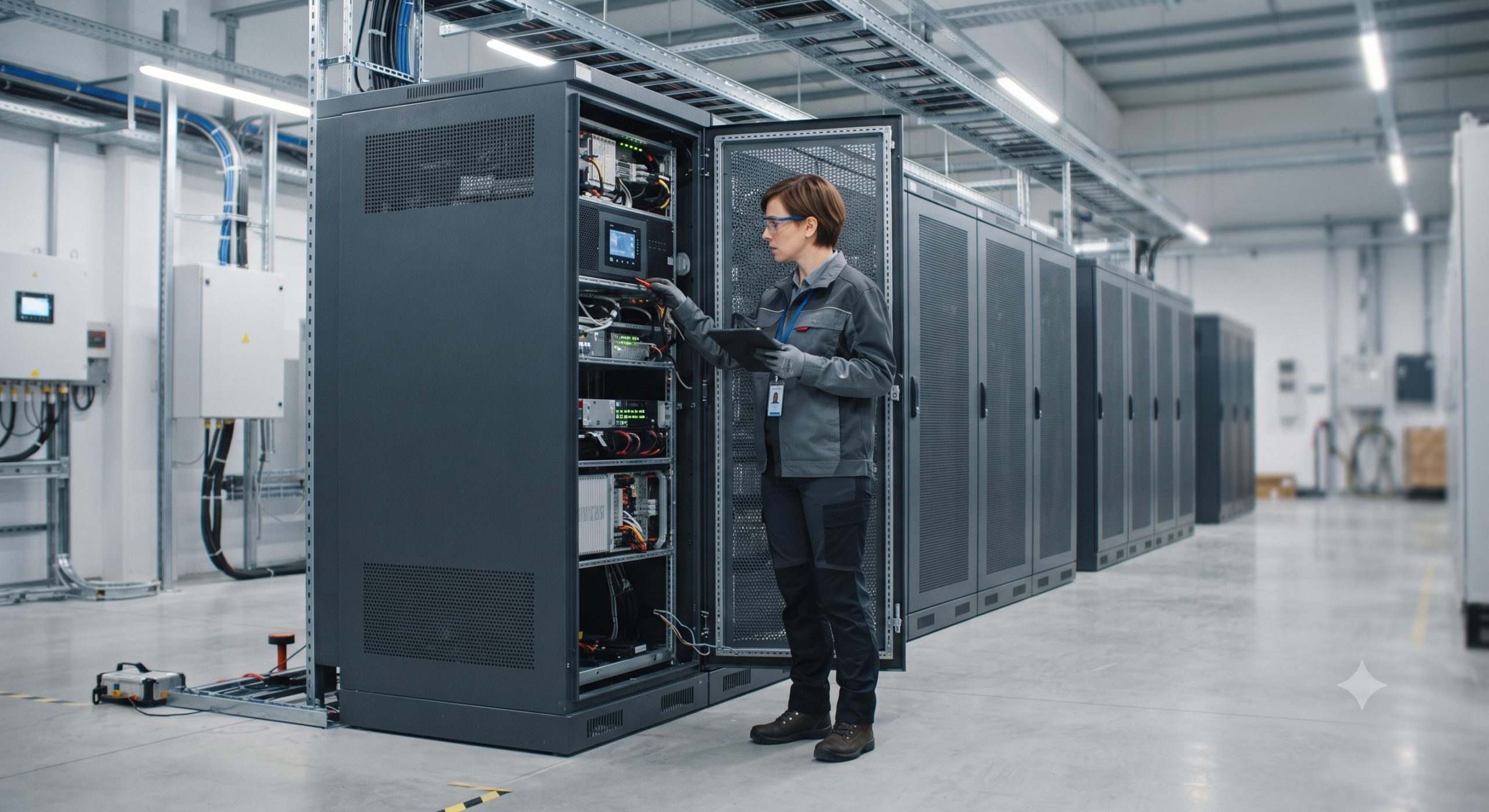
Intelligent temperature control is the cornerstone of safe, efficient, and long-lasting Battery Energy Storage Systems (BESS). For B2B engineers and procurement specialists, understanding how these systems actively manage thermal dynamics is critical to mitigating risks, ensuring optimal performance, and maximizing ROI. This FAQ addresses the most pressing technical and safety questions regarding thermal management in containerized ESS.
Frequently Asked Questions
- Q1: What is the standard cycle life and DoD for a container ESS with intelligent liquid cooling?
- The standard cycle life is 6,000 to 8,000 cycles at 90% Depth of Discharge (DoD) for a container ESS utilizing advanced liquid cooling. This significant lifespan, often exceeding 20 years in daily cycling scenarios, is directly enabled by the thermal system’s ability to maintain cells within a narrow optimal temperature range of 15°C to 35°C, drastically reducing degradation.
- Q2: How does the intelligent liquid cooling system work in a container ESS?
- It works by circulating a dielectric coolant through cold plates adjacent to each battery module, actively absorbing and dissipating heat. This process is regulated by a smart control unit that modulates coolant flow and chiller operation based on real-time data from multiple temperature sensors, ensuring uniform cell temperatures and preventing hotspots that can accelerate aging.
- Q3: What are the primary fire safety and thermal runaway prevention features?
- The primary features include multi-level detection (gas, smoke, temperature), aerosol or water-mist fire suppression systems, and a Battery Management System (BMS) programmed to trigger an automatic shutdown before critical temperatures are reached. Furthermore, the liquid cooling system itself acts as a passive safety measure by rapidly absorbing and dispersing heat from a failing cell, buying critical time for the suppression system to activate and contain the event.
- Q4: How does the BMS integrate with the temperature control system for monitoring?
- The BMS integrates seamlessly by acting as the central intelligence, continuously monitoring individual cell voltages and temperatures. It processes this data to calculate state-of-charge (SoC) and state-of-health (SoH), and actively communicates with the thermal management system to dynamically adjust cooling or heating to preemptively protect cells, ensuring all units operate within safe parameters.
- Q5: What are the key scalability and parallel connectivity limits for these systems?
- Scalability is virtually limitless, as container ESS units are designed for parallel connectivity via common DC busbars or AC coupling. The practical limit is determined by the site’s power capacity and the master Energy Management System’s (EMS) ability to manage the aggregated load. With proper cabling and transformer sizing, multiple containers can be linked to scale from a few MWh to over 100 MWh.
- Q6: How is the total cost of ownership (TCO) and ROI calculated for a thermal-managed ESS?
- ROI is calculated by analyzing peak shaving, demand charge reduction, and energy arbitrage revenue, minus the total system cost, including O&M. The intelligent thermal system dramatically improves TCO by extending cycle life (reducing replacement costs) and maintaining high round-trip efficiency (minimizing energy losses), ensuring the system generates maximum savings over its operational lifetime.
- Q7: What are the installation requirements for grid-tie vs. off-grid configuration?
- Grid-tie installation requires synchronizing the bi-directional PCS with the utility’s phase, voltage, and frequency, often involving a step-up transformer. Off-grid configuration requires the ESS to act as the grid-forming source, which necessitates advanced inverters capable of providing stable frequency and voltage reference, along with black-start capability for backup power scenarios.