Overview
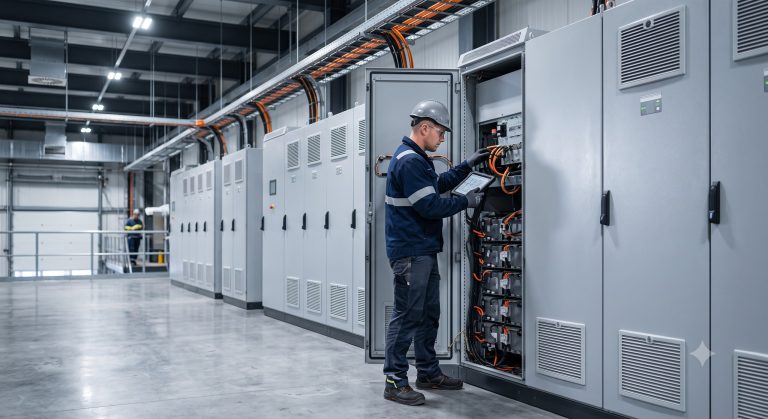
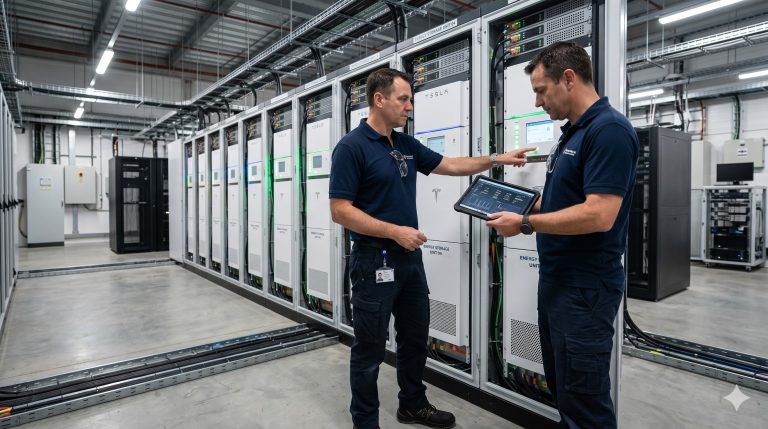
Scalability is a primary advantage of modern Battery Energy Storage Systems (BESS), but it raises a critical question: what is the maximum number of stackable batteries allowed in one home or commercial system? For B2B plant engineers, procurement specialists, and system integrators, the answer isn’t a simple number, but a dynamic result of voltage limits, BMS architecture, and safety certifications like UL 9540. This technical FAQ addresses the engineering, safety, and ROI considerations for stacking battery cabinets, moving from pre-sales sizing to post-sales maintenance.
Frequently Asked Questions
- Q1: What is the maximum number of stackable BESS cabinets I can parallel in one commercial system?
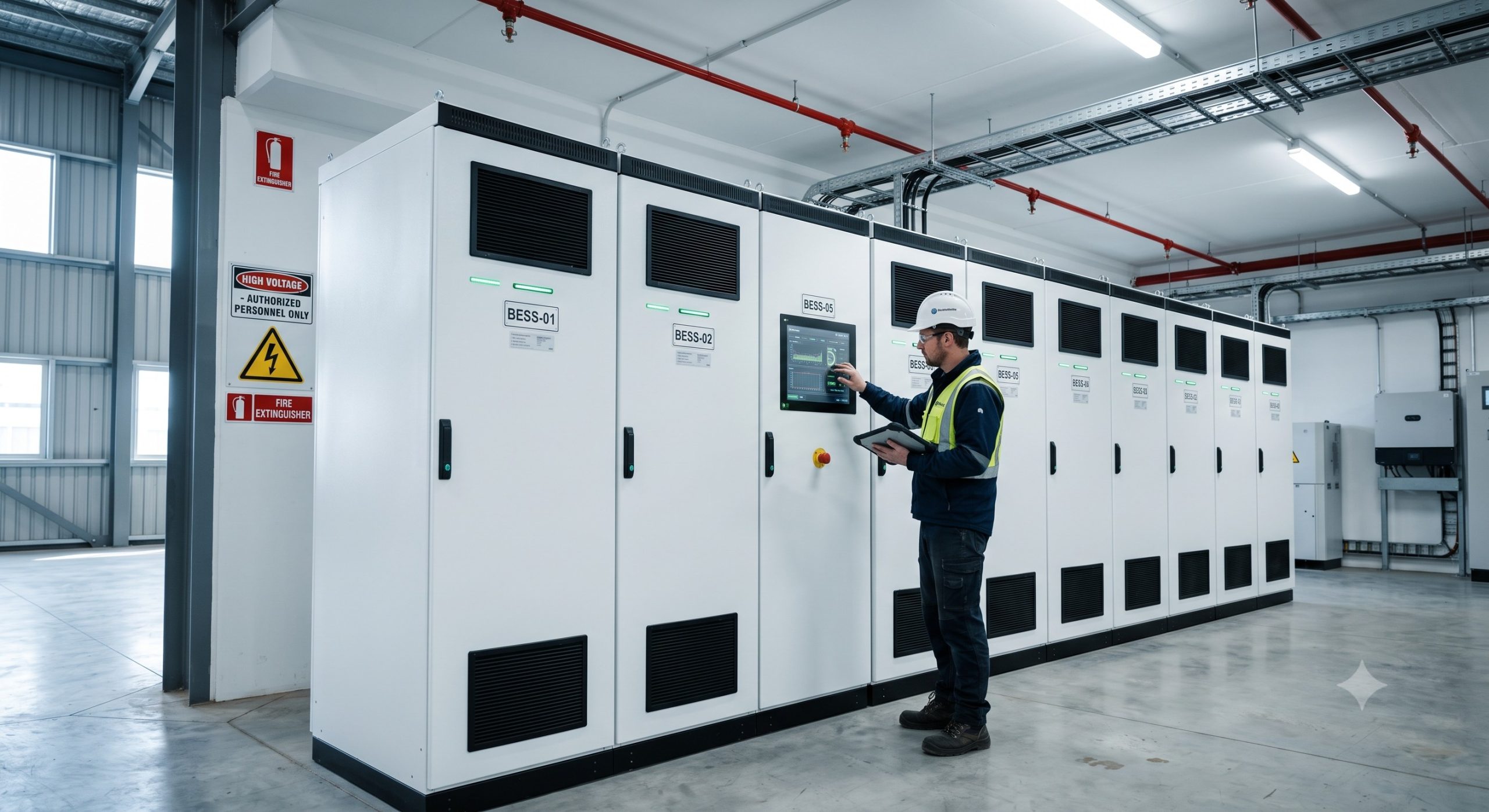
- The maximum number is typically 4 to 10 cabinets per common DC bus, depending on the manufacturer’s BMS design and system voltage limits. Most Tier-1 1000Vdc systems support up to 8 parallel units, while 1500Vdc architectures can handle up to 10 to maximize energy density. Crucially, this limit is governed by the BMS’s ability to manage inter-cell balancing and total system current, ensuring no single point of failure compromises the entire bank.
- Q2: How does the BMS manage battery balancing across a maximum stackable configuration?
- A hierarchical BMS architecture uses cell-to-pack and pack-to-system active balancing to maintain State of Charge (SoC) parity across all stacked cabinets. For a 10-cabinet system, the master BMS communicates with each slave unit at sub-second intervals, issuing balancing commands to equalize voltage discrepancies. This ensures that even at the maximum stack count, the entire system achieves a high usable DoD of 90-95%, preventing premature degradation from over-stressed cells.
- Q3: What is the practical impact on cycle life when operating at the maximum number of stackable batteries?
- Operating at the maximum stack limit does not inherently reduce cycle life if the cooling system and PCS are properly sized to handle the thermal load. At a 1C rate, a fully stacked system will generate significant heat; hence, liquid cooling is essential. With robust thermal management, you can still achieve 6,000 to 8,000 cycles at 80% DoD, even in a 10-cabinet configuration.
- Q4: What fire safety mechanisms are critical when scaling to the maximum stackable BESS capacity?
- Multi-tier fire safety including early gas detection (CO, H2) and aerosol or water-mist suppression is non-negotiable at maximum density. Additionally, UL 9540A certification is mandatory for large-scale stacks; it certifies that thermal runaway in one module will not propagate to adjacent units. You must also install isolation contactors per cabinet to electrically isolate a faulty unit without shutting down the entire system.
- Q5: Are there limitations for grid-tie vs. off-grid configurations when using the maximum number of stackable cabinets?
- For off-grid applications, the maximum stack size is often limited by your inverter’s DC input voltage and the need for grid-forming capability. The BESS must handle 100% load spikes without grid support. In contrast, grid-tie systems can leverage the grid’s inertia, allowing for larger stacks focused on peak shaving and arbitrage. You must upsize your bi-directional PCS and ensure the grid interconnection transformer can handle the total power throughput.
- Q6: How do I calculate ROI for a maximum stackable BESS project compared to diesel generation?
- Calculate ROI based on the LCOE and peak shaving arbitrage. A maximum stack (e.g., 2.5MWh) can achieve a significantly lower LCOE (<$0.12/kWh) compared to diesel ($0.25-$0.40/kWh), offering payback in under 3 years. Include O&M costs in your calculation; modern systems with remote monitoring can reduce OPEX by 40%.
- Q7: What are the BMS monitoring and post-sales maintenance requirements for a max-stacked system?
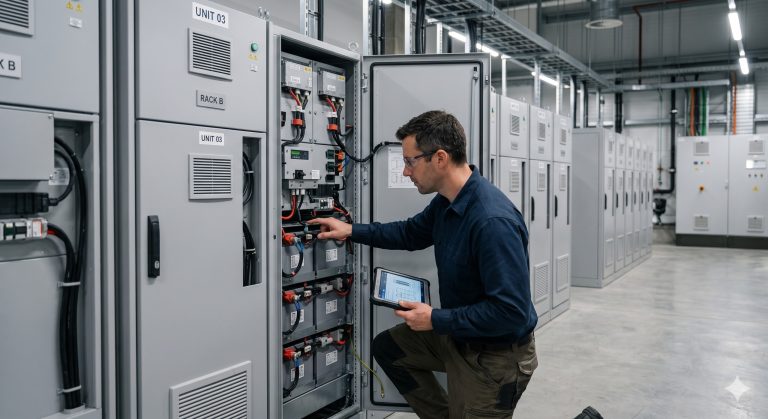
- Post-sales maintenance requires continuous monitoring of SoC, State of Health (SoH), and internal resistance for each of the hundreds of cells in the stack. Establish threshold alerts for voltage and temperature deviations. System integrators must perform quarterly capacity tests and annual contactor inspections.