Introduction: The Imperative of Contamination Control in BESS Manufacturing
In the rapidly evolving landscape of Commercial & Industrial (C&I) energy storage, the difference between a high-performance asset and a liability often begins long before the battery is discharged. The manufacturing environment, specifically the cleanliness and dryness of the assembly line, is foundational to the long-term reliability, safety, and cycle life of a Battery Energy Storage System (BESS). This technical blog offers a comprehensive analysis of Class-100,000 cleanroom battery assembly, exploring its critical role in the production of Tier-1 LFP cells. With particulate and moisture control being paramount, we delve into the rigorous standards, engineering controls, and performance metrics that define state-of-the-art BESS manufacturing. A Class 100,000 cleanroom (ISO 8) represents a controlled environment where the number of particles 0.5 µm or larger per cubic foot of air is limited to 100,000 . This level of cleanliness is essential for lithium-ion battery assembly, particularly for cell stacking, packaging, and quality control testing, where even micron-level contamination can lead to reduced efficiency, accelerated degradation, or catastrophic thermal events . As the demand for high-capacity, reliable energy storage surges, sourcing from manufacturers adhering to these stringent protocols becomes a non-negotiable element of risk management and performance assurance.
Core Architecture & Battery Management
Precision Assembly in Controlled Environments
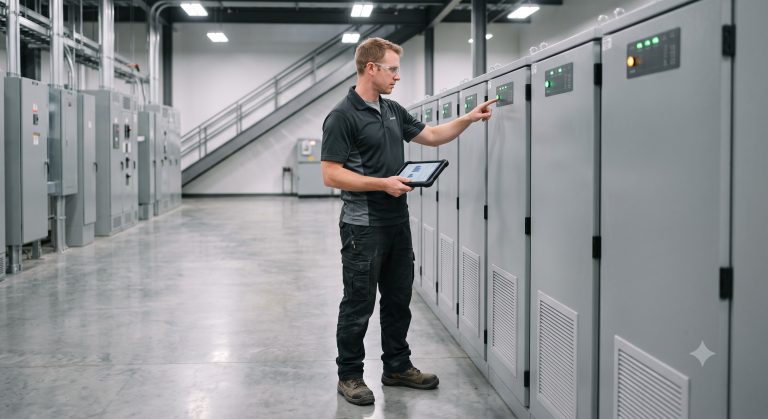
The architecture of a high-quality BESS is intrinsically linked to the quality of its cell assembly. The Class-100,000 cleanroom designation is not a monolithic requirement but is often part of a tiered cleanroom strategy within a manufacturing facility. For instance, while a Class 100,000 (ISO 8) cleanroom may be suitable for packaging operations and final assembly, more sensitive stages like electrode coating and active material handling may demand ISO Class 6 (Class 1,000) or ISO Class 7 (Class 10,000) environments . This zoning ensures that contamination risks are mitigated at every critical juncture. A world-class battery manufacturing facility integrates these cleanrooms with advanced process utilities, including deionized water systems, high-pressure solids collection systems for safe powder mixing, and specialized humidity control. Lithium-ion battery production lines often transition from a Class-100,000 semi-cleanroom to higher-grade cleanrooms, with conveyor linkages maintaining environmental integrity . This meticulous approach ensures that impurities are not introduced during cell formation, which would otherwise compromise the performance of the final BESS modules.
Humidity Control: The Silent Performance Killer
Particulate control is only half the battle; stringent humidity management is equally crucial. In a Class-100,000 cleanroom battery assembly line, the dew point must be aggressively managed to prevent moisture ingress into battery cells. Moisture reacts with electrolytes to form hydrofluoric acid, which degrades internal components, reduces capacity, and increases the risk of short circuits. Typical dry rooms used in assembly require a dew point ranging from -35°C to -45°C, corresponding to an extremely low absolute humidity. More critical areas, such as electrolyte filling stations, often require a dew point as low as -60°C , necessitating advanced desiccant-based drying technologies rather than conventional refrigeration cycles.
Smart BMS Integration and PCS Topology
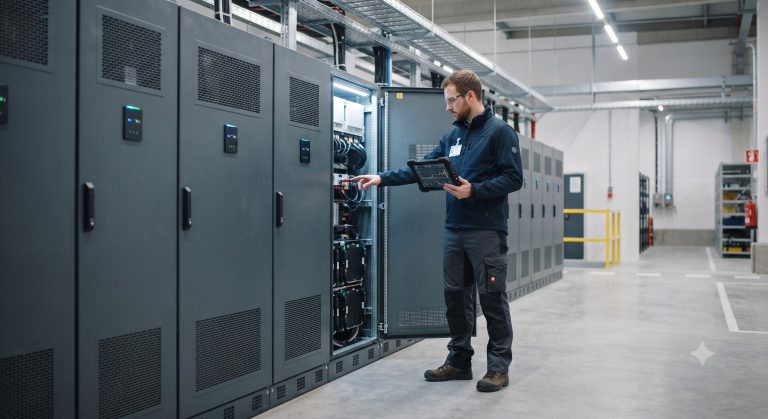
Once assembled in these pristine conditions, the cells are integrated into a system managed by a sophisticated Battery Management System (BMS) and a bi-directional Power Conversion System (PCS). The BMS is responsible for cell balancing, state-of-charge estimation, and critical safety functions, such as monitoring voltage and temperature to prevent thermal runaway. The PCS, often featuring liquid cooling for optimal thermal control, handles the AC/DC conversion, enabling seamless grid interaction and peak shaving. A robust BMS and PCS architecture, coupled with the inherent quality advantages of cleanroom assembly, maximizes the system’s round-trip efficiency, typically exceeding 90%.
Technical Specifications
The following table outlines key technical specifications for a state-of-the-art C&I BESS, reflecting the performance enabled by high-quality cleanroom assembly and advanced engineering.
| Key Parameter | Technical Specification |
|---|---|
| Battery Chemistry | Tier-1 LFP (Lithium Iron Phosphate) |
| System Capacity | Up to 2.0 MWh per container (scalable to 100 MWh+) |
| Rated Voltage | ~700-1500 V DC |
| Cycle Life | > 8,000 cycles @ 90% Depth of Discharge (DoD) |
| Round-Trip Efficiency | > 92% (AC/AC) |
| Thermal Management | Advanced Liquid Cooling (AI-optimized flow control) |
| Response Time | < 20ms (Grid-support Mode) |
| Safety Standards | IEC 62619, UL 9540, UN38.3, CE |
| Fire Suppression | Multi-level aerosol & gas-based systems |
Commercial ROI & Grid Support
Quantifying the Value of Quality
Investing in BESS equipment manufactured under strict Class-100,000 cleanroom conditions translates directly to a superior Total Cost of Ownership (TCO). The extended cycle life and higher round-trip efficiency reduce the effective cost per kWh stored over the asset’s lifespan. For C&I end-users, this enables more aggressive peak-shaving strategies, capturing greater value through demand charge reduction. Furthermore, systems with high-quality cells are more reliable performers in demand response programs and Virtual Power Plant (VPP) aggregations, where rapid, predictable dispatch is financially rewarded.
Decarbonization and Grid Resilience
Beyond ROI, these systems are critical for decarbonizing industrial operations. By integrating with on-site solar PV, a BESS allows for shifting renewable energy to off-peak hours, minimizing reliance on fossil-fuel-powered grid electricity. This integration enhances resilience, providing seamless off-grid transition capabilities during grid disturbances. The superior cell quality derived from cleanroom manufacturing ensures that the system can perform reliably during these critical grid-support events, maintaining power for sensitive industrial equipment and processes.
Deployment Scenarios
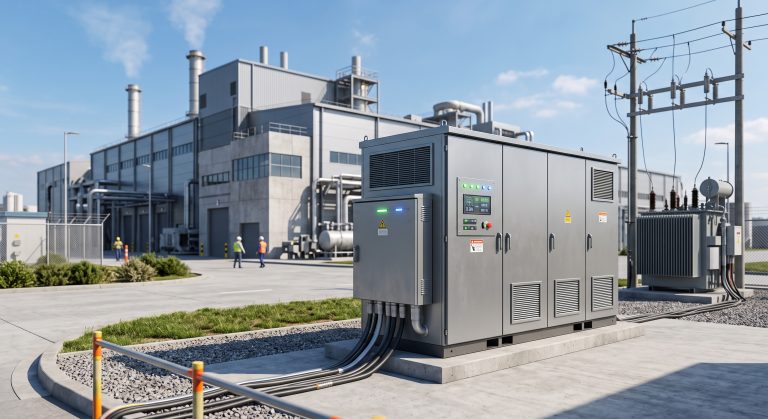
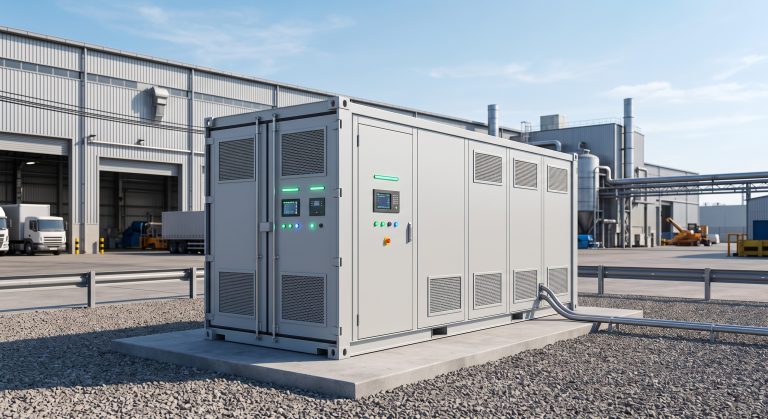
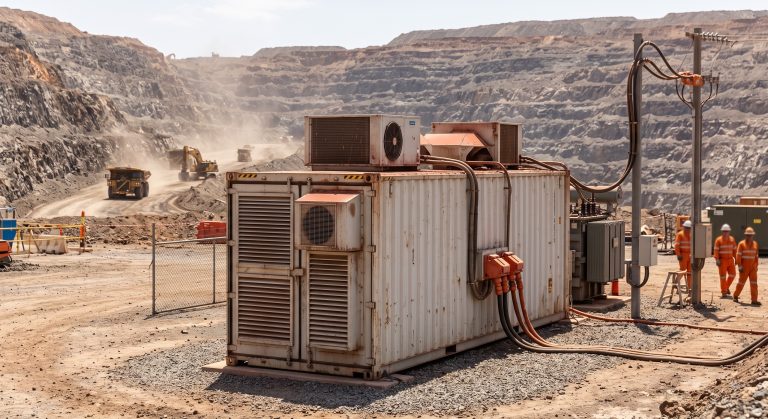
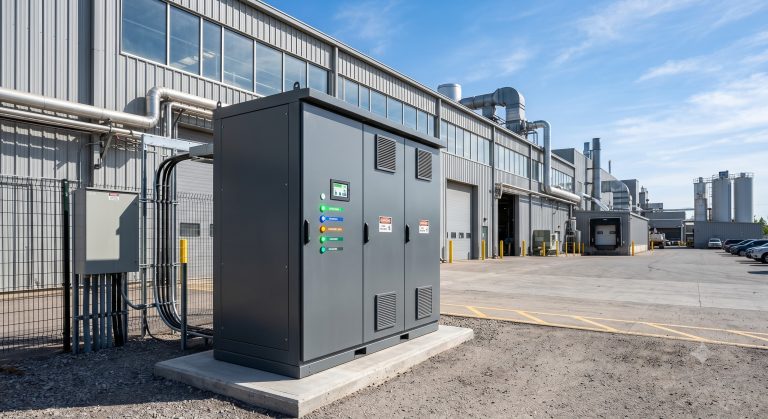
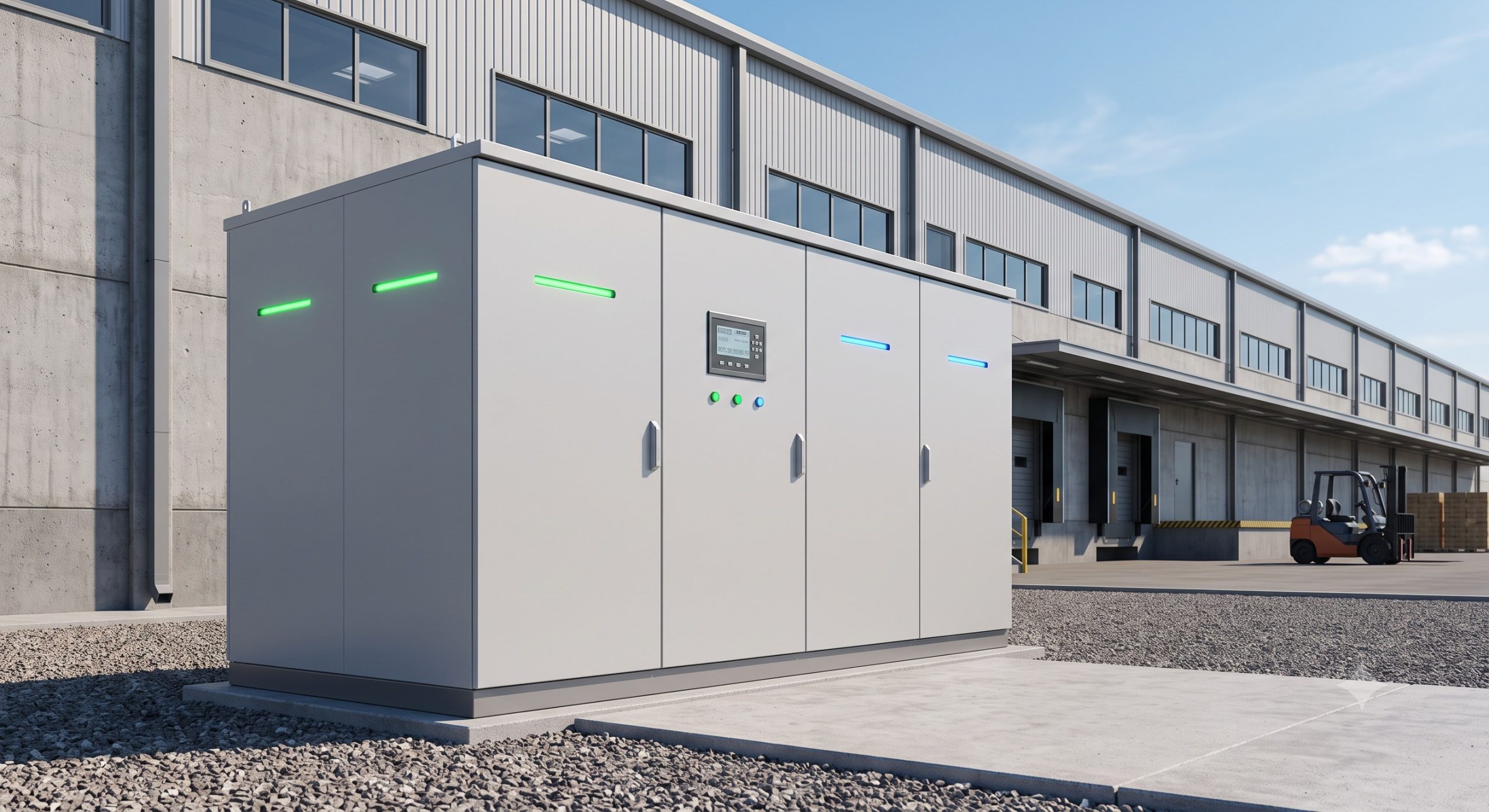
High-quality BESS solutions born from Class-100,000 cleanroom assembly are adaptable to a variety of high-value deployment scenarios, as illustrated below.

Industrial Parks and Manufacturing Facilities
In industrial settings with complex load profiles and high energy costs, these systems provide a turnkey solution for energy independence. Containerized or cabinet-based designs allow for scalable MWh-level capacity, often incorporating dedicated fire suppression systems and meeting stringent UL 9540 and IEC 62619 safety standards . A deployment in an industrial park can involve parallel cabinet expansion via inter-cabinet busbar linkage, providing modular scaling as energy needs grow. The mechanical integrity and performance consistency enabled by cleanroom manufacturing are vital for these demanding, high-utilization applications.
PV-Storage-Charging (光储充) EV Supercharging Hubs
One of the most dynamic use cases is the integration of BESS into PV-Storage-Charging hubs for EV supercharging. The rapid, high-power demand of ultra-fast chargers can cause significant strain on the local grid, incurring high demand charges. A BESS acts as a buffer, storing solar energy and grid power during low-demand periods and discharging at high rates to power EVs. This application demands batteries with exceptional cycle life and robust thermal management. The liquid cooling systems integrated with the PCS ensure the battery can handle the heat generated during these high C-rate charge/discharge cycles, a capability directly traceable to the quality of the cells produced in a controlled cleanroom environment.
Conclusion
The rigorous control of particulate and moisture achieved in a Class-100,000 cleanroom battery assembly environment is not merely a manufacturing detail; it is a cornerstone of performance, safety, and economic viability for commercial energy storage systems. For B2B sourcing professionals, specifying batteries produced under such strict conditions is an essential step in ensuring the long-term success of energy storage projects. By understanding the interplay between cleanroom standards, advanced BMS/PCS integration, and key performance metrics like cycle life and round-trip efficiency, stakeholders can make informed decisions that maximize ROI and drive the transition to a sustainable, reliable, and decarbonized energy future.