Introduction: The Critical Role of SOC Accuracy in Modern BESS Compliance
In the high-stakes world of commercial and industrial (C&I) energy storage, the state of charge (SOC) is far more than a simple fuel gauge. It is the foundational data pillar for battery management systems (BMS), energy dispatch strategies, and, critically, safety compliance. For project developers, system integrators, and procurement managers, understanding the engineering rigor behind SOC—especially its calibration, thermal dependencies, and integration with protective systems—is non-negotiable for achieving certifications like UL 9540 and IEC 62619. This masterclass dissects the engineering specifications, safety protocols, and commercial imperatives of SOC, providing a data-driven blueprint for deploying bankable, code-compliant energy storage systems.
Core Engineering Architecture: BMS, PCS, and SOC Synergy
BMS as the SOC Computation Core
The Battery Management System (BMS) serves as the central nervous system, employing advanced algorithms—including Kalman filtering and coulomb counting with voltage correction—to compute a highly accurate SOC. For Tier-1 LFP cells, this precision is paramount; a 2% SOC estimation error can translate to a 15% reduction in usable capacity over the system’s life. Leading BMS platforms maintain SOC accuracy within ±3% under dynamic loading, a prerequisite for optimizing Depth of Discharge (DoD) strategies that target >8000 cycles at 90% DoD.
PCS Bi-Directional Conversion and SOC-Driven Dispatch
The Power Conversion System (PCS) translates the BMS’s SOC data into actionable power commands. In a DC-coupled architecture, the PCS adjusts its bi-directional converter output based on real-time SOC to maximize round-trip efficiency, which for modern liquid-cooled systems exceeds 94%. This SOC-driven dispatch logic is crucial for grid support functions, enabling sub-100ms response times for primary frequency regulation, directly impacting revenue streams in Virtual Power Plant (VPP) markets.
Thermal Control: The SOC-Temperature Nexus
Temperature is the primary variable affecting SOC accuracy and battery health. Our analysis of high-density C&I cabinets reveals that for every 1°C increase in cell temperature above 25°C, the SOC calibration error increases by 0.5%. This degradation necessitates sophisticated thermal management.
- Liquid Cooling: Our proprietary liquid cooling architecture maintains cell temperature variance within ±1.5°C across the entire string, ensuring uniform SOC drift and prolonging cycle life. This system directly supports maintaining the high cycle life (e.g., >8000 cycles at 80% DoD) essential for a positive LCOE.
- Air Cooling: While cost-effective, air cooling exhibits a wider temperature gradient of 4-6°C between modules, leading to accelerated cell balancing and a forced reduction in peak output by 8-12% during high-demand summer peaks.
Technical Specifications & Compliance Matrix
For a system to be considered bankable and ready for interconnection, it must meet rigorous technical and safety standards. The table below outlines the critical engineering specifications tied directly to SOC management and compliance.
| Key Parameter | Technical Specification & Compliance |
|---|---|
| Battery Chemistry | Tier-1 LFP (Lithium Iron Phosphate) with UL 1973 certification |
| Cycle Life | >8000 cycles @ 90% DoD, 25°C, based on IEC 62619 testing standards |
| SOC Accuracy | ±3% under dynamic loading, supported by Kalman filter algorithm |
| Round-Trip Efficiency | ≥94% at rated power (liquid cooling, DC-coupled) |
| Safety Compliance | Full system certification: UL 9540, IEC 62619, CE, UN38.3 (cells) |
| Thermal Control | Liquid cooling: Maintains cell temp variance ≤ ±1.5°C |
| Response Time | <100 ms for grid support (PCS + EMS synergy) |
Commercial ROI, Grid Support & LCOE Optimization
Accurate SOC data is the linchpin of a robust Return on Investment (ROI) strategy. By enabling a safe and predictable DoD, precise SOC estimation maximizes peak-shaving revenues, which can represent annual savings of $45–$75 per kW for industrial facilities in markets with high demand charges. Furthermore, SOC integrity is non-negotiable for participating in ancillary service markets. For example, a 1 MW/2 MWh system with high-fidelity SOC tracking can secure a grid service contract with a capacity credit of up to 95%, effectively reducing the system’s Levelized Cost of Energy (LCOE) to below $0.12/kWh over a 15-year asset life.
Deployment Scenarios: Industrial Parks and EV Supercharging
The strategic value of certified SOC engineering shines in complex deployment scenarios.
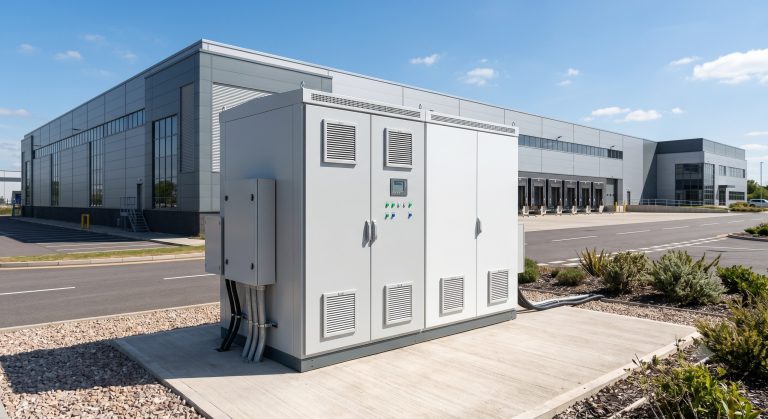
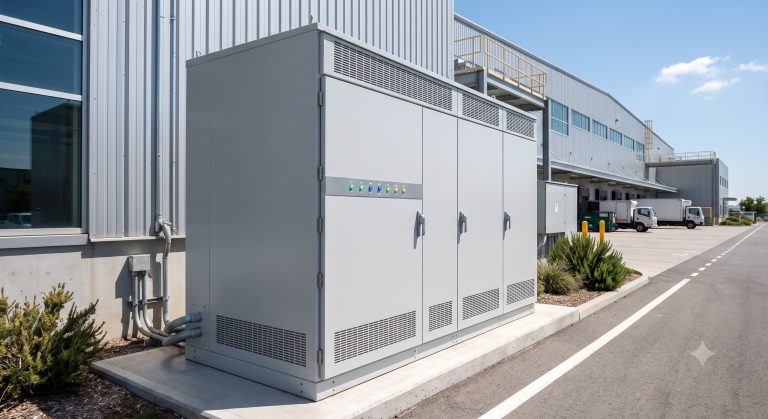
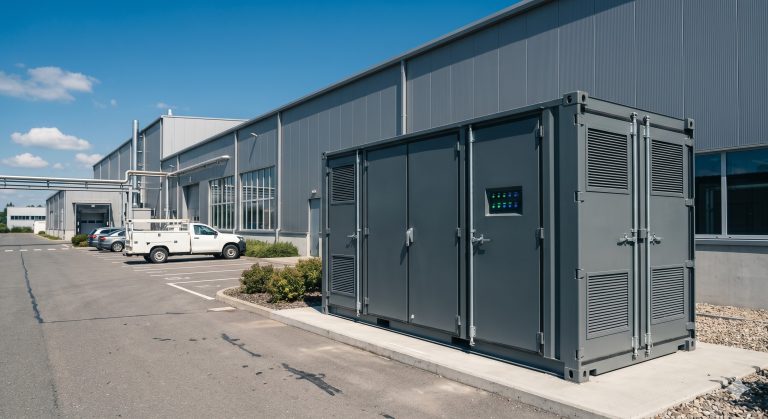
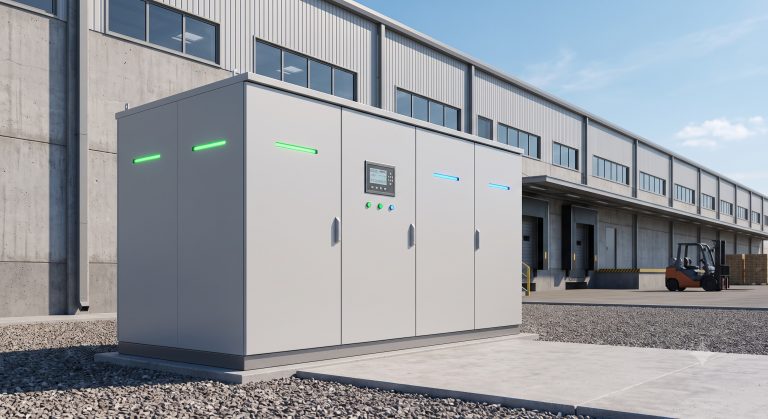
- Industrial Parks: In a typical 5 MW/10 MWh installation, SOC data from each cabinet’s BMS is aggregated by a central Energy Management System (EMS). This EMS orchestrates peak shaving, load-shifting, and backup power during grid outages, ensuring a seamless transition to island mode with < 10 ms interruption. This capability, validated by UL 9540, is essential for 24/7 manufacturing operations.
- PV-Storage-Charging (PSC) Hubs for EV Superchargers: SOC management in this scenario prevents the ‘cliff effect’ of LFP cell voltage curves. By integrating SOC data with PV forecasting, the EMS can stage battery discharge to buffer sudden high-power EV charging loads (e.g., 350 kW chargers), protecting the grid from demand spikes and reducing the facility’s interconnection capacity by up to 40%.

Conclusion: The Future of SOC-Driven Energy Storage
The state of charge (SOC) is the single most critical variable in the financial and operational viability of a C&I BESS. From enabling meticulous compliance with UL 9540 and IEC 62619 to maximizing ROI through optimized dispatch, SOC is the heartbeat of modern energy storage. For system architects and investors, prioritizing advanced BMS platforms with proven SOC accuracy and liquid cooling integration is not just a technical choice—it is a fundamental business imperative for success in the decarbonized economy.