PRODUCT IDENTIFICATION AND SCOPE
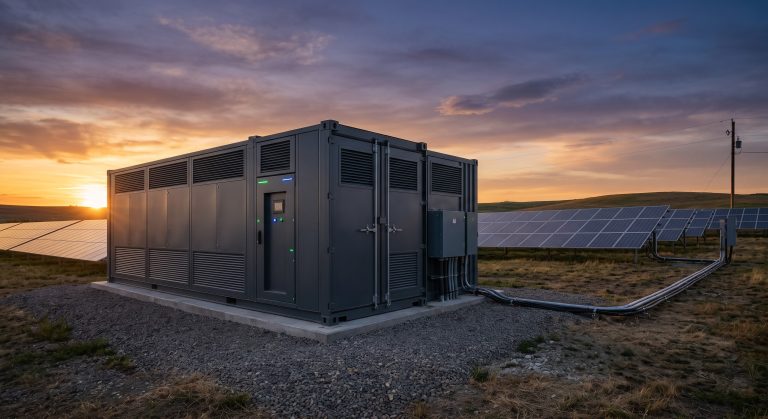
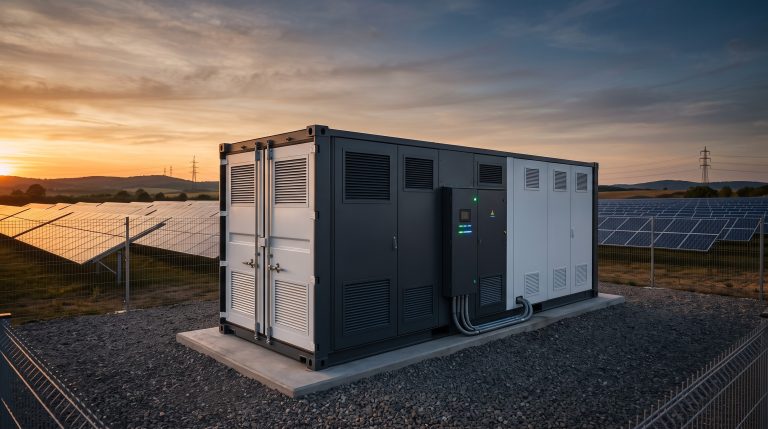
This engineering reference manual defines the Heavy-duty Connector (HDC) product family, purpose-built for the rigorous electrical and mechanical interconnection demands within utility-scale and commercial & industrial (C&I) Battery Energy Storage Systems (BESS). The Heavy-duty Connector serves as the critical interface for power transmission, control signals, and data communication between battery racks, power conversion systems (PCS), and balance-of-plant (BOP) equipment. Designed for high-availability environments, these connectors ensure reliable, low-resistance connections that minimize energy loss and thermal stress across a 20-year operational lifespan. This document provides a comprehensive technical overview, performance specifications, and compliance information essential for system integrators, facility engineers, and procurement specialists.

INTERNAL BESS TOPOLOGY AND INTERFACE ARCHITECTURE
Within a typical BESS, the Heavy-duty Connector facilitates three primary categories of interconnection: battery-to-PCS DC power links, battery rack-to-rack parallel busbar connections, and auxiliary control/power circuits for battery management systems (BMS) and thermal management. The connector family is segmented by voltage class (1500V DC for high-power DC links, 800V AC for PCS AC-side connections) and current rating (up to 400A continuous). The modular housing design supports both field-wireable and factory-terminated cable assemblies, enabling flexible integration into various enclosure types—from compact outdoor cabinets to 40-foot containerized ESS. The connector’s architecture incorporates a proven multi-point contact system, typically utilizing silver-plated copper alloy terminals, ensuring stable contact resistance below 0.2 mΩ, thereby reducing I²R losses and mitigating hot-spot formation under full load.
THERMAL PROTECTION MECHANISMS AND ENVIRONMENTAL SEALING
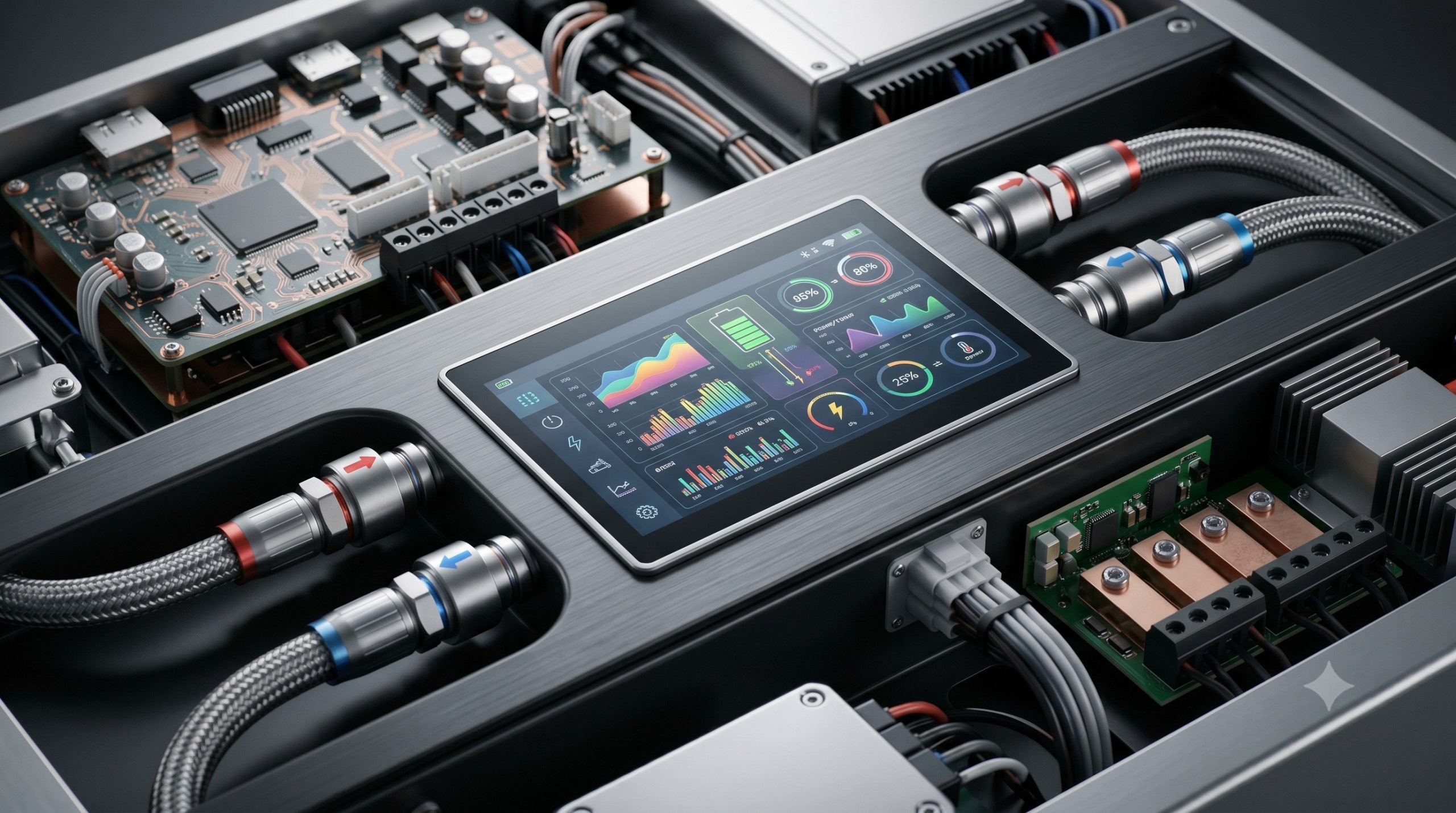
The Heavy-duty Connector integrates multiple layers of thermal and environmental protection to guarantee operational integrity in diverse climates. The primary mechanism is the intelligent material selection and robust physical design: the connector housing is constructed from UL94 V-0 rated thermoplastics, providing intrinsic flame retardancy, while the contact interface is engineered to maximize surface area for efficient heat dissipation. For extreme temperature environments, an optional built-in thermal sensor (PT1000) can be integrated to provide real-time temperature monitoring to the BMS, enabling predictive maintenance and preventing thermal runaway propagation. Environmental sealing is achieved through a multi-lip silicone gasket design, delivering an IP66/IP68 (depending on plug variant) rating upon full mating. This sealing solution effectively protects against water ingress, dust, and corrosive atmospheres (tested per ISO 9227), ensuring reliable operation in solar fields, coastal areas, and high-humidity industrial parks. Furthermore, the connector utilizes a proven secondary locking mechanism with a visual indication of complete engagement, preventing accidental disconnection due to vibration or thermal cycling.
OPERATIONAL ADVANTAGES AND MAINTAINABILITY
The Heavy-duty Connector offers distinct advantages in operational efficiency and total cost of ownership. The plug-and-play design, combined with color-coded housings (typically grey for DC positive, black for DC negative, and blue for auxiliary) and mechanical keying, eliminates the risk of incorrect mating and substantially reduces installation time and wiring errors. This streamlined integration facilitates rapid field replacements, minimizing system downtime during maintenance or upgrade cycles. The connectors are engineered for a minimum of 100 mating cycles without measurable performance degradation, ensuring durability through the ESS’s life. Additionally, the connector’s design supports high-fidelity power line communication (PLC) and shielded data transmission for critical BMS control signals, eliminating the need for separate, complex wiring harnesses. This integrated approach simplifies cable management, reduces the overall footprint, and enhances the aesthetic and functional quality of the battery rack and PCS interface. The use of standardized tooling for termination (e.g., specific crimping tools and torque wrenches) ensures consistent, reliable field installations, further bolstering system reliability.
SPECIFICATION MATRIX
Detailed performance and environmental parameters for the Heavy-duty Connector series are summarized below, reflecting its suitability for high-power energy storage applications.
| Parameter | Specification |
|---|---|
| Rated Voltage | 1500 V DC (Power) / 800 V AC (Control) |
| Rated Current (continuous) | Up to 400 A (depending on contact size) |
| Contact Resistance | < 0.2 mΩ (initial) |
| Dielectric Withstand Voltage | 3500 V AC (for 1 minute) |
| Insulation Resistance | > 1000 MΩ (at 500 V DC) |
| Mating Cycles (durability) | ≥ 100 cycles (without performance degradation) |
| Operating Temperature Range | -40 °C to +125 °C (ambient) |
| Housing Material | UL94 V-0 rated thermoplastic |
| Contact Material | Silver-plated high-conductivity copper alloy |
| Ingress Protection (mated) | IP66 / IP68 (depending on variant) |
| Certifications | UL 1977, IEC 61984, RoHS, REACH |
REGULATORY COMPLIANCE AND QUALITY ASSURANCE
All Heavy-duty Connectors in this product family are designed and validated to meet the most stringent international standards for electrical safety and performance. Compliance with UL 1977 (Standard for Component Connectors for Use in Data, Signal, Control, and Power Applications) is mandatory, ensuring the connector meets rigorous dielectric voltage-withstand and current-carrying capacity requirements for North American markets. Furthermore, the connectors are certified to IEC 61984 (Connectors – Safety requirements and tests), providing a robust framework for global deployments. The materials used are compliant with RoHS and REACH directives, underlining our commitment to environmental responsibility. The entire product development lifecycle, from raw material selection to final assembly, is conducted under an ISO 9001:2015 certified quality management system. This comprehensive compliance matrix provides asset owners and engineering firms with the assurance required for project financing, permitting, and long-term operational reliability, contributing to a lower levelized cost of storage (LCOS).
📥 Download Technical Specification
Click the button below to view or download the full official PDF datasheet.