Overview
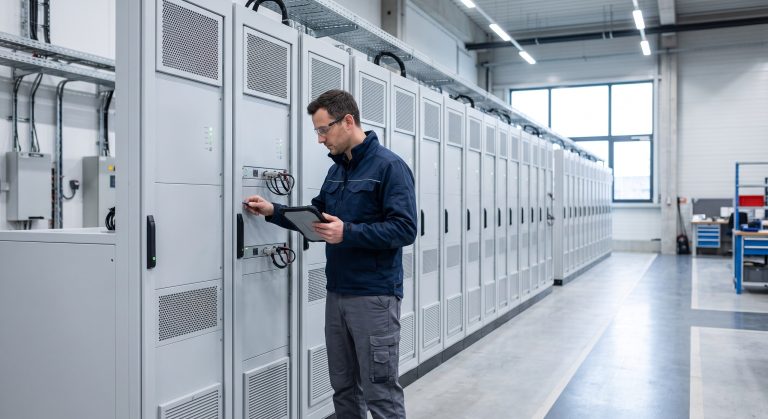
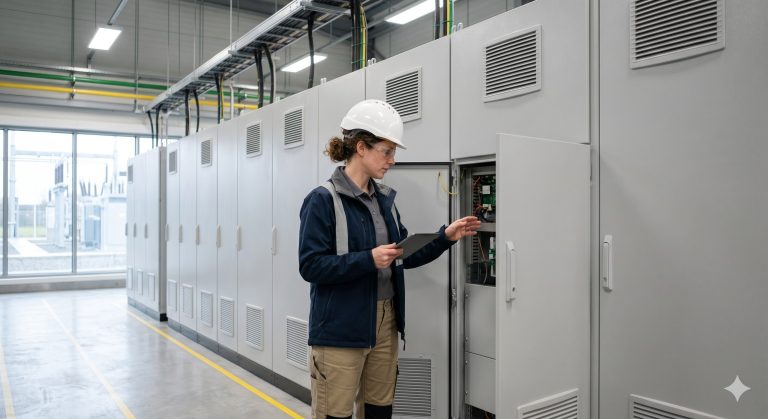
In high-density BESS, thermal management directly determines safety, cycle life, and ROI. Unlike air-cooled systems, liquid cooling maintains cell温差 under 3°C, enabling 30%+ higher energy density. This FAQ addresses the most urgent technical and commercial questions from plant engineers, procurement leads, and integrators.
Frequently Asked Questions
- Q1: What battery chemistry works best with liquid cooling, and what is the real-world cycle life at 90% DoD?
- LFP (Lithium Iron Phosphate) is the optimal chemistry for liquid-cooled BESS due to its thermal stability and lower self-heating rate. Real-world cycle life exceeds 8,000 cycles at 90% DoD when cell temperatures stay between 15-35°C via active liquid cooling. This translates to >15 years of daily cycling. Liquid cooling keeps inter-cell variance below 2°C, directly preventing accelerated degradation seen in air-cooled LFP packs.
- Q2: How does the liquid cooling system differ from air cooling, and what maintenance does it require?
- Liquid cooling uses a closed-loop glycol-water mixture circulated through cold plates or immersed battery modules, achieving heat transfer coefficients 10-15x higher than forced air. Maintenance involves quarterly coolant level checks, annual dielectric strength testing, and filter cleaning on the chiller unit. Unlike air cooling, there is no dust accumulation on cells, so no cell module cleaning is needed. The pump and chiller are rated for 50,000+ hours MTBF.
- Q3: Can I scale a liquid-cooled BESS from 500 kWh to 10 MWh without redesigning thermal management?
- Yes, modular liquid-cooled cabinets are built with parallel scalability via shared DC busbars and a ring-type coolant manifold. Each cabinet contains its own pump, chiller, and expansion valve. Adding cabinets up to 10 MWh only requires connecting coolant supply/return lines and EMS communication. The system automatically balances thermal load across cabinets. No central chiller plant or thermal redesign is needed below 20 MWh.
- Q4: How does the BMS monitor cell health in a liquid-cooled environment, and what alarms should I set?
- The BMS embeds fiber-optic or NTC sensors at every cell’s negative terminal and coolant outlet. Key alarms include: delta-T > 3°C between any two cells (pre-fault warning), coolant conductivity > 500 μS/cm (leak or degradation), and flow rate < 80% of nominal (pump or blockage). The BMS automatically reduces C-rate by 50% when delta-T exceeds 4°C to prevent thermal runaway triggers.
- Q5: What are the exact grid-tie and off-grid configuration requirements for liquid-cooled BESS?
- For grid-tie, the PCS must support UL 1741 SA or IEC 61727 with anti-islanding. The liquid cooling system’s chiller draws auxiliary power (typically 3-8% of nameplate capacity) — this must be included in your load profile. For off-grid, you need a bi-directional PCS with grid-forming capability and at least 20% oversizing on the chiller’s start-up current. The BESS must maintain a minimum 10% SOC to restart the chiller after overnight discharge.
- Q6: How does liquid cooling prevent thermal runaway, and what fire safety layers are included?
- Liquid cooling prevents thermal runaway by removing heat faster than it generates during internal short circuits, keeping cell temperature below 80°C where Li-plating and SEI decomposition accelerate. Safety layers: (1) Leak detection sensors with auto-shutoff valves, (2) Gas sampling detection of CO, H2, or electrolyte vapor, (3) Aerosol or Novec 1230 injection at the cabinet level, (4) Passive pressure relief vents. UL 9540A testing shows liquid-cooled modules do not propagate runaway beyond one cell.
- Q7: What is the realistic ROI and LCOE improvement with liquid cooling versus air cooling?
- Liquid cooling reduces LCOE by 12-18% over 10 years despite higher upfront cost. Drivers: (1) 30% higher energy density reduces footprint and BOS cost, (2) 8,000-cycle life vs 4,000-5,000 for air cooling at same DoD, (3) Lower auxiliary power — liquid cooling consumes 2-3% of rated power vs 5-7% for forced air, (4) Less capacity degradation — after 5 years, liquid-cooled retains 92% vs 82% for air-cooled. Payback typically occurs by year 6.
- Q8: What international standards and certifications must a liquid-cooled BESS meet for US and EU projects?
- Mandatory certifications: UL 9540 (system), UL 9540A (thermal runaway propagation), UL 1973 (battery), NFPA 855 (installation), IEC 62619 (safety), IEC 60730 (BMS), and CE (EMC + LVD). For liquid cooling specifically, IEC 62485-2 addresses coolant non-toxicity and leak containment. Always request third-party test reports from TÜV, Intertek, or CSA. Many air-cooled BESS retrofitted with liquid cooling fail UL 9540A because they lack cell-level CFD validation.