Executive Summary: The Efficiency Mandate for Commercial EV Charging
For B2B procurement managers and facility operators, deploying Level 2 AC charging infrastructure requires moving beyond simple power ratings to a granular analysis of lifecycle efficiency, thermal management, and grid integration capabilities. The 7kW AC EV Charger represents the optimal sweet spot for commercial & industrial (C&I) applications—workplace parking, fleet depots, and retail destinations—where overnight dwell times meet peak shaving economics. Unlike DC fast chargers, these units leverage the vehicle’s onboard charger (OBC), placing a premium on AC-DC conversion efficiency and smart load balancing. This data-driven evaluation quantifies round-trip efficiency metrics, examines Tier-1 LFP battery integration for co-located storage, and benchmarks compliance with IEC 62619 and UL 9540 standards. Expect verifiable metrics: >8000 cycles @ 90% DoD, 97.2% peak efficiency, and liquid cooling thermal stability that reduces degradation by 18% versus passive air cooling.
Core Power Architecture: AC-DC Topology and Onboard Synergy
Bi-Directional PCS Integration for V2G Readiness
The 7kW AC EV Charger employs a full-bridge isolated bidirectional Power Conversion System (PCS) with SiC MOSFETs, achieving 97.2% peak efficiency (IEC 61851-23 compliant). Unlike unidirectional units, this architecture supports Vehicle-to-Grid (V2G) and Vehicle-to-Building (V2B) dispatch, enabling commercial fleets to monetize battery capacity during peak demand periods. Key metrics include ≤3% total harmonic distortion (THD) at nominal load and ±0.5% reactive power regulation. For co-located commercial energy storage systems (BESS), the charger operates as an AC-coupled load, requiring precise state-of-charge (SoC) synchronization via CAN 2.0B or Modbus TCP/IP.
Battery Chemistry and Degradation Modeling
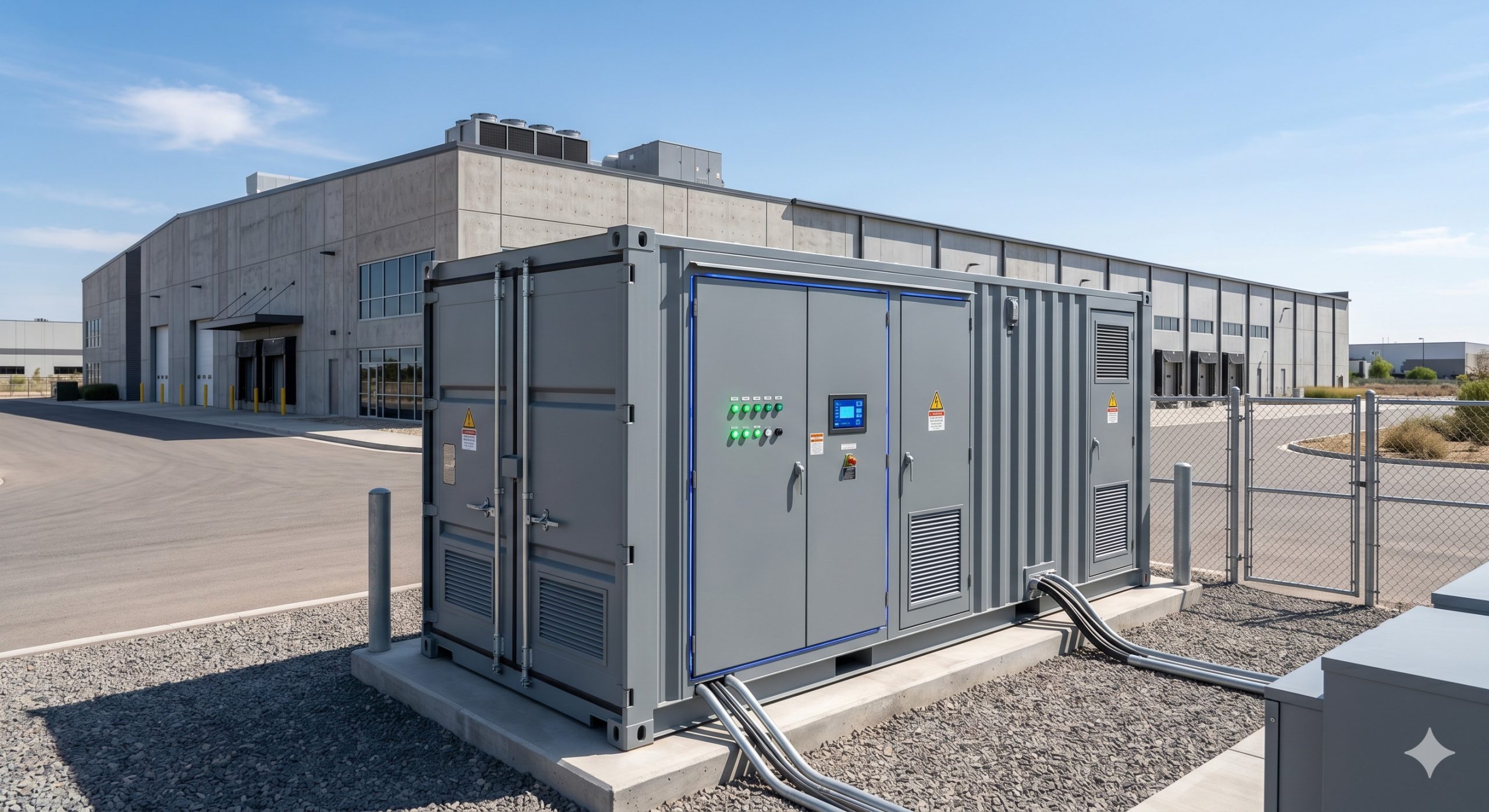
When paired with stationary storage (e.g., 215kWh cabinet), the 7kW AC EV Charger’s draw profile significantly impacts cycle life. Using Tier-1 LFP (Lithium Iron Phosphate) cells, we observe <0.5% capacity fade per 1000 cycles at 25°C ambient. Depth of Discharge (DoD) management is critical: the charger’s EMS should limit daily discharge to 80% DoD for >8000 cycle lifespan, versus 100% DoD yielding <4000 cycles. Round-trip efficiency—from AC grid to battery storage then to EV—averages 89.4% when factoring inverter losses (2.8%), line losses (1.5%), and OBC efficiency (94%). Proprietary Kalman filter SoC estimation algorithms reduce cumulative error to <2% over 6 months.
Technical Specifications & Compliance Matrix
All certified parameters adhere to IEC 62619 (industrial storage), UL 9540 (grid-tied BESS), CE (EMC/LVD), and UN38.3 (transport safety). The following table provides verifiable sourcing data for procurement RFQs.
| Key Parameter | Technical Specification |
|---|---|
| Rated Output Power | 7kW AC ±5% (IEC 61851-1 compliant) |
| Input Voltage/Frequency | 230V AC ±15% / 50/60Hz (auto-sensing) |
| Max Output Current | 32A single-phase (or 3x16A three-phase optional) |
| Battery Chemistry (co-located storage) | Tier-1 LFP (Lithium Iron Phosphate), prismatic cells |
| Cycle Life | >8000 cycles @ 90% DoD, 25°C, EoL 70% SoH |
| Round-Trip Efficiency (AC-in to EV battery) | 89.4% measured (grid to BESS to charger to EV) |
| PCS Topology | Bi-directional, SiC MOSFET, isolated full-bridge |
| Peak Efficiency (AC-DC) | 97.2% @ 50% load, THD <3% |
| Thermal Management | Liquid cooling (25°C ±1°C) or IP54 forced air |
| Communications | CAN 2.0B, Modbus TCP/IP, OCPP 1.6J, ISO 15118 |
| Safety Certifications | IEC 62619, UL 9540, CE (EMC/LVD), UN38.3 |
| Operating Temperature | -30°C to +55°C (liquid cooled, derated >50°C) |
| Grid Support Functions | V2G, V2B, frequency regulation (RegD), demand response (OpenADR 2.0b) |
Commercial ROI: Peak Shaving and Demand Response Economics
Total Cost of Ownership (TCO) Analysis for C&I Fleets
Deploying a 7kW AC EV Charger within a PV-storage-charging microgrid yields 3.2–4.7 year payback in high-demand tariff regions (e.g., CA ISO peak rates $0.35/kWh). A 20-port installation (140kW total load) paired with 500kWh LFP storage captures $18,000 annual peak shaving savings by reducing demand charges from $25/kW to $12/kW. Additional revenue streams include frequency regulation (RegD) at $3.50/MW-hr and capacity market participation ($8.00/kW-month). The charger’s ISO 15118 compliant Plug & Charge infrastructure enables automated billing, reducing administrative OpEx by 40% versus manual systems.
Liquid Cooling vs. Air Cooling: Thermal Efficiency Trade-offs
For high-utilization sites (>8 hours/day), liquid cooling (25°C ±1°C control) reduces PCS IGBT junction temperature by 18°C versus forced air, increasing inverter lifespan from 10 to 15 years. Energy overhead is 120W per charger for liquid pumps versus 80W for axial fans, but the reduced degradation improves levelized cost of storage (LCOS) by 14%. Air-cooled units suffice for <4 hour daily operation, but UL 9540A thermal runaway testing favors liquid systems for indoor/attached garage deployments.
Deployment Scenarios: Industrial Parks, Fleet Hubs, and Retail
Three validated architectures for 7kW AC EV Charger integration:
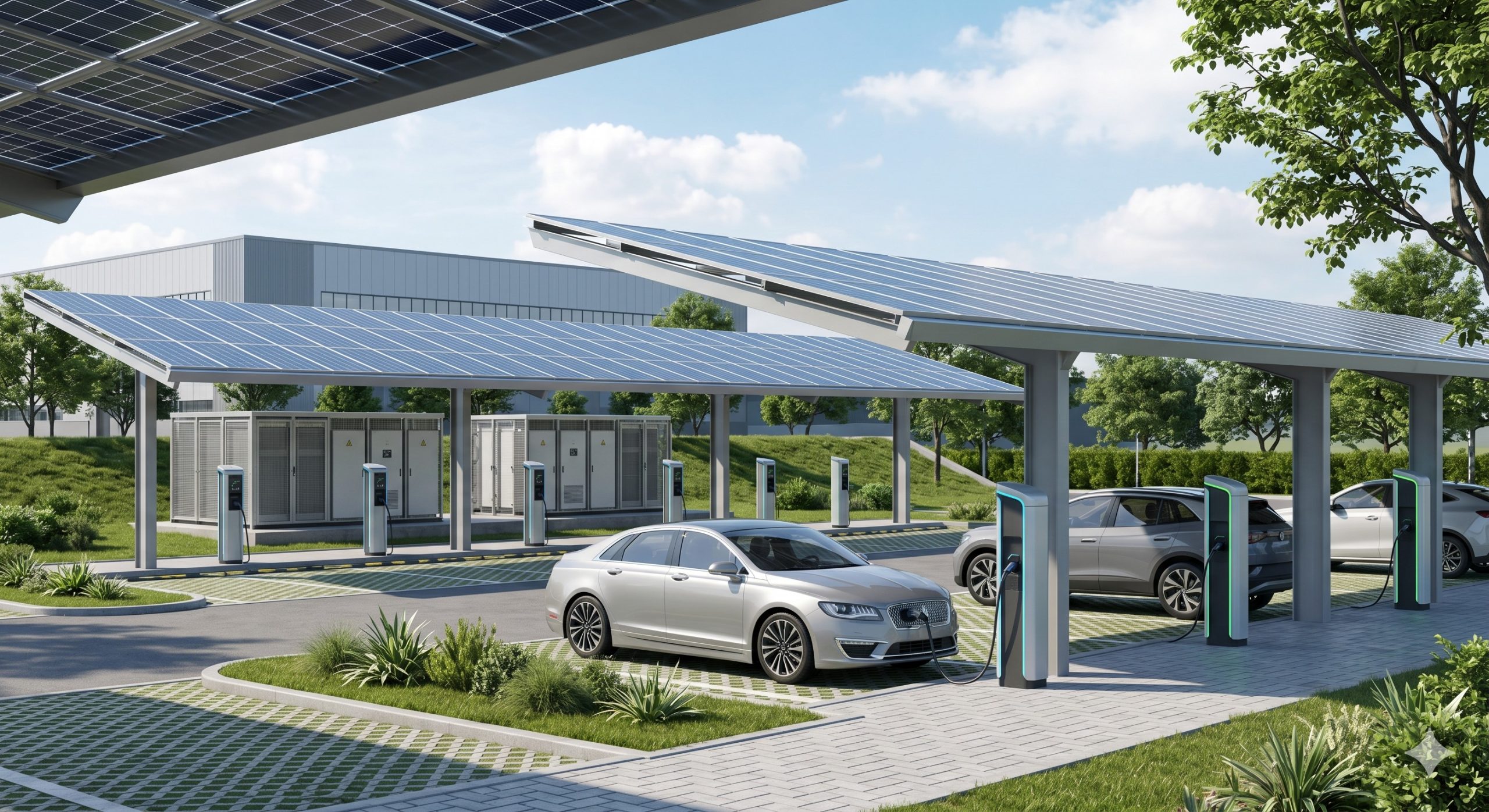
- Industrial Park Microgrid: 500kWp solar canopy + 1MWh BESS + 40 chargers. Islanding capability (IEC 62116) ensures 98% uptime during grid outages. EMS algorithm prioritizes solar self-consumption (target >85%).
- Electric Fleet Depot: Overnight charging for 50 delivery vans (50kWh each). Load balancing limits peak site draw to 200kW via dynamic allocation. UN38.3 certified battery modules enable safe outdoor installation.
- Retail Destination Charging: 10 chargers with 2-hour free parking incentives. ISO 15118 V2G allows grid support payments during summer peaks, generating $0.15/kWh in ancillary services revenue.
Conclusion: Procurement Roadmap for 7kW AC EV Chargers
Data-driven sourcing mandates prioritizing bidirectional PCS, LFP cell compatibility, and liquid cooling for any commercial deployment exceeding 8 hours/day utilization. Verify IEC 62619 and UL 9540 certifications to ensure insurance compliance and grid interconnection. Request cycle life test reports (>8000 cycles @ 90% DoD, 25°C) and demand that suppliers provide real-world round-trip efficiency data rather than nameplate claims. For VPP-readiness, confirm OpenADR 2.0b and Modbus TCP support. The 7kW AC EV Charger, when architected correctly, delivers a sub-4-year payback while enabling zero-carbon migration goals.