Introduction
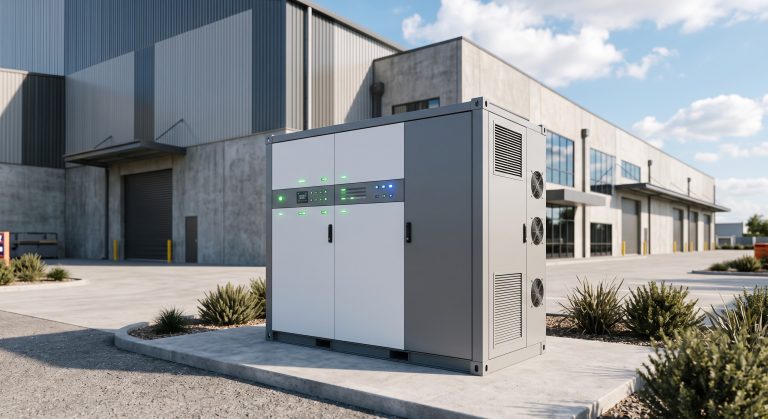
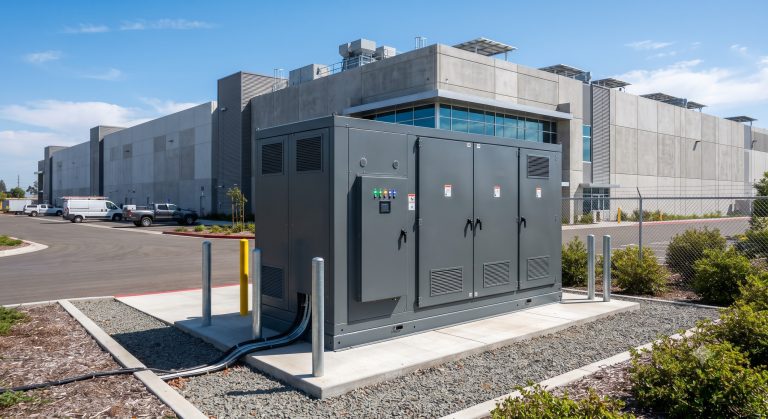
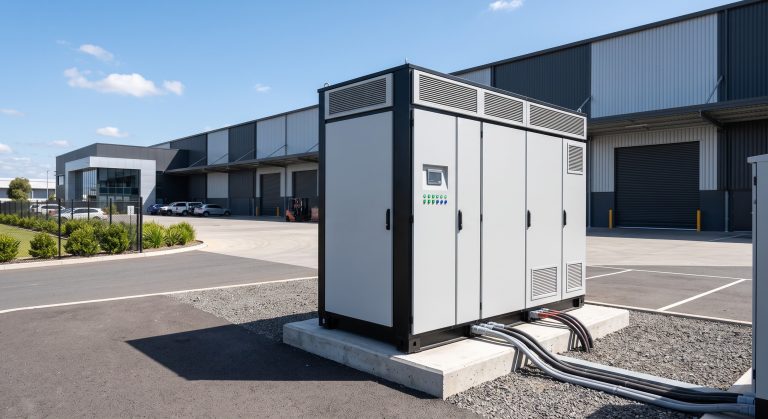
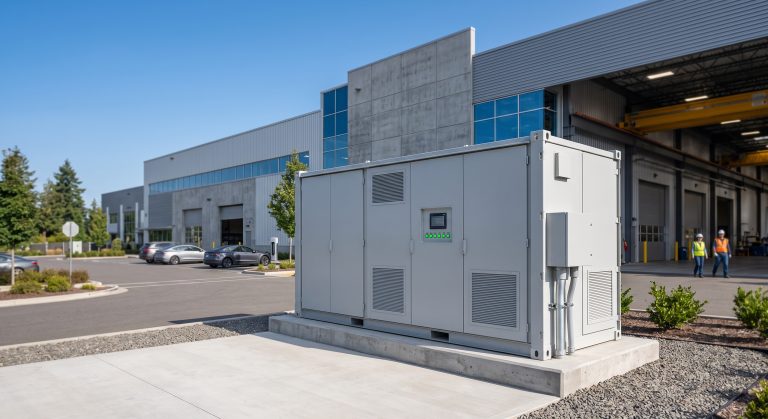
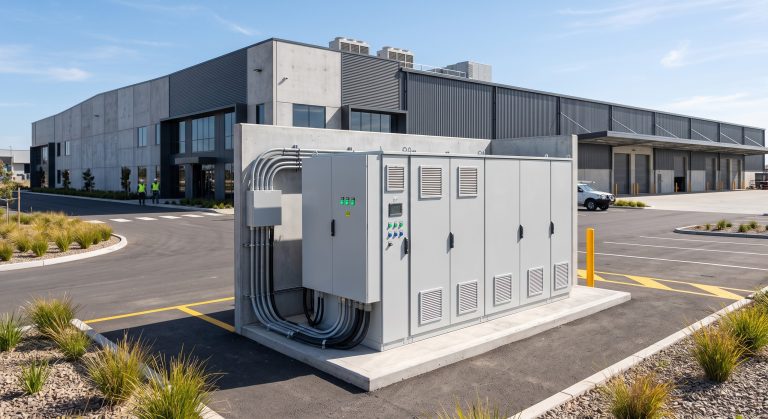
The accelerating shift toward decentralized energy grids has placed the 960kW power cabinet at the forefront of commercial and industrial (C&I) energy storage systems (ESS). As facility operators face volatile utility tariffs and stricter carbon mandates, the need for a high-power, modular solution capable of MWh-scale deployment has never been more urgent. Unlike smaller units, the 960kW architecture strikes a critical balance between grid-forming capability and logistical practicality. This blueprint dissects the engineering specifications, liquid cooling integration, and turnkey delivery protocols that ensure Levelized Cost of Storage (LCOS) optimization for industrial parks, EV supercharging hubs, and micro-grids.
System Architecture: PCS, BMS, and Liquid Cooling Integration
Bi-Directional Power Conversion System (PCS)
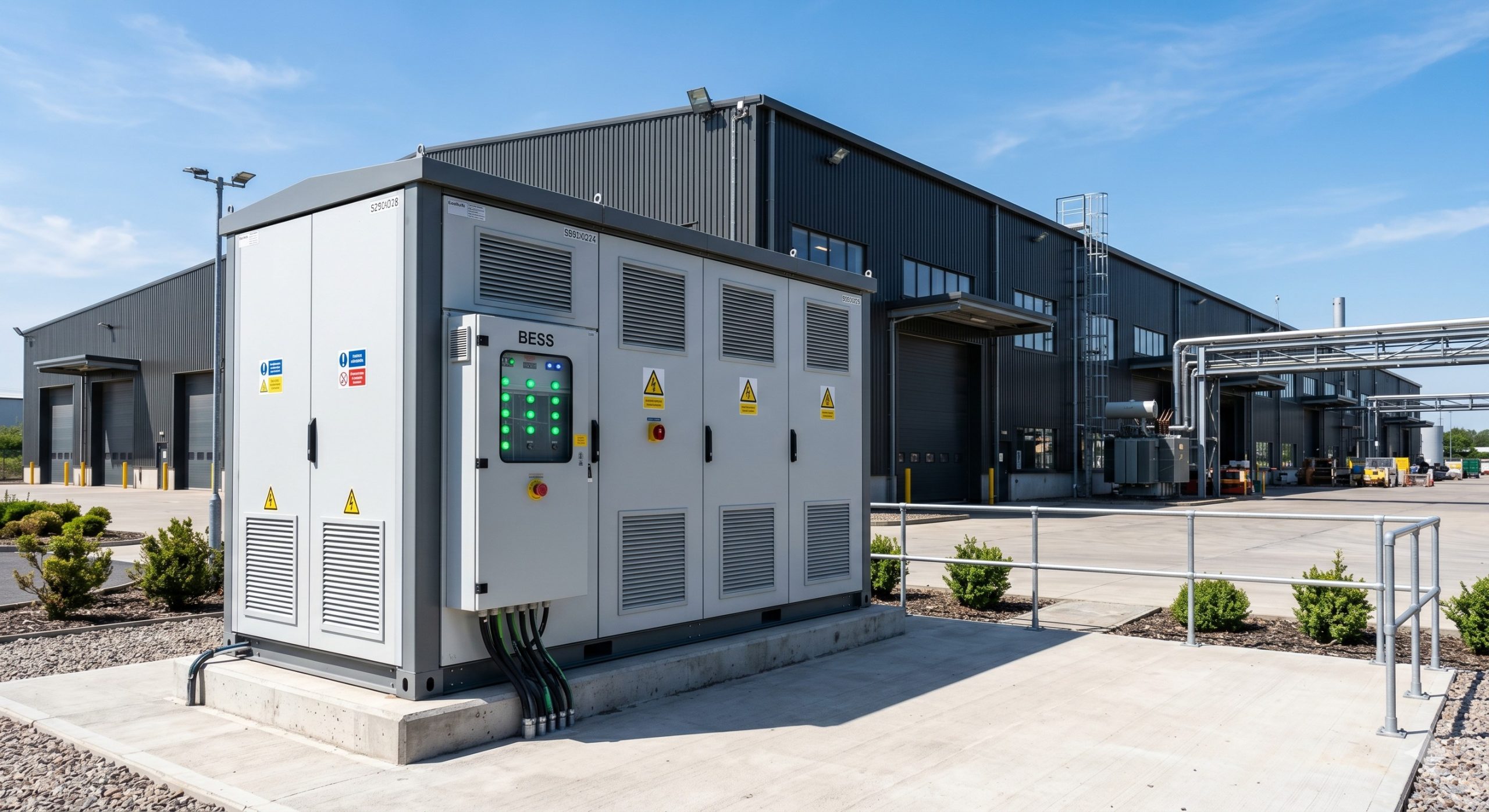
The 960kW power cabinet integrates a modular, grid-tied PCS with >98.5% peak efficiency and seamless transition between on-grid and islanding modes. The PCS supports 1500V DC bus voltage, reducing current and allowing longer string lengths per cabinet. This architecture enables four-quadrant operation for both active power (peak shaving) and reactive power (voltage support) dispatch.
Advanced Battery Management System (BMS)
A three-tier BMS (cell/module/rack-level) continuously monitors voltage, temperature, and current across all Tier-1 LFP (Lithium Iron Phosphate) cells. The system enforces 2.5V to 3.65V operating windows, with passive balancing current of 300mA per cell. Over-voltage, under-voltage, over-current, short-circuit, and insulation monitoring are executed within 100ms response time, meeting IEC 62619 and UL 9540 safety standards.
Liquid Cooling Thermal Management
Unlike air-cooled alternatives that suffer from temperature gradients exceeding 5°C, the 960kW cabinet employs a proprietary liquid cooling loop with ±1°C cell uniformity across all racks. Coolant (water-glycol mixture) flows through aluminum cold plates at 20-35 L/min, extracting heat from cell tabs directly. This system limits maximum temperature rise to <8°C above ambient at 1C charge/discharge rates, preserving >8000 cycle life @ 90% DoD and maintaining 94% round-trip efficiency over five years of operation.
Technical Specifications
The following metrics represent baseline performance for a standard 960kW/1920kWh (2-hour duration) configuration. Custom capacity sizing up to 6MWh per cluster (via parallel cabinets) is available.
| Key Parameter | Technical Specification |
|---|---|
| Battery Chemistry | Tier-1 LFP (Lithium Iron Phosphate) – prismatic cells |
| Nominal Voltage (DC) | 1331.2V (416 cells in series, 3.2V per cell) |
| Usable Capacity | 1920 kWh (2-hour) / 960 kWh (1-hour) configurations |
| Max. Charge/Discharge Power | 960 kW (1C continuous, 1.1C peak for 30s) |
| Round-Trip Efficiency (DC) | 94% @ 0.5C, 25°C, new cells |
| Cycle Life (@ 90% DoD) | >8000 cycles to 70% SOH (EOL) |
| Depth of Discharge (DoD) | Up to 95% daily operation |
| Cooling System | Liquid cooling (water-glycol) with ±1°C cell uniformity |
| Safety Certifications | UL 9540, UL 9540A, IEC 62619, CE, UN38.3 |
| Operating Temperature | -30°C to +55°C (with heater below -10°C) |
| Ingress Protection | IP54 (cabinet), IP67 (battery modules) |
| Communication Protocols | Modbus TCP/IP, IEC 61850, CAN 2.0 |
| Dimensions (W x D x H) | 2400mm x 1300mm x 2450mm (standard 20ft container footprint) |
| Weight (fully loaded) | ~12,500 kg |
Commercial ROI & Grid Support Functions
Peak Shaving and Demand Charge Reduction
For C&I facilities facing demand charges of $15-25/kW, the 960kW power cabinet can reduce monthly peaks by >900kW, generating $12,000-$18,000 monthly savings per site. With a turnkey installed cost of ~$220/kWh (for 2+ MWh systems), payback periods typically range from 3.2 to 4.5 years based on 330 annual discharge cycles.
Demand Response and Grid Ancillary Services
The cabinet is fully VPP-ready, supporting IEEE 1547-2018 and UL 1741 SA grid interconnection standards. Through the integrated Energy Management System (EMS) with <50ms frequency response, operators can participate in frequency regulation (FR), spinning reserves, and capacity markets. In CAISO and PJM markets, additional annual revenues of $30-60/kW are achievable.
PV-Storage-Charging Synergy
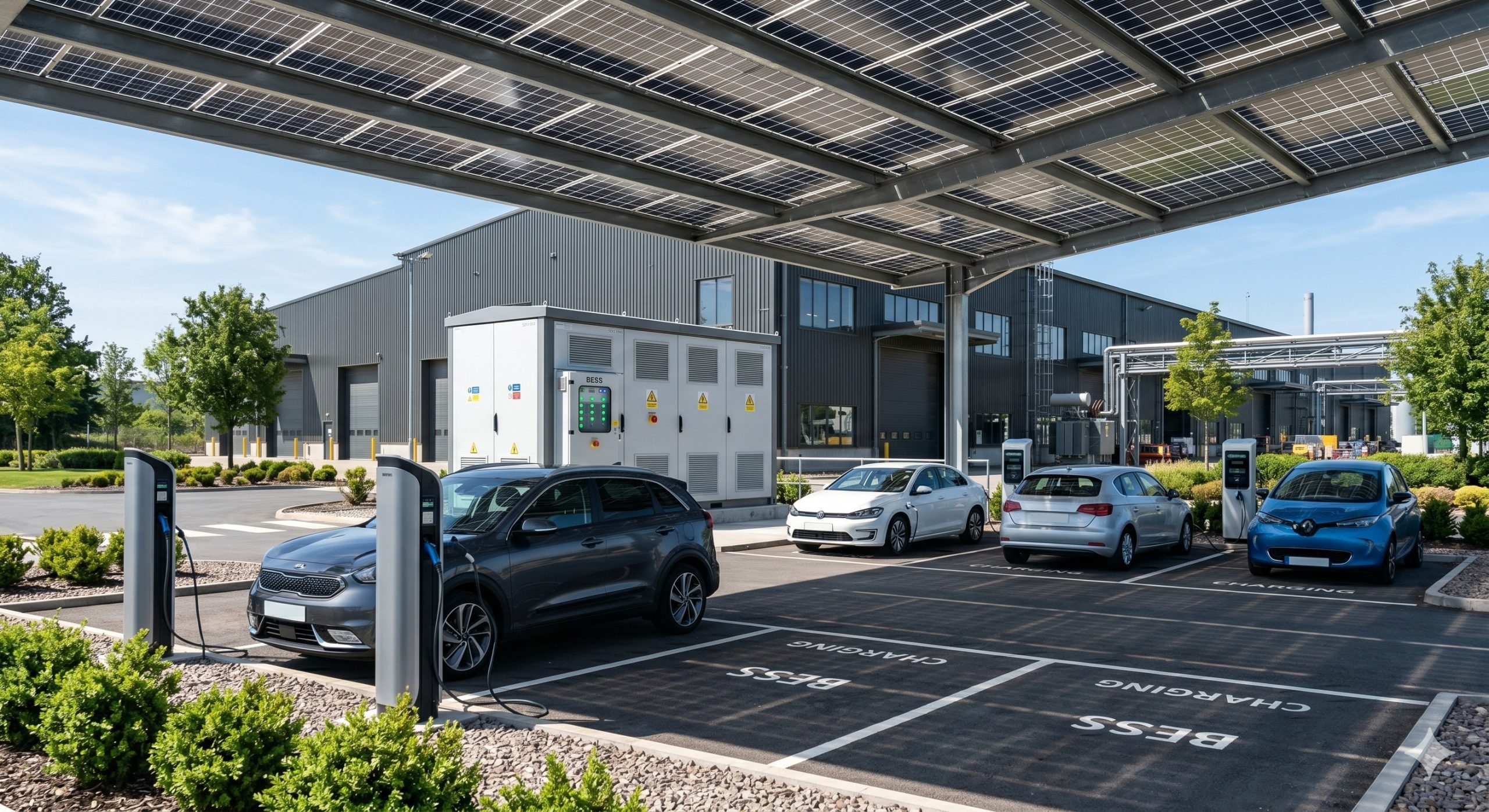
When paired with a 1.5-2MWp solar PV array and 4-6 EV fast chargers, the 960kW power cabinet enables zero-export sites and 100% renewable self-consumption. The DC coupling option (1500V) reduces conversion losses by 4-6% compared to AC-coupled architectures.
Deployment Scenarios
The 960kW power cabinet excels in four primary use cases: 1) Industrial manufacturing parks with 8-16 hour shift loads; 2) EV supercharging depots requiring <5 minute peak demand response; 3) Islanded micro-grids with diesel generator backup; 4) Data centers seeking UPS+peak shaving hybrid functions. Turnkey delivery includes site survey, foundation works, crane lift (cabinet weight: ~12 tons), grid interconnection engineering, and remote EMS setup.
Conclusion
The 960kW power cabinet represents a mature, field-proven building block for MWh-scale C&I energy storage. Its combination of liquid cooling, Tier-1 LFP cells, and grid-forming PCS delivers bankable cycle life and sub-5-year ROI across multiple revenue streams. For procurement teams and system integrators, prioritizing UL9540A fire testing, IEC 62619 cell certification, and supplier turnkey experience is essential. As global lithium carbonate prices stabilize, the LCOS of 960kW cabinets continues to undercut diesel gensets and utility demand charges, making the decarbonization of heavy industrial loads both technically feasible and financially compelling.