Introduction: The Commercial Energy Storage Imperative
Commercial and industrial (C&I) facilities face an unprecedented convergence of volatile utility tariffs, aggressive decarbonization mandates, and the urgent need for grid-independent resilience. At the heart of every viable energy storage system (ESS) lies the high-performance battery module—a tightly integrated assembly of Tier-1 LFP cells, advanced thermal management, and precision battery management electronics. Selecting the wrong module architecture can inflate Levelized Cost of Energy (LCOE) by 30% or more over a 10-year horizon, while the right specification can deliver round-trip efficiencies exceeding 94% and cycle life beyond 8,000 full cycles. This guide dissects the engineering and commercial variables that separate Tier-1 modules from commodity alternatives, equipping procurement teams, EPCs, and system architects with a data-driven framework for evaluation.
Core Architecture: Cells, Packs, and Battery Management
Tier-1 LFP Cell Selection and Integration
A high-performance battery module begins with the cell. Tier-1 LFP (Lithium Iron Phosphate) cells—typically 280Ah to 314Ah prismatic formats—offer a superior balance of thermal stability, cycle life, and cost per kWh compared to NMC chemistries. The module’s internal busbar design, weld quality, and compression force directly influence internal resistance and, consequently, round-trip efficiency. Leading modules achieve DC internal resistance below 0.5 mΩ per pack, minimizing ohmic losses during high-C-rate discharge.
Advanced BMS: Precision Balancing and State Estimation
The Battery Management System (BMS) is the module’s brain. A high-performance BMS performs active cell balancing with current ratings of 2A or higher, ensuring State of Charge (SoC) divergence remains below 3% across the pack’s life. Critical metrics include State of Health (SoH) estimation accuracy (±2%), overvoltage protection response time (<100ms), and compatibility with Modbus TCP, CAN 2.0B, and IEC 61850 protocols for seamless EMS integration. The BMS must also enforce Depth of Discharge (DoD) limits dynamically—typically 90% for LFP—to balance usable capacity against degradation.
Liquid Cooling vs. Air Cooling: Thermal Control Strategy
Thermal management is the single largest determinant of module longevity. Air-cooled systems, while lower in CapEx, struggle to maintain cell-to-cell temperature differentials below 5°C under high ambient conditions. Liquid cooling—using glycol-water mixtures in cold plates—maintains differentials below 3°C and enables higher continuous C-rates (0.5C to 1C). This directly extends cycle life by reducing thermal stress on the SEI layer. For C&I deployments in hot climates or high-utilization peak-shaving scenarios, liquid cooling is non-negotiable for achieving >8,000 cycles at 90% DoD.
Technical Specifications: A Quantified Framework
The following table summarizes the key performance indicators (KPIs) that define a Tier-1 high-performance battery module. These metrics should be validated through factory acceptance testing (FAT) and third-party certification.
| Key Parameter | Technical Specification |
|---|---|
| Battery Chemistry | Tier-1 LFP (Lithium Iron Phosphate) |
| Module Capacity | 5 kWh to 15 kWh (configurable) |
| System Capacity | 100 kWh to 10 MWh (parallel expansion) |
| Cycle Life | >8,000 cycles @ 90% DoD, 25°C |
| Round-Trip Efficiency | ≥94% (DC-DC, 0.5C) |
| Depth of Discharge (DoD) | 90% (recommended), 100% (max) |
| Thermal Management | Liquid Cooling (glycol-water, cold plate) |
| Cell Temperature Differential | <3°C (liquid cooling), <5°C (air cooling) |
| BMS Communication | Modbus TCP, CAN 2.0B, IEC 61850 |
| Active Balancing Current | ≥2A |
| Ingress Protection | IP54 (module), IP55 (cabinet) |
| Safety Standards | IEC 62619, UL 9540, UN38.3, CE |
| Fire Suppression | Aerosol or Perfluorohexanone (Novec 1230) |
| Operating Temperature | -20°C to +55°C (derated above 45°C) |
| Design Life | 15 years (80% capacity retention) |
| Warranty | 10 years or 8,000 cycles (whichever first) |
Standards and Compliance: IEC 62619, UL 9540, UN38.3
Compliance is not optional. IEC 62619 governs safety for industrial battery applications, covering thermal propagation and overcharge protection. UL 9540 certifies the complete ESS enclosure, while UN38.3 ensures safe transport of lithium cells. CE marking indicates conformity with European EMC and low-voltage directives. Procurement teams must demand test reports from accredited labs (TÜV, UL, CSA) and verify that the module’s fire suppression system—typically aerosol or perfluorohexanone-based—has passed large-scale propagation tests.
Commercial ROI and Grid Support Capabilities
Peak Shaving and Demand Charge Reduction
For C&I facilities with demand charges exceeding $15/kW, a high-performance battery module enables aggressive peak shaving. By discharging during the utility’s highest 15-minute demand windows, a 500kWh system can reduce monthly demand charges by 40-60%, yielding payback periods of 3-5 years. The module’s round-trip efficiency—typically 92-95% for DC-coupled architectures—directly amplifies these savings. Every 1% improvement in efficiency translates to approximately $2,500 in additional annual savings for a 1MWh system cycling 300 times per year.
Frequency Regulation and Demand Response
Beyond peak shaving, high-performance modules with fast response times (<200ms) can participate in frequency regulation markets. When aggregated into a Virtual Power Plant (VPP), these modules provide grid support services that generate additional revenue streams. The BMS must support precise active power control and seamless transitions between charging, discharging, and idle states without compromising cycle life.
LCOE Analysis: The True Cost of Ownership
Levelized Cost of Energy (LCOE) for a C&I storage system is calculated by dividing total lifecycle costs (CapEx + OpEx + replacement) by total discharged energy (MWh) over the system’s life. A Tier-1 module with 8,000 cycles at 90% DoD and 94% round-trip efficiency achieves an LCOE of $0.08-$0.12/kWh, compared to $0.15-$0.20/kWh for lower-grade modules. The difference compounds: over a 10-year horizon, a 1MWh system can save $70,000-$100,000 in energy costs alone.
Deployment Scenarios: From Industrial Parks to EV Supercharging
Industrial Parks and Manufacturing Facilities
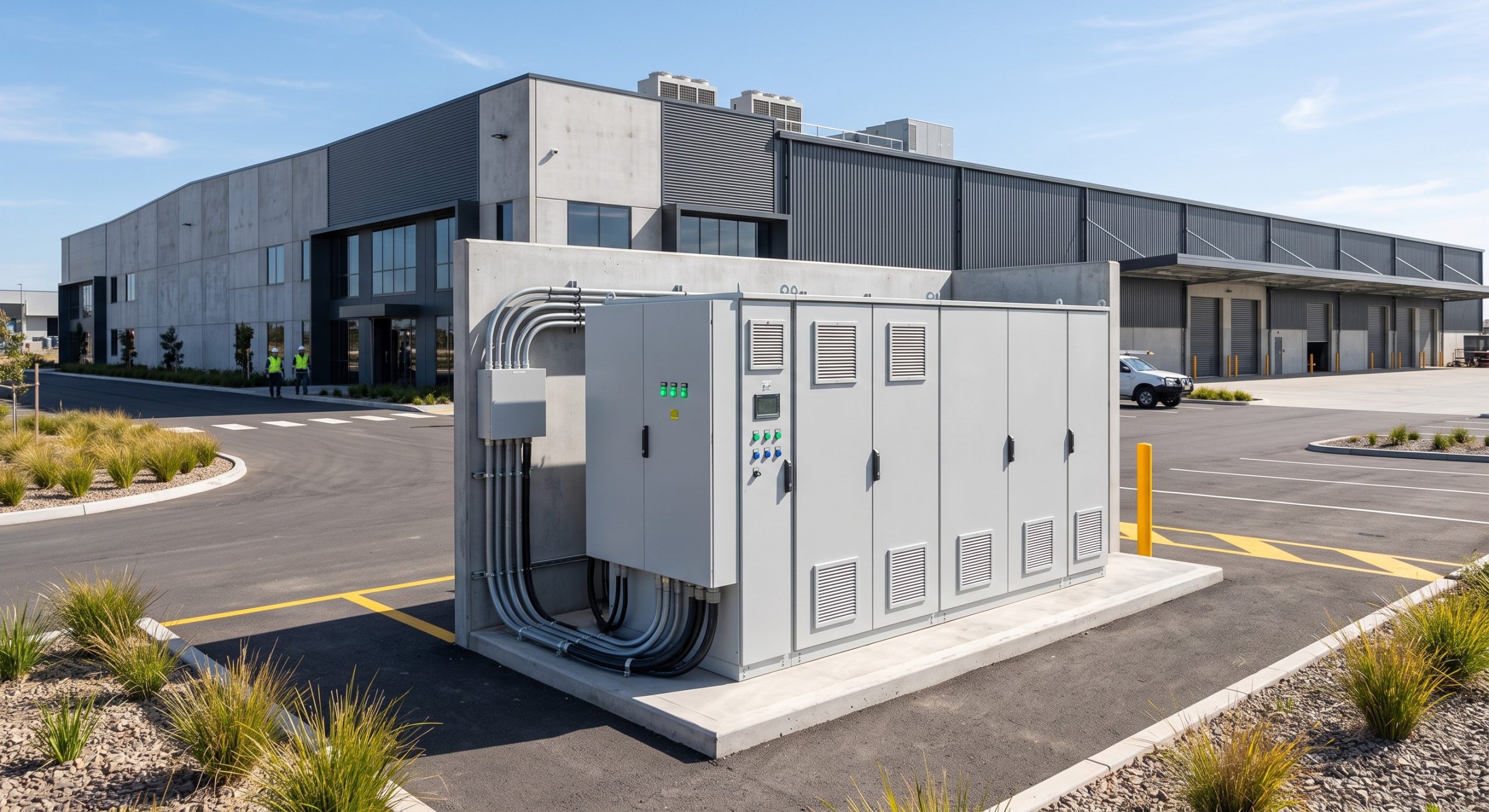
Industrial parks with high inductive loads and poor power factor benefit from modular high-performance battery modules configured in parallel cabinets. The parallel expansion topology allows incremental capacity additions (e.g., 100kWh increments) without replacing existing infrastructure. Inter-cabinet busbar linkage ensures uniform current sharing, while the EMS dispatches based on real-time load curves and Time-of-Use (ToU) tariffs.
PV-Storage-Charging (光储充) Integration
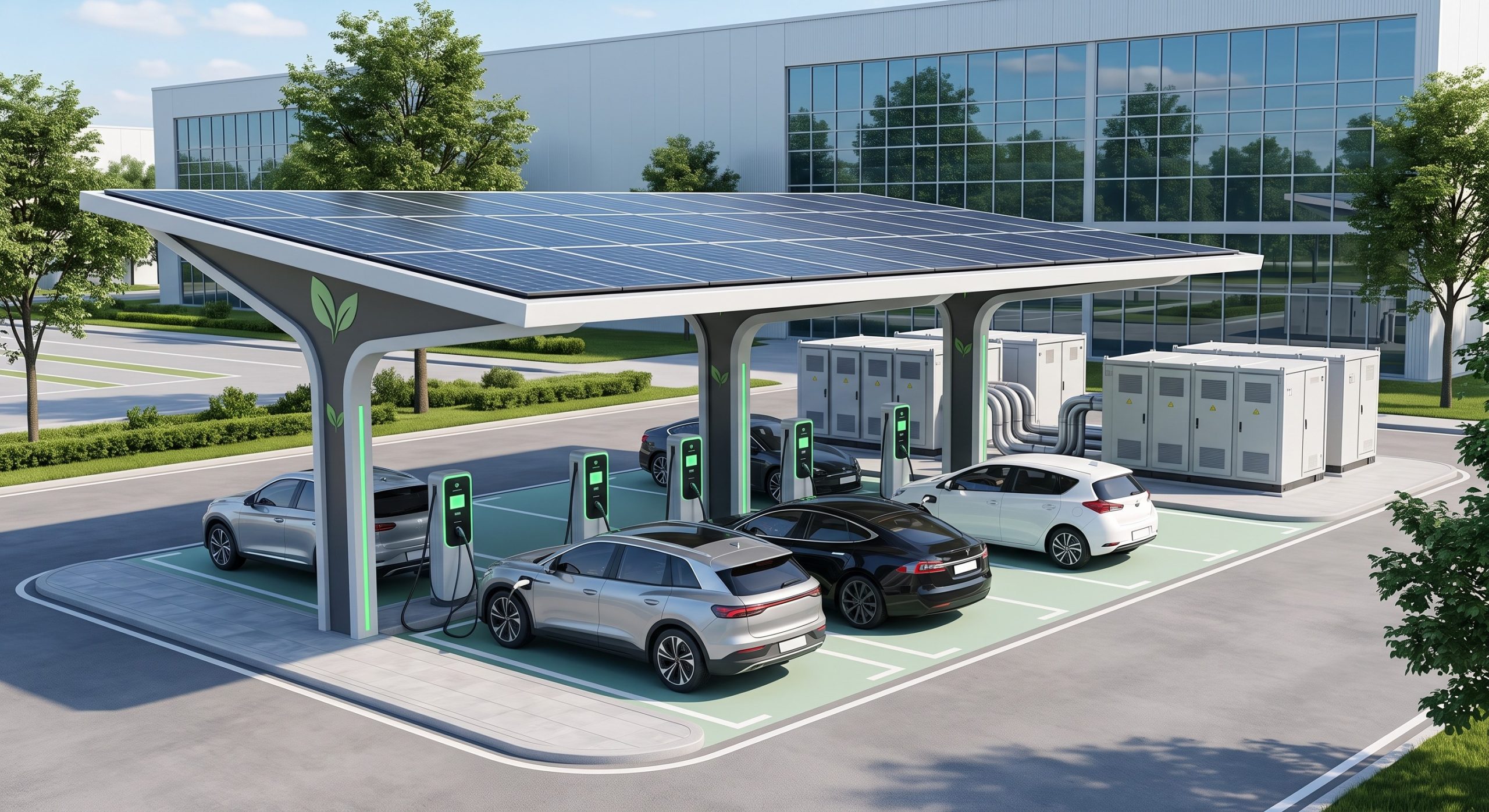
The most dynamic deployment scenario is the integration of solar PV, battery storage, and EV supercharging. Here, the high-performance battery module acts as a buffer, absorbing excess PV generation and discharging during high-power EV charging sessions (up to 350kW). This prevents demand spikes and maximizes renewable self-consumption. The module’s liquid cooling system is critical here, as high C-rate discharges generate significant heat that must be dissipated to maintain cycle life.
Micro-grids and Diesel Generator Replacement
In remote or grid-unstable locations, high-performance modules enable seamless off-grid transition. When paired with a bi-directional PCS, the system can island from the grid within 20ms, ensuring uninterrupted power for critical operations. Compared to diesel generators, the module offers lower OpEx, zero emissions, and faster response times—a compelling proposition for facilities facing reliability challenges.
Conclusion: Procurement Action Plan for Tier-1 Modules
Sourcing a high-performance battery module requires a holistic evaluation of cell quality, BMS sophistication, thermal management, and compliance credentials. Procurement teams should prioritize vendors who provide third-party test reports, offer performance warranties (e.g., 80% capacity retention after 8,000 cycles), and demonstrate a track record in C&I deployments. The total cost of ownership—not the upfront CapEx—should govern the decision. By insisting on Tier-1 LFP cells, liquid cooling, and certified safety systems, C&I facilities can unlock peak-shaving savings, grid support revenues, and long-term energy resilience. The era of commodity storage is over; the era of high-performance modules has begun.