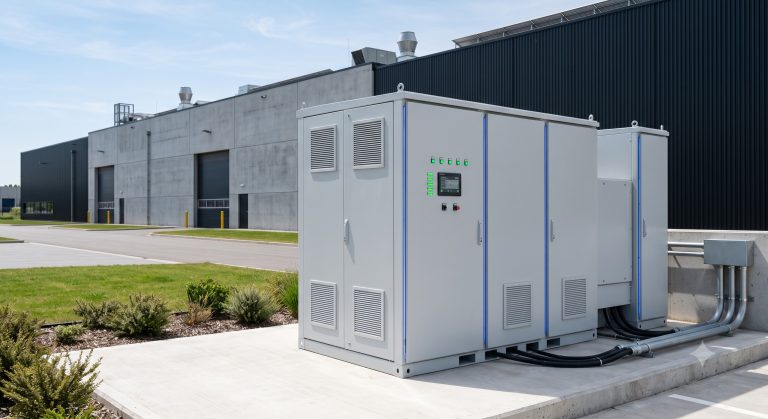
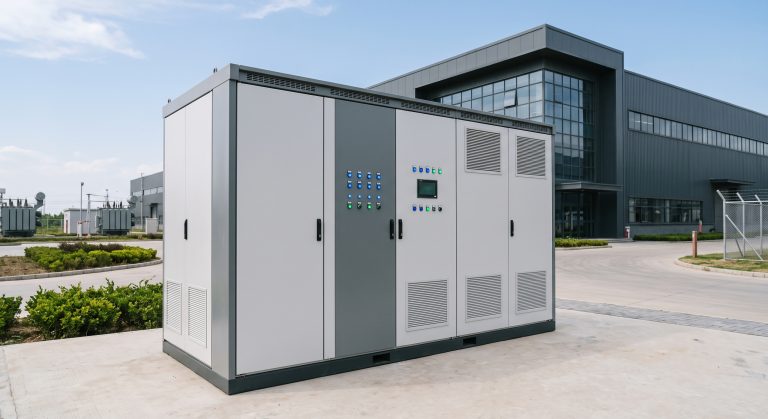
Introduction: The Industrial Grid Instability Crisis
Modern industrial facilities face an unprecedented convergence of grid volatility, escalating demand charges, and decarbonization mandates. According to the U.S. Department of Energy, commercial and industrial (C&I) sectors account for over 35% of total electricity consumption, yet grid frequency deviations of ±0.5 Hz and voltage sags below 90% nominal can cripple sensitive manufacturing lines, costing facilities an average of $250,000 per unplanned downtime event. Industrial power grid stabilization has therefore evolved from a discretionary resilience measure to a mission-critical infrastructure requirement for Tier-1 manufacturers, data centers, and heavy industrial parks.
This comprehensive B2B sourcing guide delivers a data-driven architectural deep dive into commercial energy storage systems (BESS) engineered specifically for industrial power grid stabilization. We will dissect the technical anatomy—from Tier-1 LFP cell chemistry and liquid cooling thermal management to bi-directional PCS integration—while quantifying the total cost of ownership (TCO) and levelized cost of energy (LCOE) for MWh-scale deployments.
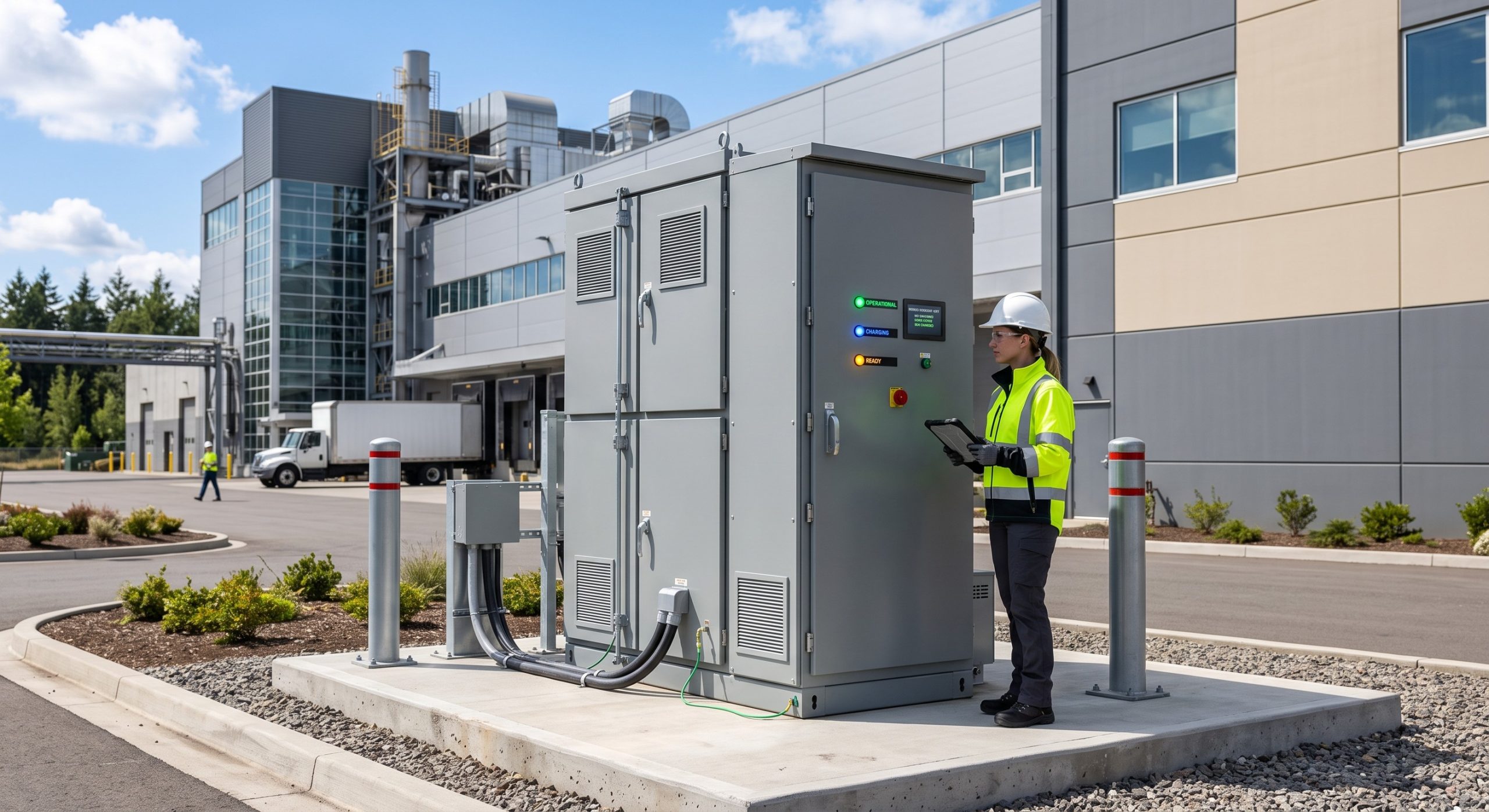
Core Architecture: PCS, BMS, and Tier-1 LFP Cell Integration
Bi-Directional Power Conversion System (PCS) Topology
At the heart of any grid-stabilization BESS lies the Power Conversion System (PCS), which governs the seamless bi-directional flow between DC battery racks and the AC industrial bus. Modern PCS units for industrial power grid stabilization must deliver four-quadrant operation with reactive power compensation capabilities, achieving a total harmonic distortion (THD) of <3% at full load. Advanced models utilize three-level NPC (Neutral Point Clamped) topology to achieve peak conversion efficiency of 98.5%, with response times under 20ms for frequency regulation dispatch.
Multi-Level Battery Management System (BMS)
The Battery Management System (BMS) operates as the central nervous system, executing active cell balancing at the rack level with balancing current up to 5A. For industrial power grid stabilization, the BMS must maintain State of Charge (SoC) estimation accuracy within ±2% and State of Health (SoH) tracking across the system lifecycle. Tier-1 systems integrate three-tier BMS architecture: BMU (Battery Monitoring Unit) at module level, BCU (Battery Control Unit) at rack level, and MBMS (Master BMS) at container level, communicating via CAN 2.0B and Modbus TCP/IP protocols.
Liquid Cooling Thermal Control
Liquid cooling thermal management has emerged as the dominant technology for high-density industrial power grid stabilization systems, maintaining cell-to-cell temperature delta within 3°C and reducing auxiliary power consumption by 30% compared to air-cooled alternatives. The coolant loop—typically a 50/50 ethylene glycol-water mixture—operates at flow rates of 20-40 L/min per container, with plate heat exchangers achieving 95% thermal rejection efficiency. This precision thermal control directly extends cycle life by mitigating lithium plating and SEI layer degradation.
Technical Specifications: Engineering Parameters for Grid Stabilization
The following specification ledger represents a benchmark Tier-1 commercial energy storage system engineered for industrial power grid stabilization. These parameters adhere to IEC 62619, UL 9540, CE, and UN38.3 certification frameworks.
| Key Parameter | Technical Specification |
|---|---|
| Battery Chemistry | Tier-1 LFP (Lithium Iron Phosphate) |
| System Capacity | 2 MWh – 5 MWh per container (expandable to 20 MWh+) |
| Cycle Life | >8,000 cycles @ 90% DoD, 25°C ambient |
| Round-Trip Efficiency | 88% – 92% (AC-AC) |
| Depth of Discharge (DoD) | 90% maximum continuous |
| Thermal Management | Liquid Cooling (50/50 glycol-water, 20-40 L/min) |
| Cell Temperature Delta | <3°C across module |
| PCS Topology | Three-level NPC, four-quadrant bi-directional |
| PCS Efficiency | 98.5% peak, <3% THD at full load |
| Response Time | <20ms for frequency regulation, <10ms for grid fault |
| BMS Balancing Current | Up to 5A active balancing per rack |
| SoC Estimation Accuracy | ±2% |
| Communication Protocols | CAN 2.0B, Modbus TCP/IP, IEC 61850 |
| Certifications | IEC 62619, UL 9540, UL 9540A, CE, UN38.3 |
| Fire Suppression | Multi-level: aerosol + perfluorohexanone + water mist |
| Ingress Protection | IP54 (container), IP67 (battery module) |
| Operating Temperature | -20°C to +55°C (derated above 45°C) |
| Design Life | 15 years / 8,000 cycles to 70% EOL capacity |
| LCOS | $0.08 – $0.12 per kWh per cycle |
| CapEx Range | $250 – $350 per kWh (2-4 MWh configuration) |
Round-Trip Efficiency and Cycle Life Metrics
Round-trip efficiency (RTE) for AC-coupled industrial power grid stabilization systems typically ranges from 88% to 92%, encompassing PCS conversion losses, thermal management overhead, and transformer losses. Cycle life exceeds 8,000 cycles at 90% Depth of Discharge (DoD) under 25°C ambient conditions, translating to a 15-year operational lifespan with 70% end-of-life capacity retention. The Levelized Cost of Storage (LCOS) for such systems has declined to $0.08-0.12/kWh per cycle, making grid stabilization economically viable without subsidy in most deregulated markets.
Commercial ROI: Peak Shaving, Demand Response, and Grid Support
Peak Shaving Economics
Industrial facilities subject to demand charges of $15-25/kW-month can realize peak shaving ROI within 4-6 years through strategic BESS dispatch. A 1 MW / 2 MWh system performing daily peak shaving of 500 kW for 4 hours can reduce annual demand charges by $90,000-150,000, depending on utility tariff structures. When combined with time-of-use (TOU) energy arbitrage—charging during off-peak rates of $0.04/kWh and discharging during on-peak rates of $0.18/kWh—the annual savings compound to $200,000+ per MWh deployed.
Demand Response and Frequency Regulation
Grid operators in PJM, ERCOT, and European markets compensate industrial power grid stabilization assets for frequency regulation services at rates of $30-50/MW-hour. A 10 MWh BESS with 5 MW discharge capability can generate $150,000-250,000 annually from ancillary services alone. The PCS must achieve full power response within 100ms and maintain sustained output for 15-30 minutes to qualify for most frequency regulation markets.
Total Cost of Ownership (TCO) Analysis
CapEx for containerized industrial power grid stabilization systems ranges from $250-350/kWh for 2-4 MWh configurations, inclusive of PCS, BMS, thermal management, and fire suppression. OpEx averages 1.5-2.5% of CapEx annually, covering coolant maintenance, BMS firmware updates, and warranty extensions. Over a 15-year horizon, the TCO per kWh discharged declines to $0.05-0.07, competitive with diesel generator fuel costs of $0.25-0.35/kWh.
Deployment Scenarios: From Industrial Parks to EV Supercharging Hubs
Industrial Park Micro-Grids
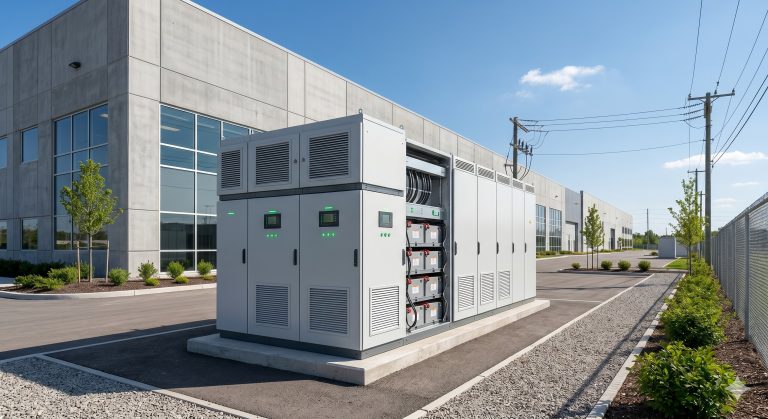
Modular industrial power grid stabilization systems enable industrial parks to achieve energy independence through parallel cabinet expansion topology. Each 2 MWh container can be linked via inter-cabinet busbar connections, scaling to 20 MWh+ within the same footprint. Real-world deployments in automotive manufacturing plants have demonstrated 40% reduction in grid import capacity requirements and 99.99% power availability for critical welding and stamping operations.
PV-Storage-Charging (光储充) EV Supercharging Stations
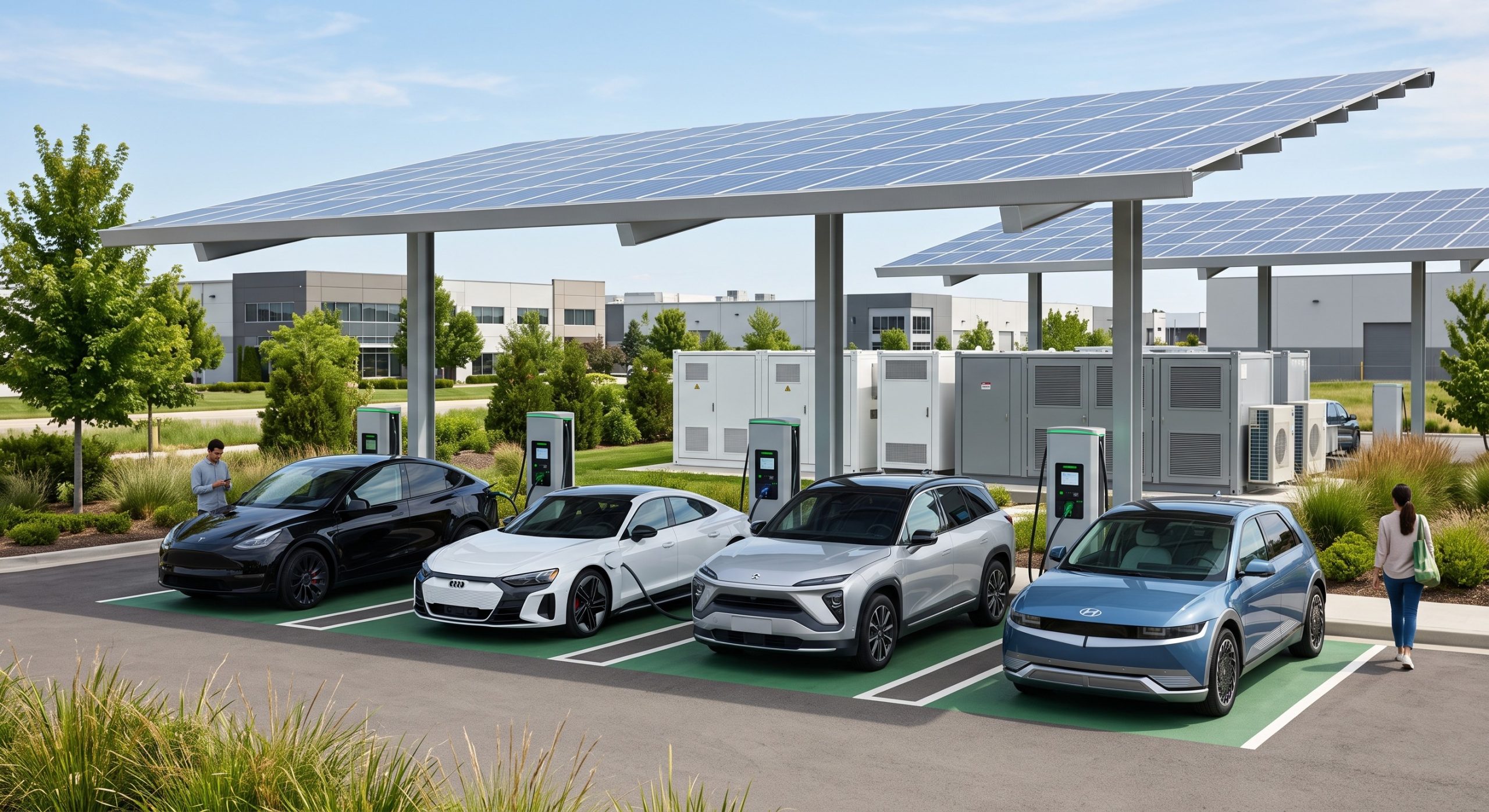
The integration of industrial power grid stabilization with solar canopies and EV superchargers creates a synergistic ecosystem where BESS buffers the intermittent PV generation and shaves the high-demand pulses of 350 kW DC fast charging. A typical 5 MWh BESS paired with 2 MWp solar and 10 EV chargers can reduce grid connection capacity by 60%, deferring costly transformer upgrades and enabling deployment in areas with limited grid infrastructure.
Data Center and Semiconductor Fab Resilience
For mission-critical facilities, industrial power grid stabilization systems provide seamless transition to off-grid operation within 10ms of grid fault detection, surpassing the response time of traditional UPS systems. N+1 redundancy configurations with liquid-cooled LFP cabinets ensure thermal runaway propagation is contained per UL 9540A test criteria, maintaining Tier IV availability standards.
Conclusion: Strategic Procurement for Grid Stabilization
As industrial electricity costs continue to rise and grid operators tighten frequency and voltage tolerances, industrial power grid stabilization via commercial energy storage has become an indispensable capital allocation for C&I facility managers and EPC contractors. The convergence of Tier-1 LFP cell pricing declines, liquid cooling thermal efficiency gains, and evolving demand response markets has created a procurement window where BESS investments yield IRRs of 15-25% without subsidy. Decision-makers should prioritize vendors offering UL 9540 and IEC 62619 certified systems with demonstrated 8,000+ cycle life, integrated liquid cooling, and open-protocol EMS platforms to future-proof their grid stabilization infrastructure against evolving regulatory and market conditions.