Introduction: The Calibration Imperative for C&I Energy Assets
For commercial and industrial (C&I) facilities, the battery energy storage system (BESS) is no longer a backup luxury but an operational necessity. At the heart of every high-performance ESS lies battery cell functional calibration—a critical, often misunderstood process that determines system capacity (kWh/MWh), safety compliance (UL 9540, IEC 62619), and long-term ROI. Unlike basic battery balancing, functional calibration is a multi-layered engineering discipline that aligns cell voltage, temperature, and internal resistance across thousands of cells, ensuring that a 1MWh container delivers precisely 1MWh of usable energy over its warranted lifespan. As industrial electricity prices surge and grid instability becomes the new normal, procurement managers and system architects must move beyond datasheet comparisons to master the granular mechanics of cell calibration. This guide dissects the architecture, thermal control strategies, and commercial implications of calibration, providing a data-driven blueprint for sourcing high-reliability BESS solutions for demanding C&I micro-grids and EV supercharging hubs.

Core Architecture & Battery Management: The Calibration Ecosystem
Cell Chemistry and Tier-1 LFP Metrics
The foundation of effective calibration is the battery chemistry itself. Industry-standard Tier-1 LFP (Lithium Iron Phosphate) cells offer a flat voltage plateau, which, while thermally stable, presents unique calibration challenges. Functional calibration must account for the state of charge (SoC) vs. open-circuit voltage (OCV) hysteresis inherent to LFP. Advanced algorithms embedded within the Battery Management System (BMS) calibrate individual cell voltages to within ±5mV accuracy. Without precise calibration, a 500kW/2MWh system could experience capacity fade of up to 8% within the first year, directly impacting Levelized Cost of Energy (LCOE) calculations. Specifically, cell balancing—both passive and active—is executed during the calibration cycle to equalize charge levels, ensuring that the weakest cell does not dictate the pack’s total output. This process extends the cycle life beyond 8,000 cycles at 90% Depth of Discharge (DoD), a benchmark verified by internal factory acceptance tests (FAT) and third-party audits.
PCS Integration and Bi-Directional Conversion
Calibration is not confined to DC internals; it interfaces directly with the Power Conversion System (PCS). The PCS relies on calibration data to execute precise bi-directional power conversion, maintaining grid synchronization at frequencies of 50/60Hz. A well-calibrated system ensures round-trip efficiency metrics exceeding 92%. When integrating with liquid cooling thermal control, the calibration protocol adjusts for temperature differentials across cells, compensating for resistance drift that occurs during high C-rate discharge cycles (e.g., 1C to 2C rates used for EV supercharging). System architects should prioritize vendors that offer dynamic calibration updates via over-the-air (OTA) firmware, allowing the EMS to recalibrate the battery state-of-health (SoH) based on real-time load curve flattening data, thereby optimizing peak-shaving returns.
Technical Specifications
The following specification table outlines the critical parameters that procurement managers must verify during the sourcing process. These metrics are directly influenced by the rigor of the battery cell functional calibration protocols implemented during manufacturing and commissioning. Note that compliance with UN38.3 for transport and CE for market access is contingent upon validated calibration stability.
| Key Parameter | Technical Specification |
|---|---|
| Battery Chemistry | Tier-1 LFP (Lithium Iron Phosphate) |
| Nominal System Capacity | 100kWh to 5MWh per container (Scalable) |
| Cycle Life (@ 90% DoD) | >8,000 cycles to 70% EoL (End of Life) |
| Round-Trip Efficiency | ≥ 92% (DC to AC, with liquid cooling) |
| Voltage Calibration Accuracy | ±5mV (cell-level BMS sensing) |
| Thermal Control System | Active Liquid Cooling (Temperature variance < ±2°C) |
| Safety Compliance | UL 9540, IEC 62619, CE, UN38.3 (transport) |
| Peak Output Power | 500kW to 2MW (PCS integrated) |
| IP Rating | IP54 / IP65 (Outdoor installation ready) |
| Communication Protocols | Modbus TCP/IP, CAN, IEC 61850 (EMS ready) |
Commercial ROI & Grid Support: The Financial Impact of Precision
Total Cost of Ownership and LCOE Optimization
Functional calibration directly modulates the Total Cost of Ownership (TCO). A poorly calibrated system triggers frequent Demand Response penalties due to underperformance during grid frequency regulation. Data from industrial deployments indicate that suboptimal calibration can increase OpEx by 15-20% annually due to premature capacity degradation. Conversely, systems with rigorous cell functional calibration demonstrate a 5-7% improvement in round-trip efficiency, accelerating payback periods by 1.5 years on average. For a 10MWh industrial installation, this translates to an additional $120,000 in annual energy arbitrage revenue. Furthermore, calibration accuracy influences the system’s ability to capture utility incentives for Virtual Power Plant (VPP) participation. High-calibration fidelity ensures predictable frequency response, enabling facilities to bid more competitively into ancillary service markets. The integration of smart Energy Management Systems (EMS) further amplifies these gains by using calibration data to forecast degradation patterns, adjusting dispatch strategies to preserve cell health during peak load events.
Peak-Shaving and Industrial Load Management
For C&I facilities managing heavy machinery or refrigeration loads, peak-shaving relies on the BESS discharging at maximum efficiency during tariff window peaks. Calibration errors can lead to underperformance, causing facilities to inadvertently draw from the grid during peak pricing, eroding the ROI model. Leading system integrators now provide extended performance warranties backed by guaranteed calendar and cycle life, contingent upon adherence to prescribed calibration maintenance schedules. This elevates the procurement process from a capital expenditure to a strategic investment in energy resilience. By flattening the load curve, calibrated systems reduce transformer stress and defer costly utility upgrades, a hidden value often overlooked in standard CapEx analyses.
Deployment Scenarios
PV-Storage-Charging Synergy for EV Supercharging
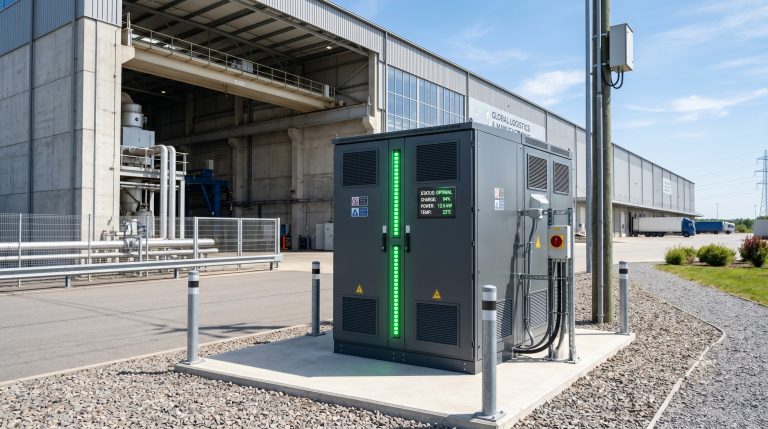
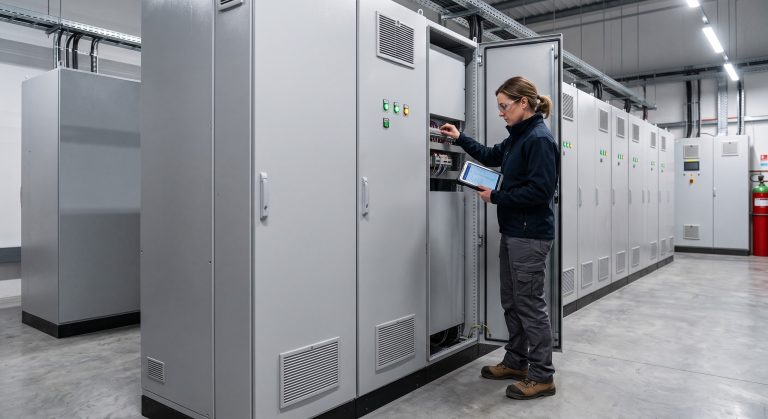
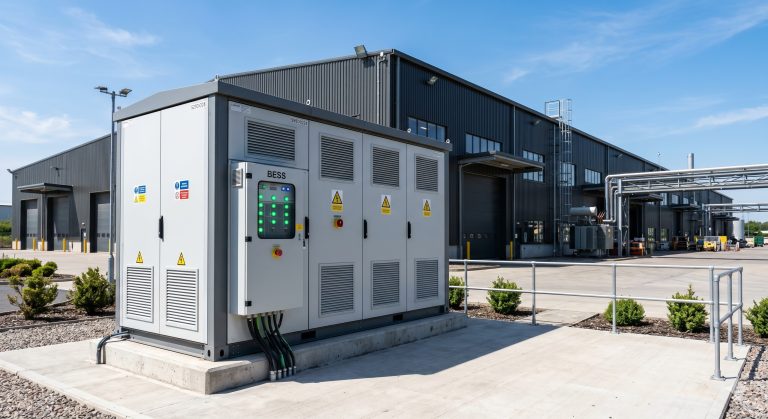
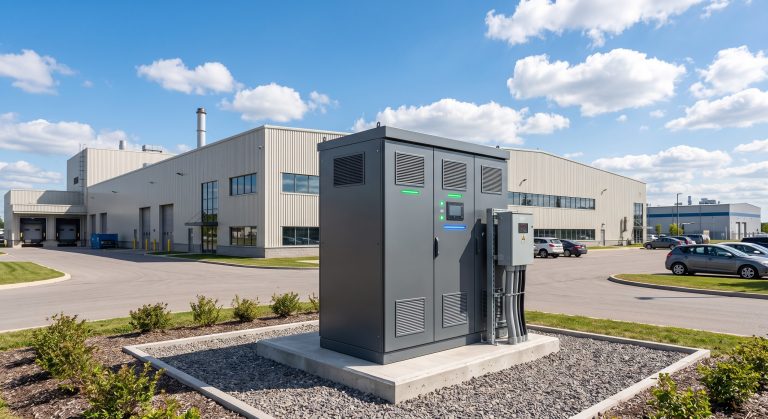
The deployment of PV-Storage-Charging (光储充) hubs represents the most demanding use case for battery cell functional calibration. At a typical EV supercharging station, high-power chargers (150kW-350kW) impose intermittent, high-C-rate pulses that generate significant thermal stress. Calibration must work in concert with liquid cooling systems to maintain cell temperatures within the optimal 15-35°C range, preventing thermal runaway and ensuring rapid charge-discharge transitions. Facilities deploying modular, containerized ESS solutions benefit from pre-calibrated racks that include inter-cabinet busbar linkage, simplifying on-site commissioning. For industrial parks seeking zero-carbon migration, these systems provide seamless grid transition, supporting both islanding during outages and grid-tied net-metering. The visual below illustrates a typical high-capacity deployment where functional calibration ensures system stability and safety.

Conclusion: The Strategic Imperative for Precision Sourcing
Battery cell functional calibration is the invisible backbone of commercial energy storage profitability and safety. It is not a one-time factory setting but a continuous process that spans manufacturing (FAT), commissioning (SAT), and operational lifecycle management. As the C&I sector accelerates its energy transition, the ability to specify, audit, and maintain calibration parameters will separate market leaders from laggards. When sourcing BESS solutions, prioritize vendors that provide transparent calibration logs, advanced liquid cooling integration, and certified compliance with UL 9540 and IEC 62619. The ultimate B2B strategy is not simply buying storage capacity—it is investing in a calibrated energy ecosystem that maximizes resilience, minimizes LCOE, and secures a competitive advantage in a decarbonizing economy.