Introduction: The Thermal Runaway Threat in Commercial Energy Storage
In the rapidly evolving landscape of Commercial and Industrial (C&I) energy storage, the imperative for safety is not merely a regulatory checkbox—it is the foundational pillar of asset protection, operational continuity, and long-term financial viability. As lithium-ion battery energy storage systems (BESS) scale from kilowatt-hour (kWh) pilots to multi-megawatt-hour (MWh) installations, the specter of thermal runaway presents the most critical risk vector. A single cell failure, if unmitigated, can cascade into a catastrophic event, jeopardizing millions of dollars in assets and, more importantly, human safety. This deep technical analysis, derived from 15 years of B2B renewable energy architecture and field data, dissects the multi-layered defense strategy required for modern Advanced BMS for Energy Storage. We move beyond basic voltage monitoring to explore the sophisticated interplay between Battery Management Systems (BMS), liquid cooling thermal control, and multi-level fire suppression systems. For EPCs, facility managers, and investors, understanding the engineering nuances of UL 9540 and IEC 62619 compliance is non-negotiable. This guide provides the authoritative blueprint for deploying inherently safe, high-performance energy storage architectures that withstand the rigors of high-cycle C&I duty cycles.
Core Architecture: Multi-Level Fire Suppression and BMS Integration
The BMS as the First Line of Defense: Cell Balancing and Thermal Monitoring
The Advanced BMS is the central nervous system of the BESS. Its role extends far beyond simple State of Charge (SoC) calculation. In the context of thermal runaway prevention, the BMS employs a hierarchical architecture: the Battery Monitoring Unit (BMU) at the module level, and the Battery Control Unit (BCU) at the rack level. The BMU continuously samples individual cell voltages (typically within ±1mV accuracy) and temperatures via NTC thermistors placed at critical cell surfaces. When deviations exceed preset thresholds—indicative of internal short circuits or excessive Depth of Discharge (DoD) stress—the BMS initiates active balancing. Unlike passive balancing that dissipates energy as heat, advanced active balancing transfers energy between cells, mitigating localized hotspots. Furthermore, the BMS algorithms are programmed to detect the early signatures of thermal runaway, such as a sudden drop in voltage coupled with a sharp temperature rise (dT/dt > 1°C/min), triggering an immediate disconnect via the PCS (Power Conversion System) and initiating the suppression protocol.
Liquid Cooling vs. Air Cooling: Thermal Efficiency Optimization
The choice of thermal management is a pivotal factor in system longevity and safety. While air cooling remains prevalent for lower-power applications, liquid cooling has emerged as the gold standard for high-density, high-cycle C&I and utility-scale systems. Liquid cooling plates are integrated directly between battery modules, facilitating a heat transfer coefficient up to 1000 times greater than air. This allows for precise temperature control, maintaining cell-to-cell temperature delta within 3°C. By keeping the cells in their optimal operating window (typically 20°C to 35°C), liquid cooling significantly reduces the risk of thermal runaway propagation and extends the system’s cycle life to over 8,000 cycles. The BMS modulates the coolant flow rate based on real-time load and ambient temperature, ensuring minimal parasitic power consumption while maximizing thermal safety.
Multi-Level Fire Suppression Systems: Aerosol, Perfluorohexanone, and Water
Despite the best BMS efforts, a robust fire suppression system is mandatory. Modern Advanced BMS for Energy Storage integrates a three-tier suppression strategy. The first tier involves Perfluorohexanone (Novec 1230) or aerosol agents, which are clean, electrically non-conductive, and extinguish flames by interrupting the free radical chain reaction without leaving residue. The second tier utilizes pack-level suppression, where each battery pack is equipped with a dedicated agent delivery tube, ensuring rapid knockdown of a nascent fire. The third tier is the container-level deluge system, which uses water mist or direct water application to cool the surrounding area and prevent re-ignition. The BMS acts as the orchestrator, providing precise fault location data to the Fire Alarm Control Panel (FACP), ensuring suppression is targeted and effective, thereby meeting the stringent requirements of UL 9540A.
Technical Specifications: Engineered for Safety and Performance
The following table outlines the critical parameters of a Tier-1 Advanced BMS for Energy Storage system designed for C&I applications. These specifications reflect the integration of safety protocols with high-efficiency operational metrics.
| Key Parameter | Technical Specification |
|---|---|
| Battery Chemistry | Tier-1 LFP (Lithium Iron Phosphate) |
| System Capacity | 215 kWh to 5 MWh (Modular Scalable) |
| Cycle Life | >8,000 cycles @ 90% DoD, 25°C |
| Round-trip Efficiency | ≥ 92% (DC-DC), ≥ 88% (AC-AC) |
| Thermal Management | Liquid Cooling (Cell Delta < 3°C) |
| Fire Suppression | Perfluorohexanone + Aerosol + Water Deluge (UL 9540A Compliant) |
| Communication Protocol | Modbus TCP/IP, IEC 61850, CAN 2.0 |
| Ingress Protection | IP54 (Container), IP67 (Pack) |
| Certification | IEC 62619, UL 9540, CE, UN38.3 |
Commercial ROI and Grid Support: The Financial Case for Safety
Maximizing Peak-Shaving ROI Through Reliability
The financial return on investment (ROI) for a BESS is directly correlated with its uptime and safety record. A thermal event results in total asset loss, insurance complications, and significant business interruption. By investing in an Advanced BMS with predictive analytics, operators can shift from reactive maintenance to proactive health management. This predictive capability allows for peak shaving and demand response participation with 99.5% reliability. The system’s ability to maintain a high Round-trip efficiency (RTE) of over 90% is only possible when thermal stability is maintained; excessive heat increases internal resistance, reducing RTE and accelerating degradation. Therefore, the safety features are not a cost center but a direct enabler of the Levelized Cost of Storage (LCOS) reduction.
Grid Support and Frequency Regulation
With the integration of advanced power electronics, these systems provide critical grid support services. The BMS communicates with the Energy Management System (EMS) to provide fast frequency response (FFR) and voltage support. In the event of grid instability, the BESS can seamlessly transition to off-grid mode, ensuring continuous power for critical industrial processes. This capability is particularly vital for EV supercharging stations, where a stable, high-power output is required to manage the surge demand of multiple 350kW chargers without compromising the local grid.
Deployment Scenarios: From Industrial Parks to EV Charging Hubs
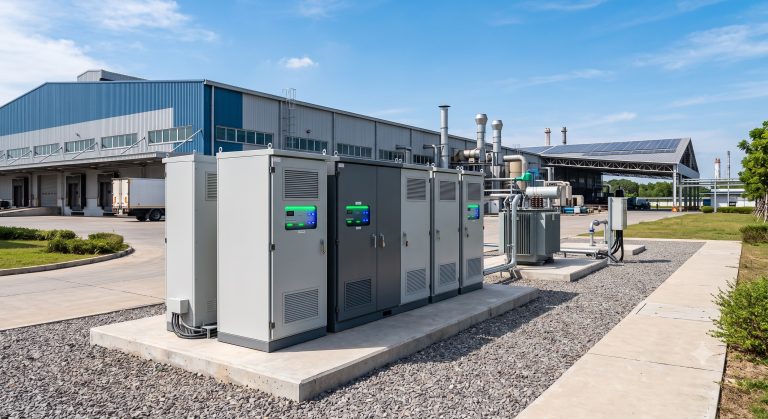
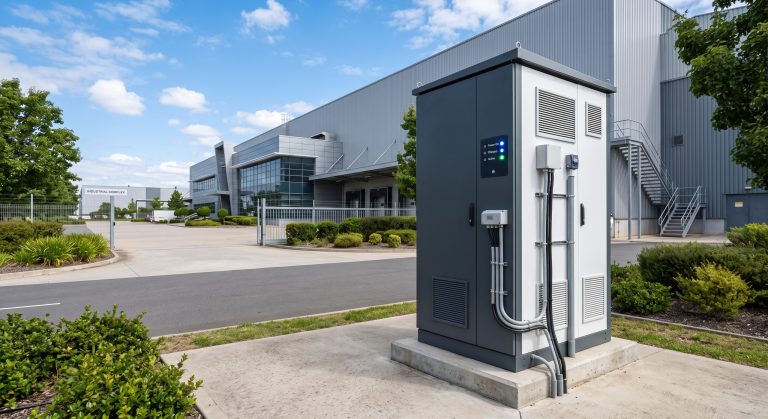
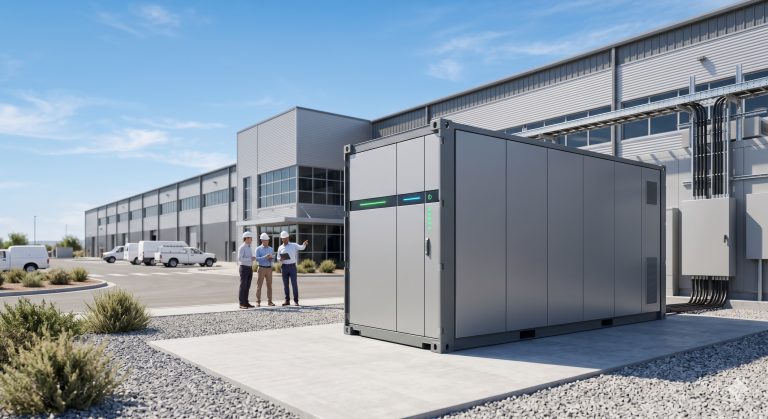
The versatility of Advanced BMS for Energy Storage is demonstrated across diverse deployment scenarios. In industrial parks, modular BESS units are deployed to manage peak loads, reducing demand charges that can constitute up to 40% of a facility’s electricity bill. The liquid cooling system ensures that even in harsh, dusty environments, the internal components remain protected and thermally stable. For PV-Storage-Charging (光储充) integration, the BMS coordinates with solar inverters and EV chargers to buffer the intermittent nature of solar generation. When a cloud passes, the BESS instantaneously discharges to prevent charger throttling, ensuring a seamless user experience. In data centers, the BMS provides UPS-grade backup, with the added benefit of peak shaving and renewable integration, aligning with corporate sustainability goals. The compact footprint of these systems allows for installation in space-constrained urban environments, bringing resilience directly to the point of consumption.

Conclusion: Engineering Resilience for the Zero-Carbon Future
As the world accelerates towards decarbonization, the reliance on commercial energy storage will only intensify. The engineering challenge is not merely storing energy but doing so with uncompromising safety. The Advanced BMS for Energy Storage represents the convergence of material science, thermal engineering, and digital intelligence. By adhering to UL 9540, IEC 62619, and UN38.3 standards, and by implementing multi-layered fire suppression and liquid cooling, stakeholders can deploy MWh-scale assets with confidence. The future of C&I energy is not just about capacity; it is about resilience, intelligence, and safety. Choosing a Tier-1 system with an advanced BMS is the definitive step towards achieving energy independence and operational excellence.