Introduction
The traditional commercial UPS has anchored critical power protection for decades, yet its fundamental limitations—short-duration backup, sealed lead-acid chemistry, and standalone operation—are increasingly misaligned with modern C&I facilities facing volatile electricity costs, aggressive decarbonization mandates, and grid instability. This guide examines the engineering and economic case for migrating from conventional UPS architectures to battery energy storage systems (BESS) purpose-built for commercial and industrial deployment. Drawing on current market data and regulatory frameworks, we quantify the technical specifications, lifecycle economics, and compliance pathways that define the next generation of commercial UPS alternatives.
Core Architecture & Battery Management
From Static Backup to Dynamic Energy Assets
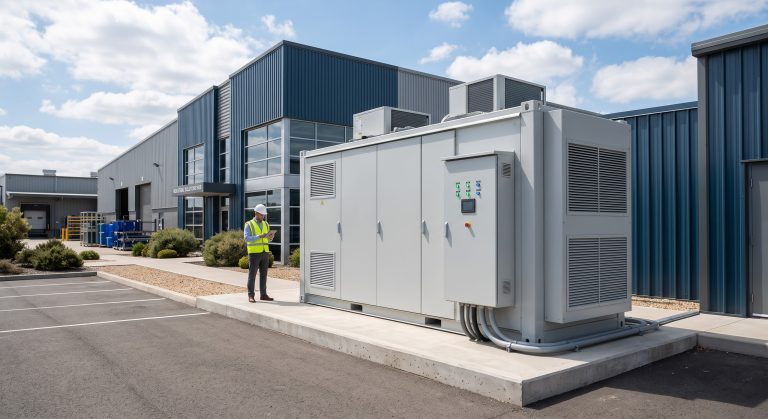
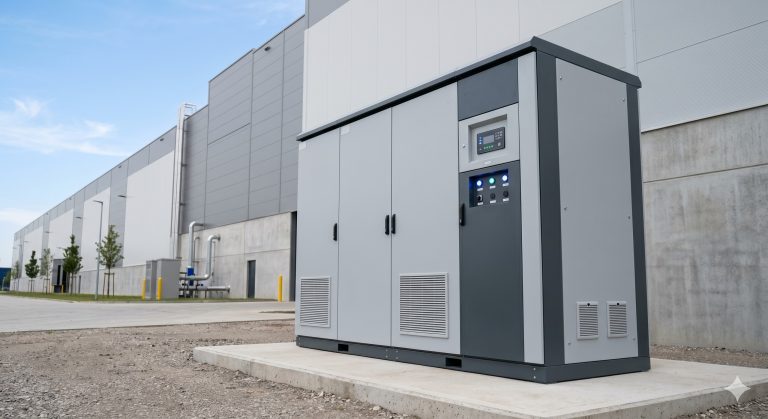
Conventional UPS systems operate as passive insurance—discharging only during grid faults and otherwise consuming energy through double-conversion losses. A commercial BESS inverts this paradigm. Using bidirectional PCS (Power Conversion System) architecture, the same lithium-ion platform that provides UPS-grade backup (sub-10ms transfer) also executes peak shaving, demand response, and renewable integration on a daily basis.
The technical distinction centers on battery chemistry and BMS sophistication. Tier-1 LFP (Lithium Iron Phosphate) cells deliver >6,000 cycles at 80% DoD, compared to 300-500 cycles for VRLA batteries. The BMS performs active cell balancing, state-of-charge (SOC) estimation, and thermal runaway early detection—capabilities absent in legacy UPS battery strings.
Liquid Cooling vs. Air Cooling Thermal Control
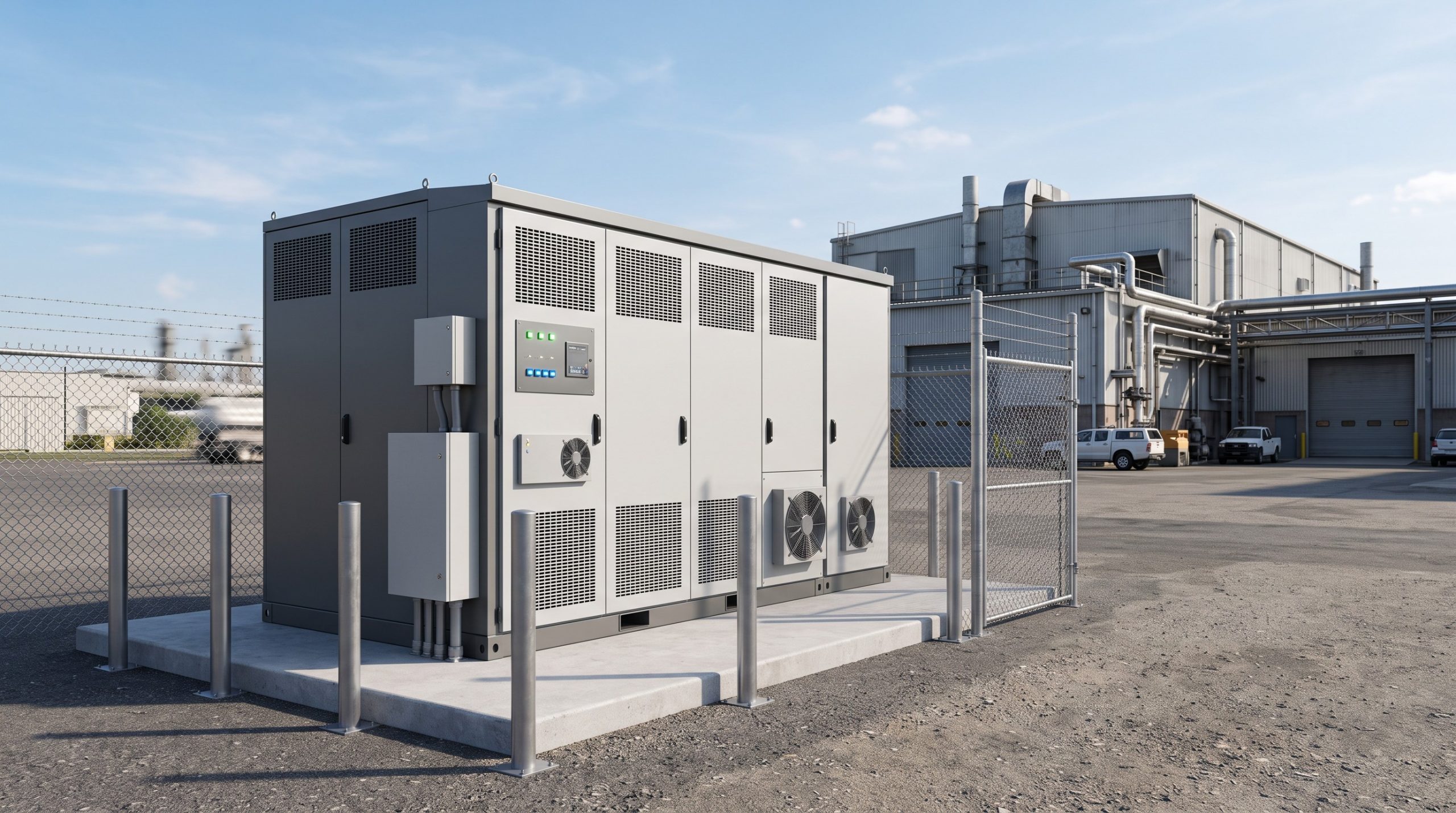
High-cycle BESS operation generates sustained thermal loads that air cooling struggles to manage in high-ambient industrial environments. Liquid cooling with coolant distribution units (CDU) maintains cell temperature uniformity within ±2°C, reducing degradation rates by 15-20% compared to air-cooled equivalents. This matters for C&I facilities where ambient temperatures routinely exceed 40°C and round-trip efficiency directly impacts ROI.
Technical Specifications
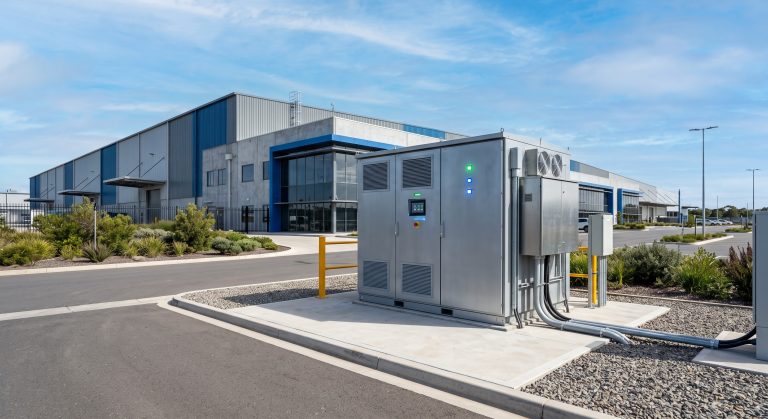
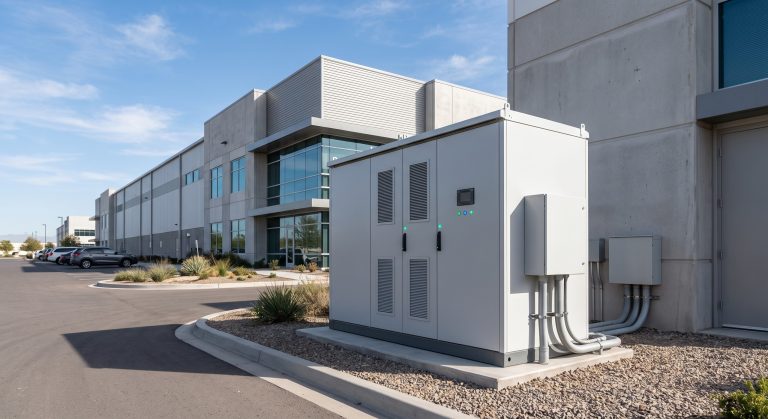
The following specification ledger represents a typical C&I BESS configuration engineered for commercial UPS replacement. Parameters reflect current Tier-1 supplier capabilities and align with IEC 62619 industrial safety requirements.
| Key Parameter | Technical Specification |
|---|---|
| Battery Chemistry | Tier-1 LFP (Lithium Iron Phosphate) |
| Nominal System Capacity | 215 kWh / 100 kW (modular, scalable to MWh) |
| Cycle Life | >6,000 cycles @ 80% DoD, 25°C |
| Round-Trip Efficiency | ≥90% AC-AC |
| Depth of Discharge (DoD) | 90% maximum recommended |
| Thermal Management | Liquid cooling, CDU-integrated |
| Communication Protocol | Modbus TCP / IEC 61850 |
| Safety Certifications | UL 9540, UL 9540A, IEC 62619, UN38.3, CE |
| Enclosure Rating | IP54 (outdoor), NEMA 3R equivalent |
| Operating Temperature | -20°C to 55°C (derated above 45°C) |
Commercial ROI & Grid Support
Peak Shaving and Demand Charge Mitigation
For facilities subject to demand charges exceeding $15/kW-month, BESS arbitrage delivers measurable returns. A 500 kWh / 250 kW system performing daily peak shaving across a 400 kW peak demand profile can reduce billed demand by 15-25%, translating to $15,000-$30,000 in annual savings for large industrial users. The round-trip efficiency of modern LFP systems—typically 88-92% AC-to-AC—ensures that energy arbitrage spreads of $0.08-0.15/kWh remain profitable after conversion losses.
Demand Response and Ancillary Services
Beyond behind-the-meter savings, C&I BESS assets can enroll in utility demand response programs, capturing capacity payments of $50-150/kW-year in organized markets like PJM and ERCOT. Fast grid synchronization capabilities (under 100ms) enable participation in frequency regulation, where response speed commands premium compensation.
Deployment Scenarios
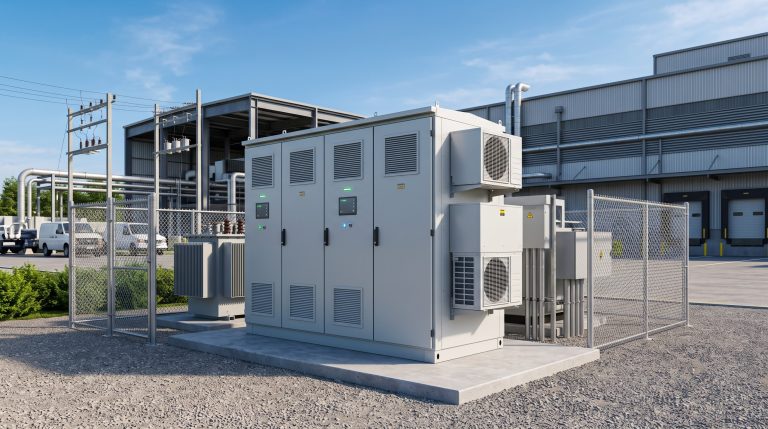
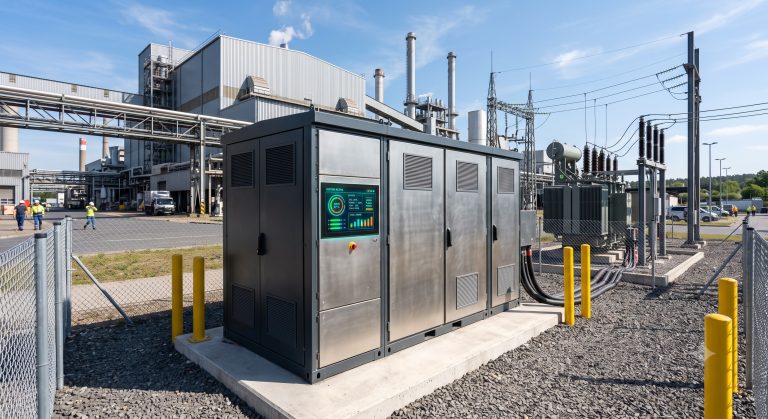
The most compelling commercial UPS alternative deployments cluster around three facility profiles:
- Manufacturing Plants: Where process loads tolerate 10-20ms transfer and demand charges dominate electricity bills
- Data Centers (Edge/Micro): Where lithium-ion UPS already displaces VRLA, and additional storage capacity monetizes through demand response
- Cold Storage & Logistics: Where thermal inertia provides ride-through for longer transfer windows, and rooftop solar integration offsets refrigeration loads
Each scenario demands site-specific capacity sizing and EMS dispatch logic optimization. A warehouse with 200 kW peak load and 4-hour backup requirement needs fundamentally different configuration than a fabrication facility with 1 MW peak and 15-minute ride-through needs.
Compliance & Safety Framework
Regulatory compliance separates deployable systems from laboratory prototypes. The governing standards for C&I BESS include:
- UL 9540: The umbrella certification for energy storage systems, covering component integration and system-level safety
- UL 9540A: Thermal runaway fire propagation testing—increasingly required by AHJs for non-residential installations
- IEC 62619: International safety standard for industrial lithium cells and batteries, explicitly covering UPS and stationary applications
- UN38.3: Transportation safety certification for lithium cells
Projects lacking UL 9540A installation-level test data face mounting permitting friction. The 2026 update to UL 9540A expanded large-scale fire testing requirements and explosion hazard evaluation, tightening the evidence bar for AHJ approval.
Conclusion
The migration from commercial UPS to BESS represents more than equipment substitution—it is an architectural shift from passive protection to active energy management. For C&I operators facing rising demand charges, renewable integration mandates, and grid reliability concerns, the economic and technical case has never been stronger. Procurement decisions should prioritize verified cycle life data, UL 9540A certification, and EMS flexibility that accommodates evolving tariff structures and demand response market participation.