Introduction: The Energy Crisis and the Rise of Intelligent Storage
Commercial and Industrial (C&I) facilities are facing an unprecedented energy crisis. With volatile utility tariffs, escalating demand charges, and the urgent need to decarbonize, static energy storage is no longer sufficient. The modern Commercial Energy Storage System (BESS) must be intelligent. At the heart of this intelligence lies Cloud-based EMS monitoring—a paradigm shift that transforms a simple battery cabinet into a dynamic, revenue-generating asset. This guide, crafted by system architects with 15 years of B2B renewable energy experience, dissects the architecture, technical metrics, and commercial ROI of cloud-connected EMS platforms. We will explore how System Capacity (kWh/MWh), Round-trip efficiency, and Liquid Cooling thermal control are optimized through secure, remote monitoring to maximize Peak Shaving ROI and ensure grid resilience.
Core Architecture & Battery Management: The Cloud-Edge Synergy
Understanding Cloud-based EMS monitoring requires a deep dive into the layered architecture that connects physical electrons to digital intelligence. The system is not merely a dashboard; it is a closed-loop control mechanism.
Edge Layer: The PCS and BMS Foundation
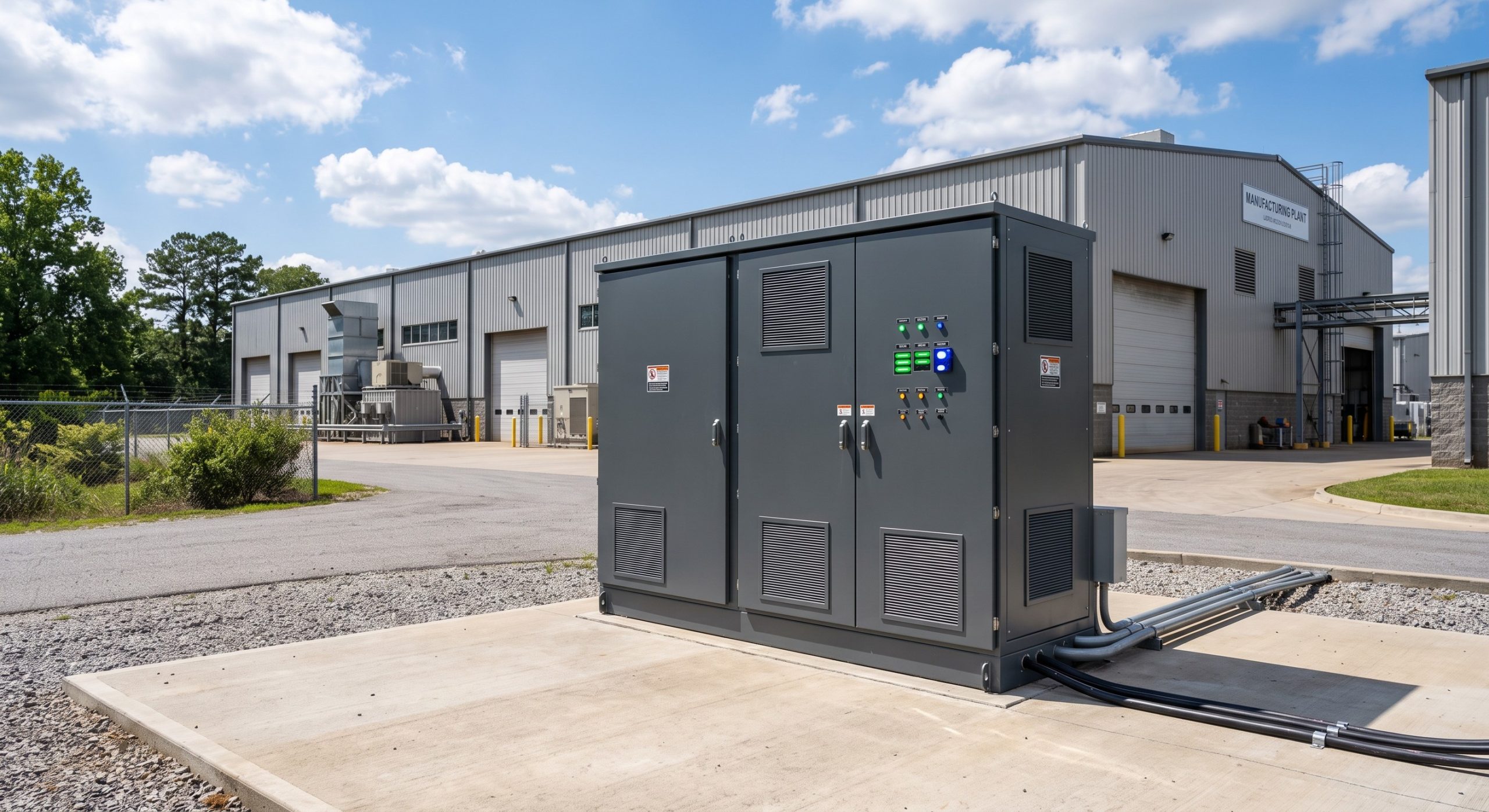
The physical core comprises the Power Conversion System (PCS) and the Battery Management System (BMS). The BMS is responsible for cell-level precision. It monitors voltage, current, and temperature across thousands of Tier-1 LFP (Lithium Iron Phosphate) cells. The BMS enforces critical safety parameters, including Depth of Discharge (DoD) limits and Cell Balancing. Data from the BMS and PCS is aggregated by an edge gateway, which performs preliminary logic (e.g., local peak shaving triggers) and buffers data for cloud transmission. This ensures operational continuity even if the network connection is interrupted.
Cloud Layer: The EMS Optimization Engine
The cloud-based Energy Management System (EMS) is where the true value is unlocked. It ingests real-time data streams: State of Charge (SoC), State of Health (SoH), Round-trip efficiency, and thermal metrics. Advanced algorithms—often leveraging machine learning—analyze historical load curves, weather forecasts, and dynamic utility pricing signals. The EMS then dispatches optimal charge/discharge commands back to the edge. This architecture enables Smart EMS Dispatch for Demand Response, Frequency Regulation, and VPP (Virtual Power Plant) readiness. The cloud also serves as a central repository for fleet-wide analytics, enabling predictive maintenance by identifying degradation trends before they impact performance.
Technical Specifications: Metrics That Matter in Cloud-Connected Systems
Evaluating a cloud-based EMS monitoring solution requires a rigorous review of the underlying hardware specifications, as the software can only optimize what the hardware can physically deliver. The following table outlines critical parameters for a high-performance C&I BESS designed for cloud integration.
| Key Parameter | Technical Specification |
|---|---|
| Battery Chemistry | Tier-1 LFP (Lithium Iron Phosphate) |
| System Capacity | 215 kWh to 5 MWh (Modular) |
| Cycle Life | >8000 cycles @ 90% DoD, 25°C |
| Round-trip Efficiency | >90% (DC-DC), >88% (AC-AC) |
| Depth of Discharge (DoD) | Up to 95% (Configurable via EMS) |
| Thermal Management | Liquid Cooling (Intelligent Thermal Control) |
| Communication Protocol | Modbus TCP/IP, IEC 61850, MQTT (Cloud) |
| Safety Certifications | IEC 62619, UL 9540, CE, UN38.3 |
| Ingress Protection | IP54 (Outdoor Cabinet), IP20 (Indoor Rack) |
| Operating Temperature | -20°C to +55°C (Derated above 45°C) |
| Grid Support Functions | Peak Shaving, Demand Response, Frequency Regulation, VPP |
These metrics directly influence the efficacy of the cloud EMS. For instance, a high Round-trip efficiency (e.g., >90%) means less energy is lost during cloud-commanded charge/discharge cycles, directly improving LCOE. The Liquid Cooling thermal control system maintains cell temperatures within a narrow band (e.g., ±2°C), which is critical for preserving Cycle Life (e.g., >8000 cycles) and preventing Thermal Runaway. Cloud monitoring allows operators to track these thermal profiles remotely and receive alerts if a cooling pump or fan degrades, ensuring compliance with safety standards like IEC 62619 and UL 9540.
Commercial ROI & Grid Support: The Financial Case for Cloud-EMS
The transition to cloud-based monitoring is not just a technical upgrade; it is a strategic financial decision. The primary revenue stream for C&I BESS remains Peak Shaving—discharging stored energy during high-tariff periods to reduce Demand Charges. Cloud EMS enhances this by dynamically adjusting the DoD to maximize savings without compromising battery health.
Maximizing Peak-Shaving ROI and TCO
By integrating real-time weather data and production schedules, the cloud EMS can predictively manage System Capacity. It can also participate in Demand Response programs, automatically curtailing load or exporting power to the grid during utility events. This creates a dual revenue stream: avoided costs and incentive payments. The data-driven nature of cloud monitoring provides verifiable performance data, which is essential for Total Cost of Ownership (TCO) analysis and securing financing. It enables Amortizing Long-Term TCO by extending asset life through optimized cycling.
Grid Support and VPP Readiness
Cloud-based EMS platforms are inherently VPP Ready. They can aggregate thousands of distributed BESS units to provide Frequency Regulation and voltage support to the grid. This capability is increasingly valuable as grids integrate more renewable energy. The cloud platform handles the complex communication and control required for Fast Grid Synchronization, ensuring that the BESS can respond to utility signals in milliseconds, far faster than traditional generators.
Deployment Scenarios: From Industrial Parks to EV Supercharging
The flexibility of cloud-based EMS monitoring enables diverse deployment scenarios across the C&I landscape.
Industrial Parks and Manufacturing Facilities
In Industrial Parks, a cloud EMS can orchestrate multiple BESS units across different factories. It can implement Load Curve Flattening and manage Modular Scaling as production expands. The system ensures Energy Independence by seamlessly transitioning to off-grid mode during outages, protecting sensitive manufacturing processes.
EV Supercharging Stations (PV-Storage-Charging)
For EV Supercharging Stations, the integration of PV-Storage-Charging is a game-changer. The cloud EMS manages the synergy between solar canopies, BESS, and high-power chargers. It mitigates grid connection bottlenecks by buffering peak charging demand with stored energy. This allows for MWh-Scale Deployment of superchargers without expensive grid upgrades. The cloud platform monitors charger usage patterns and optimizes the dispatch of stored solar energy to maximize self-consumption and reduce operational costs.

Conclusion: The Future of C&I Energy is Cloud-Connected
The era of isolated, dumb battery cabinets is over. Cloud-based EMS monitoring is the cornerstone of a resilient, profitable, and decarbonized C&I energy strategy. By leveraging advanced architectures that integrate Tier-1 LFP chemistry, Liquid Cooling thermal control, and secure cloud analytics, businesses can achieve Peak Shaving ROI while contributing to grid stability. As regulatory frameworks like UL 9540 and IEC 62619 evolve, the ability to remotely audit, update, and optimize systems will become a mandatory requirement for Zero-Carbon Migration. For B2B buyers, the mandate is clear: prioritize cloud-native EMS platforms that offer open APIs, robust cybersecurity, and a proven track record in Smart EMS Dispatch. The future of commercial energy is not just stored; it is intelligently managed from the cloud.