Overview
High-density lithium battery cells achieve better space efficiency primarily by increasing the active material ratio per unit volume, reducing inactive cell housing and separator thickness, and pairing that cell-level density with tightly integrated liquid cooling and high-voltage rack architecture. For B2B energy storage buyers, this means more usable kWh and MWh per square meter of footprint without sacrificing cycle life, safety, or grid-tie performance. The following FAQ addresses the highest-intent pre-sales and post-sales questions plant engineers, EPCs, and procurement teams ask when evaluating high-density LFP-based BESS cabinets.
Frequently Asked Questions
- Q1: What is the maximum cycle life and depth of discharge (DoD) of high-density lithium battery cells used in BESS?
- The standard cycle life of high-density LFP cells in commercial BESS is 6,000 to 8,000 cycles at 80% DoD, with Tier-1 cells often guaranteed at 8,000 cycles under controlled 25°C liquid-cooled operation. This is achieved through thicker electrode coatings, optimized lithium-ion transport pathways, and precise BMS cell balancing that prevents localized over-discharge. For space-constrained industrial sites, specifying 8,000-cycle cells at 80% DoD allows a smaller physical cabinet to deliver the same lifetime throughput as a larger, lower-density system.
- Q2: How do high-density lithium battery cells improve space efficiency without increasing thermal runaway risk?
- High-density cells improve space efficiency by increasing volumetric energy density and reducing inactive materials, while thermal runaway risk is controlled through cell-to-cell spacing, integrated liquid cooling plates, and early gas/smoke detection. In a well-engineered BESS, the cooling system removes heat at the cell surface before temperature gradients exceed 3-5°C, and the BMS isolates abnormal strings within milliseconds. This combination allows higher kWh/m² and kWh/m³ without compromising UL 9540 or IEC 62619 safety compliance.
- Q3: What cooling system is required to maintain high-density lithium battery cell performance and space efficiency?
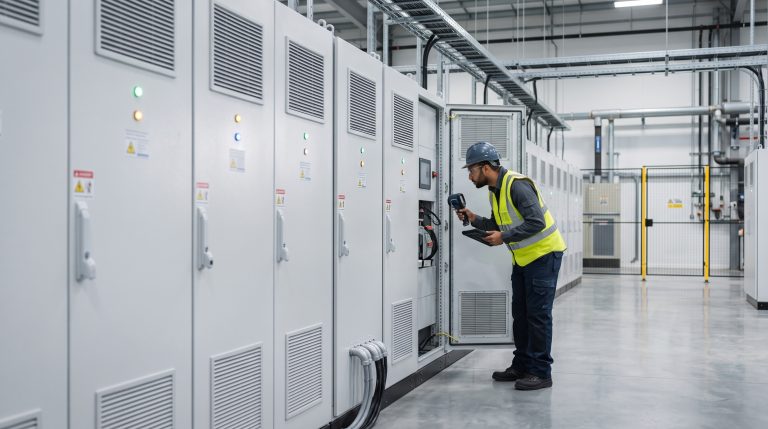
- The required cooling system for high-density BESS is typically a closed-loop liquid cooling circuit with coolant plates or immersion-ready cold plates directly contacting the cell modules. Liquid cooling maintains cell temperatures within ±2°C across the rack, which preserves cycle life and allows tighter cell packing than air cooling. For plant engineers, this means the battery room or outdoor enclosure can be smaller because the cooling hardware is integrated into the cabinet rather than requiring large air-handling clearances.
- Q4: How does the BMS monitor and balance high-density lithium battery cells in a commercial BESS?
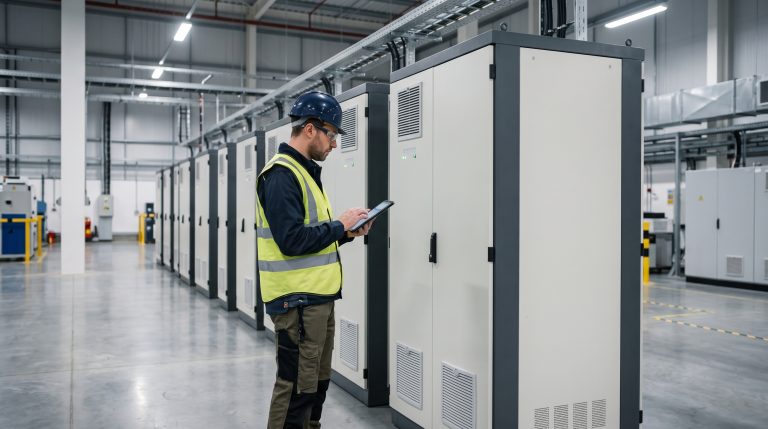
- The BMS monitors high-density lithium battery cells at the module and rack level, sampling voltage, current, and temperature at up to 1-second intervals and actively balancing cells to within 10-20 mV. Active balancing redistributes charge from stronger cells to weaker cells, which prevents premature capacity loss and maintains usable DoD across the pack. Post-sales, this data is available through the EMS API for remote diagnostics, warranty validation, and predictive maintenance scheduling.
- Q5: Can high-density lithium battery cells be configured for both grid-tie and off-grid operation?
- Yes, high-density lithium battery cells can be configured for grid-tie, off-grid, and seamless islanding operation when paired with a bi-directional PCS and an EMS that supports grid-forming and grid-following modes. The PCS manages peak shaving, demand response, and seamless transfer to backup power without dropping critical loads. This flexibility is essential for industrial facilities that want one space-efficient BESS to handle both utility interaction and micro-grid resilience.
- Q6: How does cell density affect ROI and LCOE for a commercial BESS project?
- Higher cell density directly improves ROI by reducing the number of cabinets, concrete pads, wiring runs, and cooling equipment required per MWh, which lowers installed CAPEX and levelized cost of energy (LCOE). A space-efficient 8,000-cycle LFP system can deliver a 10-year warranty and peak shaving arbitrage revenue that outperforms a lower-density system on the same site footprint. For procurement teams, the key metric is cost per usable kWh per square meter, not just cost per nameplate kWh.
- Q7: What scalability options exist when expanding a high-density lithium battery BESS?
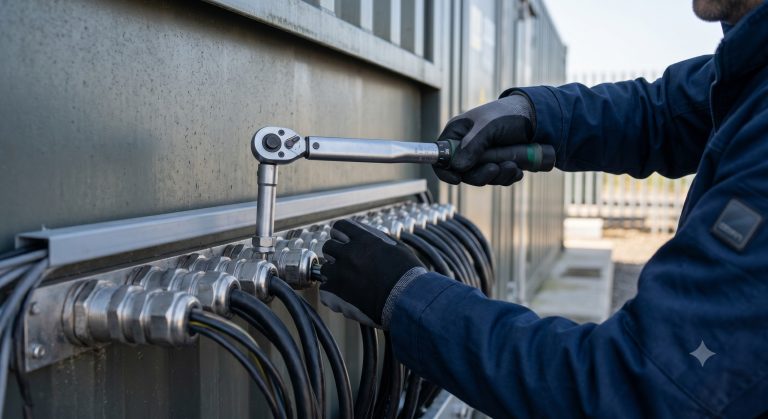
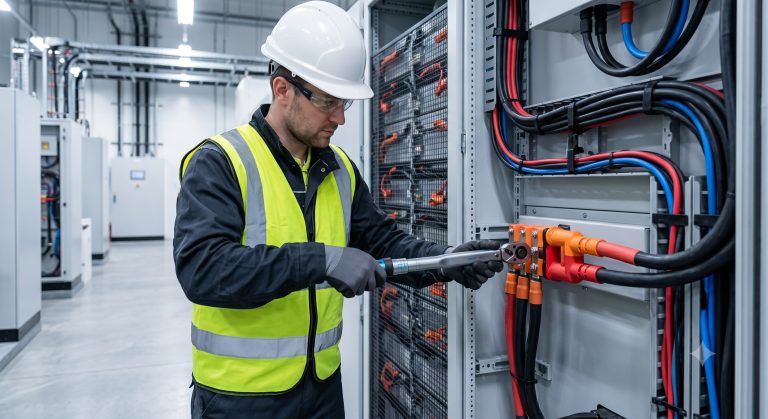
- High-density lithium battery BESS systems scale through parallel cabinet connectivity and custom DC busbar linkage, allowing incremental capacity expansion without replacing the original cabinets. Most commercial systems support 4-16 cabinets in parallel, with the EMS automatically rebalancing dispatch across the expanded bank. This modular approach preserves the original space efficiency and minimizes downtime during capacity upgrades.
- Q8: What fire safety and thermal runaway prevention features are built into high-density BESS cabinets?
- High-density BESS cabinets include multi-tier fire safety mechanisms such as early gas and smoke detection, cell-level temperature sensing, module-level isolation, and integrated aerosol or clean-agent fire suppression. The enclosure is typically rated IP54 to IP65 for outdoor installation, and the BMS triggers a controlled shutdown before thermal propagation can occur. These layers ensure that higher energy density does not translate into higher fire risk, which is critical for insurance approval and local code compliance.