Introduction: The Grid Instability Bottleneck in Commercial & Industrial Operations
Commercial and industrial (C&I) facilities are facing an unprecedented convergence of pressures: volatile utility tariffs, escalating demand charges, and the intermittent nature of renewable generation. For decades, the default backup and prime power solution was the diesel generator—a technology that offers rapid deployment but suffers from low round-trip efficiency (typically 25–35%), high maintenance costs, and strict emissions regulations. Enter high-density lithium battery assembly, a paradigm shift in C&I energy storage that delivers >95% round-trip efficiency, zero on-site emissions, and a modular architecture capable of scaling from 100 kWh to multi-MWh deployments. This deep technical evaluation examines the engineering superiority of high-density lithium battery assembly and why it has become the preferred choice for replacing diesel gensets in commercial micro-grids.
Engineering Superiority of High-density lithium battery assembly
Cell Chemistry and Pack Integration
At the heart of every modern C&I energy storage system (ESS) lies Tier-1 LFP (Lithium Iron Phosphate) chemistry. Unlike traditional lead-acid or early NMC variants, LFP cells provide exceptional thermal stability, a cycle life exceeding 8,000 cycles at 90% Depth of Discharge (DoD), and a gravimetric energy density of 160–180 Wh/kg. High-density lithium battery assembly techniques—including laser welding, busbar optimization, and compression foam integration—allow pack-level energy density to reach 250–300 Wh/L, reducing footprint by up to 40% compared to legacy assemblies.
BMS and PCS Co-optimization
A robust Battery Management System (BMS) performs active cell balancing, state-of-charge (SOC) estimation within ±3%, and state-of-health (SOH) tracking. When integrated with a bi-directional Power Conversion System (PCS), the assembly achieves round-trip efficiency >95% at nominal conditions. The PCS supports seamless grid synchronization (<20 ms transfer time), enabling uninterrupted power supply during grid outages—a critical advantage over diesel generators that require 10–30 seconds to start and stabilize.
Liquid Cooling Thermal Control
High-density assemblies generate significant heat during high-rate charge/discharge. Advanced liquid cooling systems maintain cell temperature differentials within ±2°C across the entire pack, compared to ±8–10°C for air-cooled systems. This precision thermal management extends cycle life by 20–30% and prevents thermal runaway propagation. The coolant flow logic is managed by the BMS, which modulates pump speed based on real-time cell temperatures and C-rate.
Technical Specifications
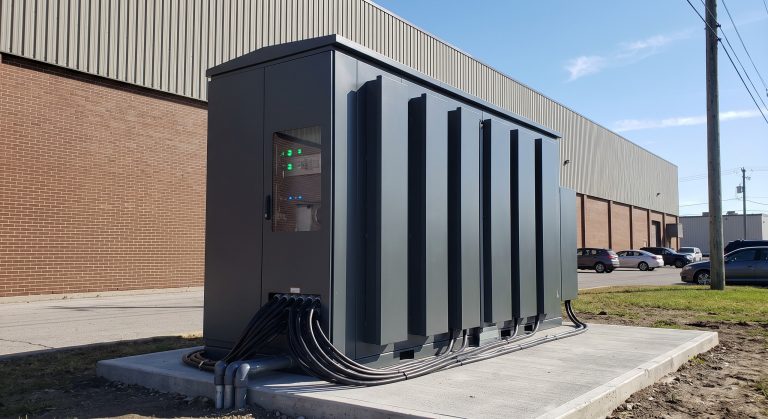
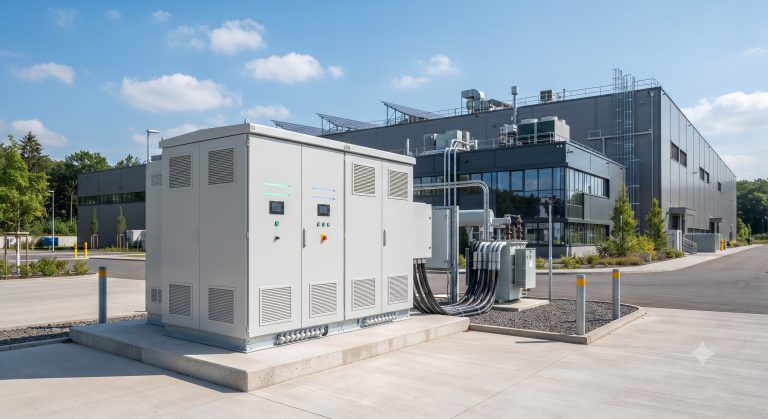
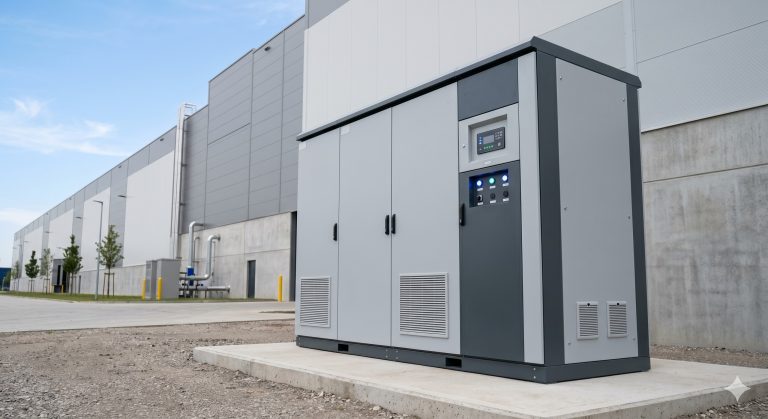
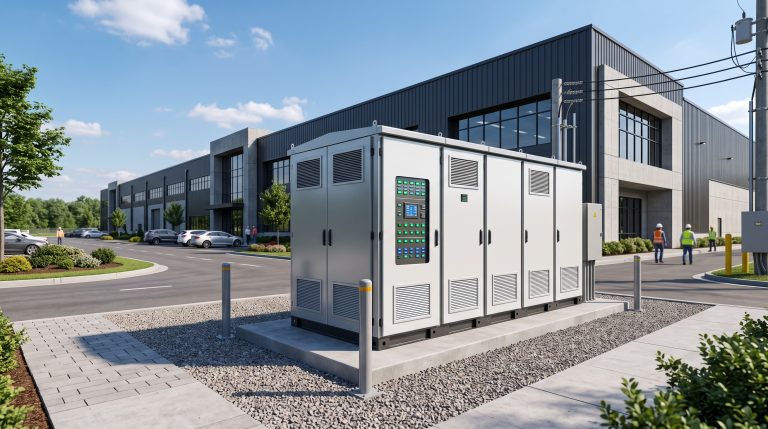
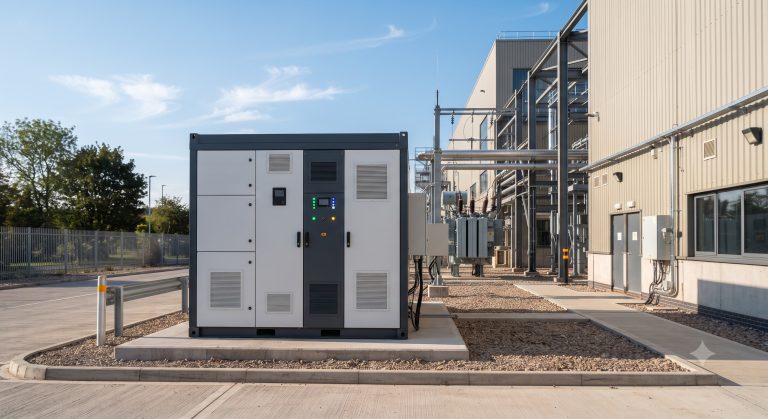
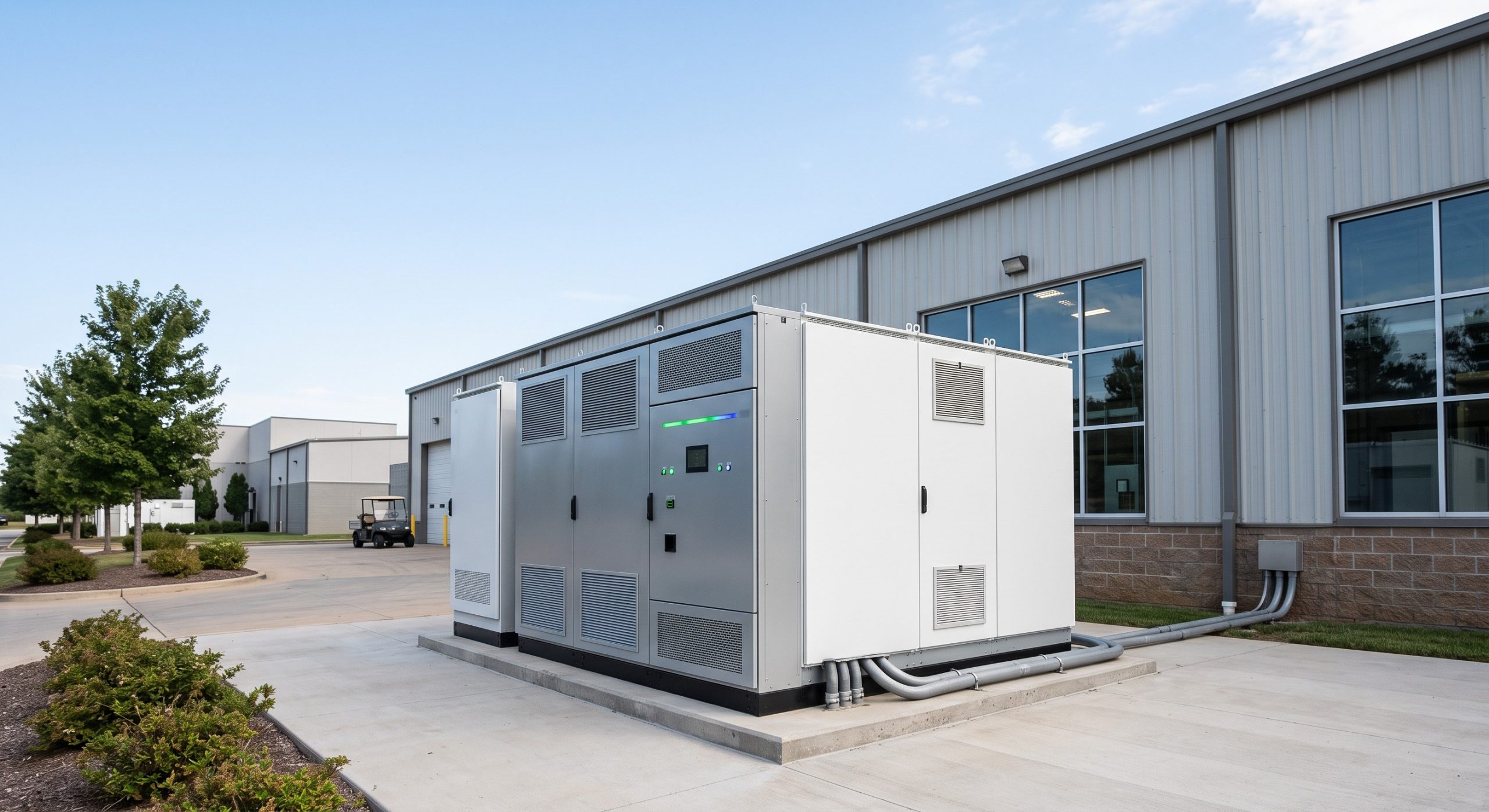
The following table summarizes the core parameters of a typical 215 kWh commercial cabinet using high-density lithium battery assembly, compliant with IEC 62619, UL 9540, CE, and UN38.3 standards.
| Key Parameter | Technical Specification |
|---|---|
| Battery Chemistry | Tier-1 LFP (Lithium Iron Phosphate) |
| System Capacity | 215 kWh (expandable to 1 MWh+ via parallel cabinets) |
| Cycle Life | >8,000 cycles @ 90% DoD, 25°C |
| Round-Trip Efficiency | >95% at 0.5C |
| Depth of Discharge (DoD) | 90% (recommended), 100% (emergency) |
| Cooling Method | Liquid Cooling (cell temp differential ≤2°C) |
| PCS Rated Power | 100 kW bi-directional, 400V/480V AC |
| Grid Synchronization | <20 ms transfer time |
| Communication | CAN 2.0, RS485, Ethernet (Modbus TCP) |
| Certifications | IEC 62619, UL 9540, CE, UN38.3 |
| Operating Temperature | -20°C to +55°C (derated above 45°C) |
| Dimensions (W×D×H) | 1,200 × 1,100 × 2,200 mm |
| Weight | ~2,800 kg |
| Fire Suppression | Aerosol + Perfluorohexanone (Novec 1230) integrated |
Seamless Off-Grid Transition and Micro-Grid Capability
Replacing diesel gensets requires more than just battery capacity—it demands seamless transition logic. A high-density lithium battery assembly paired with a smart EMS can operate in grid-tied, islanded, and hybrid modes. During grid failure, the PCS disconnects from the grid and forms a local micro-grid within 20 ms, ensuring zero interruption for critical loads such as data centers, refrigeration, and production lines. Unlike diesel generators, which require fuel storage, exhaust systems, and regular maintenance, the ESS operates silently and requires minimal O&M.
Demand Charge Management and Peak Shaving
For facilities with demand charges exceeding $15/kW, the ESS performs automated peak shaving by discharging during high-demand intervals. A 500 kWh system can reduce a 1 MW peak by 30–50%, translating to annual savings of $50,000–$120,000 depending on utility rates. The EMS uses predictive algorithms to forecast load curves and optimize dispatch, maximizing peak-shaving ROI.
Deployment Scenarios: Real Facility Results
In a recent deployment at a 2 MW industrial park, a 1 MWh high-density lithium battery assembly replaced two 500 kVA diesel generators. The system reduced annual energy costs by 38%, eliminated 1,200 tons of CO₂ emissions, and achieved a payback period of 4.2 years. In another case, a PV-storage-charging station integrated a 430 kWh ESS with solar canopies and 360 kW EV superchargers, achieving 92% self-consumption of solar generation and reducing grid imports by 65%.

Final Advice: Strategic Procurement for C&I Stakeholders
When evaluating high-density lithium battery assembly for your facility, prioritize Tier-1 LFP cells, liquid cooling, and UL 9540/IEC 62619 certification. Request round-trip efficiency data at 0.5C and 1C rates, and verify cycle life at 90% DoD. A well-designed ESS is not merely a backup power source—it is a revenue-generating asset that enhances resilience, reduces operating costs, and accelerates your zero-carbon transition.